CoinDeskPolicyPublicado em 2024-04-17Última atualização em 2024-04-18

Resumo

There aren't enough secondary markets that support tokenized assets, and they come with risks, the ratings company said.

  • The development of blockchain-powered secondary markets can help improve the adoption of tokenization in traditional markets, a new report by Moody's says.
  • Although there is a lack of these secondary markets, analysts are noting growth.
VolumeMuteUnmute
What On-Chain Access for AGI Unlocks
0 seconds of 20 minutes, 26 secondsVolume 0%
Press shift question mark to access a list of keyboard shortcuts
Keyboard Shortcuts
Play/PauseSPACE
Increase Volume
Decrease Volume
Seek Forward
Seek Backward
Captions On/Offc
Fullscreen/Exit Fullscreenf
Mute/Unmutem
Seek %0-9
Up Next
How Can AI and Blockchain Change the Music Industry?
16:58
00:25
20:01
20:26
 
  • How Can AI and Blockchain Change the Music Industry?
    16:58
    How Can AI and Blockchain Change the Music Industry?
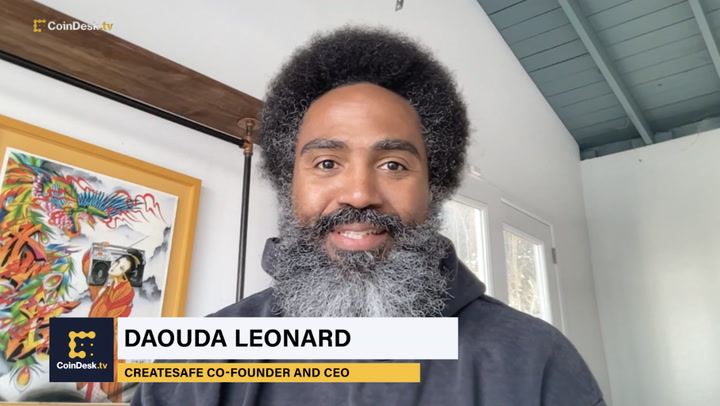
  • AI Will Make Music 'Come Alive Again,' CreateSafe CEO Says
    00:39
    AI Will Make Music 'Come Alive Again,' CreateSafe CEO Says
  • A Look Back: Blockchain Technology in 2023
    00:54
    A Look Back: Blockchain Technology in 2023
  • Why Zug Is Ranked as the Top Global Crypto Hub of 2023
    02:44
    Why Zug Is Ranked as the Top Global Crypto Hub of 2023
  • Blockchain-powered secondary markets can help expand the reach of tokenized assets, analysts at Moody's Investors Service said in a report published Thursday.

    Tokenization is the representation of real-world assets on a blockchain, and financial institutions worldwide are exploring how it can improve the efficiency, cost and reach of financial markets. For example, tokenization allows large assets such as private equity or real estate to be broken down and represented by multiple tokens, opening the market to a wider range of investors, a previous report from the ratings company said.

    While financial institutions and governments have started dabbling in the issuance of tokenized assets – such as Hong Kong's $100 million green bond last year – there is a lack of secondary markets where they can be traded after the primary offering, the Moody's analysts note.

    Advertisement
    Advertisement

    This limits the adoption of tokenization, the new report said, adding that there is a noticeable growth in blockchain-powered secondary markets.

    Blockchain and tokenization bring "significant innovations to secondary market structures," and developing secondary markets for blockchain-based securities could improve liquidity management, enhance market data accessibility and facilitate instantaneous settlements, the report said.

    "These blockchain-powered secondary markets address several perceived drawbacks of traditional secondary markets, including limited accessibility of certain asset classes, inefficiencies in settlement processes, and high operational costs," the report said.

    Though these blockchain markets promise innovation, the report warns that there are also technological and regulatory hurdles.

    "The technology underpinning these markets, primarily smart contracts, is susceptible to risks such as bugs, rug pulls, price manipulations, and oracle failures. These vulnerabilities not only pose financial risks to participants but also hinder the broader acceptance and integration of [decentralized finance]," the report said.
    Edited by Sheldon Reback.

    Leituras Relacionadas

    A Chip Company Releases AIDC Energy Storage Certification Standards. Why NVIDIA? Computing Power Reshapes Power Supply Logic. Who's in the Lead and Who's Left Out?

    NVIDIA has released a "Battery Energy Storage System Self-Certification Guide," setting strict technical standards for energy storage systems specifically for AI data centers (AIDC). The guide focuses solely on certifying the Power Conversion System (PCS), not the batteries, with 10 mandatory performance metrics and 12 validation tests requiring real-world and simulation comparisons. Key requirements include rapid dynamic response to AI workloads, high-frequency system telemetry, and detailed electromagnetic transient models. The move is driven by the extreme and fluctuating power demands of next-generation AI hardware. Modern AIDCs require energy storage systems to act as intelligent, controllable grid assets, not just passive backup, to manage instantaneous, massive power load shifts that traditional UPS systems cannot handle. This redefines the competitive landscape for energy storage providers, shifting focus from capacity and cost to advanced control capabilities and system integration. While the market potential is significant—with forecasts of hundreds of GWh in new demand by 2030—the certification creates a high barrier to entry. It requires proven PCS delivery volumes and credible plans for rapid capacity scaling, favoring established, well-resourced players. Early movers like Fluence (partnering with Siemens) and several Chinese companies have secured projects ahead of the standard, but new entrants must now navigate this rigorous, costly, and time-intensive certification process to compete in the AIDC energy storage market.

    marsbitHá 11m

    A Chip Company Releases AIDC Energy Storage Certification Standards. Why NVIDIA? Computing Power Reshapes Power Supply Logic. Who's in the Lead and Who's Left Out?

    marsbitHá 11m

    After Missing the 20x, I've Found a 'Dumb' Method for AI Investing

    **Missing the 20x Opportunity: A Simple 'Dumb' Approach to AI Investing** The AI boom, driving NVIDIA's revenue from $60B to $216B in two years, creates immense investment pressure. However, like the internet bubble of 2000, the largest AI opportunities likely lie ahead, perhaps after a correction. Instead of rushing in now or waiting paralyzed for a crash, the author proposes a third way: building a "knowledge warehouse" by systematically mapping the AI industry to be ready when opportunities arise. The core of the strategy is understanding AI's four-layer value chain: 1. **Compute Infrastructure (The "Engine"):** This foundational layer, where all money eventually flows, includes: a) **Chip Design:** NVIDIA's dominance via its CUDA ecosystem, b) **Chip Manufacturing/Packaging/Memory:** TSMC's near-monopoly in advanced manufacturing and SK Hynix's lead in High Bandwidth Memory (HBM), c) **Optical Interconnects:** Essential for large-scale AI clusters (e.g., Lumentum, Coherent), d) **Cooling & Power:** Critical for high-density AI data centers (e.g., Vertiv), e) **Servers/Data Centers & Cloud Platforms:** The physical and virtual wholesale providers. 2. **Models & Tools (The "OS"):** The competitive layer of foundation models (OpenAI, Anthropic, Google, Meta, xAI), now generating real revenue. A key shift is the center of gravity moving from **Training** models to **Inference** (running models), which demands different chip characteristics and could challenge NVIDIA's monopoly. 3. **Middleware & Platform ("The Glue"):** Connects models and applications (e.g., Scale AI, Hugging Face). This layer could explode if applications take off. 4. **Vertical Applications ("The Cash Register"):** Where AI meets end-users (e.g., enterprise AI, coding tools, medical AI, robotics). A critical cross-cutting constraint is **Energy**, as AI's massive power consumption drives investment in nuclear and other energy infrastructure. The author identifies four key questions for further research: 1) How will the shift from Training to Inference reshape the competitive landscape? 2) With tech giants spending over $600B on capex, where is the ROI from AI applications? 3) What are the under-the-radar opportunities in the "second" and "third" circles of the value chain (e.g., cooling, specialty foundries)? 4) How will geopolitics (e.g., U.S.-China chip restrictions) bifurcate the supply chain? The conclusion is that missed opportunities stem from insufficient research, not slow timing. By methodically studying each layer—its business models, competition, and valuations—investors can build the "killer intuition" needed to act decisively when the market presents its chance.

    marsbitHá 32m

    After Missing the 20x, I've Found a 'Dumb' Method for AI Investing

    marsbitHá 32m

    Trading

    Spot
    Futuros
    活动图片