数据解析15个Whales Market上的项目积分价值:哪些值得参与?如何结算?

Odaily星球日报Publicado em 2024-03-26Última atualização em 2024-03-26

Resumo

一文玩转Whales Market:如何计算价值?双押机制是否有安全问题?如何结算非线性兑换的积分?

原创 | Odaily星球日报

作者 | 南枳
数据解析15个Whales Market上的项目积分价值:哪些值得参与?如何结算?

随着 Blast 引发了积分制热潮,现市面上的绝大多数未发币项目均设立了积分制度,作为用户的未来奖励凭证。而 Whales Market 凭借积分交易市场快速崛起,现已上线十多个项目的积分市场,各项目积分价值如何?积分非线性兑换情况下如何结算?双押机制是否有安全问题?Odaily 将于本文解答这些问题。

数据汇总

本节对各协议的用户持有总分和 Whales Market 积分市场价格汇总如下,按照 Whales Market 中的总交易量(Total Volume)升序,理论上总交易量越高价格越接近合理数值。

其中部分协议未有官方披露的总积分数,由 Odaily 直接对排行榜进行汇总统计,统计总数详见表中备注。由于积分具有长尾效应,例如 marginfi 前 100 名积分占 1000 名的 54% ,Parcl 前 100 名占 500 名的 93% ,因此所有用户的积分总价值预计与表中统计结果无明显差异。

根据下表,若积分总额低而融资金额高,意味着项目距离空投或其他代币激励还有一定时间,用户可根据项目背景和积分获取速度决定是否参与;若积分总额高而融资金额低,则可能存在高估风险。
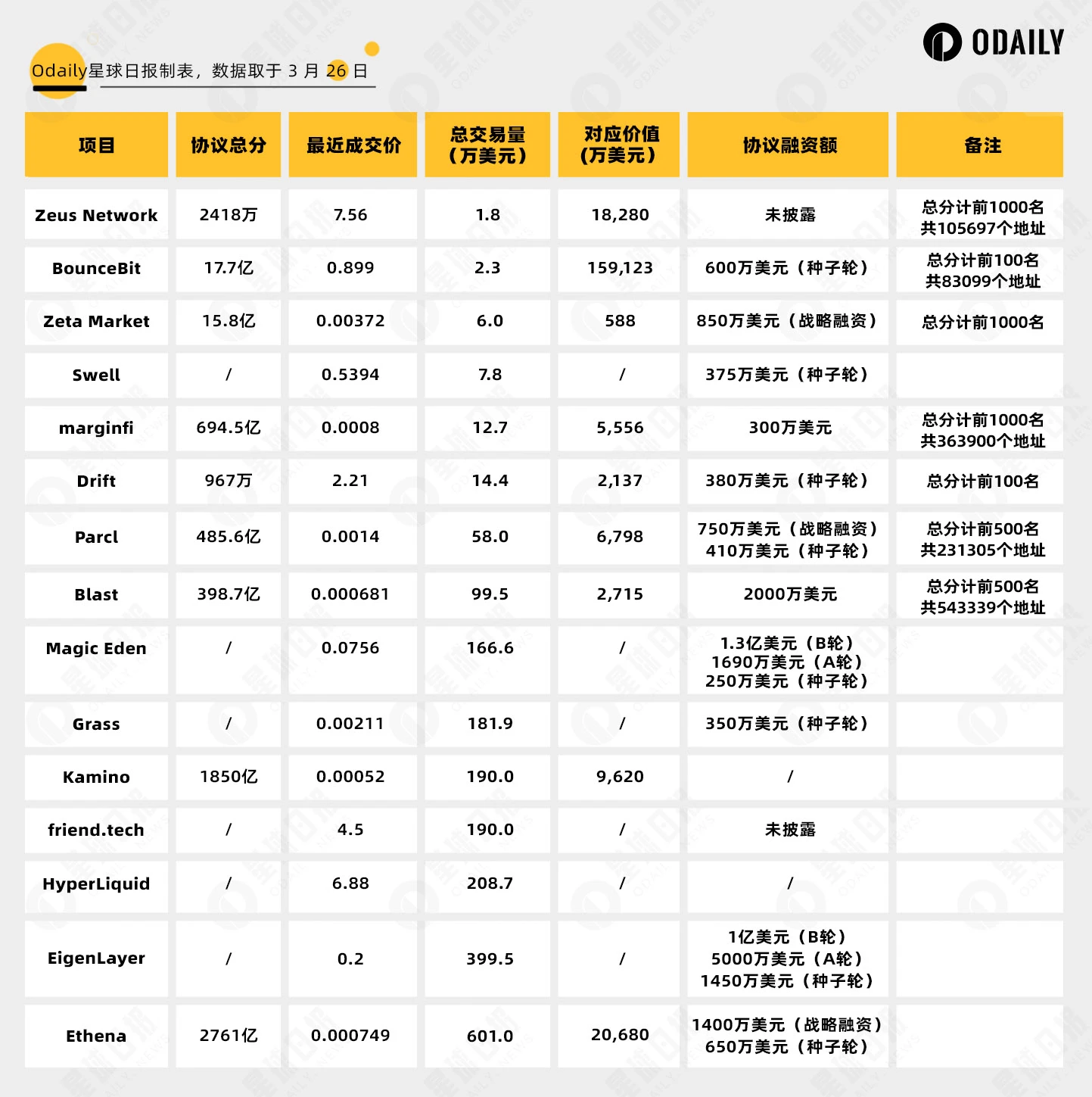
数据解析15个Whales Market上的项目积分价值:哪些值得参与?如何结算?

积分结算问题

在积分如何结算方面,存在几个问题在白皮书中未有明确,在咨询项目人员后解答如下。

问题:当代币奖励与积分并非线性关系时如何结算?例如某地址拥有 100 分,而在空投规则里 100 分的地址不发放空投,但在 Whales Market 单独出售了 100 分,如何结算?

解答:对于每个项目,在项目开启基于积分的空投后,Whales Market 官方将为这个项目单独计算一个兑换系数,不论在积分市场上出售了涉及多少积分的单子,均按照统一的兑换系数计算,卖方根据换算后的应交付代币进行卖单结算。(原文:Our team will calculate the average conversion rate and move according to that)

问题:当某个项目最终决定不参考积分进行空投,此时市场上已成交的积分单如何结算?

解答:所有成交单将被撤销,然后向所有用户退款。

问题:项目已宣布空投且买卖单已成交,但迟迟不发放代币,能够撤销成交单吗?

解答:已成交单无法撤销,需等待 TGE 后开启结算。

(Whales Market 功能、机制、运行流程和代币解读详见下文:《积分制协议太多,难以定价和抉择?Whales Market 这样解决》)

安全问题

此外,Whales Market 采取了双押模式,买卖双方都需要质押资金在平台合约中,因此存在对安全方面的疑虑,对于部分问题,Odaily 咨询了安全团队 Beosin 的相关人士,问题及解答如下。

问题:买卖双方进行双押的资金合约,是否有后门,项目方是否有权转移?

解答:当前买卖双方进行双押的资金合约中并没有后门,但由于该合约是可升级合约,其风险点在于项目方或是控制了 ProxyAdmin 合约(0xeB5E772919661F455619A4cABd9B2b64715505E6)的人可以通过升级合约实现恶意的攻击。

问题:平台如果出现无法登陆的情况下,能否通过合约进行解除交割? 

解答:平台如果无法登陆,目前可以由合约的管理员调用 forceCancelOrder()解除订单,将资产返回给买卖双方。合约代码如下: https://etherscan.io/address/0x0e57fff83ae53b22c5b656745168b21a9d2ac3da#code#F 19 #L2 79 

结论

Whales Market 的积分市场极大程度地解决了积分市场的定价与锁定利润需求,但存在资金占用高、项目方仍有超级权限等瑕疵,用户可根据实际需求选择使用。
Leituras Relacionadas

A Chip Company Releases AIDC Energy Storage Certification Standards. Why NVIDIA? Computing Power Reshapes Power Supply Logic. Who's in the Lead and Who's Left Out?

NVIDIA has released a "Battery Energy Storage System Self-Certification Guide," setting strict technical standards for energy storage systems specifically for AI data centers (AIDC). The guide focuses solely on certifying the Power Conversion System (PCS), not the batteries, with 10 mandatory performance metrics and 12 validation tests requiring real-world and simulation comparisons. Key requirements include rapid dynamic response to AI workloads, high-frequency system telemetry, and detailed electromagnetic transient models. The move is driven by the extreme and fluctuating power demands of next-generation AI hardware. Modern AIDCs require energy storage systems to act as intelligent, controllable grid assets, not just passive backup, to manage instantaneous, massive power load shifts that traditional UPS systems cannot handle. This redefines the competitive landscape for energy storage providers, shifting focus from capacity and cost to advanced control capabilities and system integration. While the market potential is significant—with forecasts of hundreds of GWh in new demand by 2030—the certification creates a high barrier to entry. It requires proven PCS delivery volumes and credible plans for rapid capacity scaling, favoring established, well-resourced players. Early movers like Fluence (partnering with Siemens) and several Chinese companies have secured projects ahead of the standard, but new entrants must now navigate this rigorous, costly, and time-intensive certification process to compete in the AIDC energy storage market.

marsbitHá 21m

A Chip Company Releases AIDC Energy Storage Certification Standards. Why NVIDIA? Computing Power Reshapes Power Supply Logic. Who's in the Lead and Who's Left Out?

marsbitHá 21m

After Missing the 20x, I've Found a 'Dumb' Method for AI Investing

**Missing the 20x Opportunity: A Simple 'Dumb' Approach to AI Investing** The AI boom, driving NVIDIA's revenue from $60B to $216B in two years, creates immense investment pressure. However, like the internet bubble of 2000, the largest AI opportunities likely lie ahead, perhaps after a correction. Instead of rushing in now or waiting paralyzed for a crash, the author proposes a third way: building a "knowledge warehouse" by systematically mapping the AI industry to be ready when opportunities arise. The core of the strategy is understanding AI's four-layer value chain: 1. **Compute Infrastructure (The "Engine"):** This foundational layer, where all money eventually flows, includes: a) **Chip Design:** NVIDIA's dominance via its CUDA ecosystem, b) **Chip Manufacturing/Packaging/Memory:** TSMC's near-monopoly in advanced manufacturing and SK Hynix's lead in High Bandwidth Memory (HBM), c) **Optical Interconnects:** Essential for large-scale AI clusters (e.g., Lumentum, Coherent), d) **Cooling & Power:** Critical for high-density AI data centers (e.g., Vertiv), e) **Servers/Data Centers & Cloud Platforms:** The physical and virtual wholesale providers. 2. **Models & Tools (The "OS"):** The competitive layer of foundation models (OpenAI, Anthropic, Google, Meta, xAI), now generating real revenue. A key shift is the center of gravity moving from **Training** models to **Inference** (running models), which demands different chip characteristics and could challenge NVIDIA's monopoly. 3. **Middleware & Platform ("The Glue"):** Connects models and applications (e.g., Scale AI, Hugging Face). This layer could explode if applications take off. 4. **Vertical Applications ("The Cash Register"):** Where AI meets end-users (e.g., enterprise AI, coding tools, medical AI, robotics). A critical cross-cutting constraint is **Energy**, as AI's massive power consumption drives investment in nuclear and other energy infrastructure. The author identifies four key questions for further research: 1) How will the shift from Training to Inference reshape the competitive landscape? 2) With tech giants spending over $600B on capex, where is the ROI from AI applications? 3) What are the under-the-radar opportunities in the "second" and "third" circles of the value chain (e.g., cooling, specialty foundries)? 4) How will geopolitics (e.g., U.S.-China chip restrictions) bifurcate the supply chain? The conclusion is that missed opportunities stem from insufficient research, not slow timing. By methodically studying each layer—its business models, competition, and valuations—investors can build the "killer intuition" needed to act decisively when the market presents its chance.

marsbitHá 41m

After Missing the 20x, I've Found a 'Dumb' Method for AI Investing

marsbitHá 41m

Trading

Spot
Futuros
活动图片