对标Bitmap?社区都在FOMO的Solmap是什么?

Odaily星球日报Publicado em 2023-12-21Última atualização em 2023-12-21

Resumo

铭文、土狗,Solana 承接住了每一个热点

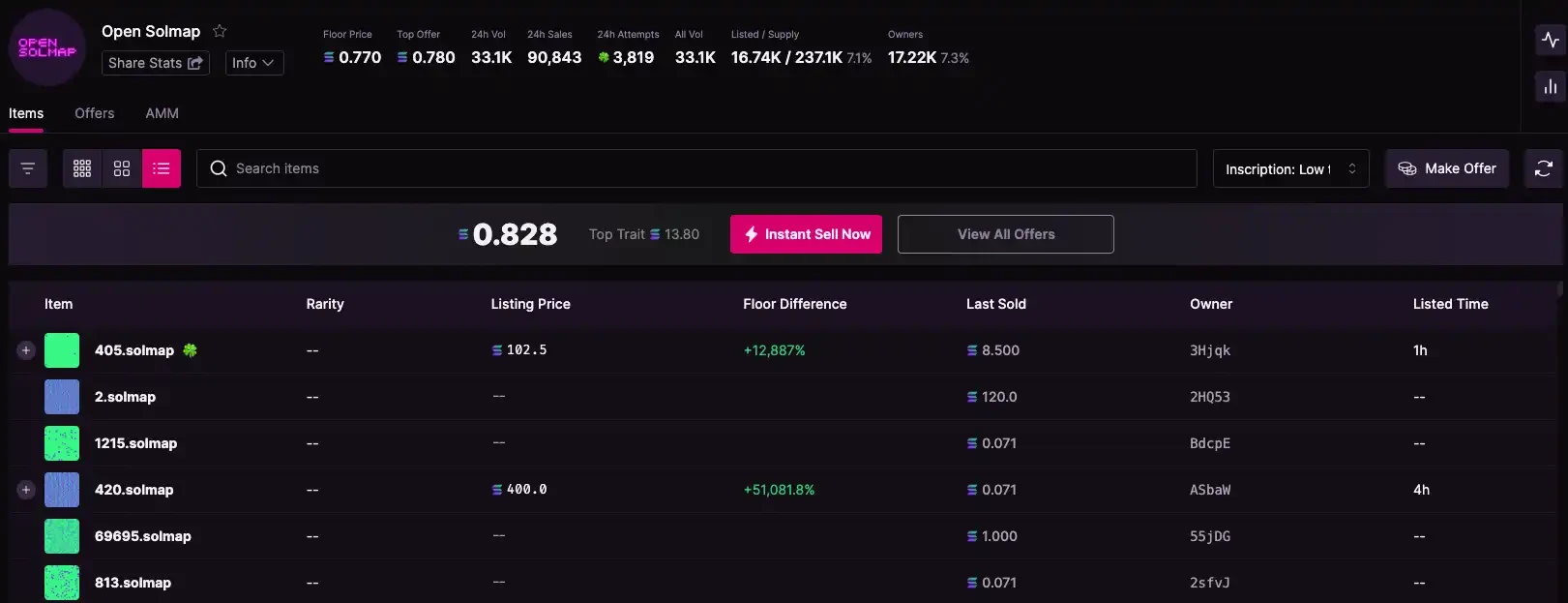
12 月 21 日,NFT 交易平台 Magic Eden 的 24 小时交易榜上出现了一个 NFT 系列「Open Solmap」。截至撰稿时,Open Solmap 地板价触及 0.77 SOL,有超过 230 k 个地块,当前持有人数超 17, 780 人。
对标Bitmap?社区都在FOMO的Solmap是什么?

Open Solmap 是什么?

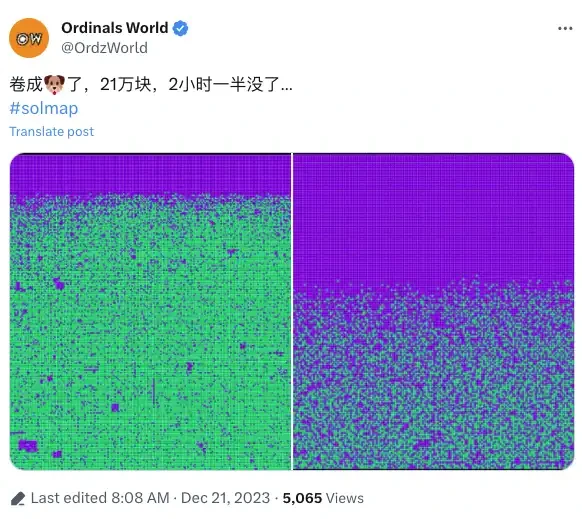
据悉,「Open Solmap」是 Magic Eden 官方推出的一个代表 Solana 上区块空间所有权的项目,在 mint 完毕后将由社区运行。Solmaps 的核心是对「地块」(Solana 区块链上连续插槽的独特部分)主张数字主权的权力,Solmap 上的每个「地块」包含 1000 个交易历史插槽,并被直观地进行视觉表示。总共约有 2.32 亿个插槽,即可以有大约 232, 000 个 Solmap 地块。

插槽又是什么?在 Solana 上验证交易时,每个插槽代表着一段时间的单位,类似于电影胶片中的一帧,在这段时间内,大量的交易被处理并确认。与比特币以固定大小的区块处理交易不同,Solana 的创新在于其运用动态插槽,使系统更具灵活性和可扩展性。插槽的动态特性允许在交易处理中实现高吞吐量和效率。

比如,用户铭刻了 12345.solmap,将获得一个 NFT 和一个代表 12345.solmap 的铭文,以及从 12345000 到 12345999 的 1, 000 个 Solana 插槽,其中插槽 12345000 将成为地块的主要插槽。

Solmap 白皮书中提到,社区鼓励用户充分利用 Solana 插槽和区块的本地属性,通过添加图层和含义来构建 Solmap,可构建的潜在领域包括区块属性、大宗交易、区块奖励、区块程序和区块账户等。Solana 上的不可变铭文允许 Open Solmap 标准遵循先到先的规则。该规则确保了每个 Solmap 的合法性和唯一性,防止重复创建绘图。基于这样的设定,Solmap 的概念使其成为了探索链上数据的有共识驱动的社区项目。

看到这里,你可能会想到 Bitmaps,这是比特币生态中第一个建立在序数理论和位图理论上的元宇宙项目,Bitmaps 目前总交易量已超 286 BTC,约合 1 千多万美元。就像 Bitmaps 一样,Solmaps 从交易历史数据出发,将数据映射为独特的地块,并基于地块属性为其赋予承载社区创作的潜力。

相关阅读:《比特币 NFT 普涨,哪些表现最优异?

Bitmap 项目的第二阶段发展引入了「分区」(The Parcelling)的概念,允许用户在街区内独立于区块划分自己的地块。这一阶段的发展对于比特币区块链上的数字房地产创造是一个重要里程碑。与其他元宇宙项目不同,Bitmap 并不限制地块的数量,而是将新的 Bitmap 的创建与比特币区块相连,理论上每天可以创造多达 144 个新的 Bitmap,为用户提供了大量的发现和确认其数字资产的机会。

Open Solmap 上的插槽可以类别为 Bitmaps 上的「聪」,「以太坊杀手 Solana」结合「比特币生态创新玩法」,Solmap 一经上线就引起了社区的极大关注。而这不是 Solana 生态中出现的第一个让社区惊喜的项目。
对标Bitmap?社区都在FOMO的Solmap是什么?

铭文、土狗,Solana 承接住了每一个热点

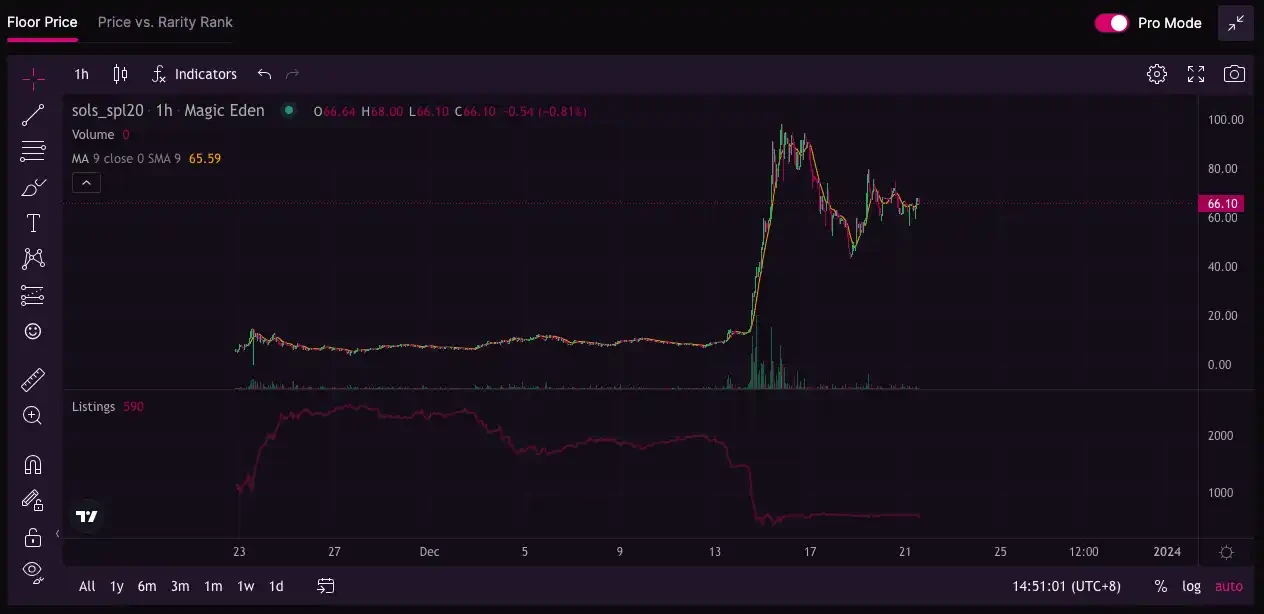
始于比特币生态的铭文 ORDI 以其巨大的财富效应带起了长达两个月的铭文热,各大公链均被席卷。而这些公链铭文中,Solana 上的铭文 sols 是既 eths 后价值增长最快的一批,截止撰稿时,一张 sols 的价格为 66 SOL。

相关阅读:《盘点十大公链值得关注的铭文

sols 在最初 mint 时就与其他公链铭文不同,同期的 pols 铭刻步骤极为简单,而 sols 则需要附带图片一起铭刻。mint 完毕后,成本几十 U 的 sols 在二级交易市场立刻就有 1 SOL 的交易价, 12 月 15 日,sols 在 Magic Eden 上的价格突破了 100 SOL。
对标Bitmap?社区都在FOMO的Solmap是什么?

sols 的价值增长背后,Solana 生态本身对铭文板块的支持起了重要作用。Solana Labs 联合创始人 Anatoly Yakovenko 在 Unchained 播客节目中曾表示,铭文是一种完全基于区块链的资产,「虽然不太必要,但 Solana 仍将提供支持」。

除了铭文,Solana 生态正上演着新一期「土狗季」。Solana Labs 的联合创始人 Toly 在 Breakpoint 大会上穿着「龙型」服装诞生了 meme 币 SILLY,在其引起社区关注的初期, 12 月 16 日,Toly 在社交媒体表示「迫切需要傻龙模因」。

如果你在那时买入了 SILLY, 5 日来你将收获近 30 倍的收益。今日,SILLY 突破 0.07 美元, 24 小时涨幅接近 400% 。

相关阅读:《Solana 土狗季持续火热,这波快钱你赚到了吗?

凭借低成本、高速度的交易体验,Solana 吸引了一众 Web3 项目。而在与公链性能关系不大的铭文热、meme 季中,Solana 上的社区也足够活跃,承接住了每一次 Web3 热点。链上数据显示,Solana 生态 DEX 在 21 日单日交易量超过 12 亿美元,历史上第二次超过以太坊。新的一轮牛市中,Solana 又将会给社区带来什么样的惊喜?

Leituras Relacionadas

Microsoft Announces Commercial-Grade Quantum Computer to be Completed in Three Years: Will the Boots Land?

Microsoft announces plans to build a commercially viable quantum computer by 2029, a significant acceleration from the previous industry consensus of a decade. The breakthrough is fueled by their new Majorana 2 quantum chip, which boasts a record-breaking average qubit lifetime of 20 seconds—a 1,000-fold reliability improvement over its predecessor. This leap was achieved by leveraging topological qubits, a theoretically more stable technology using Majorana zero modes, and switching the core superconducting material from aluminum to lead. Crucially, Microsoft's "Discovery" agentic AI platform accelerated the R&D process. AI agents autonomously analyzed vast experimental data, optimized manufacturing parameters (like the lead alloy composition), and solved issues like "ghost noise," dramatically speeding up experimentation. While the 20-second coherence time is a landmark, challenges remain: scaling from 12 qubits to the millions needed for practical applications, managing compilation costs, and verifying quantum results. Skeptics call for peer-reviewed data, and questions persist about whether even 20 seconds is sufficient for complex algorithms like breaking RSA encryption. The race is on with other approaches (superconducting, trapped ions), but Microsoft's confidence in its topological roadmap signals a potential shortcut to a scalable quantum future.

marsbitHá 12m

Microsoft Announces Commercial-Grade Quantum Computer to be Completed in Three Years: Will the Boots Land?

marsbitHá 12m

Is There Really a "World Cup Curse" in the Market?

Is there really a "World Cup Curse" affecting markets? Historical data shows global equity markets often underperform during the tournament. The S&P 500 has averaged negative returns of -1.5% to -2.11% across 19 World Cups since 1950, with declines in 58% of events. China's Shanghai Composite fell in 71% of tournaments since 1994. Studies confirm reduced trading activity during matches, with volumes dropping significantly, especially when a home nation plays. A team's loss can also lead to negative sentiment and selling pressure in its domestic market the next day. However, the "curse" may be partly attributed to seasonal weakness. Many tournaments are held in June-July, a historically weaker period for stocks ("Sell in May and go away"). The 2022 Qatar World Cup, held in November-December, saw a smaller drop in trading volume compared to summer events, suggesting timing plays a role. The cryptocurrency market's performance during World Cups has been mixed and largely driven by its own major catalysts (e.g., Mt. Gox hack, FTX collapse, halving cycles) rather than the tournament. Investment opportunities have shifted over time. Traditional beneficiaries like TV manufacturers have seen fading returns as streaming platforms become the core viewing channel. Classic consumer plays like beer and sportswear face challenges from changing consumption trends. Newer digital assets, like fractionalized collectible player cards on blockchain, have seen explosive growth. While gambling is a traditional sector, prediction markets are emerging. In conclusion, while a statistical correlation exists, the World Cup's direct impact on markets is likely limited and intertwined with seasonal patterns. With lower liquidity during the event, the simplest strategy for many might be to step back from trading and enjoy the games.

marsbitHá 19m

Is There Really a "World Cup Curse" in the Market?

marsbitHá 19m

Why 'AI Service Subscription' Is Destined to Die Out?

"Why 'AI Service Subscription Models' Are Doomed to Disappear" The article argues that the flat-rate subscription model for AI services is fundamentally unsustainable. It points to recent industry shifts, such as Anthropic limiting access to its flagship Claude Fable 5 model for subscribers after just 14 days, and GitHub and OpenAI moving towards credit-based or usage-based billing. The core problem is that subscription models rely on a capped human consumption limit—like watching videos or listening to music—which keeps costs predictable. However, the rise of autonomous AI agents shatters this premise. Agents can consume 5 to 30 times more computing resources (tokens) than a human chatting, and they operate continuously without user presence. This removes the natural usage cap, making fixed-price plans financially unviable as heavy users incur massive costs. Attempts to patch the model with higher tiers or usage caps have failed, often leading to "adverse selection" where only the heaviest users subscribe. The industry's solution is to hollow out subscriptions, replacing "unlimited" access with prepaid credits charged per token, akin to a utility meter. While chat-based subscriptions may linger, the real value and revenue are shifting to pay-as-you-go models. The current period represents a final, heavily subsidized phase for users. The conclusion is that the soul of subscription—a fixed price for worry-free use—is dying, soon to be replaced by pure usage-based pricing where everyone pays for their own "electricity meter."

marsbitHá 20m

Why 'AI Service Subscription' Is Destined to Die Out?

marsbitHá 20m

Trading

Spot
Futuros
活动图片