Crypto Oversight Concerns: State Regulators Warn Market Structure Bill May Hinder Anti-Fraud Protections

bitcoinistPublié le 2025-10-04Dernière mise à jour le 2025-10-04

Résumé

Multiple state authorities shared concerns about the upcoming crypto market structure legislation and its impact on their ability to prosecute...

Trusted Editorial content, reviewed by leading industry experts and seasoned editors. Ad Disclosure

Multiple state authorities shared concerns about the upcoming crypto market structure legislation and its impact on their ability to prosecute fraudsters in crimes related to digital assets.

State Regulators Sound The Alarm Over Crypto Bill

Regulators from Alabama to Montana sounded the alarms over the highly anticipated crypto market structure bill, warning that it may “diminish their ability to pursue wrongdoers,” Bloomberg reported on Thursday.

Amanda Senn, director of the Alabama Securities Commission, told the news media outlet that the Senate’s draft of the legislation, the Responsible Financial Innovation Act, does not give state-level regulatory agencies implicit authority to supervise digital asset companies.

This oversight could mean that these authorities may not be able to prosecute offenders for fraud. Meanwhile, Federal enforcement against crypto companies has significantly decreased since the Trump administration took office in January.

Multiple federal regulatory agencies, including the Securities and Exchange Commission (SEC), Department of Justice (DOJ), and the Commodity Futures Trading Commission (CFTC), have shut down or reduced their digital asset-related enforcement units, dismissing most cases and investigations against crypto firms.

According to Cornerstone Research data cited by Bloomberg, the SEC had initiated nine crypto-related enforcement actions by the end of August, a significant drop from the 47and 33 actions taken in 2023 and 2024, respectively. At this pace, 2025 could see the lowest crypto-related enforcement actions since 2017.

“The dam is going to break,” Senn argued. “If you don’t have the states paying attention and prosecuting fraud, nobody is looking out.”

Montana State Auditor James Brown warned that the bill’s changes to the definition of an investment contract could “let criminals wiggle out of being prosecuted.” “What we are hearing from people, with all the national talk about the benefits of digital currencies and the theory that you are going to get rich quick, you’ve got two factors that lead to easy fraud,” Brown added.

State Anti-Fraud Protections In Danger?

State regulators have proposed changes to the market structure bill, which is expected to go into markup after late October. Some state officials explained that the Senate’s current draft language would not require crypto businesses to register with states or respond to their inquiries.

Additionally, the legislation would change the federal definition of an investment contract, adding new conditions and elements. In September, the North American Securities Administrators Association (NASAA) sent a letter to multiple Senators, warning them that Congress must preserve state anti-fraud enforcement authorities in the upcoming crypto bill.

The association argued that “it is critical that the resulting framework preserve state anti-fraud protections,” as they protect investors and are “essential in the ongoing fight against online scams.” To achieve this, NASAA offered two recommendations to the lawmakers.

First, they suggested that lawmakers reject provisions that redefine the investment contract test, explaining that “upending decades of securities law as contemplated in Section 105 will have devastating effects on anti-fraud efforts by adding so many elements and conditions to the investment contract analysis that form, not substance, will determine whether regulators can take action.”

Second, they recommended that Congress enact the Support Anti-Fraud Enforcement (SAFE) Act to ensure states have the anti-fraud authority necessary to respond to residents’ complaints involving digital assets.

Despite the concerns, some industry players disagree that the market structure bill will hinder state authorities’ ability to prosecute bad actors. Some suggest that regulators will be able to pursue criminals “in the name of consumer protection.”

“I do understand why a state would be worried about it, in particular if the federal system doesn’t engage in any enforcement,” Mauro Wolfe, leading partner of Duane Morris’s Digital Assets and Blockchain Group, told Bloomberg. “I do think this will be an area where defense lawyers will say the states can’t do it, and it will be litigated,” he concluded.
crypto, bitcoin, btc, btcusdt

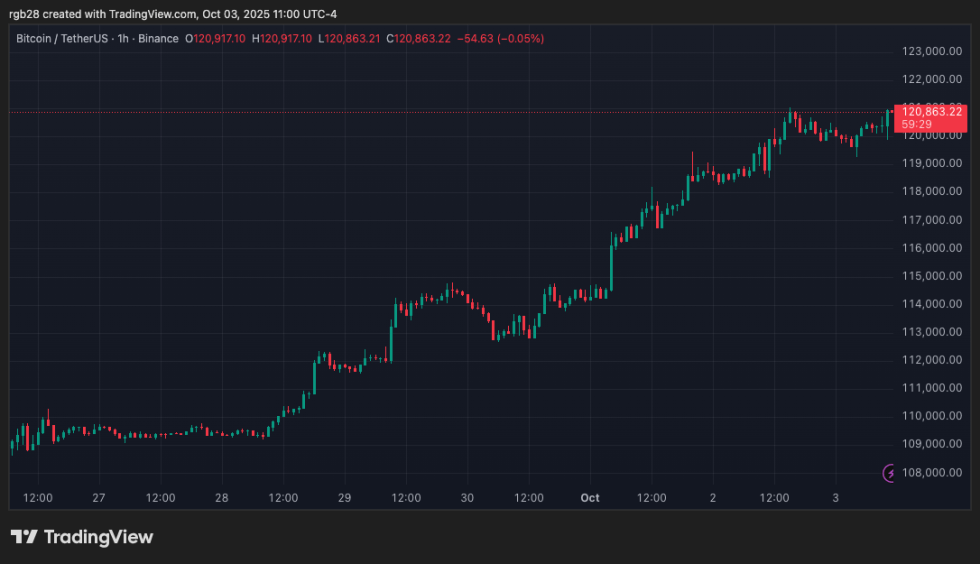
Bitcoin (BTC) trades at $120,863 in the one-week chart. Source: BTCUSDT on TradingView
Featured Image from Unsplash.com, Chart from TradingView.com
Editorial Process for bitcoinist is centered on delivering thoroughly researched, accurate, and unbiased content. We uphold strict sourcing standards, and each page undergoes diligent review by our team of top technology experts and seasoned editors. This process ensures the integrity, relevance, and value of our content for our readers.

Rubmar is a crypto enthusiast who likes learning and improving constantly. She enjoys reporting on the latest news and developments in the crypto industry. Rubmar also enjoys scrapbooking, crafting, simulation games, and watching football.

Lectures associées

UBS : La concentration des actions technologiques chinoises A est loin d'avoir atteint un pic historique

Résumé : L'actionnariat des valeurs technologiques chinoises (A-shares) est loin d'être aussi concentré qu'aux sommets historiques, selon une analyse récente d'UBS. Bien que le volume des transactions et la capitalisation du secteur de la mégatechnologie (électronique, communication, informatique, défense) aient atteint des niveaux record, le niveau de surpondération des fonds communs de placement, indicateur clé de la concentration des positions institutionnelles, s'élève à 9,9 % au premier trimestre 2026. Ce chiffre est inférieur au pic historique de 14,1 % de fin 2015 et très en deçà du pic de 18,7 % du secteur de la consommation. La phase actuelle de surperformance des valeurs de croissance technologique dure depuis moins de deux ans, alors que les cycles stylistiques historiques durent généralement environ trois ans, indiquant un potentiel de prolongation. Par ailleurs, la reprise des bénéfices des entreprises soutient le marché. UBS prévoit une croissance du bénéfice de 11 % pour l'ensemble des A-shares en 2026, après 3,9 % en 2025. Au premier trimestre 2026, les bénéfices des sociétés non financières ont progressé de 11,8 % en glissement annuel, avec des marges au plus haut depuis 2023. Sur le plan tactique, UBS privilégie les styles croissance et cyclique dans son scénario de référence « hausse modérée », avec une surpondération sur six secteurs : électronique, communication, équipement électrique, machines, métaux non ferreux et produits chimiques.

marsbitIl y a 48 mins

UBS : La concentration des actions technologiques chinoises A est loin d'avoir atteint un pic historique

marsbitIl y a 48 mins

Officiers de la Fed : le choix actuel est entre la patience et la hausse des taux, l'inflation est le risque économique n°1, l'IA n'a pas encore d'impact

Des responsables de la Réserve fédérale américaine (Fed) ont émis des signaux plutôt fermes concernant l'inflation et la trajectoire des taux d'intérêt. Lors de prises de parole jeudi, ils ont indiqué que le principal dilemme actuel de la Fed est de choisir entre maintenir sa patience en laissant les taux stables, ou procéder à une nouvelle hausse pour contenir une inflation persistante. Jeffrey Schmid, de la Fed de Kansas City, a clairement identifié l'inflation comme le risque numéro un pour l'économie et a, pour la première fois, évoqué une hausse des taux comme une option, sans mentionner de futures baisses. Mary Daly, de la Fed de San Francisco, a estimé que la politique monétaire était actuellement bien positionnée, mais qu'en raison d'une grande incertitude économique, la Fed devait se préparer à agir dans les deux sens (hausse ou baisse) et éviter des orientations prématurées qui pourraient induire le marché en erreur. Les contrats sur les taux d'intérêt montrent que les investisseurs anticipent désormais une probabilité élevée d'une hausse cette année. Concernant l'intelligence artificielle (IA), Mary Daly a déclaré qu'elle n'avait actuellement aucun impact significatif sur l'inflation ou la productivité à grande échelle, et que ses effets déflationnistes potentiels n'étaient pas une préoccupation immédiate pour la politique monétaire. Thomas Barkin, de la Fed de Richmond, a pour sa part noté un marché du travail équilibré, sans tensions excessives. La prochaine réunion du Comité fédéral de l'open market (FOMC) est prévue les 16 et 17 juin.

marsbitIl y a 49 mins

Officiers de la Fed : le choix actuel est entre la patience et la hausse des taux, l'inflation est le risque économique n°1, l'IA n'a pas encore d'impact

marsbitIl y a 49 mins

Trading

Spot
Futures
活动图片