Crypto Morning Brief: US Plans to Release 172 Million Barrels of Oil in 120 Days, Binance Files Lawsuit Against Wall Street Journal

marsbitPublished on 2026-03-12Last updated on 2026-03-12

Abstract

US plans to release 172 million barrels of oil from strategic reserves over 120 days, as announced by the Energy Department. SEC and CFTC signed a memorandum to collaborate on crypto regulatory frameworks. Binance filed a defamation lawsuit against The Wall Street Journal over a report on Iran sanctions. Ethereum researchers demonstrated a "native Rollups" prototype to simplify Layer 2 validation. Across Protocol proposed transitioning from a DAO to a C-corporation, offering token holders equity or USDC redemption. Hong Kong is expected to issue stablecoin licenses to HSBC, Standard Chartered, and OSL. Mastercard's new blockchain payment project includes Binance, PayPal, and Ripple. VanEck integrated crypto ETFs into 401(k) plans via Basic Capital. Metaplanet announced two subsidiaries and a ¥4 billion investment in Japan's Bitcoin infrastructure. Ripple initiated a $750 million share buyback at a $50 billion valuation.

Author: Deep Tide TechFlow

Yesterday's Market Dynamics

US February Unadjusted CPI Year-over-Year 2.4%, Expected 2.40%

US February Unadjusted CPI Year-over-Year 2.4%, Expected 2.40%, Previous 2.40%.

US Department of Energy: Plans to Release 172 Million Barrels of Oil from Reserves in 120 Days

According to Jinshi Data, US Secretary of Energy Wright issued a statement on the release of the Strategic Petroleum Reserve, stating that the 32 member countries of the International Energy Agency have unanimously agreed to Trump's request to coordinate the release of 400 million barrels of crude oil and refined products from their respective reserves to lower energy prices. As part of this action, Trump has authorized the Department of Energy to release 172 million barrels of crude oil from the Strategic Petroleum Reserve starting next week. Based on the planned release rate, delivery is expected to take approximately 120 days. Meanwhile, Trump has committed to ensuring US energy security through responsible management of the Strategic Petroleum Reserve. The US has arranged to replenish approximately 200 million barrels to the strategic reserve over the next year—20% more than the planned withdrawal—with no cost to taxpayers.

SEC and CFTC Sign Memorandum of Understanding, Pledge to Jointly Advance Crypto Asset Regulatory Framework

According to The Block, the US Securities and Exchange Commission (SEC) and the Commodity Futures Trading Commission (CFTC) formally signed a Memorandum of Understanding (MOU) on March 11, pledging to enhance coordination and cooperation in supporting legitimate innovation, maintaining market integrity, and protecting investor rights.

The two agencies stated that a key focus of the collaboration is to jointly develop federal policies to build an "adaptive regulatory framework" for crypto assets and other emerging technologies, and they committed to coordinating efforts to facilitate the lawful introduction of crypto asset products and remove related obstacles.

SEC Chairman Paul Atkins said that long-standing disputes over regulatory jurisdiction between the two agencies, duplicate registration requirements, and rule differences have already stifled innovation and caused market participants to turn to other jurisdictions. CFTC Chairman Michael Selig stated that this MOU aims to promote the harmonization of the regulatory frameworks of the two agencies to achieve comprehensive, seamless financial market supervision.

Binance Formally Files Defamation Lawsuit Against Wall Street Journal Over False Reporting

According to the official Binance blog, Binance formally filed a lawsuit against the Wall Street Journal on March 11, stemming from an article published by the media on February 23, 2026, regarding Iran sanctions. Binance claimed the content contained false and defamatory statements, which have led government officials to initiate unfounded investigations. Binance Global Head of Litigation Dugan Bliss stated that this lawsuit aims to hold the Wall Street Journal accountable for prioritizing traffic over journalistic integrity.

Ethereum Researchers Demonstrate "Native Rollups" Prototype, Potentially Simplifying Layer 2 Verification

According to The Block, Ethereum ecosystem developers have released a proof-of-concept prototype for "Native Rollups," enabling Ethereum to directly verify Layer 2 state transitions at the base layer without relying on external verification systems like zero-knowledge proofs or fraud proofs.

This solution introduces the EXECUTE precompilation mechanism through EIP-8079, replaying Layer 2 blocks on Ethereum's native layer to confirm their validity. Participating teams include Ethrex client developers, Ethereum Foundation contributors, and L2BEAT researchers. The developers stated that this design could allow Layer 2 networks to directly inherit Ethereum's security attributes and protocol upgrades, simplifying long-term maintenance costs. The solution is currently in the early exploratory stage and has not yet entered a production environment.

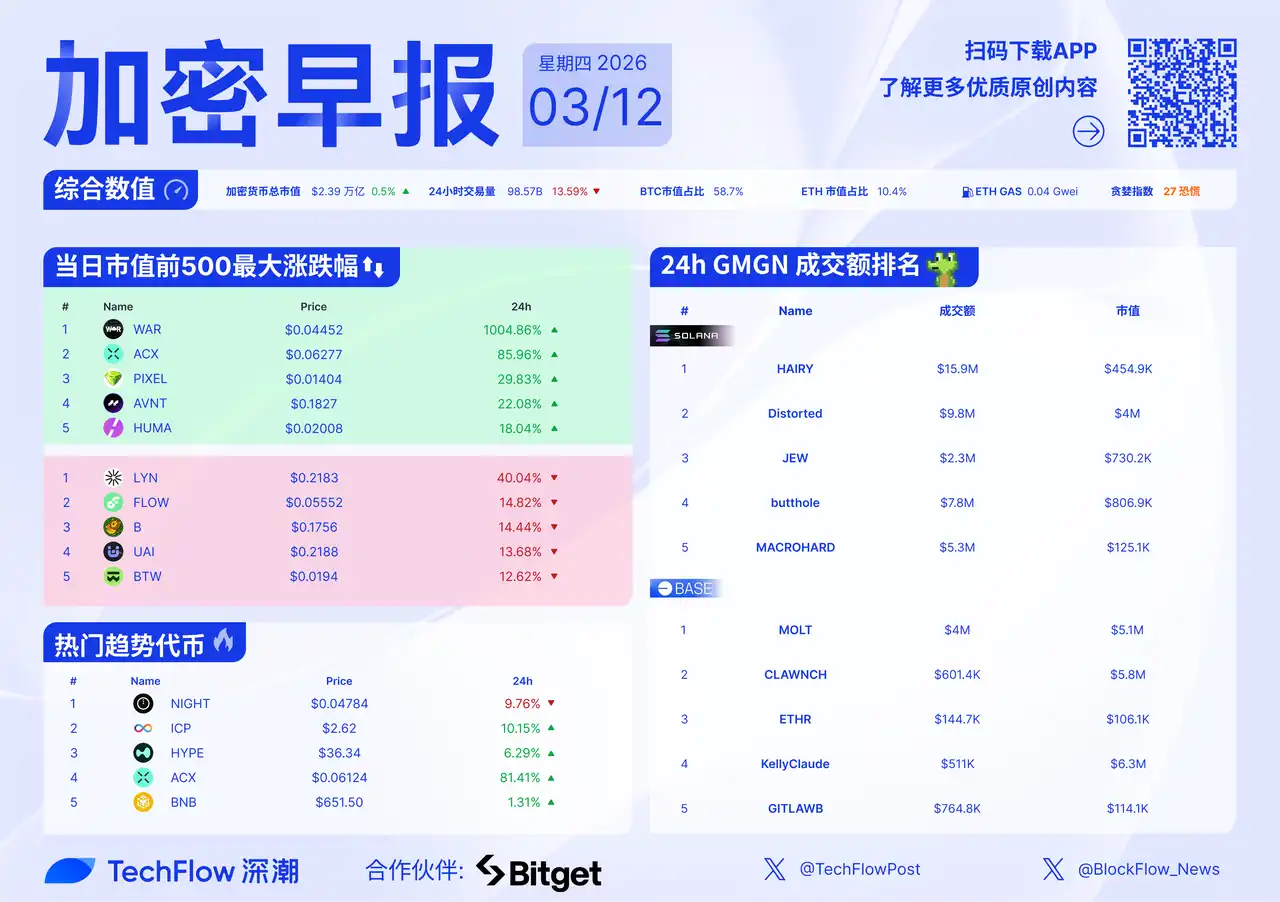
Across Protocol Proposes Transition from DAO to C-Corp, ACX Holders Can Swap for Equity or Redeem for USDC

According to The Block, Paradigm-backed cross-chain interoperability protocol Across Protocol has released a temperature check proposal exploring a transition from a DAO structure to a US C-Corporation (AcrossCo).

Token holders will have two options:

  • Equity Swap: Convert ACX to AcrossCo equity at a 1:1 ratio
  • Redemption: Convert ACX to USDC at the one-month average price, with a 6-month redemption window

The team stated that the existing DAO structure creates bottlenecks when signing enforceable contracts with institutional partners, and the transition will help drive the protocol's next phase of growth. If community sentiment is positive, the team will initiate a formal governance vote in two weeks, with the majority vote determining the final outcome.

Sources: Hong Kong to Issue Stablecoin Licenses to HSBC, Standard Chartered, and OSL

According to Sing Tao Daily citing multiple sources, HSBC, Standard Chartered, and local Hong Kong virtual asset trading platform OSL will be among the first batch of companies to receive Hong Kong stablecoin licenses. The report stated that the list could be announced as early as next week but is not yet final and is still subject to change. The Hong Kong Monetary Authority declined to comment on market rumors.

Market News: Binance, PayPal, and Ripple Join Mastercard's New Blockchain Payment Project

According to market news, Binance, PayPal, and Ripple have joined a new blockchain payment project launched by Mastercard.

VanEck Announces Select Crypto ETFs Now Accessible Through Basic Capital's 401(k) Plan

According to Cointelegraph, asset management firm VanEck announced that select digital asset exchange-traded products (ETPs) under its umbrella will be made available to US 401(k) retirement account holders through the fintech platform Basic Capital, marking the formal entry of crypto assets into traditional employer pension plan systems.

VanEck's major crypto products include the Bitcoin spot ETF VanEck Bitcoin Trust (HODL), the Ethereum spot ETF VanEck Ethereum Trust (ETHV), and the VanEck Digital Transformation ETF (DAPP) which invests in companies related to the digital asset ecosystem. Additionally, VanEck launched a spot Avalanche ETF in the US earlier this year. The specific products to be listed were not disclosed.

Basic Capital was founded in 2021 and completed a $25 million Series A funding round last year led by Forerunner and Lux Capital. Its 401(k) platform supports alternative asset allocations beyond traditional stocks and bonds.

Metaplanet to Establish Two Wholly-Owned Subsidiaries in Japan and US, Plans 4 Billion Yen Investment in Japanese Bitcoin Financial Infrastructure

According to disclosures by Metaplanet CEO Simon Gerovich, the board of the Japanese listed company Metaplanet has resolved to establish two wholly-owned subsidiaries: Kabushiki Kaisha Metaplanet Ventures and US subsidiary Metaplanet Asset Management Inc.

Metaplanet Ventures will invest 4 billion yen over the next few years in Japanese companies engaged in Bitcoin financial infrastructure construction, covering lending, payments, custody, stablecoins, derivatives, and compliance. It will also simultaneously launch an incubator program for Japanese entrepreneurs and a grant program for open-source developers, educators, and researchers. As the first investment by Metaplanet Ventures, the company has signed a basic agreement with Japan's first registered yen stablecoin project, JPYC Kabushiki Kaisha, for an investment of up to 400 million yen.

Metaplanet Asset Management Inc. will be established in Miami, positioning itself as a digital credit and Bitcoin capital markets platform connecting Asian, European, and American capital markets. It plans to engage in businesses related to yield, equity, credit, and volatility strategies, with specific products to be announced successively.

Ripple Initiates Share Buyback Plan of Up to $750 Million, Company Valuation Reaches $50 Billion

According to The Block, Ripple has initiated a company share buyback plan of up to $750 million. This buyback corresponds to a company valuation of $50 billion. The buyback is being conducted as a tender offer, allowing investors and employees to sell their shares back to the company, and is expected to last until April.

Ripple President Monica Long previously stated that the company has no immediate plans for an IPO and prefers to achieve private growth through mergers and acquisitions and product development. Previously, Ripple acquired institutional broker Hidden Road (approx. $1.25 billion) and stablecoin platform Rail ($200 million), and announced plans to acquire BC Payments to obtain an Australian financial services license.

Market Dynamics
Recommended Reading

OpenClaw Gold Rush, Who's Getting Rich?

This article delves into the industry chain phenomenon behind the OpenClaw wave, analyzing its monetization models in hardware, data, and information asymmetry. Through multiple cases, it demonstrates how to profit by lowering technical barriers, leveraging user anxiety, and information gaps, while also revealing the operational logic of this business model and its rapid cycle of rise and fall.

March 11 Market Summary: The War Isn't Over Yet, Oil Prices Drop Another 15%

This article explains that despite Trump's claims that the war is about to end, statements from the White House and the Pentagon indicate that the war continues. The market oscillates between optimism and reality, leading to volatile US stocks, plummeting oil prices, and fluctuations in gold and cryptocurrency markets.

Jensen Huang's Latest Article: AI's "Five-Layer Cake"

This article discusses the importance of artificial intelligence (AI) as modern infrastructure and its profound impact on the five-layer structure of energy, chips, infrastructure, models, and applications. It also explores AI's role in driving economic, labor market, and industry transformations, pointing out that the rapid development of AI is creating unprecedented infrastructure construction demands.

Sequoia Capital: The Next Trillion-Dollar Company Doesn't Sell Software, It Sells Results Directly

This article explores the application of artificial intelligence (AI) technology in the service industry and its future development, proposing that the next trillion-dollar company might be a software company disguised as a service company, selling work results directly rather than tools. It analyzes automation opportunities across various industries and contrasts the development directions of the Copilot and Autopilot AI models.

a16z: The Best Technology Doesn't Necessarily Win in the Enterprise Market

This article details the challenges of blockchain technology adoption in the enterprise market, noting that enterprises prioritize compatibility with existing systems and risk management over technological purity or best performance when choosing technology. It also provides practical advice for blockchain founders targeting enterprise customers.


Related Questions

QWhat is the purpose of the US Department of Energy's plan to release 172 million barrels of oil from the Strategic Petroleum Reserve?

AThe purpose is to lower energy prices. The release is part of a coordinated action by 32 IEA member countries to release a total of 400 million barrels of oil and petroleum products.

QWhat significant action did Binance take against The Wall Street Journal and why?

ABinance filed a defamation lawsuit against The Wall Street Journal due to a February 23, 2026, article about Iran sanctions that contained what Binance claims were false and defamatory statements, which led to unwarranted government investigations.

QWhat new collaborative effort did the SEC and CFTC announce regarding crypto assets?

AThe SEC and CFTC signed a Memorandum of Understanding (MOU) to enhance coordination and cooperation in supporting legitimate innovation, maintaining market integrity, and protecting investor rights, with a focus on jointly developing a federal policy for an 'adaptive regulatory framework' for crypto assets.

QWhat major corporate structure change is Across Protocol proposing for its DAO and what are the options for ACX token holders?

AAcross Protocol is proposing to transition from a DAO to a Delaware C corporation named AcrossCo. ACX token holders will have two options: a 1:1 exchange of their tokens for equity in the new company or redemption of their tokens for USDC at a one-month average price, with a 6-month redemption window.

QWhich financial institutions are reported to be among the first to receive a stablecoin license in Hong Kong?

AAccording to sources cited by Sing Tao Daily, HSBC, Standard Chartered, and the local virtual asset trading platform OSL are among the first companies expected to receive a stablecoin license in Hong Kong.

Related Reads

Aave Is Surrendering the Throne of DeFi Lending Due to Its Own Stupidity

Aave, a leading DeFi lending protocol, is facing a severe crisis and losing its dominant market position due to its poor handling of a recent security incident. The crisis began when Kelp DAO suffered a hack resulting in a loss of $292 million in rsETH. In the aftermath, approximately $17.2 billion in funds flowed out of Aave as user panic escalated. The article criticizes Aave's crisis management as "extremely foolish." Instead of promptly offering reassurance or committing to cover the potential bad debt—estimated between $123.7 million and $230.1 million, which Aave could have afforded—the protocol initially deflected blame, emphasizing that its code was not at fault. This delay and lack of a clear guarantee led to widespread user anxiety, triggering a bank run-like scenario where users withdrew funds or borrowed aggressively from other pools, causing liquidity shortages. Meanwhile, Aave’s competitor Spark—a fork of Aave’s own code—has benefited significantly. Having removed support for rsETH months earlier, Spark avoided any losses from the incident and has since seen its TVL grow by nearly $2 billion, attracting major deposits such as over $1.24 billion from Justin Sun. Spark has actively capitalized on the situation, publicly criticizing Aave’s security reputation. Although Aave’s founder Stani eventually announced a relief plan named "DeFi United" with several partners and a personal donation, the damage to user trust and capital outflows may be irreversible. The article concludes that Aave is losing its throne in DeFi lending to aggressive competitors like Spark, Morpho, and Jupiter Lend.

Odaily星球日报40m ago

Aave Is Surrendering the Throne of DeFi Lending Due to Its Own Stupidity

Odaily星球日报40m ago

Trading

Spot
Futures

Hot Articles

What is BNB WHALES

Understanding BNB Whales: A Deep Dive into the Cryptocurrency Landscape Introduction to BNB Whales In the vibrant world of cryptocurrencies, new projects regularly emerge, often promising innovative solutions and unique experiences. One such project is BNB Whales, launched in 2023 and built on the BNB Smart Chain (BEP20). BNB Whales sets out to establish a distinctive presence within the cryptocurrency ecosystem, focusing on creating an engaging platform that combines the benefits of blockchain technology with social and gaming interactions. This article aims to delve deeper into BNB Whales, exploring its core components, mechanics, and developmental trajectory. What are BNB Whales? BNB Whales is a cryptocurrency initiative that seeks to provide a diverse range of features and opportunities for its users in the burgeoning Web3 environment. Utilizing the BEP20 standard, the project operates with a total token supply of 100 trillion (100,000,000,000,000,000). Despite this significant figure, it is noteworthy that no tokens are currently in circulation, indicating that the project may still be in its early developmental stages. The primary goal of BNB Whales is to create a platform where users can participate in various interactive activities while benefiting from the security and transparency afforded by blockchain technology. By fostering a unique and engaging environment, BNB Whales aims to build a strong community of users who are invested in the project and its development. Who is the Creator of BNB Whales? The identity of the creator of BNB Whales remains undisclosed at this time, presenting a challenge for those looking to understand the project's founding principles and visionary insights. This absence of publicly available information regarding the project's leadership may raise questions among potential investors and users about its governance and accountability structure. Who are the Investors of BNB Whales? As BNB Whales continues to evolve, information concerning specific investors or support from investment foundations is currently unavailable. The project’s official documentation, including its whitepaper, does not disclose either individual or institutional financial backers. The lack of transparency in this regard can sometimes raise questions about the legitimacy and sustainability of new projects within the cryptocurrency ecosystem. How Does BNB Whales Work? BNB Whales operates on the BNB Smart Chain utilizing the BEP20 standard, which is known for its efficiency and low transaction fees, attracting a variety of developers and projects. The unique aspect of BNB Whales lies in its focus on creating a community-driven platform. While precise operational details are scarce, the project emphasizes interaction and engagement, potentially incorporating gamified elements into its offerings. The emphasis on community is pivotal, as it aligns with prevailing trends in the cryptocurrency space, where user input and participation often dictate a project's success. Further innovation may be anticipated, but at present, the specific mechanisms and features that differentiate BNB Whales from other crypto initiatives remain to be fully elucidated. Without detailed information regarding its functionality, it is challenging to evaluate the project's differentiators comprehensively. Timeline of BNB Whales The development of BNB Whales has unfolded across key milestones, marking its journey in the cryptocurrency landscape. Below is a timeline of significant events pertaining to the project: 2023: Launch of BNB Whales, marking the project's entry into the market. 2023: Publication of the project's whitepaper, which lays out the overarching goals and operational framework. Ongoing: BNB Whales continues to develop its features, aiming to build a robust user base and expand its offerings. Key Points About BNB Whales Platform: BNB Smart Chain (BEP20) Total Supply: 100 trillion tokens (100,000,000,000,000,000) Circulating Supply: 0 tokens (indicating a nascent stage) Project Goal: To foster an engaging cryptocurrency platform for interaction and community building. Creator: Unknown Investors: Not disclosed Operational Status: Active with ongoing development and expansion Conclusion As BNB Whales navigates the competitive cryptocurrency landscape, it offers a glimpse into the potential of community-driven projects built on the foundations of blockchain technology. By focusing on engagement and interaction, the initiative stands at the forefront of innovation in the Web3 space. However, the project's success ultimately hinges on the clarity of its operational mechanics, the disclosure of its governance, and the establishment of a solid user community. For potential users and investors alike, BNB Whales represents a case study in the evolving nature of cryptocurrency projects—one that illustrates both the exciting possibilities and the complexities associated with new initiatives. As the landscape continues to evolve, it will be essential to monitor BNB Whales' progress and its impact on the broader cryptocurrency ecosystem.

3.1k Total ViewsPublished 2024.04.01Updated 2024.12.03

What is BNB WHALES

What is PONKE BNB

Ponke BNB: A New Approach in the Cryptocurrency Space Introduction Ponke BNB, a newcomer in the cryptocurrency arena, was launched in 2024 and operates on the BNB Smart Chain (BEP20) platform. This innovative project seeks to build a distinctive and engaged community, focusing on sustainable reward generation. As the cryptocurrency landscape evolves, Ponke BNB aims to address critical issues surrounding reward sustainability, making it a project worth observing for enthusiasts and investors alike. What is Ponke BNB? At its core, Ponke BNB is a cryptocurrency designed specifically for the BNB Smart Chain ecosystem. Boasting an immense total supply of 370,000,000,000,000,000 tokens, it is worth noting that currently, there are no tokens in circulation. The guiding mission of Ponke BNB is to foster a sustainable reward system that mitigates the challenges associated with rewards depletion, a common pitfall in many cryptocurrencies today. The mechanics of Ponke BNB's functionality centre around encouraging user participation, while simultaneously providing rewards that can stand the test of time. The unique structure of its reward system is aimed at ensuring longevity and stability, addressing essential market concerns. Who is the Creator of Ponke BNB? Despite extensive exploration, the identity of Ponke BNB's creator remains unknown. There is a notable absence of publicly available information regarding the project’s founder or its development team. This anonymity, while not uncommon in the cryptocurrency space, raises some questions about transparency and accountability in project management. Who are the Investors of Ponke BNB? Similar to the lack of clarity surrounding its creator, there is no public information available regarding any investment foundations or organizations that support Ponke BNB. This absence of investor data can often breed uncertainty among prospective investors, who typically prefer a clear understanding of the backing behind cryptocurrencies they consider engaging with. How Does Ponke BNB Work? Ponke BNB stands out through its inventive two-layered sustainable reward generating system. This system is built to tackle the issue of rewards depletion effectively. By engaging users and creating a vibrant community, Ponke BNB seeks to provide a stable and enjoyable environment, which emphasizes user interaction and rewards. The operation framework of Ponke BNB encourages participation through various activities and challenges that are designed to incentivise users while ensuring that the reward system remains sustainable. It aims to stimulate the community and promote an engaging atmosphere where members can feel valued and appreciated. Timeline of Ponke BNB The evolution of Ponke BNB can be summarized through a few key milestones: 2024: The inception of Ponke BNB on the BNB Smart Chain (BEP20) platform marked a significant entry into the cryptocurrency market. 2024: The release of the project’s whitepaper and official website provided comprehensive insights into Ponke BNB’s goals and objectives, forming the foundation for its community-driven approach. Key Features of Ponke BNB Ponke BNB is built on several key features that set it apart from other cryptocurrency projects: Sustainable Reward System The two-layered reward system is designed to foster engagement, prevent depletion of rewards, and ensure the longevity of returns for participants in the Ponke BNB ecosystem. Community Engagement The project places a strong emphasis on active community engagement, driving participation through activities designed to create a social and collaborative environment. This community-centric approach empowers users to have a hand in shaping the project's future directions. BNB Smart Chain Integration Operating on the BEP20 platform, Ponke BNB is reinforced by the security and efficiency offered by the BNB Smart Chain. Users benefit from fast and cost-effective transactions, positioning Ponke BNB well within the broader cryptocurrency ecosystem. Conclusion In summary, Ponke BNB is an emergent cryptocurrency project aiming to carve a niche for itself in the growing digital currency landscape. With its focus on a sustainable reward system and community engagement, it presents a fresh outlook in an otherwise volatile sector. While uncertainties linger concerning the project's creators and investors, Ponke BNB continues to strive for transparency and innovation. As the cryptocurrency market continues to develop, Ponke BNB’s principles of sustainability and community-driven dynamics place it in a promising light for future observers and participants alike.

2.9k Total ViewsPublished 2024.04.01Updated 2024.12.03

What is PONKE BNB

What is BNB CARD

Understanding BNB Card: Revolutionizing Digital Identity in Web3 In the rapidly evolving landscape of blockchain technology and cryptocurrency, the BNB Card or $BNBCARD stands out as a noteworthy project. This community-driven utility meme token leverages the BNB Smart Chain (BSC), aiming to integrate meme culture with innovative digital identity solutions. As more users dive into the realms of decentralization, it is crucial to dissect what BNB Card offers, its operational nuances, and its potential market impact. What is BNB Card ($BNBCARD)? At its core, BNB Card represents a meme token with substantial utility. It is designed to empower users by enabling the creation of personalized digital identity cards that are both expressive and functional. The project encapsulates several key features: Customizable ID Cards: Users have the ability to design Binance-themed digital ID cards, providing them with a platform for self-expression and enhanced community interaction. Decentralized Framework: Developed on the BSC, BNB Card emphasizes key attributes such as security, transparency, and user sovereignty. The decentralized nature of the framework allows for transactions that are both efficient and secure. Community-Centric Model: The emphasis on grassroots participation rather than laboratory-driven financial models creates an engaging environment for its users. By leveraging the inherent virality of meme culture, BNB Card fosters a robust community movement. The primary goal of BNB Card is to democratize digital identity tools in Web3, offering accessible solutions that benefit the users without the encumbrances typically associated with traditional identity management systems. Creator and Investors When exploring the identity behind BNB Card, it is important to note that no singular creator is explicitly credited. Instead, the project appears to be community-driven, suggesting a collective effort inspired by the notion of Binance's “Early Builder Card.” This organic development approach is common among projects within the meme token spectrum, where development is often influenced by the community's passion rather than a central authority. In terms of investment, the absence of publicly disclosed institutional backers further highlights the project's grassroots foundation. It thrives on organic community support, reflecting a usual characteristic of meme-driven projects that often engage their audience through social channels rather than formal investment routes. How It Works BNB Card employs several mechanisms that delineate its functioning and innovative spirit: Token Utility: The BNBCARD token allows users access to a suite of ID creation tools while also providing a platform for community governance. The token serves as the linchpin that enables these functionalities. Blockchain Integration: By utilizing the BSC, BNB Card ensures compatibility with Ethereum Virtual Machine (EVM)-based applications. This integration provides users with the benefits of low transaction fees while enhancing accessibility. DIY Ecosystem: Central to BNB Card’s appeal is its do-it-yourself (DIY) approach to digital identity card generation. This participatory element encourages users to engage in creative expression, fostering an inclusive culture that thrives on contribution and collaboration. Timeline Chronology is vital to understanding BNB Card's trajectory. Important milestones in the project’s history include: March 18, 2025: BNB Card was listed on LBank, marking a significant step in its exchange journey and opening doors for liquidity and user accessibility. March 19, 2025: A pivotal moment occurred as the token experienced an astronomical surge of 26,000% within 24 hours, garnering attention for its potential and the community’s enthusiasm. Ongoing Developments: The project is continuously expanding its partnerships with decentralized exchanges (DEXs) like PancakeSwap, further enhancing liquidity and user engagement. Innovation and Differentiation Understanding what sets BNB Card apart involves deeper exploration into its innovative framework: Meme-Utility Hybrid: BNB Card successfully merges the playful allure of meme culture with practical applications in digital identity management. This niche approach effectively caters to a broad demographic, appealing to both tech-savvy users and those new to crypto. Decentralized Governance: Operating devoid of centralized control allows the project to harness community input directly. The collective decision-making process buoyed by community involvement empowers users, ensuring their voices contribute to the development and direction of the project. Scalability: BNB Card stands to benefit immensely from the 2025 roadmap upgrades to the BNB Chain, which include enhancements such as increased transaction speeds and the integration of artificial intelligence tools. These improvements position the project advantageously within a highly competitive environment. Conclusion BNB Card is emblematic of a new wave of digital identity solutions within the Web3 ecosystem. By blending fun, community engagement, and practical utility, it invites users to participate actively in shaping their digital personas. As the project navigates the dynamic cryptocurrency landscape, its success will likely hinge on maintaining strong community support while adapting to technological advancements and user needs. The integration of decentralization with meme culture serves not only as a means for user-driven engagement but also as a foundation for the evolving narrative surrounding digital identity in the age of blockchain. In summation, BNB Card not only exemplifies the convergence of creativity and utility within the crypto space but also underscores the importance of community in steering the future of decentralized technologies.

3.4k Total ViewsPublished 2025.03.26Updated 2025.03.26

What is BNB CARD

Discussions

Welcome to the HTX Community. Here, you can stay informed about the latest platform developments and gain access to professional market insights. Users' opinions on the price of BNB (BNB) are presented below.

活动图片