Witnessing History! Just Now, the First Limit-Up! Are Commodities Rallying Across the Board?

marsbitPublished on 2025-12-15Last updated on 2025-12-15

Abstract

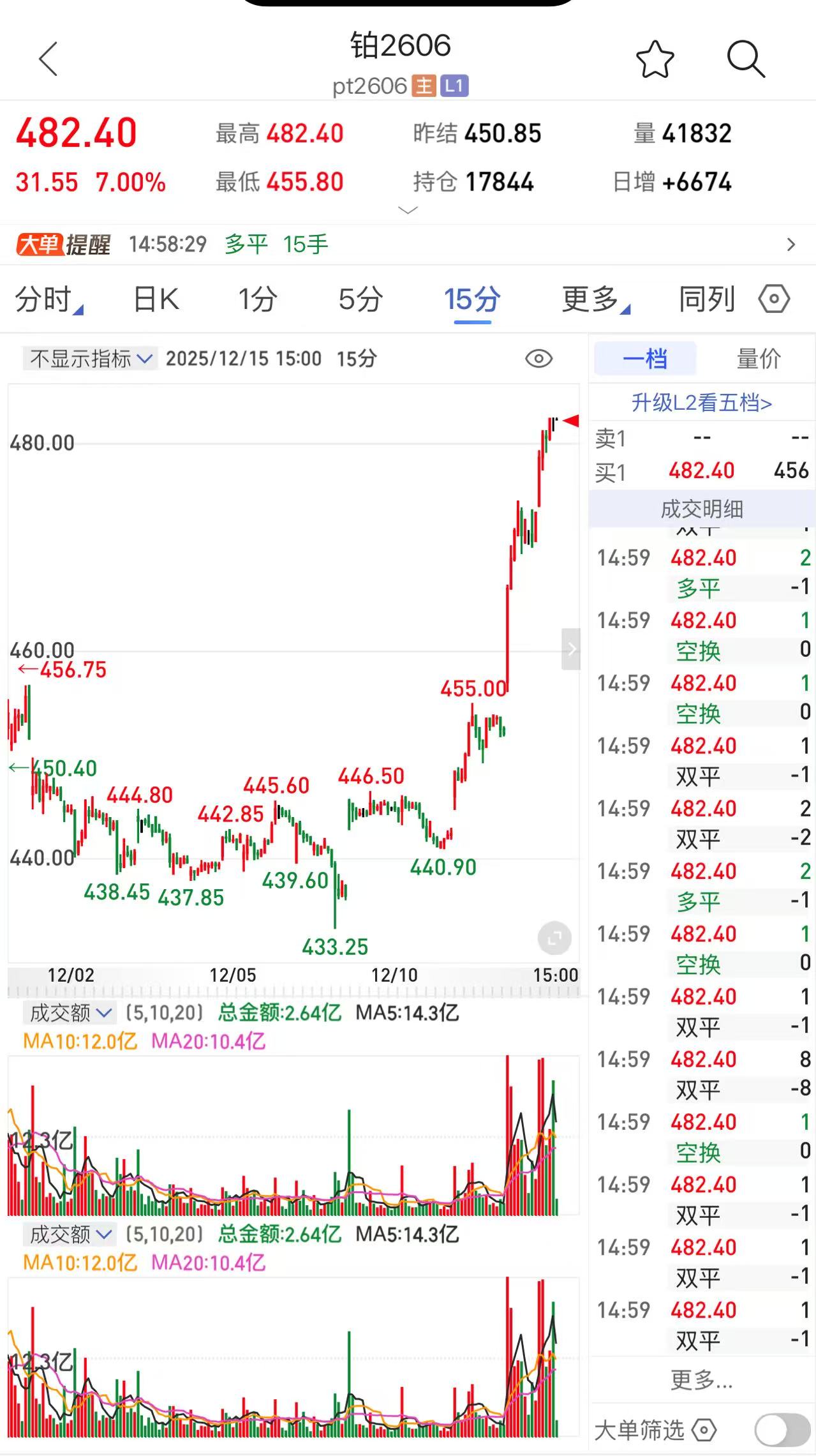
On December 15, the platinum futures contract on the Guangzhou Futures Exchange surged by 7%, hitting a daily limit up for the first time since its listing, closing at 482.4 yuan/gram. Palladium futures also rose sharply by 4.73%. This rally reflects a broader global trend, with international platinum prices up 93% year-to-date, driven by structural supply constraints and growing demand. Supply-side issues are critical. Over 70% of global platinum production comes from South Africa, where aging infrastructure, power instability, and high operational costs hinder output. Similarly, palladium supply remains tight, with Russia—supplying over 40%—facing geopolitical risks. Global platinum supply has declined significantly from 258.4 tons in 2021 to an estimated 227.4 tons in 2024. Demand is robust and diversifying. Automotive applications (37.4% of platinum demand) remain stable, while industrial use (30%) spans chemicals, glass, and electronics. The hydrogen economy presents a major growth opportunity, as platinum is essential for fuel cells and electrolyzers. Investment demand is rising due to macroeconomic uncertainty and potential monetary easing. Analysts are bullish long-term, with some predicting platinum could reach $2,170–$2,300/oz by 2026. However, risks include high volatility, potential demand substitution from elevated prices, and sensitivity to global industrial activity. The rally underscores a broader commodities momentum, with some drawing parallels to Bitcoin...

On December 15th, the domestic futures market witnessed a remarkable rally. The main platinum futures contract listed on the Guangzhou Futures Exchange surged robustly during the trading session, firmly hitting the limit-up in the afternoon with an intraday gain of 7%, closing at 482.4 yuan per gram.

Notably, this marks the first limit-up since the listing of this contract, with trading volume also surging to 41,800 lots on the same day, indicating strong participation and enthusiasm from market funds.

In a similar vein, the main palladium futures contract, also a platinum group metal, showed strong performance, with intraday gains once exceeding 5%, closing up 4.73% at 407.6 yuan per gram. This synchronized surge signals that platinum and palladium, these relatively "low-profile" precious metals, are officially capturing the attention of more investors. Shifting the focus to the global market, platinum's strong momentum had already been evident.

Since the beginning of this year, international platinum prices have soared, with a cumulative increase reaching a staggering 93%, completely breaking the multi-year downtrend and becoming one of the most dazzling performers among commodities this year. This interconnected rise, both domestically and internationally, is not an isolated event; it is driven by profound and lasting changes in fundamental supply and demand dynamics.


II. Analysis of the Rally Drivers: Structural Shortage and New Demand Narratives

Market analysis generally agrees that the core driver of this platinum and palladium rally stems from long-accumulated supply-demand contradictions, rather than short-term speculative sentiment. Muhammad Umair, a financial analyst at FXEmpire, pointed out that the main forces pushing platinum prices higher come from the dual squeeze of growing industrial demand and an increasingly tight supply structure.

From the supply side, a long-term contraction trend is significant.

Global platinum supply has been in a tight state for several consecutive years. According to data from the World Platinum Investment Council (WPIC), global total platinum supply in 2024 is forecast at 227.4 tons, showing a noticeable decline from 258.4 tons in 2021 and remaining at the lower end of the historical supply range.

Platinum supply primarily consists of mine production (over 75%) and recycling.

Currently, the South African mines, which account for over 70% of global production, continue to be plagued by multiple challenges including unstable power supply, aging mine infrastructure, and rising operational costs, severely constraining output from the mining side. Simultaneously, a long-term lack of capital expenditure has created bottlenecks for mine capacity expansion.

Analysis from Xinhu Futures indicates that the platinum market has been in a physical deficit for many consecutive years, and this structural supply gap is the fundamental reason supporting the steady upward shift in its price center. The supply situation for palladium is equally concerning. Although global total palladium supply in 2024 is expected to increase slightly by 3.6% year-on-year to 292.84 tons, inventory levels have fallen to multi-year lows, leaving the market with extremely weak buffering capacity.

More importantly, Russia supplies over 40% of the world's mined palladium, and any potential risks in geopolitics or trade could impact the already fragile supply chain, exacerbating market volatility.


From the demand side, traditional support remains solid, and new bright spots are emerging.

​While supply remains constrained, the demand side demonstrates strong resilience and new growth potential.

WPIC data shows that global total platinum demand in 2024 is forecast at 258.25 tons, far exceeding the同期 supply, clearly indicating a supply-demand deficit.

The automotive sector remains the largest source of platinum demand currently, accounting for about 37.4% in 2024, primarily used in manufacturing catalytic converters for vehicle exhaust. Although the global auto industry is transitioning towards electrification, demand for platinum from traditional internal combustion engine vehicles, particularly some diesel vehicles facing stricter emission standards, remains stable. Furthermore, due to price factors, the ongoing substitution of platinum for palladium in some catalytic applications provides additional support for platinum demand. Industrial demand is another stable pillar, accounting for about 30%, widely used in high-end manufacturing sectors such as chemicals, glass, electronics, and medical applications.

However, what most excites the market is the vast potential brought by the hydrogen energy industry. Platinum is an indispensable catalyst material in Proton Exchange Membrane Fuel Cells (PEMFC) and is also a crucial electrode material in electrolyzers for water splitting (a key technology for green hydrogen production). As countries worldwide actively advance the energy transition, the rapid development of the hydrogen energy industry chain is expected to open a long-term and potentially huge new growth avenue for platinum demand. Cong Shanshan, an analyst at Huishang Futures, pointed out that hydrogen energy is becoming a new core growth driver for platinum demand.

Additionally, the recovery in investment demand should not be overlooked. Against a backdrop of increased global macroeconomic uncertainty and expectations for a potential shift in monetary policy by major central banks, platinum, which possesses both precious metal financial attributes and strong industrial properties, has attracted inflows from funds seeking diversification and safe-haven assets. The sustained increase in holdings of palladium ETFs this year also reflects warming investment sentiment.


III. Market Outlook: Value Reassessment Coexists with Potential Risks

Regarding the future market, while specific price point predictions vary among analysis institutions, the view of a bullish medium-to-long-term trend predominates.
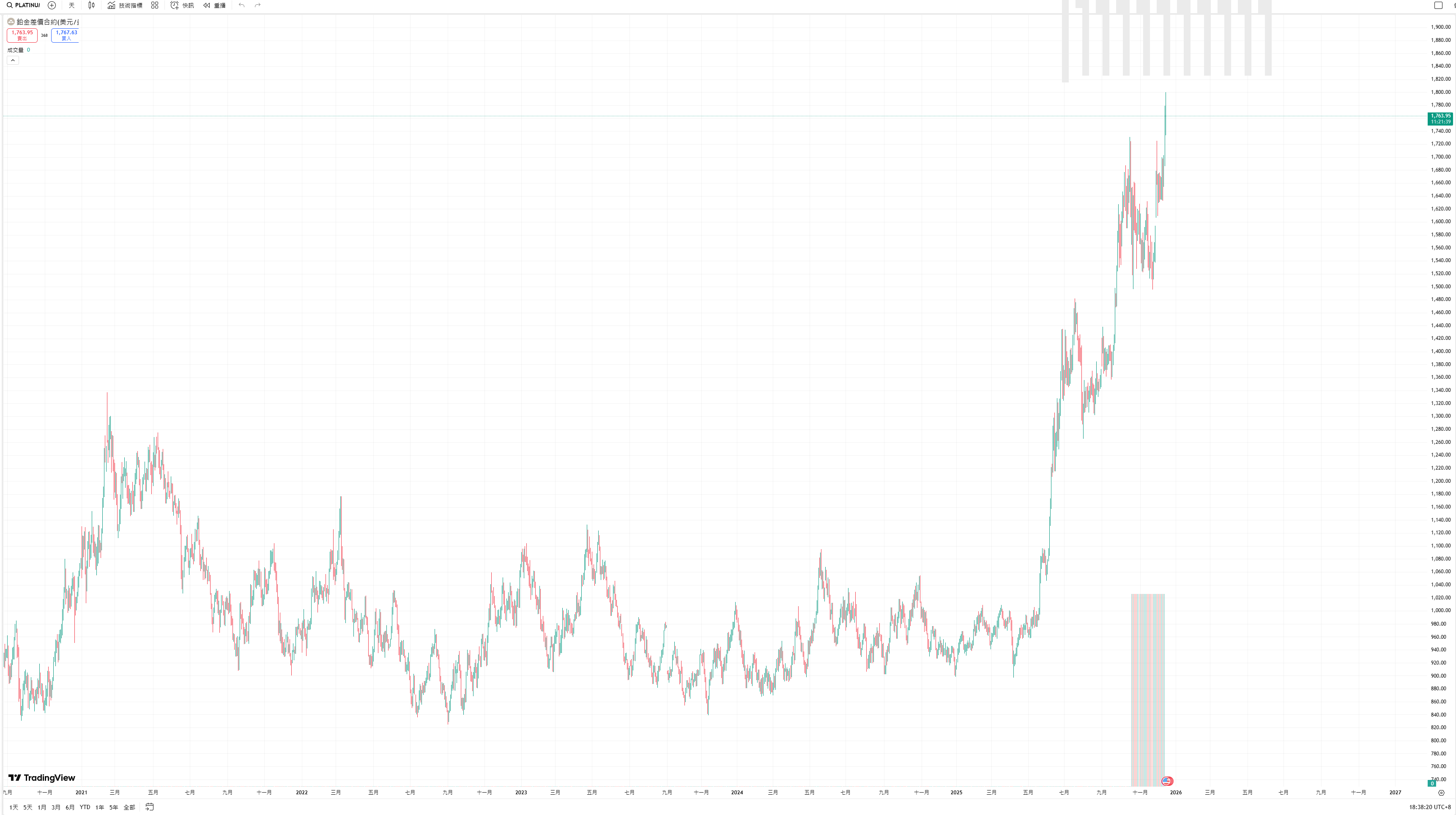
Muhammad Umair holds a relatively aggressive view, believing the current rally is not over. He forecasts that platinum prices could climb to the range of $2170-$2300 per ounce by 2026. This expectation is significantly higher than the median forecast of $1550-$1670 per ounce for next year by most Wall Street institutions.

Cong Shanshan, an analyst at Huishang Futures, stated that the prospect of a shift in the Federal Reserve's monetary policy expectations (such as interest rate cuts) and the resulting looser liquidity outlook are macro-level positives for precious metal prices including platinum and palladium.

Concurrently, the strength in gold and silver prices also supports platinum and palladium through precious metal sector correlation.

She emphasized that, from a medium-to-long-term perspective, against a backdrop of loose liquidity, if investors continue to view platinum as an alternative investment to gold, its price will receive solid support. Xinhu Futures also believes that the "structural gap in the platinum and palladium markets will persist, driving prices steadily higher". However, market participants also need to be wary of potential risks. Firstly, the overall platinum and palladium markets are much smaller than gold, inherently leading to higher price volatility; rapid short-term gains could accumulate correction pressure. Secondly, high prices may prompt some industrial users to seek alternative materials or process improvements, thereby dampening long-term demand. Finally, the global macroeconomic situation, particularly the industrial activity sentiment in major economies, will continue to directly impact the industrial demand for platinum and palladium.


IV. Conclusion: Precious Metal Opportunities in the New Cycle

In summary, the recent price explosion in platinum and palladium is the result of the combined effect of a long-term reversal in fundamental supply and demand, empowerment from new application scenarios, and changes in the macro-financial environment. South Africa's supply woes, geopolitical risks associated with Russia, and the grand narrative of the hydrogen economy together form a solid foundation for this value reassessment.

The listing of domestic platinum and palladium futures provides investors with more convenient participation tools, expected to further enhance market attention and liquidity for these two metals. In a broader asset allocation perspective, it's not just niche precious metals like platinum and palladium that are shining; the entire commodities market is showing signs of活跃 (activity).

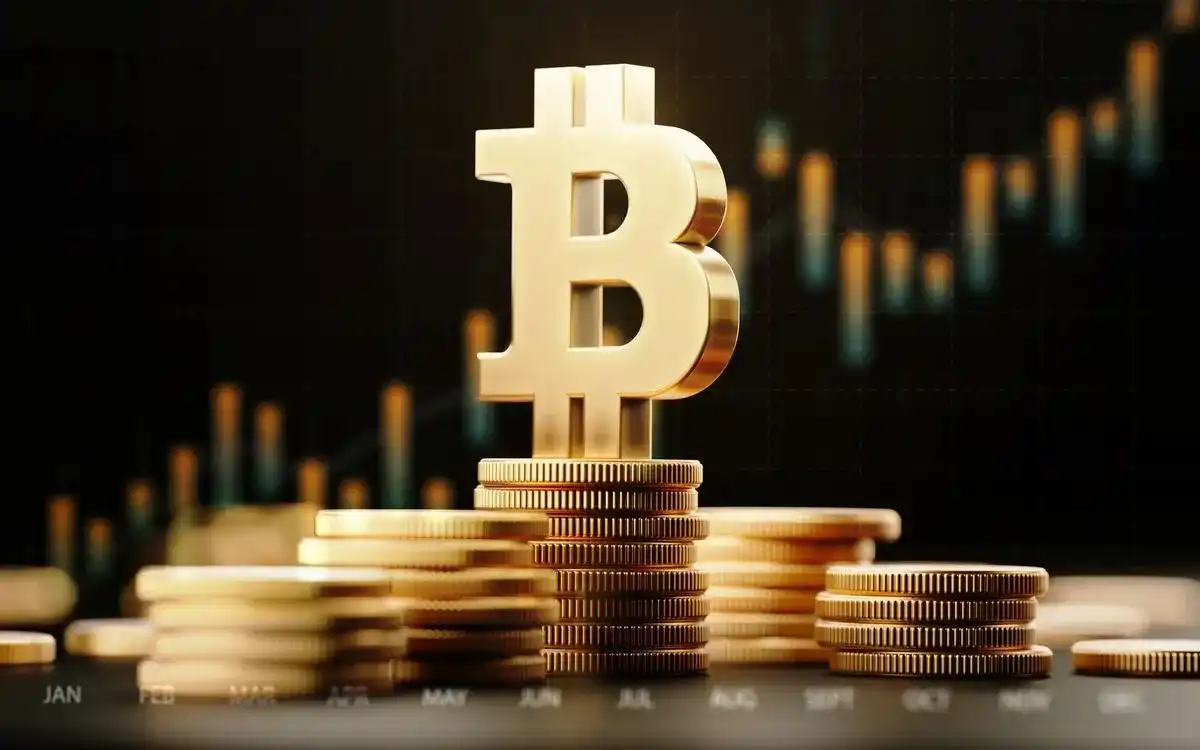
From energy to metals, prices of various basic assets are rotating, seemingly heralding a new cycle of volatility and opportunity. As traditionally defined commodities纷纷启动 (start rallying across the board), Bitcoin, representing the innovation of value storage in the digital age, is also being increasingly discussed and its属性 (attribute) as "digital gold" is gaining more attention. If commodities are all rallying, can Bitcoin, as digital gold, be far behind?


Trending Cryptos

Related Questions

QWhat was the significant event that occurred in the domestic futures market on December 15th, as described in the article?

AThe platinum futures main contract listed on the Guangzhou Futures Exchange surged and hit the limit-up (涨停) for the first time since its listing, with a daily gain of 7%, closing at 482.4 yuan per gram.

QAccording to the article, what are the two main drivers behind the recent surge in platinum and palladium prices?

AThe core drivers are a long-term accumulation of supply-demand contradictions, specifically strong industrial demand growth and a tightening supply格局 (structure).

QWhich country is highlighted as a major source of palladium supply, and what potential risk does this pose?

ARussia is highlighted as supplying over 40% of the world's mined palladium. The potential risk is that any geopolitical or trade-related risks could impact the already vulnerable supply chain and increase market volatility.

QWhat emerging industry is identified as a significant new source of demand for platinum, and what specific applications does it have in this industry?

AThe hydrogen energy industry is identified as a significant new source of demand. Platinum is an indispensable catalyst material in Proton Exchange Membrane (PEM) fuel cells and an important electrode material in electrolyzers for green hydrogen production.

QWhat is the more aggressive price target for platinum by 2026, as mentioned by one analyst in the article?

AAnalyst Muhammad Umair projected a more aggressive price target of $2,170 to $2,300 per ounce for platinum by 2026.

Related Reads

A New Scaling Variable for Text-to-Image Generation, Discovered by ByteDance's Seed Team

ByteDance's SEED team investigated a crucial but often overlooked scaling variable in text-to-image diffusion models: the amount of image-grounded information in training captions. They found that simply increasing caption length with natural language does not improve model performance, as it often adds redundancy without new, usable visual supervision. The core discovery is that the final training loss of a diffusion model can be predicted by the *information content* of its text condition, measured by two complementary metrics: Grounded Perplexity Gain (GPG) and Effective Detailness (ED). This establishes a scaling relationship for text conditioning. To systematically increase information content, the team proposed **Structured Prompt (SP)**, a JSON-based representation that organizes visual variables (global scene, object attributes, spatial relationships) into clear fields, enhancing **Diffusability**—the model's ability to learn from captions. For inference, an LLM **Prompter** is trained to convert user queries into detailed SP instances, defining **Promptability**. The overall generation quality is viewed as a product of Diffusability and Promptability. A three-stage training strategy (SFT, cold-start reasoning distillation, and verifier-guided reinforcement) significantly improves the prompter's capability. The structured format also enables efficient iterative refinement through a *refine-render-judge* loop. In matched-control experiments using the same Qwen-Image backbone, data, and compute, the SP-based system substantially outperformed its natural-language counterpart, demonstrating that gains stem from the structured information interface, not just more training. The work shows that scaling text-to-image models requires scaling the *usable visual information* in conditions, not just model size or data volume.

marsbit11m ago

A New Scaling Variable for Text-to-Image Generation, Discovered by ByteDance's Seed Team

marsbit11m ago

In Just 6 Months, 4 Rounds of Funding: West Lake University Professor's Venture Takes Off

Westlake Robotics, an embodied artificial intelligence company, has completed its Series A financing round within just six months and a total of four rounds, raising a cumulative 5 billion RMB. The investor lineup includes prominent institutions such as SAIF Partners, Xiaomiao Langcheng, Henan Investment Group Huirong Fund, and Haiyuan Fund, forming a high-quality capital matrix comprising state-owned, industrial, and leading venture capital. The rapid and intensive capital injection reflects strong market confidence in the company's technological approach, product deployment capabilities, and long-term potential. The newly acquired funds will be primarily allocated to the research and development of a unified large model for humanoid robots and the establishment of a talent cultivation base for embodied AI. Founded in 2024, Westlake Robotics originated from the industrial transformation of pioneering achievements in AI and robotics at Westlake University. The founding team is led by Wang Donglin, a leading figure in China's embodied AI and robot learning field, and co-founder Zhang Yue, an expert in natural language processing. The core R&D members hail from top-tier tech companies like Alibaba, ByteDance, Tencent, and Huawei, as well as prestigious global universities. The company follows a fully self-developed strategy integrating a "universal brain + humanoid body-specific cerebellum + proprietary humanoid hardware." It is one of the few domestic enterprises capable of holistically connecting the three core areas of embodied AGI cognitive reasoning, full-body motion control, and humanoid hardware. Its proprietary technologies include the General Motion Model-GAE system for low-latency teleoperation and motion generalization, and a dual pre-trained architecture for general and body-specific processing to bridge cognitive reasoning and physical movement. In 2026, Westlake Robotics launched its self-developed humanoid robot "Westlake o1," completing the full technology chain from underlying algorithms to pre-trained models and hardware. The company has secured nearly 100 million RMB in orders, with applications in scientific research, education, data collection, and power inspection. Future targets include high-risk industrial inspection, post-disaster search and rescue, and remote precision assembly. The company has also partnered with the Longyou County government to establish a county-wide real-scenario training base for humanoid robots, aimed at collecting high-quality motion data and validating technology in authentic environments. With the latest funding, Westlake Robotics plans to further advance its core model development and talent acquisition strategy, accelerating progress toward the "GPT moment" for embodied intelligence in China.

marsbit35m ago

In Just 6 Months, 4 Rounds of Funding: West Lake University Professor's Venture Takes Off

marsbit35m ago

Volatility Plummets to Historic Lows, When Will Bitcoin's 'Summer Sideways Move' End?

Bitcoin is experiencing a classic summer of stagnant price action, trapped in a tight range between approximately $62,000 and $66,000. Analysts point to historically low implied volatility and thin summer liquidity as key characteristics of the current market. The consensus among traders is that the catalyst for a decisive breakout will come from macroeconomic factors, not internal crypto dynamics. The immediate focus is on upcoming U.S. CPI data, which could influence Federal Reserve policy expectations. A softer inflation print is seen as potentially supportive for risk assets like Bitcoin. Furthermore, the pending *Clarity Act* legislation is identified as a crucial long-term catalyst that could boost institutional participation by providing regulatory clarity. While U.S. spot Bitcoin ETFs, led by BlackRock's IBIT, have seen their strongest inflows since April, providing underlying support, this buying pressure is being offset by selling from miners and other large holders. This has resulted in continued consolidation even as global crypto trading volumes hit multi-year lows. Market participants expect the range-bound, low-volatility environment to persist for several more weeks, at least until there is clearer progress on macro policy or regulatory fronts. Any sustained break above or below the current range is likely to trigger a significant expansion in volatility. Long-term bullish narratives around adoption, institutional demand, and Bitcoin's unique attributes as collateral remain intact, but the short-term path depends on external macroeconomic catalysts.

marsbit39m ago

Volatility Plummets to Historic Lows, When Will Bitcoin's 'Summer Sideways Move' End?

marsbit39m ago

Trading

Spot

Hot Articles

How to Buy SOXL

Welcome to HTX.com! We've made purchasing Semicon Bull 3X ETF (SOXL) simple and convenient. Follow our step-by-step guide to embark on your crypto journey.Step 1: Create Your HTX AccountUse your email or phone number to sign up for a free account on HTX. Experience a hassle-free registration journey and unlock all features.Get My AccountStep 2: Go to Buy Crypto and Choose Your Payment MethodCredit/Debit Card: Use your Visa or Mastercard to buy Semicon Bull 3X ETF (SOXL) instantly.Balance: Use funds from your HTX account balance to trade seamlessly.Third Parties: We've added popular payment methods such as Google Pay and Apple Pay to enhance convenience.P2P: Trade directly with other users on HTX.Over-the-Counter (OTC): We offer tailor-made services and competitive exchange rates for traders.Step 3: Store Your Semicon Bull 3X ETF (SOXL)After purchasing your Semicon Bull 3X ETF (SOXL), store it in your HTX account. Alternatively, you can send it elsewhere via blockchain transfer or use it to trade other cryptocurrencies.Step 4: Trade Semicon Bull 3X ETF (SOXL)Easily trade Semicon Bull 3X ETF (SOXL) on HTX's spot market. Simply access your account, select your trading pair, execute your trades, and monitor in real-time. We offer a user-friendly experience for both beginners and seasoned traders.

346 Total ViewsPublished 2026.08.08Updated 2026.08.08

How to Buy SOXL

How to Buy DRAM

Welcome to HTX.com! We've made purchasing Roundhill Memory ETF (DRAM) simple and convenient. Follow our step-by-step guide to embark on your crypto journey.Step 1: Create Your HTX AccountUse your email or phone number to sign up for a free account on HTX. Experience a hassle-free registration journey and unlock all features.Get My AccountStep 2: Go to Buy Crypto and Choose Your Payment MethodCredit/Debit Card: Use your Visa or Mastercard to buy Roundhill Memory ETF (DRAM) instantly.Balance: Use funds from your HTX account balance to trade seamlessly.Third Parties: We've added popular payment methods such as Google Pay and Apple Pay to enhance convenience.P2P: Trade directly with other users on HTX.Over-the-Counter (OTC): We offer tailor-made services and competitive exchange rates for traders.Step 3: Store Your Roundhill Memory ETF (DRAM)After purchasing your Roundhill Memory ETF (DRAM), store it in your HTX account. Alternatively, you can send it elsewhere via blockchain transfer or use it to trade other cryptocurrencies.Step 4: Trade Roundhill Memory ETF (DRAM)Easily trade Roundhill Memory ETF (DRAM) on HTX's spot market. Simply access your account, select your trading pair, execute your trades, and monitor in real-time. We offer a user-friendly experience for both beginners and seasoned traders.

293 Total ViewsPublished 2026.08.08Updated 2026.08.08

How to Buy DRAM

How to Buy SHOP

Welcome to HTX.com! We've made purchasing Shopify (SHOP) simple and convenient. Follow our step-by-step guide to embark on your crypto journey.Step 1: Create Your HTX AccountUse your email or phone number to sign up for a free account on HTX. Experience a hassle-free registration journey and unlock all features.Get My AccountStep 2: Go to Buy Crypto and Choose Your Payment MethodCredit/Debit Card: Use your Visa or Mastercard to buy Shopify (SHOP) instantly.Balance: Use funds from your HTX account balance to trade seamlessly.Third Parties: We've added popular payment methods such as Google Pay and Apple Pay to enhance convenience.P2P: Trade directly with other users on HTX.Over-the-Counter (OTC): We offer tailor-made services and competitive exchange rates for traders.Step 3: Store Your Shopify (SHOP)After purchasing your Shopify (SHOP), store it in your HTX account. Alternatively, you can send it elsewhere via blockchain transfer or use it to trade other cryptocurrencies.Step 4: Trade Shopify (SHOP)Easily trade Shopify (SHOP) on HTX's spot market. Simply access your account, select your trading pair, execute your trades, and monitor in real-time. We offer a user-friendly experience for both beginners and seasoned traders.

180 Total ViewsPublished 2026.08.10Updated 2026.08.10

How to Buy SHOP

Discussions

Welcome to the HTX Community. Here, you can stay informed about the latest platform developments and gain access to professional market insights. Users' opinions on the price of A (A) are presented below.

活动图片