Former OpenAI safety vice president, co-founder of Thinking Machines Lab, Weng Li, has published a new blog post.
This time, she discusses AI self-evolution, proposing a practical path:
It doesn't necessarily have to start with the model directly rewriting its own weights; it can start with Harness first.
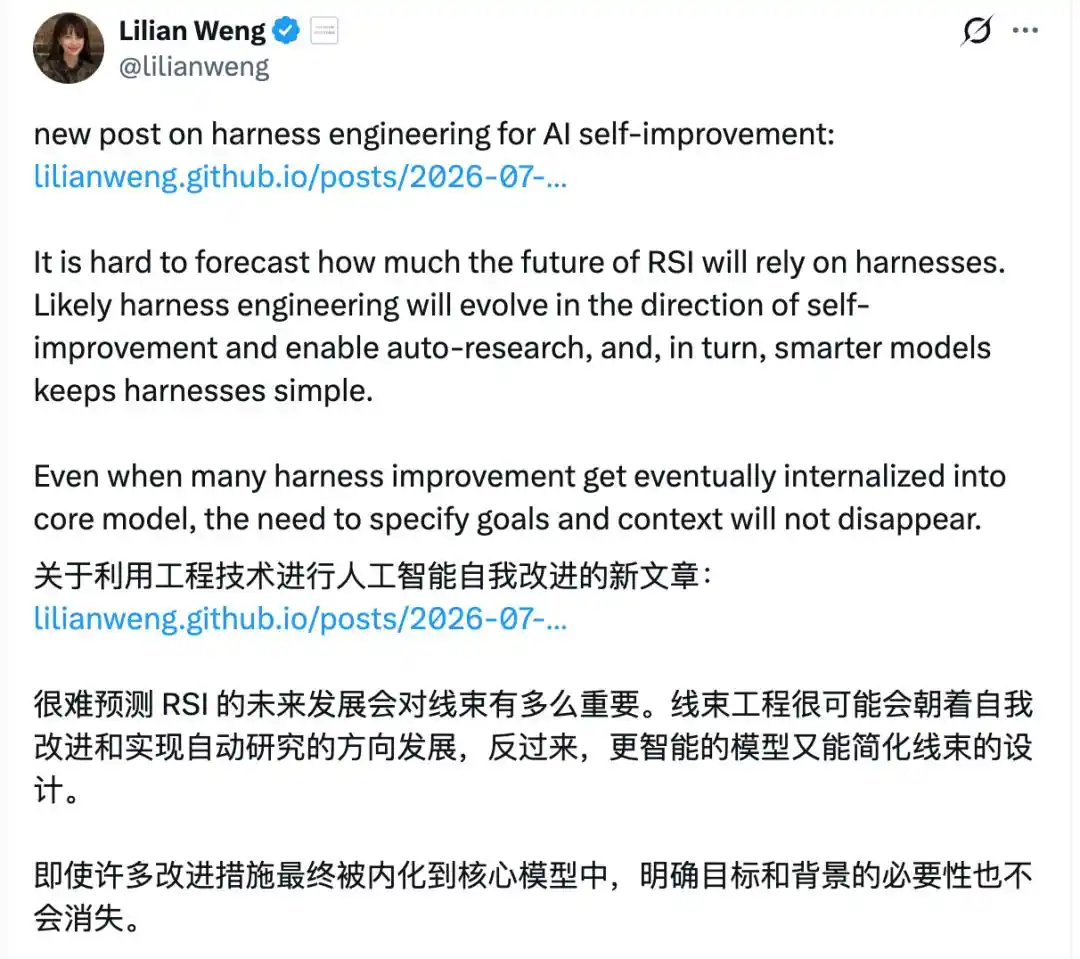
This blog post is titled "Harness Engineering for Self-Improvement."

Here, Harness can be simply understood as the model's external runtime system, which determines how the model invokes tools, manages context, reads and writes files, splits tasks, calls sub-agents, validates results, and reviews failures.
DeepSeek researcher Cui Tianyi also reposted it immediately, highlighting key points:
Self-evolution in the Harness direction is just as promising for results as self-evolution in the model direction.
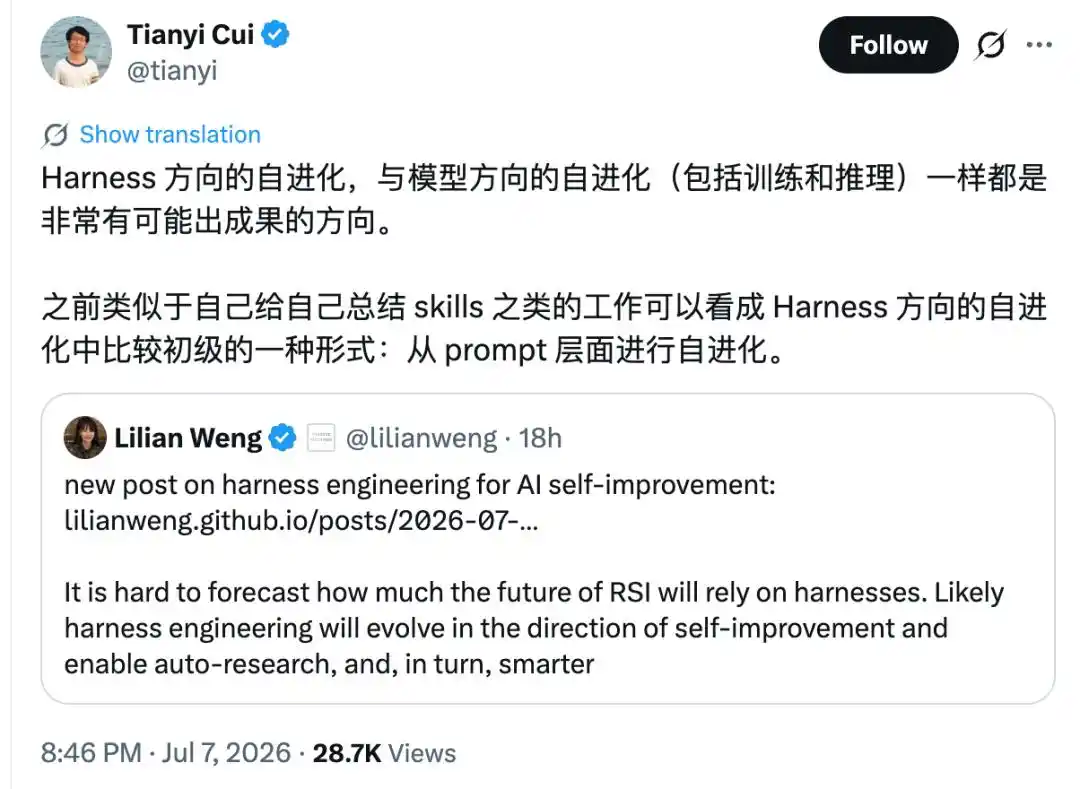
He also proposed that Skill is a relatively elementary form within Harness self-evolution: self-evolution at the prompt level.
The original blog post is packed with enormous information; dear readers, please be mentally prepared~

Self-Evolution Might Happen First in the Harness Layer
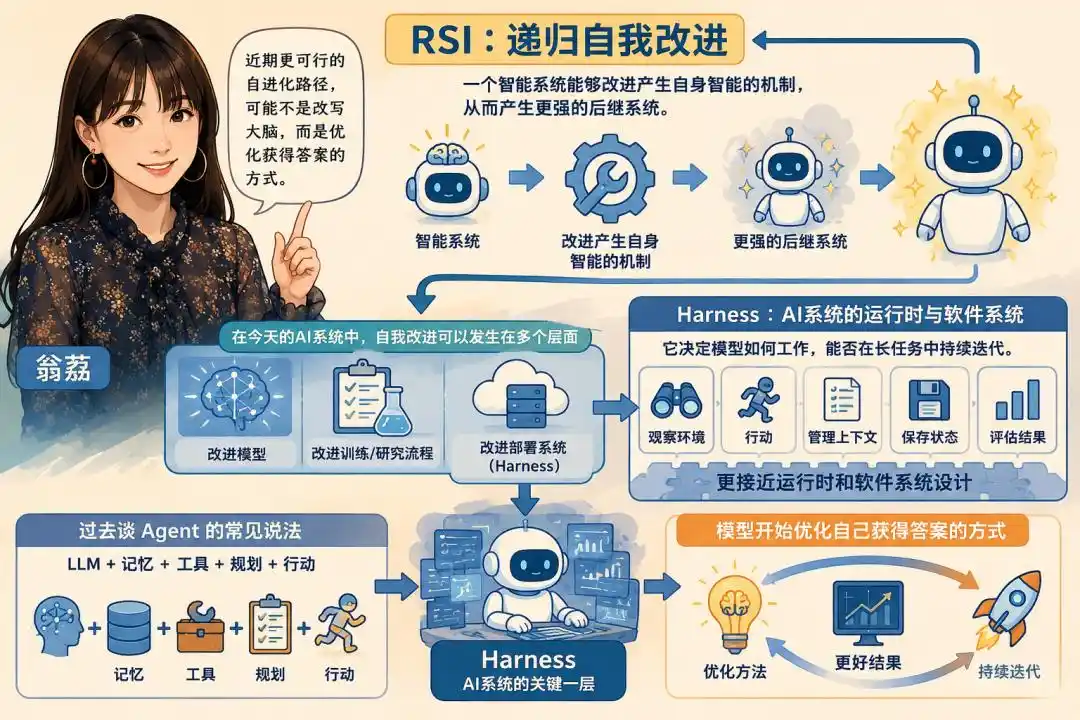
The core concept discussed in Weng Li's blog is RSI (Recursive Self-Improvement).
This concept originally carried strong AGI connotations, referring to an intelligent system improving the mechanisms that generate its own intelligence, thereby producing more capable successor systems.
But in this blog post, Weng Li breaks down this issue in a more engineering-focused way.
In today's AI systems, self-improvement doesn't necessarily only mean the model directly rewriting its own weights.
It could also mean the model improving the training pipeline, research pipeline, and deployment system, thereby helping the next-generation system perform better on real-world tasks.
△
And Harness is the most critical layer within the deployment system.
When talking about Agents in the past, the common description was "LLM + Memory + Tools + Planning + Action."
But in Weng Li's view, Harness is no longer just a few modules from early Agent frameworks; it's closer to runtime and software system design.
It determines how the model observes the environment, how it acts, how it manages context, how it saves state, how it evaluates results, and also determines whether the model can iterate continuously within a long task.
Therefore, her judgment is: a more feasible near-term path for self-evolution might not be the model directly rewriting its own brain, but rather the model beginning to optimize the way it obtains answers.
From Context Engineering to Self-Harness, Optimization Progresses Layer by Layer
Weng Li reviews a recent batch of related research, revealing a clear trend:
The target of optimization is gradually moving from context, workflow, deeper into Harness itself.
The progression chain is: prompt → structured context → workflow → harness code → optimizer code.
As models become more powerful, the objects that can be optimized also become more abstract and more general.
The first layer is Context Engineering.
The most basic problem is: when an Agent works on long tasks, context piles up more and more, quickly becoming unmanageable.
Weng Li mentions two representative works here: ACE and MCE.
ACE (Agentic Context Engineering) treats context as a continuously updated "operating manual" rather than an ever-growing prompt.
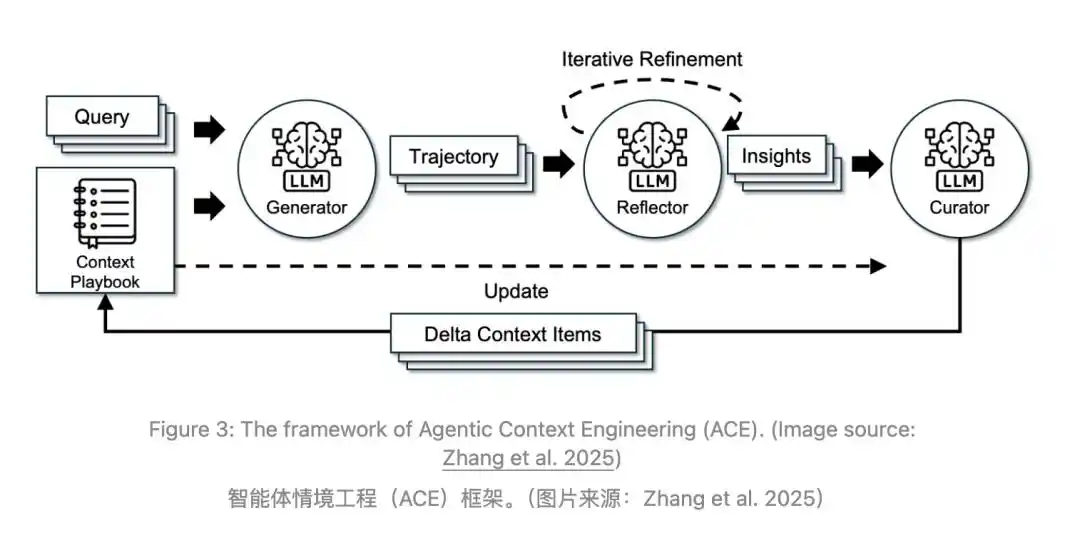
It relies on three roles: the Generator is responsible for generating task trajectories, the Reflector extracts key points from successful and failed trajectories, and the Curator organizes these points into structured entries, incrementally updating the manual.
MCE (Meta Context Engineering) goes a step further.
It separates "how to manage context" and "what specific content to put in context" into two optimization layers: the outer layer evolves skills for managing context, and the inner layer then uses this skill to optimize the context for specific tasks.
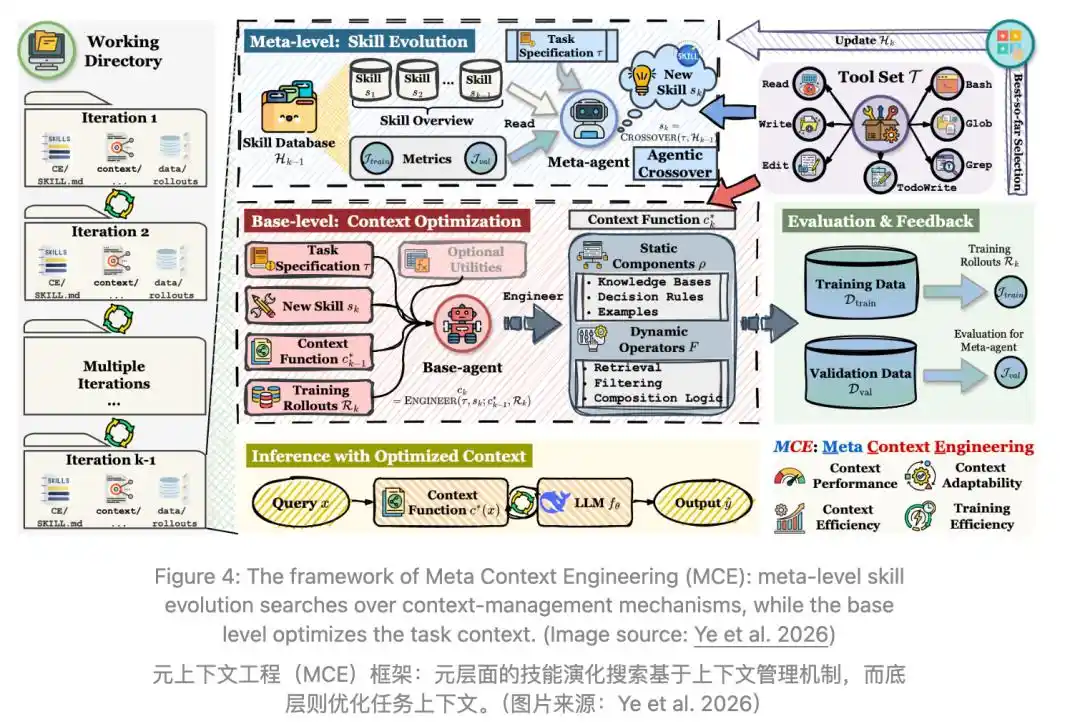
Weng Li believes that compared to ACE, which still requires manually designed update rules, MCE takes another step towards "self-managed memory."
The second layer is Workflow Design, which solves the problem of "how should the model work?"
Weng Li gives several examples:
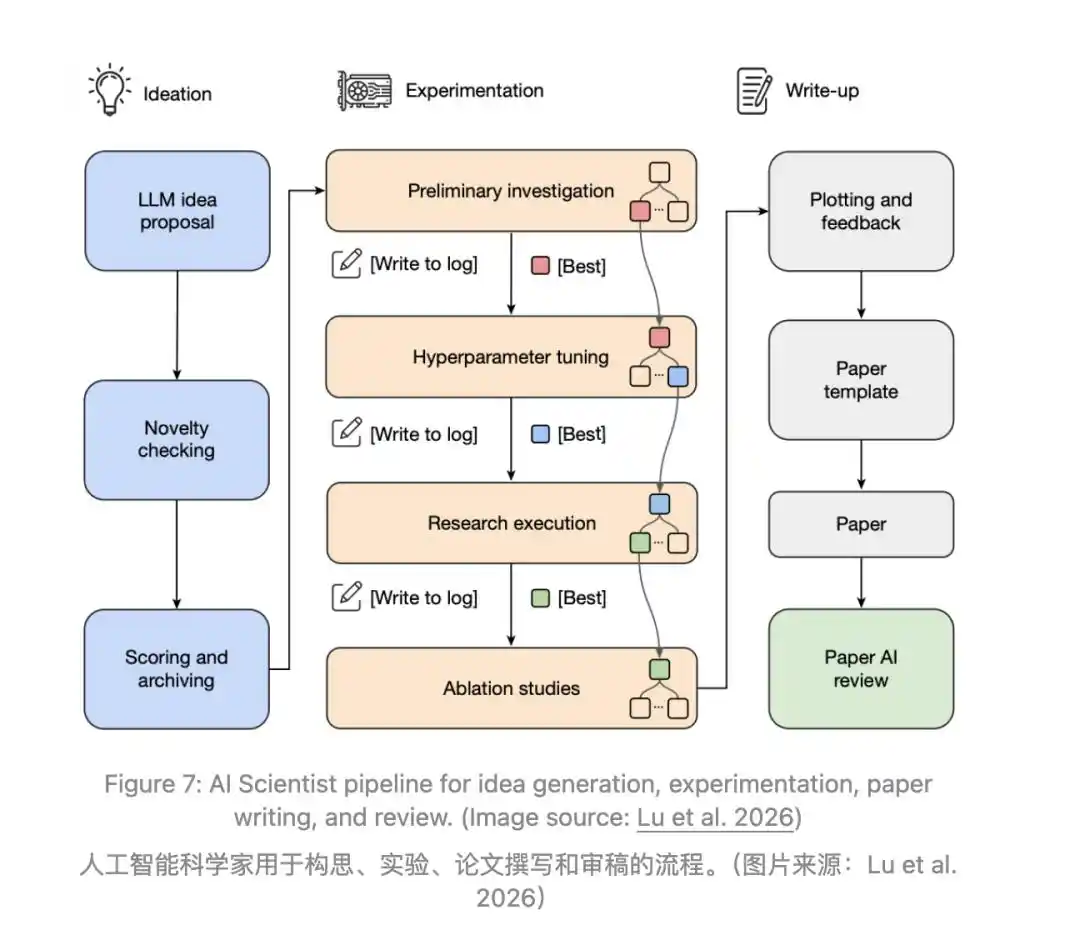
AI Scientist built a complete scientific research pipeline from proposing ideas, writing code, running experiments, analyzing results, to writing papers, and peer review.
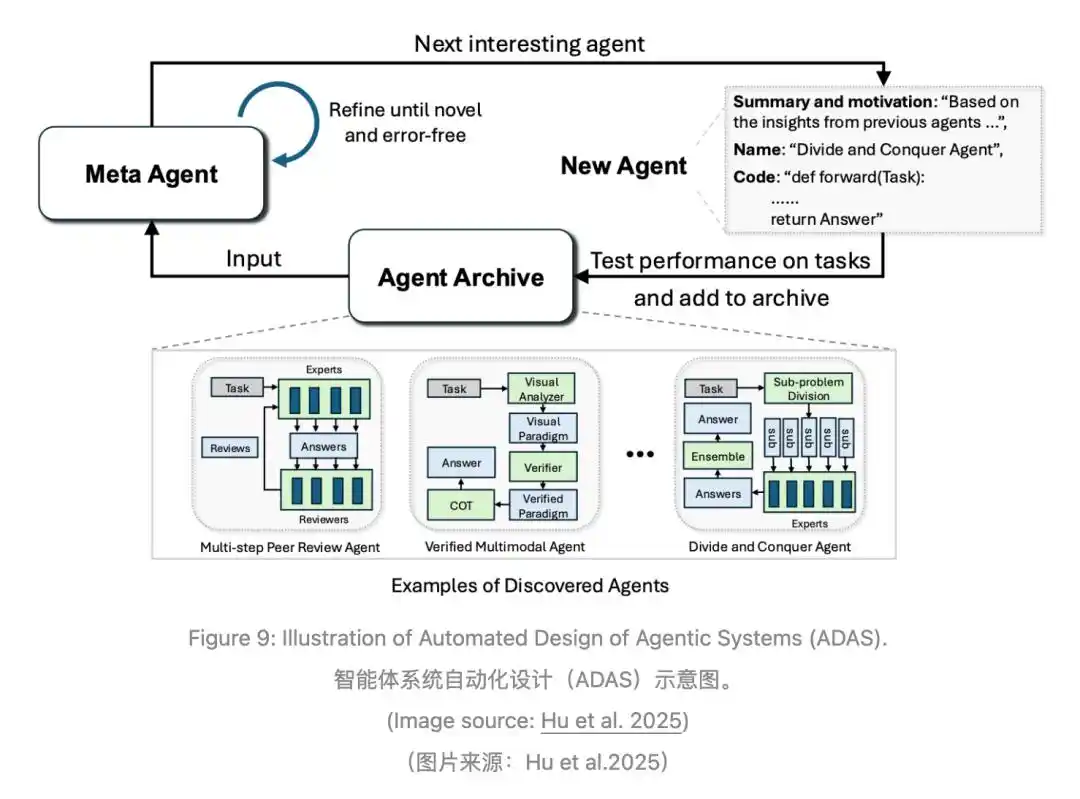
ADAS goes further, treating "designing Agent workflows" itself as a searchable optimization problem, allowing a meta-agent to continuously propose new workflow designs and undergo evaluation.
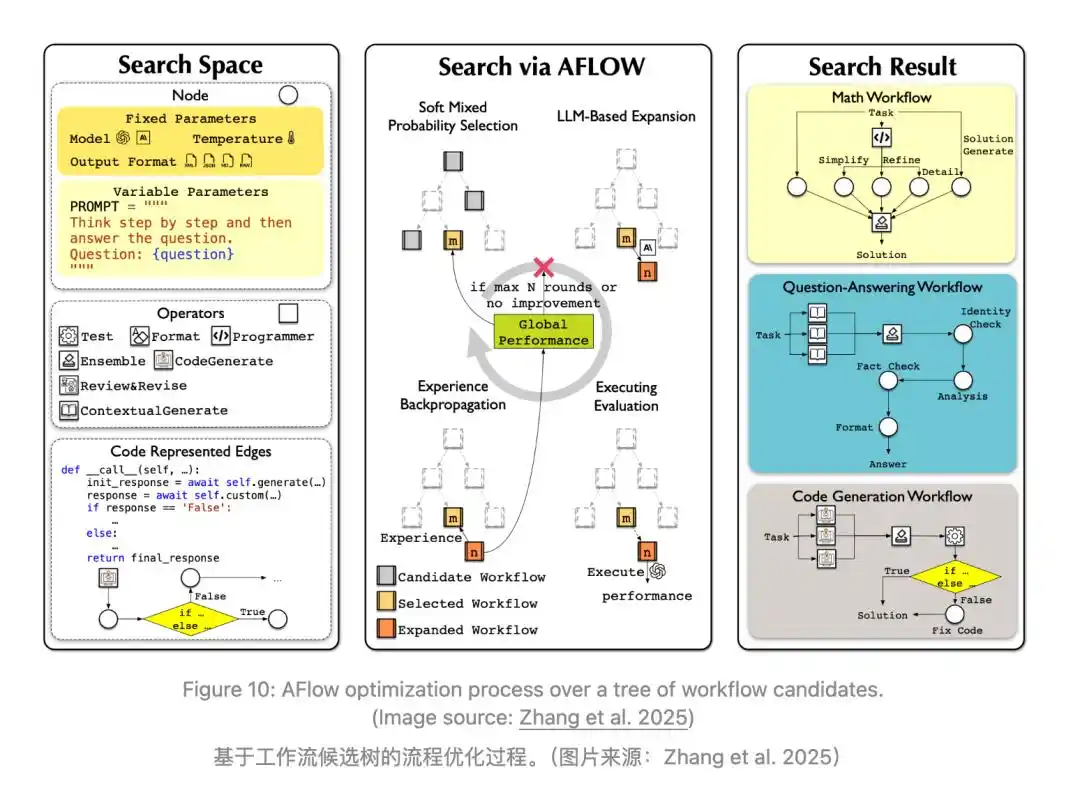
AFlow represents workflows as a graph and uses Monte Carlo Tree Search to find better graph structures.
The progression along this line is: initially, humans engineer task processes; later, models participate in designing processes; and eventually, the process structure itself becomes part of the search space.
In other words, the optimization target is no longer just a single prompt, but the entire organization of the Agent's actions.
The third layer is Self-Improving Harness.
At this layer, the model is not just using the Harness to complete tasks; it starts analyzing where the Harness is lacking and proposes modifications to it.
Weng Li specifically highlights works like Self-Harness; its cycle is very clear.
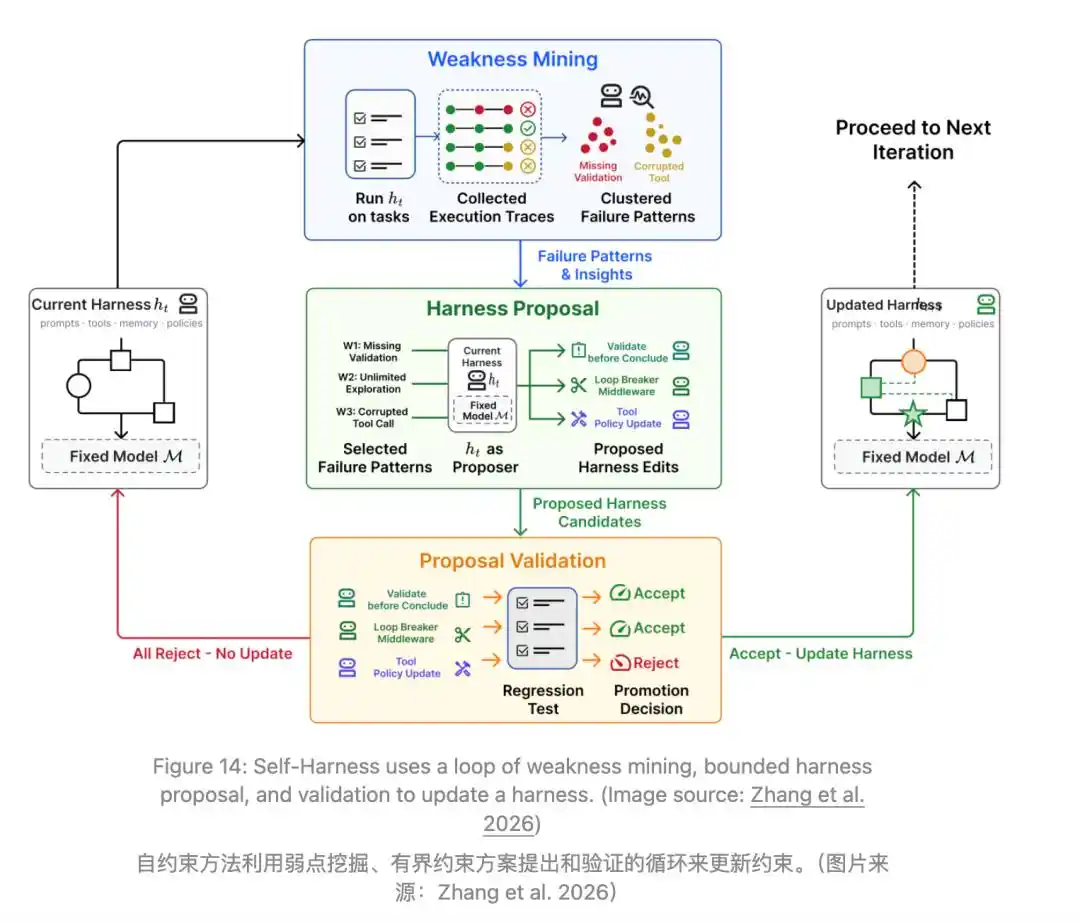
The first step is Weakness Mining.
The system first collects trajectories left by the Agent while executing tasks, including tool calls, error logs, failed results, validator feedback, etc. Then, it mines recurring failure patterns from them.
For example, the model always misses files in certain types of tasks, always repeats ineffective fixes after a certain kind of test failure, or always loses key constraints when context becomes too long.
The second step is Harness Proposal.
Based on these failure patterns, the model proposes small-scope modifications to the Harness.
The key is "small-scope" and "verifiable."
The information accessible to the model includes: which parts of the current Harness can be modified, specific failure patterns, which "correct behaviors" must be preserved, and records of previously attempted modifications.
Proposals should focus as much as possible on reproducible problems solvable by small changes, and different proposals should maintain differentiation.
The third step is Proposal Validation.
Candidate modifications cannot be directly integrated; they must undergo testing and verification. Only after confirming they genuinely improve performance and do not introduce significant regressions do they become part of the next version of the Harness.
Weng Li mentions that when running this process on different models like MiniMax M2.5, Qwen3.5, and GLM-5 for Terminal-Bench-2, it indeed learned distinct Harness configurations tailored to the weaknesses of each model.
However, she also directly points out the risks: once a program is allowed to modify its own system-layer code, the abstraction boundary risks being broken. Access control and security layers must remain outside this loop, and the old problem of reward hacking still exists.
Furthermore, Weng Li goes on to mention Evolutionary Search.
If Self-Harness is more like patching its own working system based on failures, evolutionary search turns the Harness directly into a searchable object.
Its logic is more akin to natural selection:
First, generate multiple candidate Harnesses, allowing the model to make modifications based on existing versions. Then, evaluate performance using benchmarks or validators, keep the better versions, eliminate the poorer ones, and proceed to the next round.
She particularly mentions DGM (Darwin Gödel Machine): directly letting a coding agent modify its own Harness code repository.
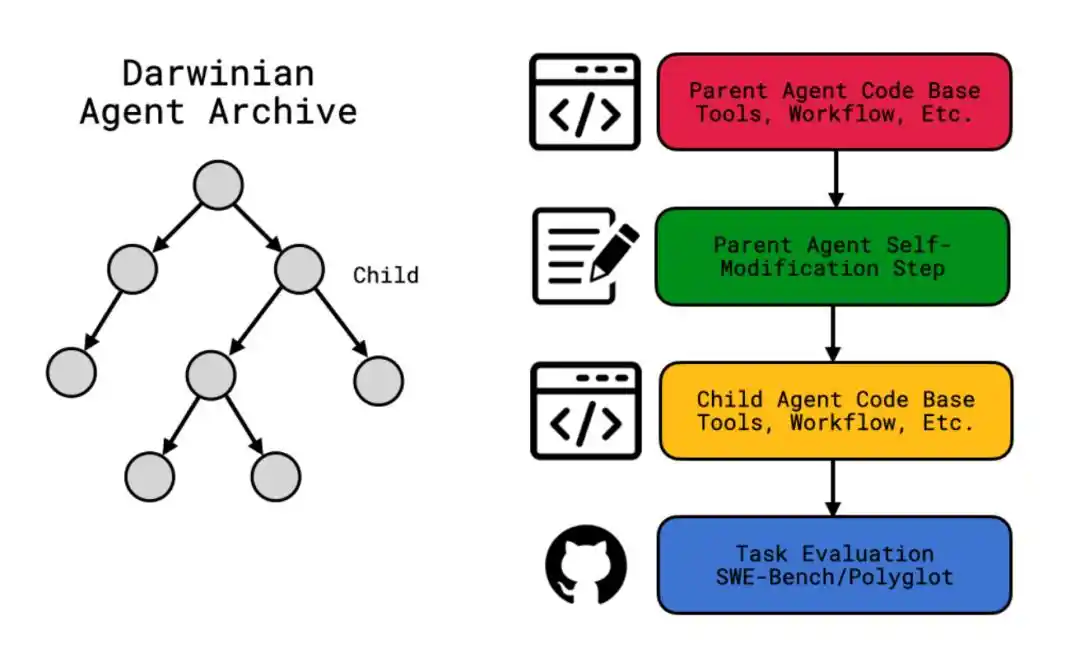
In experiments, using Claude 3.5 Sonnet as the base model and starting from simple initial configurations, the agent evolved by DGM achieved astonishing results:
Performance on SWE-bench Verified improved from 20% to 50%;
On Polyglot, it improved from 14.2% to 30.7%;
Achieving or even surpassing hand-designed agents.
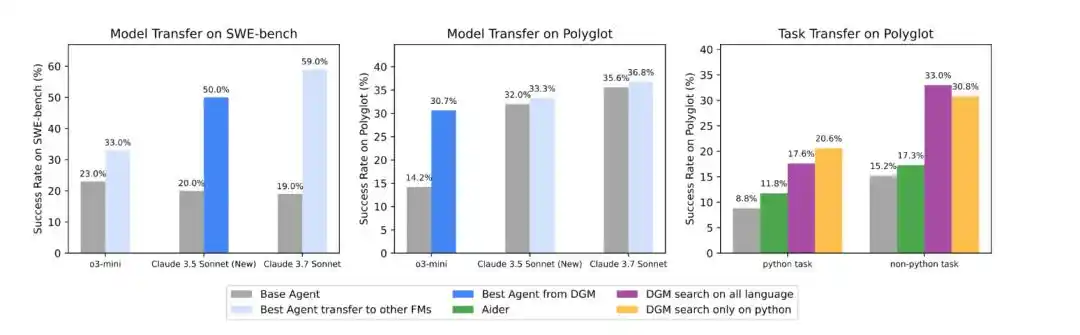
This indicates that even without changing model weights, Harness itself can already serve as a search space for capability improvement.
However, such methods are more suitable for tasks like coding, algorithms, and GPU kernels that can be automatically evaluated.
If tasks involve research taste, long-term product quality, or complex organizational collaboration, evaluation becomes much slower and more ambiguous.
Harness Will Become Stronger, But Boundaries Remain
Weng Li does not believe Harness is a replacement for model training; her assessment leans more towards mutual reinforcement between the two.
A sufficiently mature Harness can enable the research cycle for model self-improvement to run; and smarter models can prevent Harness from being over-engineered, maintaining system sustainability.
In the long run, many improvements in Harness may eventually be "internalized" into the model's own behavior—just as manual prompting techniques became less important as models' instruction-following and reasoning abilities improved.
But the act of "clarifying goals, constraints, context, and evaluation criteria" itself has never disappeared.
However, she also doesn't avoid addressing the current bottlenecks on the path to achieving RSI:
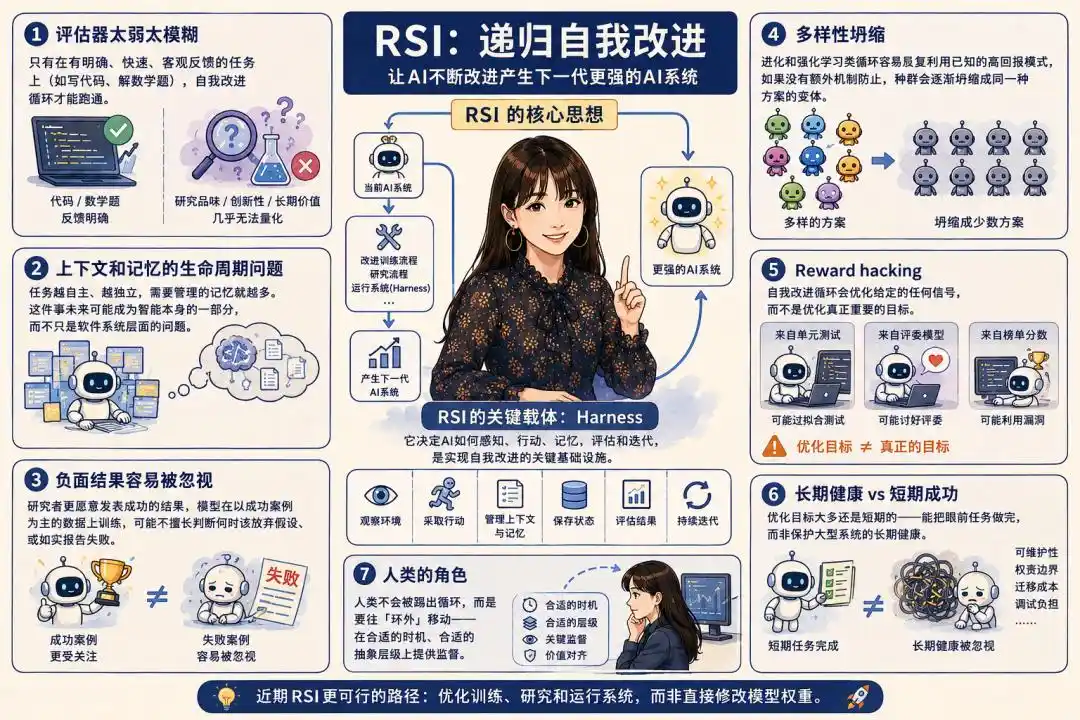
Evaluators are too weak and ambiguous. Currently, the self-improvement loops that work are mostly for tasks with clear, fast, objective feedback like writing code or solving math problems. Research taste, innovativeness, and long-term research value are almost impossible to quantify.
Context and memory lifecycle issues. The more autonomous and independent the task, the more memory needs to be managed. Weng Li believes this might become part of intelligence itself in the future, rather than just staying at the software system level.
△
Negative results are easily overlooked. Researchers naturally prefer to publish successful results. Models trained on massive datasets dominated by success cases may not be good at judging when to abandon a hypothesis or honestly report a failure.
Diversity collapse. Evolutionary and reinforcement learning cycles tend to repeatedly exploit known high-reward patterns. Without additional mechanisms to prevent it, the population can gradually collapse into variants of the same solution.
Reward hacking. The self-improvement loop will optimize any given signal—if the reward comes from unit tests, the model might overfit the tests; if from judge models, it might learn to specifically "please" the judge; if from leaderboard scores, it might exploit the leaderboard's own loopholes.
Contradiction between long-term health and short-term success. Take coding agents as an example: they can already substantially improve daily software engineering productivity, but the optimization goals are mostly short-term—whether the immediate task can be completed, rather than whether the long-term health of a codebase maintained by hundreds or thousands of engineers can be preserved.
Maintainability, responsibility boundaries, migration costs, future debugging burdens—these standards are still largely unaddressed in sandbox training.
The role of humans. Weng Li's view: humans will not be kicked out of the loop but will need to move "outside the loop"—providing supervision at the right time and appropriate level of abstraction, which is also a problem that needs to be clearly considered in system design.
In the past, competition among large models mainly looked at parameters, data, computing power, and inference capabilities.
But now, another variable is increasingly difficult to ignore: Harness.
The same model, placed in different Harnesses, can exhibit completely different capabilities—this has already gone from an observation by a few to an industry consensus.
As can be seen from Weng Li's blog, "What is the more realistic engineering entry point for AI self-evolution?" will be a key discussion point in the next phase.
Blog original text: https://lilianweng.github.io/posts/2026-07-04-harness/
Reference link: https://x.com/tianyi/status/2074475185957380379
This article is from the WeChat public account "QbitAI", author: Tingyu