U.S. Stock Market Trend: Nasdaq Plunges 3.5% Intraday Before a Remarkable Recovery, All Eyes on CPI Tomorrow

marsbitPublished on 2026-06-10Last updated on 2026-06-10

Abstract

"US Stock Market Trends: Nasdaq Plunges 3.5% Before Dramatic Recovery, Eyes on Tomorrow's CPI" On Tuesday, US markets experienced a wild swing. The Nasdaq initially surged nearly 0.7% before plummeting to a 3.5% intraday loss following a post by Donald Trump on Truth Social. He stated that Iran had shot down a US Apache helicopter in the Strait of Hormuz and that the US "must...respond." The index, however, staged a remarkable recovery in the final two hours, closing down only 0.97%, as subsequent remarks from Trump and Vice President Vance suggested a potential Iran deal within days. The S&P 500 fell 0.26%, while the Dow Jones gained 0.17%, supported by its non-tech components. This incident marked the first loss of a US military asset since tensions with Iran escalated in late February. Despite the event, crude oil prices fell sharply (WTI -3.93%) due to expectations of a near-term deal, OPEC+ plans to increase output, and fears that strong jobs data could lead to Fed rate hikes. Market attention is now laser-focused on the May CPI data release Wednesday morning. This report is seen as critical evidence for whether hot job growth is fueling inflation and will heavily influence expectations for the Federal Reserve's upcoming meeting. A hotter-than-expected reading could trigger further sell-offs, particularly in tech, while a cooler print could spark a significant rebound. The article notes a clear sector rotation, with money flowing out of tech (Nasdaq down over 5% in a...

Author: Tide Research

On Tuesday, Wall Street witnessed a thriller of "kill first, rescue later."

The morning session progressed calmly, with the Nasdaq once gaining nearly 0.7%, and chip stocks continuing their rebound from Monday. In the afternoon, Trump posted on Truth Social that Iran had shot down a U.S. Apache helicopter over the Strait of Hormuz. Both pilots were safely rescued, but the U.S. "must respond to this attack."

The Nasdaq instantly plunged, falling as much as -3.5% at its intraday low.

Over the following two hours, the market gradually climbed back as Trump provided follow-up statements like "negotiations are still ongoing" and "a deal could be reached within two or three days," eventually paring losses. The Nasdaq closed down 0.97% at 25,678.82 points, and the Nasdaq 100 fell 1.12%. The S&P 500 dropped 0.26% to 7,386.65 points. The Dow Jones, supported by its non-tech components, bucked the trend to close up 0.17% (+86 points) at 50,872.11 points.

From -3.5% to -0.97%, the Nasdaq recovered over 70% of its intraday decline in the two hours before the close. This strength of recovery sends two signals: first, bears are hesitant to aggressively increase positions on the eve of CPI; second, the market still holds a firm belief that the "Iran issue will eventually be resolved," it's just a matter of time.

Helicopter Incident: The First Time U.S. Military Assets Were Hit

This is the first time since the U.S.-Iran conflict erupted at the end of February that the U.S. side has lost an Apache helicopter. Although there were no casualties, "hitting U.S. military assets" itself crosses a psychological line. Trump used the phrase "must respond," some of his toughest rhetoric on the Iran issue.

CNN reported that a U.S. military unmanned vessel rescued the two pilots. Iranian Foreign Minister Araghchi later responded on X: "Foreign military forces approaching our territory always face the risk of their own human error, accidents, or being caught in crossfire." The subtext is clear: no admission of actively shooting it down, but no denial either.

Vice President Vance stated in a CBS interview that a deal is "very close," but "there's still some work to do." After attending the NBA Finals (Spurs vs. Knicks), Trump told reporters that a final deal might be reached "within two or three days," and the Strait of Hormuz would reopen "immediately" after the agreement is signed. He also emphasized that the U.S. blockade of Iranian ports would not be lifted before a deal is reached.

The reason the market could digest this bombshell intraday is that from March to June, investors have been repeatedly taught a lesson over 100 days regarding the Middle East situation: every escalation is followed by a de-escalation; behind every missile launch, there's a tweet saying "negotiations are still ongoing." This is a form of "war fatigue"—not fatigue with the war itself, but fatigue with the market being repeatedly held hostage by it.

Sector Divergence: Tech Takes Another Hit, Dow Holds Steady

Among the S&P's 11 sectors, only Technology (-2%) and Energy closed in the red. The other 9 sectors all closed higher. The Dow's non-tech components held the line.

This has been a persistent pattern over the past week: the Dow is stable, the Nasdaq is crumbling. From June 4th (Thursday) to June 9th (Tuesday), the Nasdaq has accumulated a loss of over 5%, while the Dow has fallen less than 1.5%. The trend of funds flowing continuously from AI chips to defensive sectors like healthcare, finance, and consumer staples shows no signs of slowing down.

Nvidia slipped 0.22%, Micron fell 1.41%. Following last Friday's trillion-dollar chip massacre, chip stocks have neither seen a panic-driven secondary sell-off nor a convincing V-shaped rebound; they are simply consolidating at low levels. Institutions are waiting for one thing: tomorrow's CPI.

Crude Oil: Helicopter Shot Down, Yet Oil Prices Fell

The most counter-intuitive market move on Tuesday happened in the oil market.

Logically, the downing of a U.S. military helicopter should have caused oil prices to surge. However, WTI crude plummeted 3.93% to $87.73/barrel, and Brent fell 1.3% to $93.02/barrel. The reason was three simultaneous bearish factors: Trump and Vance's "deal is at hand" remarks suppressed the war premium; OPEC+ approved a further production increase of 188,000 barrels per day for July; and after last week's strong non-farm payrolls report, the market began to worry that Fed rate hikes would curb demand.

WTI falling below $90 is a psychological threshold. The last time it was at this level was after the initial ceasefire in mid-April. If CPI data shows inflation cooling due to the drop in oil prices, it would provide the Fed with the perfect excuse to pause rate hikes.

Gold continued to be under pressure, hovering around $4,300, a two-month low. A strong dollar and rate hike expectations both suppressed safe-haven buying for the precious metal. Silver rose slightly by 0.81% to $68.90, finding some support from industrial demand.

Bitcoin fell to around $62,500, down 27% year-to-date for 2026, having halved from its all-time high. Spot BTC ETFs have seen net outflows for four consecutive weeks, with a cumulative withdrawal of $5.4 billion over the past four weeks. Strategy (formerly MicroStrategy) plunged 24.29% last week, its worst weekly performance since the FTX crash in November 2022, showing that even the staunchest bulls in the crypto space are bleeding.

Looking Ahead: CPI Day, June's Most Important 8:30 AM

Tomorrow (Wednesday) at 8:30 AM ET, the May CPI data will be released.

The weight of this data point goes beyond being just a monthly economic indicator. It is the key evidence the market will use to answer all the following questions:

Has last week's overheated jobs number of 172K translated into price pressures? How deeply has the Middle East war-driven oil price increase penetrated into core inflation? At the Fed's June 16-17 meeting, will they maintain a wait-and-see stance or clearly turn hawkish?

The market is currently pricing in a 70% probability of a rate hike in December. If CPI exceeds expectations to the upside, this probability could surge towards 90%, putting the Nasdaq under renewed selling pressure. If CPI surprisingly cools, especially core CPI, it would become the strongest catalyst for chip stocks to bottom out, potentially triggering a fierce technical rebound from short covering.

Oracle's earnings are also due after Wednesday's close. As a key player in AI cloud infrastructure, it holds over $500 billion in remaining performance obligations (RPO), and the market needs to see these contracts translating into real revenue. Thursday brings a triple whammy: PPI, the ECB interest rate decision, and the OPEC monthly report.

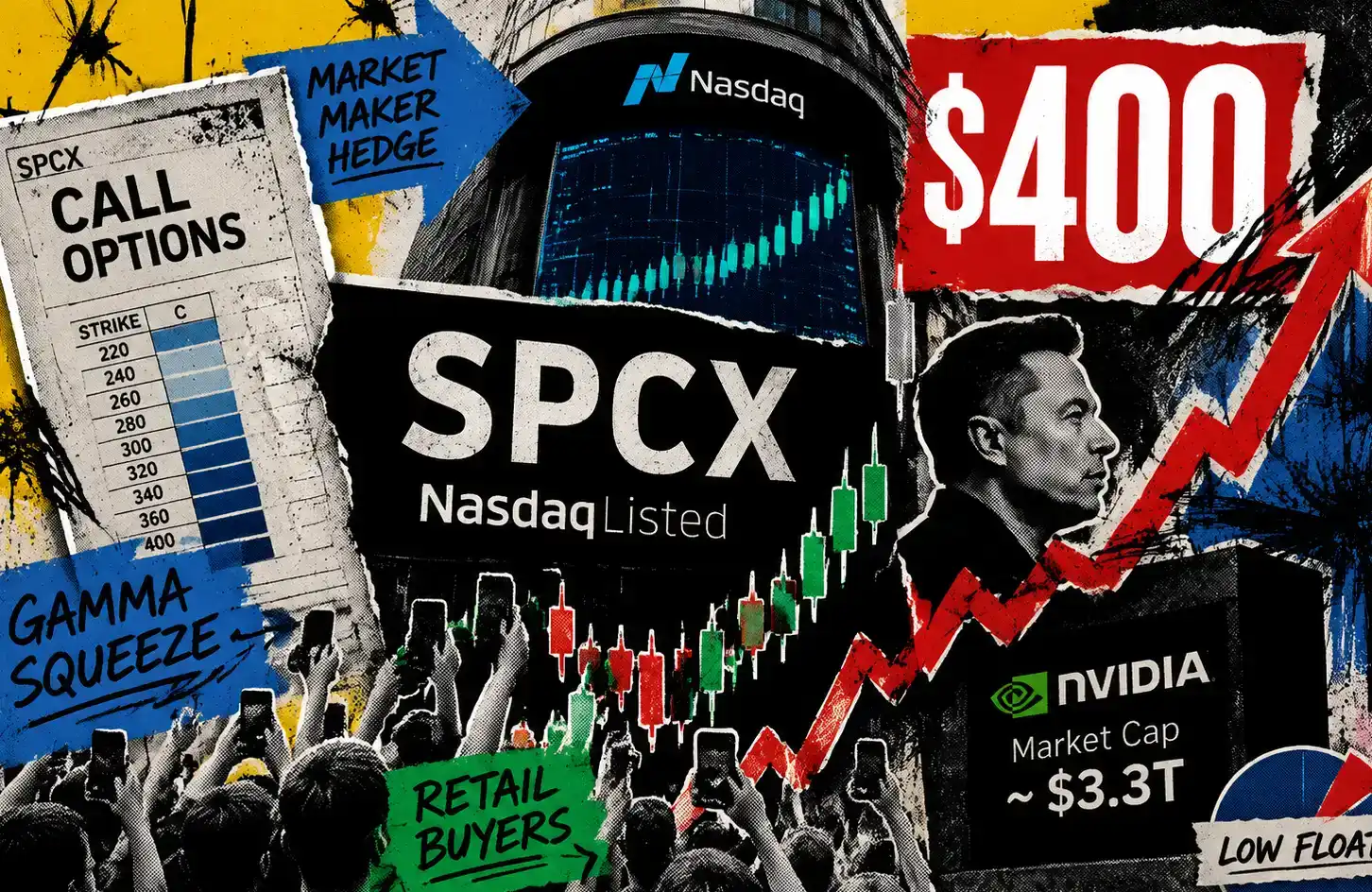
Larger IPO events are also approaching. SpaceX is expected to price on June 11th and list on the Nasdaq on June 12th (ticker SPCX), with a valuation range of $1.75 trillion to $2 trillion. The FIFA World Cup kicks off in the U.S. on June 11th.

But all of this comes after tomorrow's 8:30 AM.

Over the past six trading sessions, the Nasdaq has fallen 5.2% from its all-time high of 27,094 points to 25,679 points. The VIX has surged from 16 to 19. The chip sector has evaporated over $1 trillion in value. The Middle East ceasefire exists in name only. Bitcoin has halved. This is a market under comprehensive pressure.

Against this backdrop, a CPI reading below 4% would be a shot in the arm; a reading above 4.5% might mean last week's sell-off was just an appetizer.

At least for today, one thing is clear: oil prices falling below $90 indicate the market is pricing in peace. But whether peace actually arrives depends on whether the Iranian deal, claimed to be "reached within two or three days," is yet another empty promise or the real thing this time.

It's been a hundred days. The market is no longer willing to guess. It just wants to see results.


Related Questions

QWhat caused the sharp intraday drop and subsequent partial recovery of the Nasdaq Composite on Tuesday?

AThe sharp intraday drop was triggered by former President Trump's post on Truth Social stating that Iran shot down a U.S. Apache helicopter in the Strait of Hormuz and that the U.S. 'must respond.' The subsequent partial recovery occurred over the next two hours as Trump and Vice President Vance made follow-up statements suggesting a deal with Iran was very close and could be reached in a couple of days, easing market fears.

QWhat is the market's primary focus after the trading session described, and why is it so critical?

AThe market's primary immediate focus is the release of the May CPI data. It is critical because it will serve as key evidence for whether strong recent job growth has fueled inflation, how deeply Middle East conflict-driven oil prices have impacted core inflation, and whether the Fed will maintain its wait-and-see stance or turn more hawkish at its upcoming meeting.

QWhy did oil prices fall despite the reported downing of a U.S. military helicopter in a key region?

AOil prices fell due to three concurrent bearish factors: 1) Statements from Trump and Vance suggesting an Iran deal was imminent, which reduced the geopolitical risk premium. 2) OPEC+'s approval to increase production by 188,000 barrels per day in July. 3) Market concerns that strong recent non-farm payroll data could lead to Fed rate hikes, which would dampen demand.

QHow have different market sectors, specifically the Dow Jones and Nasdaq, performed over the past week according to the article?

AOver the past week, there has been a clear divergence: the Nasdaq Composite has fallen more than 5% while the Dow Jones Industrial Average has declined less than 1.5%. Funds have been consistently flowing out of tech/AI chip stocks and into defensive sectors like healthcare, finance, and consumer staples, supporting the Dow.

QWhat major event is scheduled for June 12th according to the article, and why is it significant?

ASpaceX (ticker SPCX) is scheduled to go public on the Nasdaq on June 12th. It is significant because its estimated valuation range is between $1.75 trillion and $2 trillion, making it one of the largest IPOs ever.

Related Reads

After Tokenization of Assets, How to Exit?

Title: How to Exit After Asset Tokenization? Author: Symbiotic Compiled by: Hu Tao, ChainCatcher Summary: Tokenization addresses how assets go on-chain but largely leaves the redemption question unresolved. While tokenized assets can settle instantly, the underlying redemption for assets like treasuries, private credit, or real estate can take from T+1 to 180 days. This gap hinders DeFi adoption of Real World Assets (RWAs). Three emerging models aim to provide instant exit liquidity, differing primarily in their capital structure and efficiency: 1. **Balance Sheet Model (e.g., Grove Basin):** A single entity (like Sky) provides immediate liquidity from its balance sheet, acting as a bridge during the settlement period. It offers simplicity and deep initial liquidity but is constrained by a single entity's capacity and risk appetite. 2. **Asset-Specific Vault Model (e.g., Upshift Clear):** Independent liquidity providers fund dedicated vaults for each supported asset, earning fees. It decentralizes capital sources but isolates liquidity and capital per asset, leading to potential fragmentation. 3. **Shared Liquidity Layer Model (e.g., Symbiotic Liquid Lane):** A shared capital pool supports multiple RWA types simultaneously. Funds remain productive between redemptions (e.g., earning yield in lending markets). Exits are settled via a competitive RFQ market. This model aims for higher capital efficiency, scalability across assets, and serves longer-duration assets like private credit. Key differentiators are: 1) Source of capital and risk bearer, 2) Redemption pricing mechanism, 3) Capital efficiency, 4) Scalability to new asset types, and 5) Composability. The shared liquidity layer model represents a move from piecemeal solutions toward scalable infrastructure, enabling T+0 exits by pooling capital, maintaining yield, and using competitive pricing, thus enhancing RWA utility in DeFi.

marsbit13m ago

After Tokenization of Assets, How to Exit?

marsbit13m ago

After Tokenizing Assets, How to Exit?

After tokenization, a key unresolved issue is providing holders with a reliable exit mechanism, as underlying asset settlement (taking days to months) lags far behind on-chain token settlement. Three primary models for instant liquidity have emerged, differing in their capital structure and efficiency: 1. **Balance Sheet Model (e.g., Grove Basin):** A single, well-capitalized entity (like Sky) provides immediate liquidity from its own reserves. This offers simplicity and deep initial liquidity but is constrained by that single balance sheet's capacity and risk appetite, limiting scalability. 2. **Dedicated Vault Model (e.g., Upshift Clear):** Independent liquidity providers (LPs) fund separate vaults for each supported asset. This decentralizes capital sources but isolates liquidity and capital, which becomes inefficient as the number of tokenized assets grows. 3. **Shared Liquidity Layer Model (Symbiotic Liquid Lane):** Independent capital providers fund shared vaults that can support multiple tokenized assets simultaneously. Capital remains productive between redemptions (e.g., earning yield in DeFi markets). Exits are settled via a competitive RFQ market where market makers bid. The article argues that the shared layer model offers superior capital efficiency and scalability. It transforms exit liquidity from an asset-specific patch into shared market infrastructure, allowing liquidity capacity to grow with overall market participation rather than being fragmented per asset. This is particularly valuable for longer-duration assets like private credit, where reliable T+0 exits can significantly enhance their utility in DeFi.

链捕手27m ago

After Tokenizing Assets, How to Exit?

链捕手27m ago

Anthropic's Triple Moment: Code Leak, Government Confrontation, and Weaponization

This article analyzes Anthropic's recent conflicts and strategic moves following the U.S. government's emergency halt of its new Fable model, citing national security concerns over potential "jailbreaks." The author argues this incident reveals deeper tensions between AI labs, governments, and the software industry. While critics view Anthropic's safety-focused rhetoric as marketing fear, the author suggests it serves as a commercial moat masking the company's core economic imperative: moving closer to end-users and their valuable data to avoid being commoditized. The piece outlines a coming clash between frontier AI labs like Anthropic and established software companies. Labs need real-world usage data for model improvement via reinforcement learning, creating a cycle where better products attract more users and more data. This threatens software firms who, as Microsoft's Satya Nadella warns, risk having their value captured by a few dominant models. Anthropic's controversial policy changes—initially secretly degrading Fable's performance for LLM development and expanding data retention—are framed as assertions of control, justified by its safety narrative. The company's foundational belief that it alone is sufficiently concerned about superintelligent AI dangers legitimizes its actions, from resisting government demands to shaping usage policies. The author concludes that this alignment of mission, talent, and business strategy is powerful but concerning, as it concentrates immense potential power in the hands of those convinced of their own righteous understanding.

marsbit37m ago

Anthropic's Triple Moment: Code Leak, Government Confrontation, and Weaponization

marsbit37m ago

Trading

Spot
Futures
活动图片