The Traffic Secret Overlooked by 99% of Web3 Creators

marsbitPublished on 2025-12-29Last updated on 2025-12-29

Abstract

Summary: Most Web3 content creators struggle with storytelling not due to a lack of creativity, but because their content lacks contrast—the element of change or transformation that makes narratives compelling. Contrast can be as simple as shifting from "before" to "after," "expectation" to "reality," or "belief" to "realization." Without it, content remains flat and forgettable, even if informative. Web3 is filled with straightforward explanations of features, data, and benefits, but the human brain engages more deeply with unexpected or relatable shifts. For instance, instead of stating "Solana is fast and cheap," a personal moment like "I clicked send, switched tabs, and realized the transaction was already complete" creates impact through contrast. Embracing contrast often requires vulnerability—admitting mistakes, doubts, or surprises—which fosters authenticity and connection. To incorporate contrast, ask: "What changed here?" and include elements like past assumptions, moments of hesitation, or unexpected outcomes. In Web3’s noisy landscape, contrast helps content stand out by being genuinely relatable, not needing exaggeration.

Original Author:Noir

Original Compilation: Deep Tide TechFlow

Most Web3 content creators think they are not good at storytelling because they feel they 'lack creativity'.

But friend, that is usually not the real root of the problem.

Actually, the real problem is:

—Your content lacks contrast.

Hey, either the content:

sounds the same,

feels flat,

or has no variation.

And when nothing changes, there is no story to tell.

What is Contrast?
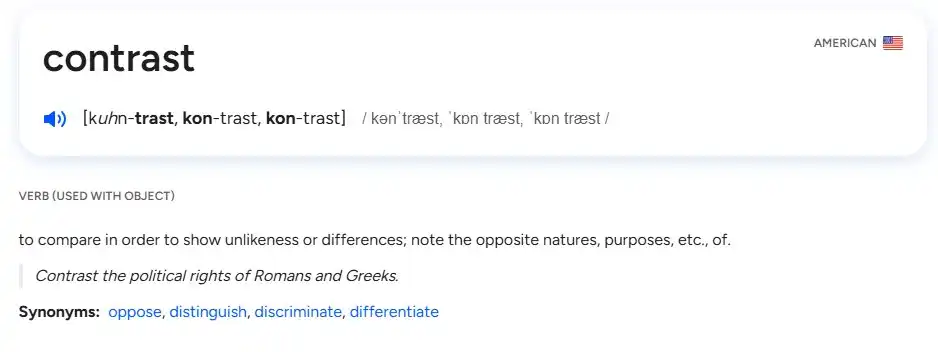
Contrast actually means that something is different from what came before.

Yes, it's that simple.

It doesn't require:

flowery language,

surprising plot twists,

or background music.

Essentially, contrast is a transformation, such as:

From "before" to "after"

From "expectation" to "reality"

From "belief" to "realization"

Without this transformation, your content is just information.

Yes, maybe it's useful, but memorable? Hmm... unlikely.

Why does a lack of contrast make content weak?

The Web3 world is full of:

features, data, promises, roadmaps......

But most content is presented too straightforwardly:

"This is what it does."

"These are its benefits."

"This is why you should care about it."

However, the brain isn't interested in this linear information.

It gets activated when something unexpected happens.

Why Content Loses Appeal Without Contrast

The Web3 world is flooded with:

features, data, promises, roadmaps......

But most content is presented too directly:

"This is its function."

"Why it's good."

"Why you need to care about it."

However, the brain isn't activated by this straight-line information.

It only wakes up when something unexpected occurs.

A Simple Example of "Contrast"

(You must have seen it countless times)

Expression without contrast:

Solana has fast transactions and low costs.

Your brain responds: Okay... and then?

Expression with contrast:

I clicked send, switched tabs, and then realized the transaction was already complete.

The same idea, but with a completely different impact.

The second expression creates a "moment." Get it?

Why Does "Contrast" Feel Uncomfortable?

(And why this is important)

Contrast often requires you to admit:

You were wrong, you were confused, you underestimated something.

That's why most people avoid it.

But this discomfort is precisely what makes content feel authentic.

People don't like flawless things.

They connect more easily with resonance and vulnerability.

When someone thinks: "Wait... I've felt that way too."

Congratulations, you've succeeded.

How to Add "Contrast" to Your Content?

Before publishing, ask yourself one question:

"What changed here?"

If you can't answer, try adding one of the following:

  • A mistaken assumption you once had
  • A moment of hesitation
  • An unexpected result
  • A 'small decision' you almost didn't make

It really doesn't need to be dramatic.

You just need a bit of relatable change.

Geek's Summary

Don't get me wrong, creativity does play an important role in storytelling.

But not everyone is naturally creative. This article is specifically for those who truly want to learn storytelling techniques.

Its core is: being sincere enough to show "transformation."

In the complex and noisy world of Web3,

"Contrast" is how you stand out without having to shout :)


Related Questions

QWhat is the main reason most Web3 content creators struggle with storytelling according to the article?

AThe main reason is that their content lacks contrast, not a lack of creativity.

QHow does the article define 'contrast' in the context of storytelling?

AContrast is defined as something that differs from what came before, representing a transformation such as from 'before' to 'after' or from 'expectation' to 'reality'.

QWhy does the absence of contrast make content less engaging?

AWithout contrast, content becomes mere information presented in a straightforward way, which fails to activate the brain as it only wakes up to unexpected changes.

QWhat example does the article use to illustrate content with and without contrast?

AWithout contrast: 'Solana's transactions are fast and cheap.' With contrast: 'I clicked send, switched pages, and then realized the transaction was already complete.'

QWhy is the discomfort of using contrast important for effective storytelling?

AThe discomfort, such as admitting being wrong or confused, makes the content feel authentic and relatable, as people connect more with vulnerability and shared experiences than with perfection.

Related Reads

MoneyGram: Why Did We Launch Our Own Stablecoin?

MoneyGram, a global leader in cross-border remittances for over 80 years, has launched its own stablecoin, MGUSD. The initiative aims to evolve from single-transaction services to becoming a more integral part of users' financial lives. By allowing customers to hold a stable US dollar balance within the MoneyGram app, MGUSD enables not only remittances but also everyday spending, currency exchange, cash access, and future financial services. Targeting the billions globally who face challenges like currency volatility or lack of bank accounts, MGUSD leverages Stellar blockchain technology with a self-custody wallet architecture. This gives users control over their assets while providing a secure, compliant experience through a trusted brand. The approach focuses on solving existing customer pain points within MoneyGram's established network, rather than competing for broad crypto market liquidity. A key advantage is MoneyGram's hybrid model, combining digital services with the world's largest physical network for crypto-to-cash conversions. The stablecoin also modernizes the company's internal infrastructure, streamlining treasury management and partner settlements, with annual forex volume via stablecoins already reaching $2 billion. The project was delivered in about a year, driven by a reorganization into agile, cross-functional teams that operate with startup-like speed while leveraging decades of institutional expertise. Partners include Stablecoin (issuance), Crossmint (wallet APIs), Fireblocks (enterprise treasury), m0 (smart contracts), and the Stellar network. MoneyGram emphasizes that enhancing direct consumer offerings strengthens its partner ecosystem. The future direction is clear: to provide users worldwide with stable value storage, better financial tools, and greater control over their funds through a trusted, existing network.

Foresight News37m ago

MoneyGram: Why Did We Launch Our Own Stablecoin?

Foresight News37m ago

BIP-110 Controversy Intensifies: Bitcoin May Face Its Most Divisive Hard Fork Battle in Years

Bitcoin is approaching a critical block height of 961,632, which could activate the controversial BIP-110 proposal. This proposal aims to restrict the amount of non-financial data, such as inscriptions and other large data payloads, within Bitcoin transactions. Supporters, including some node operators and Bitcoin purists, argue that BIP-110 is necessary to preserve Bitcoin's core function as a monetary settlement layer by reducing network congestion and node operational burdens caused by non-essential data. They frame it as a correction to keep the network true to its original purpose. However, critics, including prominent figures like Blockstream's Adam Back and developer Jameson Lopp, warn that the proposal's implementation mechanism is dangerously flawed. They highlight that its low 55% miner signaling threshold, coupled with a contentious enforcement mechanism allowing nodes to unilaterally reject non-compliant blocks, significantly increases the risk of a chain split. Opponents argue this sets a dangerous precedent for transaction censorship, undermines Bitcoin's protocol neutrality, and creates excessive uncertainty for developers and businesses, especially since the rule is proposed as a temporary one-year measure. Market analysts, such as those from Bitfinex, suggest a full-scale network split is unlikely due to a lack of broad economic consensus. Major mining pools remain neutral, and adoption of the new rules is minimal. They view the situation more as a governance stress test. The primary risk is operational disruption: if a minority chain persists, major exchanges and custodians may need to temporarily suspend Bitcoin deposits and withdrawals to manage security and liquidity, potentially unsettling newer institutional investors. While BIP-110 is not expected to succeed in overtaking the main chain, its approach has ignited a significant debate about Bitcoin's governance, core values, and resilience.

Foresight News1h ago

BIP-110 Controversy Intensifies: Bitcoin May Face Its Most Divisive Hard Fork Battle in Years

Foresight News1h ago

Trading

Spot
Futures
活动图片





