The Playground of Whales: Why Retail Investors Are Fleeing DeFi

比推Published on 2026-01-27Last updated on 2026-01-27

Abstract

The article "Whales' Playground: Why Retail Investors Are Fleeing DeFi" argues that the era of decentralized finance as a tool for financial democratization has ended. Despite lower transaction costs on Layer 2 solutions and Ethereum mainnet, retail participation is declining due to several key issues: 1. **Low Gas Trap**: Cheap gas fees have turned DeFi into a high-effort, low-reward environment where users perform repetitive tasks for minimal airdrop rewards, resembling "digital labor." 2. **Unpredictable Rules**: Project teams frequently change rules retroactively (e.g., altering token distribution criteria or locking periods), undermining the "Code is Law" principle and leaving users vulnerable to arbitrary decisions. 3. **Lockup Traps**: High APY incentives often require long-term staking (1-4 years), but users risk illiquidity, token devaluation, and exploitation by whales who exit early. 4. **Risk-Reward Mismatch**: Low returns (5-10%) come with high risks: smart contract exploits, phishing, stablecoin depegging, and rug pulls. Retail investors bear disproportionate risk compared to potential gains. The author concludes that DeFi has become a playground for whales and predatory projects, advising retail investors to exit meaningless interactions, avoid lockups, and preserve capital by investing in core assets like Bitcoin instead.

Author: Chen Xiaomeng

Original Title: The Playground of Whales: Why Retail Investors Are Fleeing DeFi


The era of DeFi that once championed financial empowerment has effectively come to an end.

A few years ago, we were complaining that the $50+ gas fees on the Ethereum mainnet were barring retail investors. Now, Layer 2s have become ghost chains, and even the mainnet's gas fees have dropped to almost negligible levels after upgrades.

The barrier is gone. We expected a狂欢 (carnival) for retail, but instead, we got a silent mass exodus.

Why? Because everyone has finally woken up to the reality:

In this market, we worry ourselves sick ("carry the heart of selling white powder"), but only earn the meager profits of "selling flour."

I. The Low Gas Trap: From Noble Chain to Sweatshop
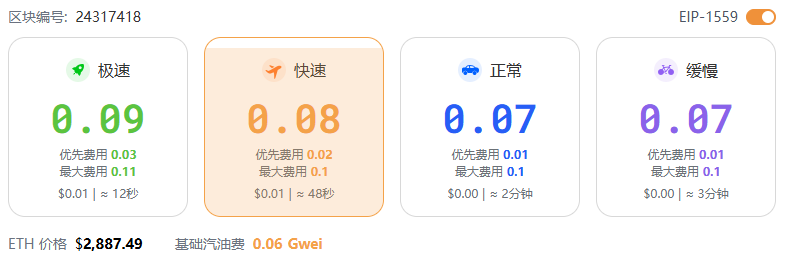
When gas was expensive, it at least filtered out low-quality interactions, forcing you to carefully consider every move. Now that gas is cheap, DeFi has turned into a massive electronic assembly line.

Because interaction costs are low, projects assume you should perform a massive number of interactions. So, for that tiny potential airdrop expectation, retail investors are forced to become proficient on-chain laborers: bridging, swapping, staking, providing LP... mechanically repeating these actions hundreds of times a day.

But this doesn't lead to higher returns. Instead, low gas has become a tool for projects to infinitely inflate their activity metrics.

This is on-chain manual labor.

II. The Capricious Dictator: Code is No Longer Law

"Code is Law" was once DeFi's most captivating narrative. But now, DeFi protocols not only have backdoors in their code, but the project teams' words have also become a sickle that can fall at any moment.

This is the current pain point retail investors hate the most—the uncertainty of the rules.

Project teams have long learned how to be ruthless. They invented undeliverable "points systems," like a carrot dangling in front of a donkey, luring you to constantly invest funds and time. After you've diligently farmed points for half a year, eagerly awaiting the payout, the project suddenly releases an announcement:

  • "For the fairness of the community, we will strictly crack down on Sybil attacks."

  • "Our VE model needs to be modified."

  • "For the development of the community, we have added a 45-day cooldown period."

Yesterday you were their cherished early supporter; today, because your IP address changed slightly, or your funds were withdrawn a day early, you are labeled a Sybil. The right to explain the rules belongs solely to the project team; they change them as they please.

This feeling is like going to work for a boss who promised daily wages. After you finish the job, the boss suddenly says, "For the long-term development of the company, we're withholding your pay. We'll see about paying you next year based on your performance."

In traditional business, this is called fraud. In DeFi, it's called DAO governance.

III. The Lock-up Prisoner: Capital Hunting Under High APY
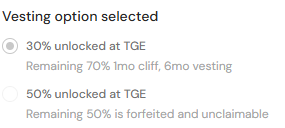
To maintain token prices, current DeFi protocols are obsessed with making users lock up their funds. Various Ve models keep emerging, often requiring periods of one year, two years, or even four years.

Projects lure you with extremely tempting APY. It looks like high returns, but the outcome is already scripted:

  • Liquidity Drain: Your principal is locked up, frozen and immobile.

  • Whale Front-Running: Project teams, early investors, and whales often have special vesting schedules for their tokens, or they can hedge their profits off-chain.

  • Price to Zero: By the time you can unlock, you might find that while you earned a 50% return in token terms, the token price has already dropped by 90%.

The essence of lock-ups is retail investors using their liquidity to provide exit liquidity for the whales. You covet the interest; they have their eyes on your principal.

IV. Extreme Mismatch of Risk and Reward

Let's do a realistic calculation.

Current DeFi protocols, excluding the shady meme coins that could rug pull at any moment, offer stablecoin yields around 5% – 10% for mainstream top protocols. This seems higher than banks, but what are the underlying risks?

  • Smart Contract Vulnerabilities: Hackers could drain the pool at any time.

  • Front-end Hijacking: Phishing sites are everywhere.

  • Depegging Risk: Algorithmic stablecoins or bridged assets can go to zero instantly.

  • Project Rug Pulls: Even projects with billions in TVL can disappear with the funds overnight.

Earning 5% yield while bearing 100% risk of total capital loss. This is the classic case of high risk, low reward. This level of return doesn't even cover the mental anguish you suffer while operating. Comparatively, simply buying and holding Bitcoin, or even using centralized exchange savings products, offers far better value for effort than messing around on-chain.

Conclusion: Refuse to Become On-Chain Fuel

DeFi innovation has stalled, but the methods of extraction have evolved.

At this stage, for most retail investors with less than $100,000 in capital, DeFi has lost its golden attributes. It is no longer a wilderness of opportunity but a playground meticulously designed by whales and unscrupulous project teams.

Every button, every rule, every suggestion to lock up funds here is designed to诱骗 (induce) you to hand over your chips.

So, perhaps the best strategy now is only one: Admit that current DeFi is indeed not working. Stop those meaningless interactions. Stop locking up funds for meager returns. Protect your principal. Convert it into truly valuable core assets, and then watch coldly from the sidelines as the whales battle each other.

Stop being an on-chain laborer. Your time and capital deserve a better destination.


Twitter:https://twitter.com/BitpushNewsCN

Bitpush TG Group:https://t.me/BitPushCommunity

Bitpush TG Channel: https://t.me/bitpush

Original Link:https://www.bitpush.news/articles/7606244

Related Questions

QAccording to the article, why are retail investors leaving DeFi despite lower transaction fees?

ARetail investors are leaving because the low fees have turned DeFi into a high-effort, low-reward environment where they must engage in massive, repetitive interactions for minimal potential airdrop rewards, while project teams and whales benefit disproportionately.

QWhat does the article criticize about the 'Code is Law' principle in current DeFi?

AThe article criticizes that 'Code is Law' is no longer valid because project teams now have backdoors in their code and can arbitrarily change rules (like retroactive Sybil checks or modifying tokenomics), making their announcements the true 'law' and creating extreme uncertainty for users.

QHow do lock-up mechanisms in DeFi protocols disadvantage retail investors, as described in the article?

ALock-up mechanisms trap retail investors' capital for long periods (1-4 years) with high APY promises, but ultimately lead to illiquidity, allow whales to dump their tokens first, and often result in significant token depreciation by the time retail can unlock, effectively making them provide exit liquidity for large players.

QWhat is the risk-reward mismatch the article identifies for users of mainstream DeFi protocols?

AThe mismatch is that users earn only 5-10% yields on stablecoins but are exposed to 100% principal risk from smart contract exploits, front-end hacks, asset de-pegging, or project rug pulls, making the potential returns not worth the high risk and stress compared to simpler alternatives like holding Bitcoin.

QWhat final strategy does the article suggest for retail investors with less than $100,000 in capital?

AThe article suggests they should承认现在的 DeFi 确实不行了 (admit that DeFi, as it is now, is not working), stop meaningless interactions and lock-ups, protect their principal by converting it into core valuable assets (like Bitcoin), and simply observe the 'whales playing in their playground' from the sidelines.

Related Reads

In Jinjiang, Fujian, a Storage Super Unicorn Lies Quiet

In Fujian's Jinjiang, a city known for sportswear, lies a quiet semiconductor giant: Fujian Jinhua Integrated Circuit Co. (JHICC). Once a promising domestic DRAM manufacturer alongside Yangtze Memory and ChangXin Memory Technologies (CXMT), its journey was derailed in 2018 when the U.S. placed it on an Entity List and filed criminal charges for alleged trade secret theft. This halted production for years. A turning point came in February 2024 when a U.S. federal court found JHICC not guilty. However, it had lost crucial time. While CXMT soared to become a top-valued A-share company in 2024, JHICC, with an estimated valuation of 80 billion RMB, was just restarting. Its current output is primarily customized DDR4 chips, not the advanced DDR5/HBM demanded for AI, but it still benefits from the broader memory chip upcycle. JHICC's story is tied to Chen Zhengkun, a veteran engineer who left Micron to lead the venture. Founded in 2016 with state-backed funding, JHICC partnered with Taiwan's UMC to develop DRAM technology. Rapid progress was cut short by the U.S. actions, which Micron initiated, partly due to its heavy reliance on the Chinese market. Post-sanctions, Chen's team worked to rebuild the production line with reduced reliance on U.S. technology. According to its records, JHICC achieved small-scale production and revenue growth under immense pressure. It now focuses on the stable "niche" DRAM market (e.g., TVs, routers) with a monthly capacity of ~40,000 wafers, aiming for 60,000 by 2026. It holds over 1,000 patents but remains on the Entity List. For Jinjiang, investing in JHICC was a bold industrial leap. The local government provided unwavering financial and logistical support during the crisis, helping the company survive. JHICC has become the anchor for a growing local semiconductor cluster. Though its scale lags behind domestic peers, JHICC's persistence symbolizes a hard-won foothold in a global market long dominated by Samsung, SK Hynix, and Micron. Having missed one boom, it seeks a place in the new AI-driven memory supercycle.

marsbit40m ago

In Jinjiang, Fujian, a Storage Super Unicorn Lies Quiet

marsbit40m ago

Must-Watch Events Next Week|CLARITY Act Could Face Senate Vote; SpaceX, Circle to Report Earnings (8.3-8.9)

**Summary: Key Events and Developments to Watch (August 3-9)** The upcoming week is marked by significant financial disclosures, key legislative deadlines, and notable product updates. **Major Financial Events:** Several companies are scheduled to release their Q2 2026 earnings. American Bitcoin (ABTC) will report on August 3, followed by SpaceX and Hut 8 Mining Corp. on August 4, and Circle on August 5. Notably, a significant portion of SpaceX shares (up to 12% of total shares) will be unlocked on August 6 following their earnings release. **Key Legislative Deadline:** The U.S. Senate faces an August 7 deadline to secure 60 votes for the CLARITY Act, a bipartisan bill aiming to establish a federal regulatory framework for cryptocurrencies. The Senate may hold a full vote on the bill during the week. **Economic Data:** The U.S. July Non-Farm Payrolls report will be released on August 7, providing crucial labor market data. **Technology & Product Updates:** * **Shutdowns:** DeFi portfolio tracker Zapper and wallet app Ctrl Wallet will cease operations on August 3. * **Upgrades:** LayerZero will deprecate its v1 relayers on August 3. XRP Ledger's new version 3.3.0, featuring five new functions, is expected next week. * **AI:** Elon Musk announced that the advanced Grok 4.6 AI model is set for release around August 7. * **Bitcoin:** The BIP-110 forced signaling for a potential Bitcoin network change is scheduled to begin around August 8. **Other Notable Events:** Chinese robotics firm Unitree Tech has set its preliminary price inquiry for its IPO for August 5. South Korean exchange Upbit will delist AQT and AERGO tokens on August 3.

marsbit2h ago

Must-Watch Events Next Week|CLARITY Act Could Face Senate Vote; SpaceX, Circle to Report Earnings (8.3-8.9)

marsbit2h ago

Trading

Spot
活动图片





