The Person Who Made $69 Million from NFTs Four Years Ago Is Still Making Money

深潮Published on 2025-12-10Last updated on 2025-12-10

Abstract

Four years after making $69 million from an NFT sale, Beeple continues to innovate and profit in the digital art space. Despite the decline in the NFT market, he recently launched "Regular Animals" at Art Basel—a collection of 256 eerie robotic dogs with human faces resembling figures like Musk, Warhol, and Picasso. These AI-driven sculptures use cameras and visual algorithms to create art based on their surroundings. The NFTs, initially given away for free, now trade for over 10 ETH (around $35,000) on OpenSea, valuing the giveaway near $9 million. A physical series of 1,024 pieces is also available, with listings reaching $6,500 on eBay—though the digital versions remain more valuable. Beeple, who once struggled to sell art for over $100, now operates a large studio with a team of artists and engineers, including a former Boeing engineer and a renowned art curator. His work continues to bridge crypto and traditional art, gaining attention from outlets like WSJ.

Written by: Cookie, Lüdong

beeple, the man who sold one NFT for a staggering $69 million, has long been seen as a symbol of the golden age of NFTs that once was.
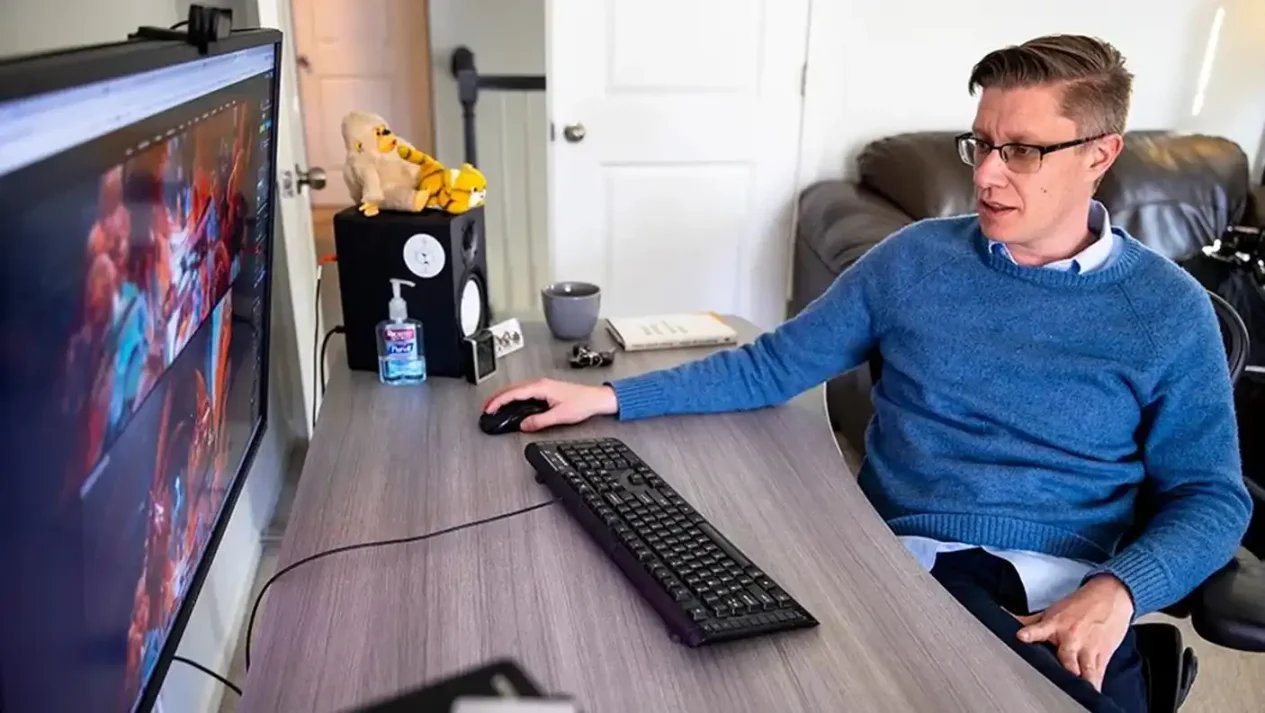
Although the glory of NFTs has faded, beeple and his team have remained active in the NFT space. At this year's Art Basel, he brought another "golden dog" to the currently quiet NFT market—Regular Animals.

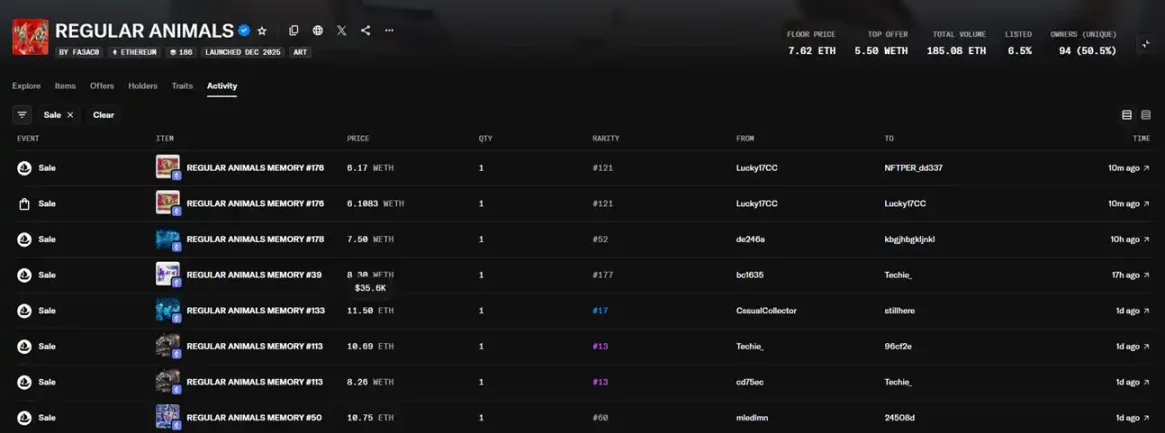
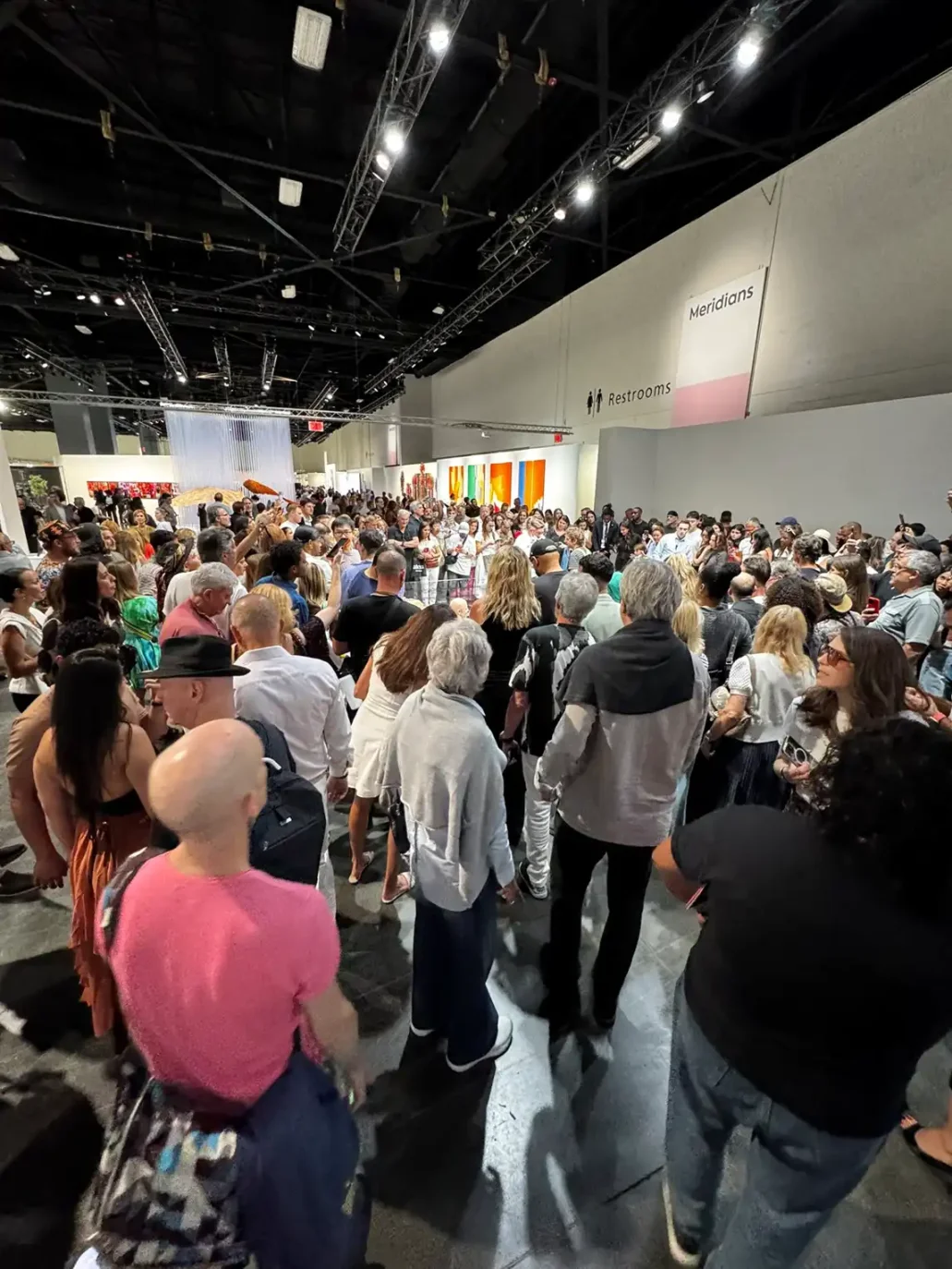
Yesterday, multiple Regular Animals were sold on OpenSea for over 10 ETH (approximately $35,000) each. These artworks were given away for free at Art Basel, with a total of 256 pieces. At this price, beeple essentially gave away nearly ten million dollars worth of NFTs at Art Basel.
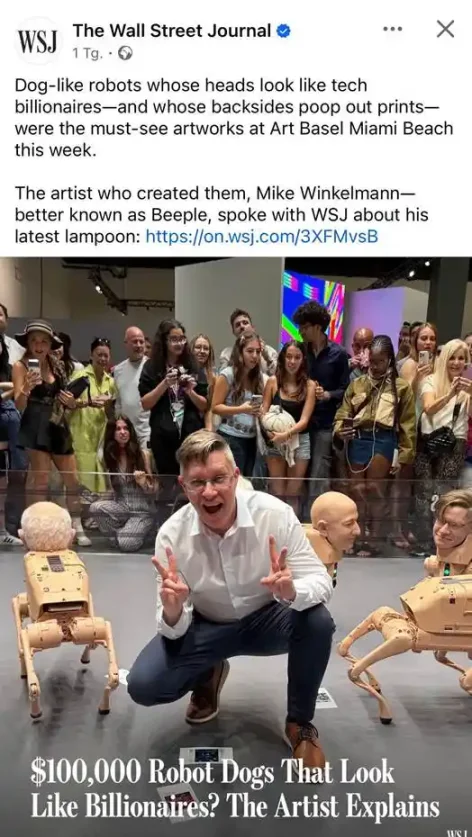
The project that beeple and his team brought to Art Basel is Regular Animals. These are robotic dogs, as shown in the image below. They look somewhat eerie because these robotic dogs have human faces, and they are faces of well-known figures such as Musk, Andy Warhol, Zuckerberg, Picasso, and even beeple himself.
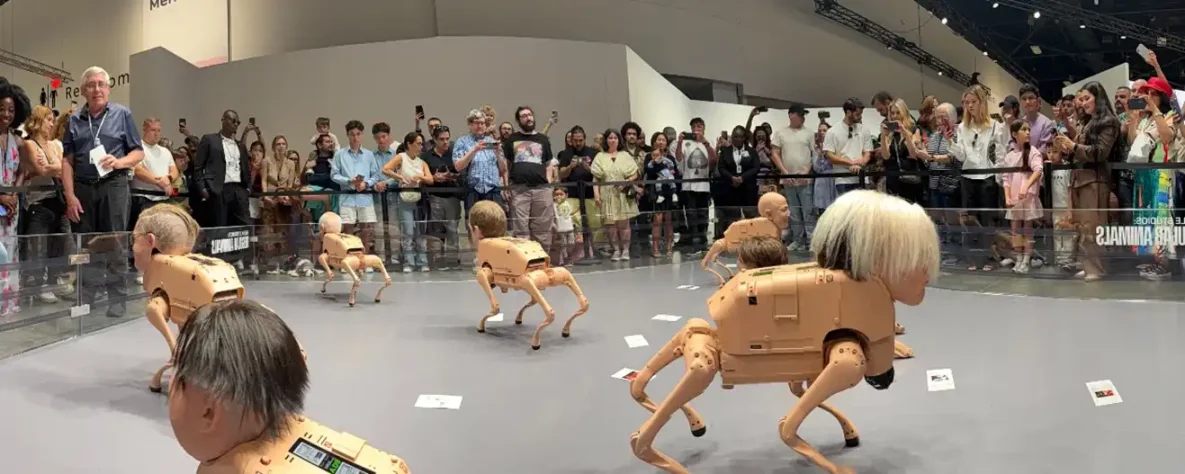
Of course, it's not just about the eerie visual effect. These robotic dogs use the cameras on their heads to observe their surroundings and employ an evolving visual algorithm to create artworks.
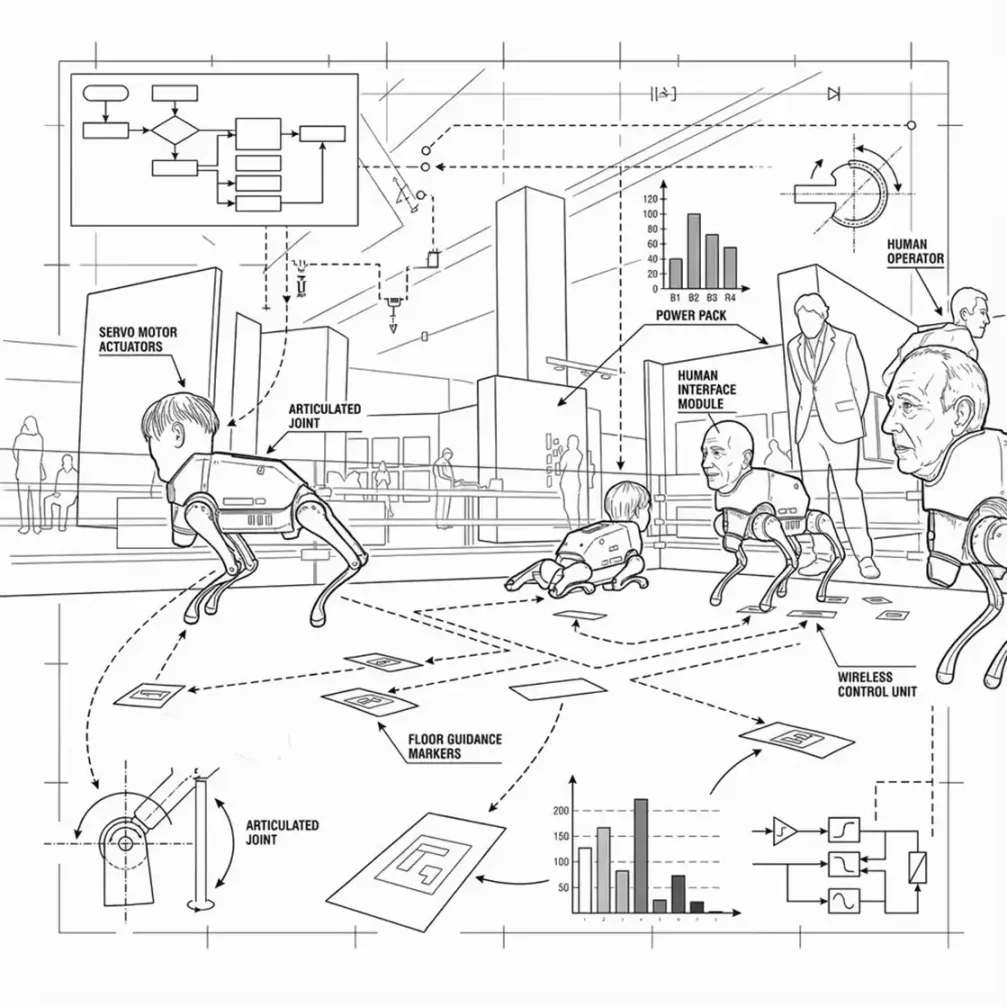
The selection of these famous figures is not arbitrary. The reason for choosing the aforementioned celebrities is that they have influenced how we view the world, whether through algorithms, art, or politics. As humans, we observe the world through these perspectives, and so do these robotic dogs. At Art Basel, these robotic dogs and humans observed each other, and each moment of observation became an artwork created by the robotic dogs. These artworks are also like autobiographies of these robotic dogs.
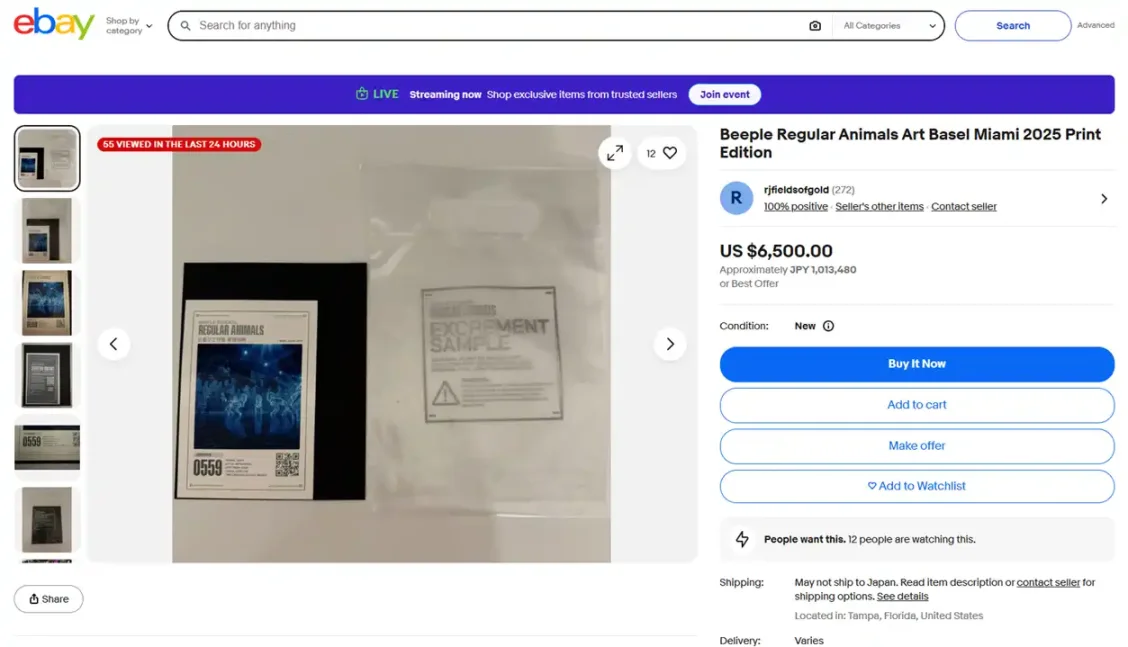
Interestingly, Regular Animals also has a physical series, with a total of 1,024 pieces. On eBay, someone has already listed one for a fixed price of $6,500. The market's valuation is that NFTs are far more valuable than physical paintings, reminiscent of Damien Hirst's "The Currency" series years ago, which forced owners to choose between physical and NFT versions.
Before achieving great success in the NFT field, beeple had been creating art every day since 2007 but had never sold anything for more than $100. After gaining fame and fortune, beeple did not squander it like some artists or crypto project teams. Instead, he acquired a studio/gallery of about 460 square meters, built a team of dozens of 3D artists, engineers, and researchers (even including a former Boeing engineer), invited Carolyn Christov-Bakargiev, the former director of the Castello di Rivoli Museum of Contemporary Art, as an advisor, and continuously exhibited at art shows around the world while creating new artworks.

This exhibition of beeple's robotic dogs has not only gained attention in the crypto circle due to its price but has also been covered by traditional media outlets like WSJ.
Related Questions

QWho is Beeple and what is he known for in the NFT world?

ABeeple is an artist who gained fame for selling an NFT for $69 million, symbolizing the golden era of NFTs.

QWhat is the name of Beeple's latest NFT project featured at the Basel Art Show?

ABeeple's latest project is called 'Regular Animals,' which features robotic dogs with human faces of famous personalities.

QHow many Regular Animals NFTs were distributed for free at the Basel Art Show, and what was their estimated total value?

A256 Regular Animals NFTs were distributed for free at the Basel Art Show, with an estimated total value of nearly $9 million based on secondary market sales.

QWhat unique ability do the Regular Animals robotic dogs have?

AThe Regular Animals robotic dogs use cameras to observe their surroundings and employ an evolving visual algorithm to create artworks, which serve as their autobiographies.

QHow has Beeple's approach to his career evolved since his NFT success?

ABeeple has established a large studio, assembled a team of artists and engineers, and continues to create and exhibit artworks globally, focusing on innovation rather than extravagance.

Related Reads

Sygnum's B2B Bank Model Fuels Cryptocurrency Boom in Switzerland

Swiss digital asset bank Sygnum's B2B model is enabling a cryptocurrency boom in Switzerland by providing integrated infrastructure to traditional banks. Its partnership with Bancastato, a regional bank, allows clients to seamlessly trade cryptocurrencies like Bitcoin, Ethereum, Litecoin, and Solana directly within their existing bank apps. This eliminates the friction of using separate platforms. Under this model, Sygnum handles the backend trading infrastructure, custody, compliance, and regulatory licenses, while partner banks maintain their customer relationships and branding. This "infrastructure-as-a-service" approach allows banks to offer crypto services faster and more safely than building them in-house. Over 25 Swiss financial institutions, including Zuger Kantonalbank and PostFinance, now use Sygnum's B2B platform, making regulated digital asset services accessible to over a third of Switzerland's population. The trend reflects a shift where Swiss banks view crypto as another mainstream asset class rather than a niche product. Sygnum, a licensed bank itself with operations in Zurich, Singapore, and Abu Dhabi, leverages Switzerland's mature regulatory framework, which has integrated crypto into existing banking supervision. This environment, along with the concentration of blockchain firms in "Crypto Valley," is helping mainstream cryptocurrency adoption in the country, with an estimated 18-23% of Swiss residents already owning crypto assets.

cryptonews.ru8m ago

Sygnum's B2B Bank Model Fuels Cryptocurrency Boom in Switzerland

cryptonews.ru8m ago

US Department of Justice Files Lawsuit to Recover $47,000 in Cryptocurrency in ATM Fraud Case

The U.S. Department of Justice has filed a civil forfeiture complaint seeking $47,461.73111 in USDT (Tether). Prosecutors allege the cryptocurrency was obtained through a fraud scheme where scammers tricked victims, including a Massachusetts woman, into withdrawing cash from their bank accounts and depositing it into crypto ATMs. In this case, the victim followed instructions after seeing a fake tech support pop-up, depositing funds into a Bitcoin Depot ATM. Authorities later traced a portion of the funds to a specific wallet, seized the assets, and linked the address to other victims. This action is part of a broader crackdown on crypto ATM fraud. In response to such scams, which the FBI reports cost Americans over $333 million in 2025, a bipartisan "Stop Crypto ATM Scams Act" has been introduced in Congress. The proposed bill would impose daily and initial deposit limits, mandate fraud warnings, and strengthen anti-money laundering requirements for operators. Regulatory bodies like FinCEN have also increased scrutiny of crypto kiosks. The Massachusetts case follows other recent forfeiture actions, including one targeting approximately $3.4 million in crypto linked to an investment scam and another for about $327,829 connected to a romance fraud scheme. Civil forfeiture allows the government to seize assets and, if successful, potentially return them to identified victims.

cryptonews.ru11m ago

US Department of Justice Files Lawsuit to Recover $47,000 in Cryptocurrency in ATM Fraud Case

cryptonews.ru11m ago

Trading

Spot
活动图片