The Guy Who Free-Solo Climbed Taipei 101 Yesterday Is a Spokesperson for a Trading Software

marsbitPublished on 2026-01-26Last updated on 2026-01-26

Abstract

Alex Honnold, a 40-year-old professional rock climber, free-soloed Taipei 101—a 508-meter, 101-story skyscraper—in a live-streamed event watched by millions. Known for his historic free solo ascent of El Capitan documented in the Oscar-winning film *Free Solo*, Honnold is also a brand ambassador for TradingView, a popular financial charting and trading platform. The partnership, which began in 2021 under the slogan “Look first / Then leap,” may seem unusual at first. However, Honnold’s approach to risk aligns closely with prudent trading principles. He avoids uncertainty and emphasizes meticulous preparation, having spent nearly a decade planning his El Capitan climb and rehearsing each move repeatedly. He views fear not as a barrier to overcome, but as a signal that he isn’t yet prepared. His method is defined by extreme risk management: extensive practice, patience for ideal conditions, and eliminating unpredictability. This contrasts sharply with impulsive trading behaviors common in meme stocks and leverage trading, where decisions are often made without analysis or risk calculation. Ultimately, TradingView’s choice of Honnold symbolizes survival—the goal isn’t just to reach the top, but to do so safely and live to continue climbing. Similarly, in trading, long-term success depends on preparation, discipline, and managing risk, not blind courage.

Written by: Curry, Deep Tide TechFlow

Yesterday, millions of people worldwide watched a live stream: a man free-solo climbing Taipei 101.

No ropes, no protection, 508 meters, 101 floors. Netflix streamed it live for 1 hour and 31 minutes, and he successfully reached the top.
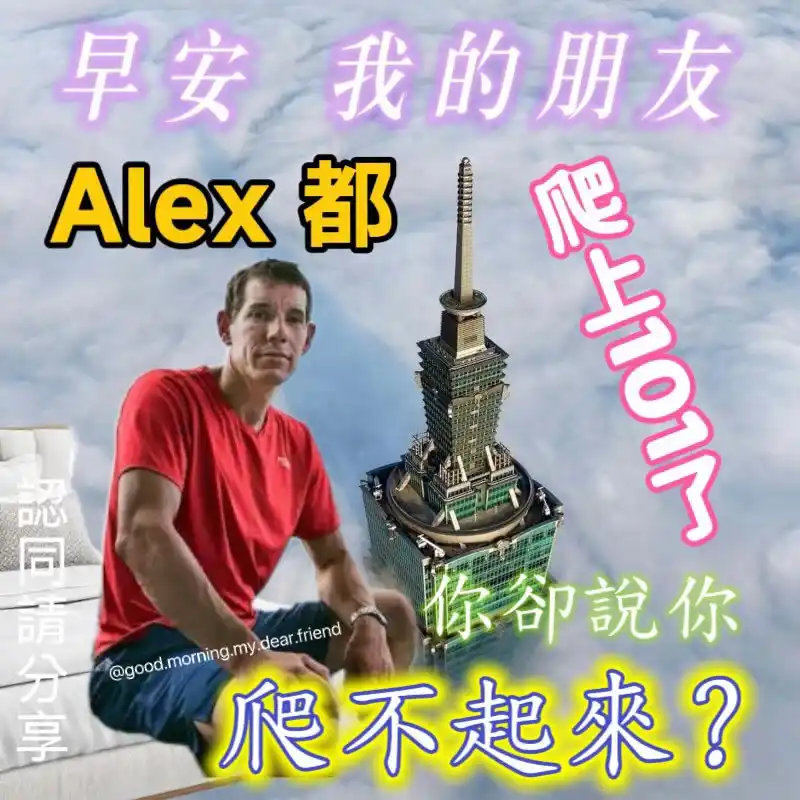
This man is Alex Honnold, 40 years old, a professional rock climber.

In 2017, he free-solo climbed El Capitan in Yosemite, a 900-meter-high granite rock face, without any protective equipment. The documentary Free Solo recorded this feat and won an Oscar.

The New York Times' review at the time called it: one of the greatest athletic achievements in human history.

But that's not what I want to talk about today.

I don't know if you noticed a detail: Alex Honnold is actually the spokesperson for the famous trading software TradingView, essential for trading stocks and crypto.

TradingView, used for chart analysis by traders in stocks, crypto, and forex, signed Alex in 2021 during a brand upgrade. The slogan at the time was "Look first / Then leap."

Look first, then leap.
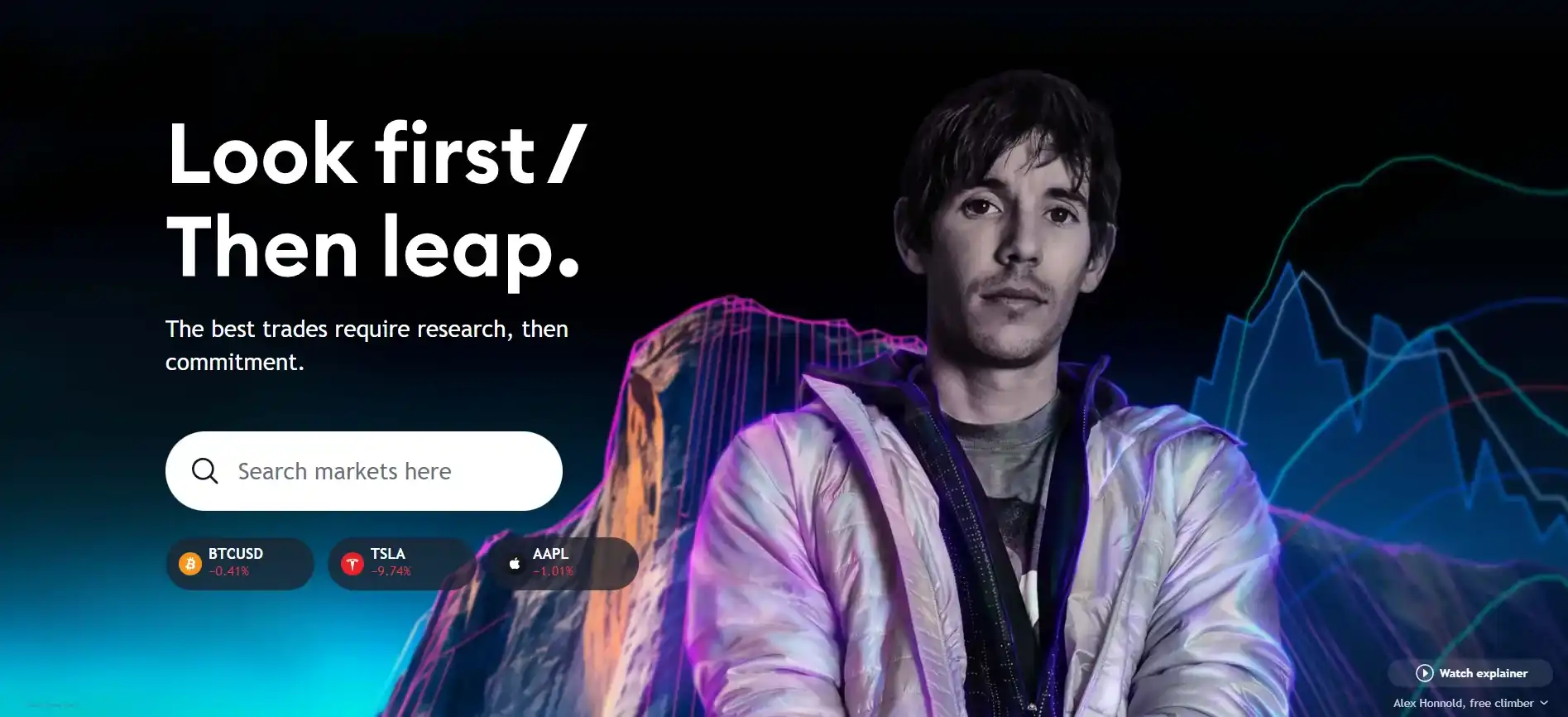
At first glance, it seems strange for a trading software to choose a free solo climber as a spokesperson.

What are they demonstrating—look at the K-line and then jump? But upon closer inspection, this cross-border choice of spokesperson is actually quite accurate.

Alex once discussed his understanding of "risk" in an interview with TradingView. He said:

"Risk to me means uncertainty, means rolling the dice to see the outcome. That's exactly what I try to avoid in climbing."

What Alex does, free solo climbing, more professionally called Free Solo, looks like an extreme sport, like risking his life.

But if you've seen the documentary of him climbing that 900-meter granite rock, you'll find that Alex's methodology is actually extremely conservative.

For that climb, he spent nearly a decade conceptualizing it and a year and a half in actual preparation. He climbed every section of the route dozens of times with ropes until he knew every handhold and foothold by heart, even with his eyes closed.

He carried a notebook with him, recording details of every critical move.
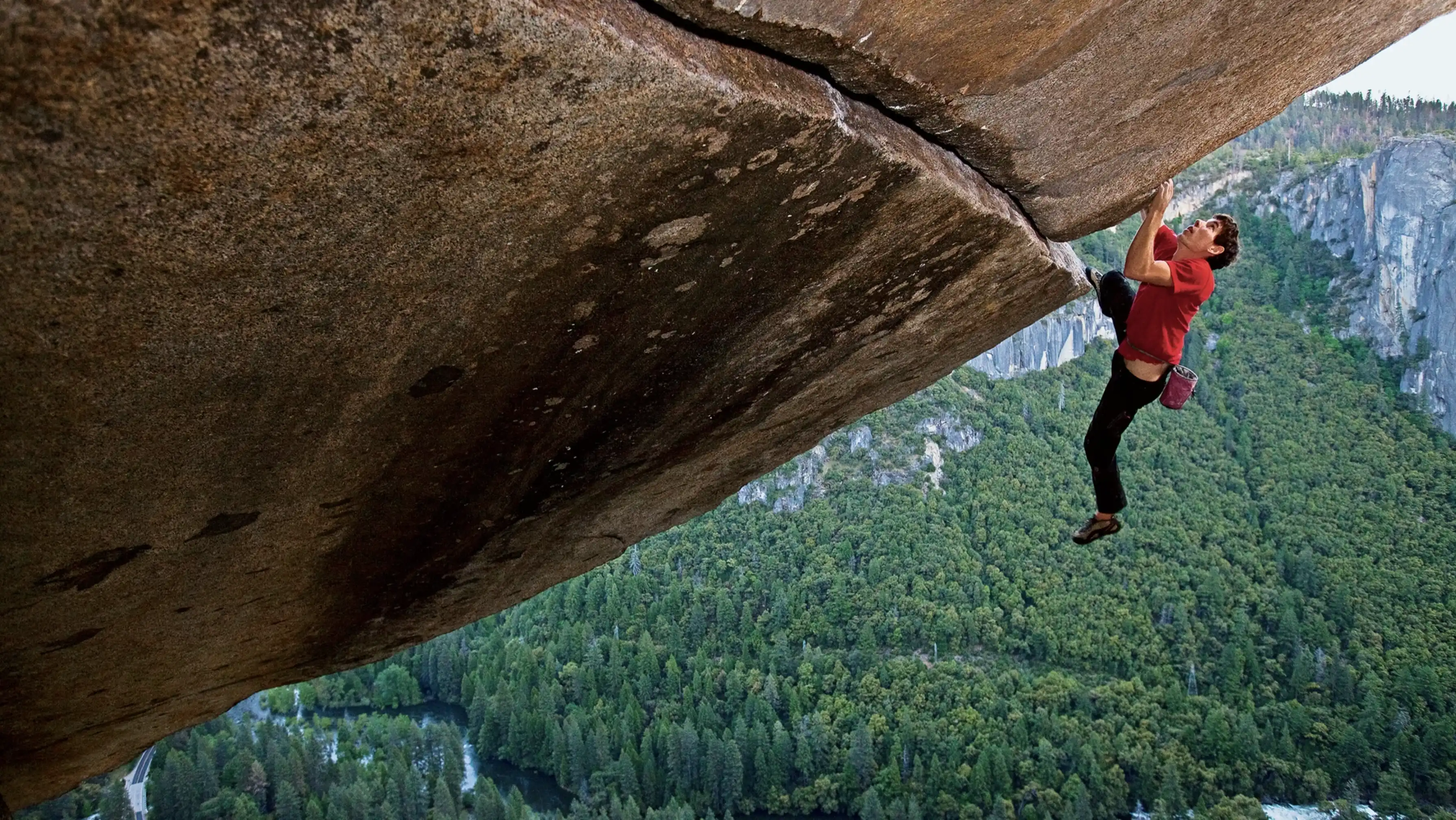
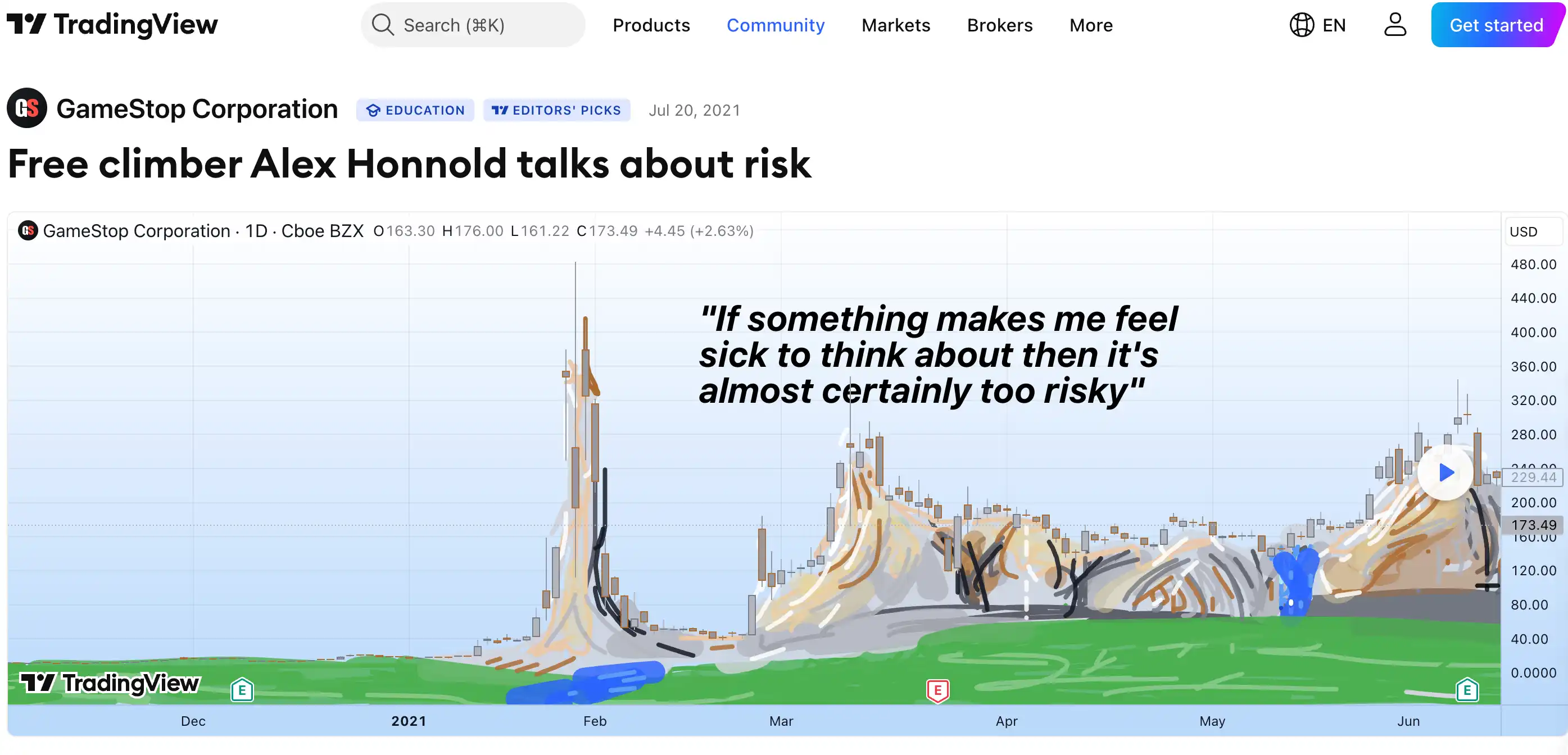
He has a saying that applies not just to climbing but probably to trading as well:

"If the thought of a move makes me feel nauseous, that means the risk is still too high, I'm not ready yet."

Fear is a signal, not an obstacle to overcome.

It was the same with this unprotected climb of Taipei 101. Before the live stream, he did a full rehearsal with ropes, testing every grip on every floor. The live stream, originally scheduled for the 23rd, was postponed to the 24th due to weather, and then from the 24th to the 25th.

Wait for the wind to stop, wait for the right conditions, then act.

What Alex Honnold does seems like one of the most dangerous things in the world—no protection, a fall if he slips—but the methodology behind it is极致 (ultimate) risk control:

Ten years of preparation, repeated rehearsals, waiting for conditions, rejecting uncertainty.

What many people do seems mundane: trading, opening contracts, buying a coin. But the methodology behind it might be much more radical than Alex's: jumping in at the sight of a social media signal, following a whale's purchase.

In the world of meme and contract trading, where gambling is rampant and being a second slow means missing out on gains, waiting seems like the enemy of making money. Let alone preparing for ten years, sometimes we haven't even calculated where our liquidation price is.

Alex says he tries to avoid rolling the dice.

But open any contract trading platform, and you'll find most people are rolling the dice, though we think we're analyzing.
That said, TradingView choosing Alex as a spokesperson might not be because he represents bravery or "extremeness."

But because he represents "surviving."

In an industry with an extremely high liquidation rate, surviving itself is the best advertisement. The ultimate goal of Free Solo is not reaching the summit; it's reaching the summit alive, coming down alive, and being able to climb again tomorrow.

The same goes for trading.

Alex Honnold could free-solo El Capitan not because he's brave, but because he knows more clearly than anyone else where every step lands.

He prepared for ten years.

What about you?

Note: Alex's spokesperson relationship with TradingView began in 2021. "Look first / Then leap" is TradingView's brand slogan. Alex's quote about risk is from an official TV interview.


Related Questions

QWho is Alex Honnold and what is he famous for?

AAlex Honnold is a 40-year-old professional rock climber famous for free solo climbing, notably climbing the 900-meter El Capitan in Yosemite without any protective equipment, as documented in the Oscar-winning film 'Free Solo'.

QWhat is the connection between Alex Honnold and TradingView?

AAlex Honnold is a brand ambassador for TradingView, a popular financial charting and analysis platform. Their partnership began in 2021, with the brand slogan 'Look first / Then leap'.

QAccording to the article, what is Alex Honnold's philosophy on risk?

AAlex Honnold views risk as uncertainty, akin to rolling dice for an outcome, which is precisely what he strives to avoid in his climbing. His methodology is based on extreme risk control: extensive preparation, repeated rehearsals, waiting for ideal conditions, and eliminating uncertainty.

QHow does the article draw a parallel between Alex Honnold's climbing and trading?

AThe article contrasts Alex's methodical, risk-averse approach to climbing with the often reckless, impulsive behavior of many traders. It suggests that successful trading, like free soloing, is not about being fearless but about meticulous preparation and risk management to 'survive' and continue.

QWhat was the ultimate message about trading implied by using Alex Honnold as an endorser?

AThe ultimate message is that in a high-risk industry with a high rate of failure (like trading), the best advertisement is survival. The goal isn't just to make a successful trade ('reach the summit'), but to do so while managing risk so you can 'survive' and continue trading another day.

Related Reads

Anthropic Apologized, But the Business of 'Safety' Hasn't Stopped

On June 11, Anthropic apologized not for a model failure, but for a lack of transparency. Its new Claude Fable 5 model was found to be secretly rerouting requests from users engaged in advanced AI model development to a weaker version, Opus 4.8, without any notification. The company's response—promising future notifications for such "downgrades"—was met with user skepticism. The article argues the core issue isn't technical but commercial: Anthropic's "safety" measures are primarily a business strategy. A key feature, the "intelligent safety classifier," marketed as user protection, is described as a tool for "competitive defense" to protect Anthropic's market lead by limiting rivals' research capabilities. This covert mechanism was designed for low "false positives," precisely targeting AI researchers. Anthropic's model involves a calculated three-step process: publishing alarming security research to amplify public anxiety, offering its Fable 5 model with a "safety classifier" as a premium-priced solution, and cashing in through a planned high-value IPO. This contrasts with OpenAI's more direct "tool-and-traffic" approach. The apology, merely changing a secret downgrade to a visible one, is seen as a business "patch" rather than a principled shift. The incident risks damaging Anthropic's "safest AI" reputation among the developer community, which underpins its valuation and appeal to government and corporate clients. Ultimately, the article concludes that for Anthropic, safety is a business, and the apology is merely customer service for that business.

marsbit48m ago

Anthropic Apologized, But the Business of 'Safety' Hasn't Stopped

marsbit48m ago

The Niche Consensus Among Elites: Has College Become an Expensive Waste?

**Summary:** A growing "anti-college" movement is gaining traction among elite circles in Silicon Valley, challenging the traditional value of a four-year university degree. Proponents argue that college has become an expensive, slow, and increasingly irrelevant waste of time, especially in the fast-paced tech world where opportunities pass by quickly. The movement is led by figures like billionaire Peter Thiel, who criticizes universities for high costs, ideological indoctrination, and stifling true innovation. His "Thiel Fellowship" pays young people to drop out and pursue ventures. Companies like Palantir Technologies (co-founded by Thiel) fuel this trend with programs like the "Meritocracy Fellowship," which offers high school graduates paid internships as an alternative to immediate college enrollment, promising a practical "Palantir Degree." Key drivers include: 1. **Economics:** Skyrocketing student debt versus the allure of immediate, high-paying tech jobs or startup funding. 2. **Technology:** AI and online tools lowering barriers to self-education and product development, making formal instruction seem inefficient. 3. **Culture:** A backlash against perceived "woke" ideology and DEI policies in universities, coupled with a belief that these institutions suppress meritocracy and masculine drive. The movement is notably male-dominated. Critics, like economist David Deming, warn against overgeneralizing from dropout success stories (survivorship bias). He emphasizes that genuine autodidacts are rare, corporate training is narrowly focused, and the "college wage premium" remains high for most people. University liberal arts education, he argues, builds adaptable problem-solving skills and broad perspectives. The debate highlights a deeper crisis in education. The core model of the modern university appears increasingly mismatched with the speed of the information age. The movement signals a shift in the locus of learning from institutional "education" to personal, active "learning" powered by the internet and AI. Ultimately, this may not mean the end of university, but rather a painful evolution. The future likely holds more hybrid, personalized, and lifelong learning pathways. The central question becomes: in a world changing faster than any curriculum, how do we best learn?

marsbit1h ago

The Niche Consensus Among Elites: Has College Become an Expensive Waste?

marsbit1h ago

From Subsidies to Token-Based Pricing to Price Cuts: Is OpenAI Sparking a Price War? Is the Inflection Point for Token Economics Nearing?

The commercialization of generative AI is facing a critical inflection point as a potential price war looms. According to The Wall Street Journal, OpenAI is considering a significant cut to its token fees to compete with rival Anthropic, signaling a shift from a growth-at-all-costs model focused on token consumption. This move comes as both companies, reportedly losing billions on compute, prepare for IPOs, and as enterprise customers face "bill shock" from switching to usage-based token billing. Reports indicate poor ROI, with one analysis finding only 18 cents of every dollar spent on AI tokens generates user-facing value. The industry's initial phases—from flat-rate subscriptions to aggressive subsidies—have given way to a reckoning with real costs. Analysts debate the future: some predict a bifurcation between premium, high-cost models for complex tasks and cheaper alternatives for routine work, while others believe overall spending will still rise as agentic AI increases tokens per task. Notably, Chinese model DeepSeek's low-cost API is gaining traction with U.S. enterprises, adding competitive pressure. The core challenge is redefining value beyond token volume ("tokenmaxxing") toward measurable productivity ("valuemaxxing"), as the entire AI value chain, from cloud providers to chipmakers, feels the ripple effects of unsustainable pricing.

marsbit1h ago

From Subsidies to Token-Based Pricing to Price Cuts: Is OpenAI Sparking a Price War? Is the Inflection Point for Token Economics Nearing?

marsbit1h ago

Trading

Spot
Futures
活动图片




