# Rollup İlgili Makaleler

HTX Haber Merkezi, kripto endüstrisindeki piyasa trendleri, proje güncellemeleri, teknoloji gelişmeleri ve düzenleyici politikaları kapsayan "Rollup" hakkında en son makaleleri ve derinlemesine analizleri sunmaktadır.


Long-Divided Must Unite, Long-United Must Divide: When L1 Becomes Its Own Rollup, What Is Ethereum's Endgame?

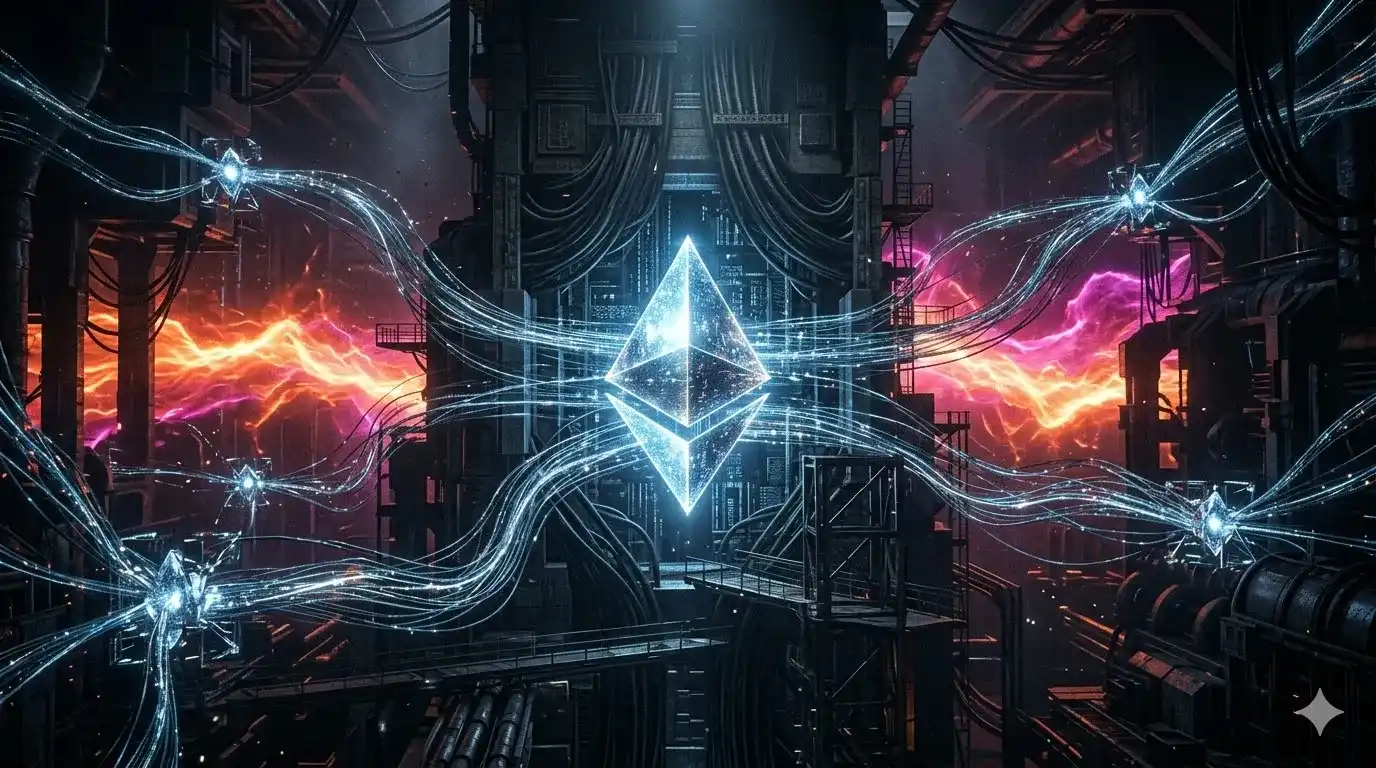
"The Inevitable Cycle: When L1 Becomes Its Own Rollup – What is Ethereum's Endgame?" For years, the Ethereum community grappled with concerns that L2s were fragmenting the ecosystem and eroding L1's value. While L2s provided cheaper execution, they also splintered liquidity and the unified user experience of a single chain. This has prompted a fundamental reassessment of the relationship between L1 and L2. Ethereum's roadmap is evolving. The "Scale" initiative merges L1 and L2 expansion into a holistic framework. L1 itself is advancing with higher gas limits, statelessness, and zkEVM verification, no longer content to be just a low-throughput settlement layer. Consequently, the primary value proposition of L2s is shifting from merely providing cheap blockspace to offering L1 cannot easily provide: application-specific optimizations, privacy features, and flexible governance models. L2s are becoming a spectrum of execution environments with varying degrees of security inheritance from Ethereum. A critical challenge in this multi-chain future is interoperability. The vision is to make Ethereum "feel like one chain again." This relies on advancements in native account abstraction (like EIP-7702) and intent-based architectures (Open Intents Framework), where users declare desired outcomes, and solvers handle the complex cross-chain execution. Furthermore, shortening Ethereum's finality time from minutes to seconds is crucial, as it underpins trust between chains for bridges, stablecoins, and cross-chain applications. Perhaps the most provocative idea is that Ethereum L1 itself could become a form of "its own Rollup." As zkEVM and proof systems mature, high-performance nodes could execute transactions and generate validity proofs. Regular validators would then verify these proofs instead of re-executing all transactions. This blurs the traditional L1/L2 hierarchy, making "Rollup" more of a general execution-verification architecture. Native Rollup aims to integrate L2 validation more directly into the Ethereum protocol, allowing L2s to inherit L1's security more fully and move away from reliance on security councils. In the end, L2s are not destined to replace L1 or be made obsolete by it. The likely future is a unified system where diverse execution environments—each optimized for specific use cases like DeFi, gaming, or privacy—coexist. They will share a common foundation of security, liquidity, and verifiable state, seamlessly connected to restore a cohesive user experience. The next phase for Ethereum is not just about scaling through separation, but about intelligently reintegrating what was separated back into a coherent whole.

链捕手07/22 00:49

Long-Divided Must Unite, Long-United Must Divide: When L1 Becomes Its Own Rollup, What Is Ethereum's Endgame?

链捕手07/22 00:49

L2 'Recalibration': When L1 Becomes Its Own Rollup, What Is Ethereum's Endgame?

The article discusses the evolving relationship between Ethereum's Layer 1 (L1) and Layer 2 (L2) solutions, moving beyond the initial "L2 for scaling" model. As Ethereum L1 itself scales (increasing Gas Limit, statelessness, zkEVM), the unique value proposition of L2s shifts from merely providing cheap execution to offering differentiated features like application-specific optimization, privacy, and flexible governance. The piece explores three key themes: 1. **L2's New Role:** L2s are transitioning from a pure scaling technology to a spectrum of execution environments with varying degrees of security inheritance from Ethereum L1. 2. **Interoperability as State Trust:** Solving L2 fragmentation is less about cross-chain bridges and more about enabling faster, trust-minimized state verification between environments. This involves initiatives like faster L1 finality, intent-based architectures (Open Intents Framework), and native account abstraction. 3. **Blurring Layers:** With the potential integration of zk-proofs into L1 validation (making L1 akin to its own "Rollup") and the concept of "Native Rollups," the rigid boundary between L1 and L2 may fade. The future could be a unified system with multiple execution domains (for DeFi, gaming, privacy, etc.) sharing a common security, settlement, and state framework. In conclusion, Ethereum's goal is not to abandon L2s or re-centralize everything on L1, but to re-integrate the fragmented user experience—liquidity, accounts, applications—while preserving the scaling benefits of a multi-environment ecosystem. The endgame is a cohesive "one chain" feeling for users, powered by diverse but securely interconnected execution layers.

marsbit07/21 12:54

L2 'Recalibration': When L1 Becomes Its Own Rollup, What Is Ethereum's Endgame?

marsbit07/21 12:54

Starknet Launches Privacy-First Bitcoin strkBTC, Targeting Institutional On-Chain Finance

Starknet introduces strkBTC, a privacy-focused version of Bitcoin designed for institutional on-chain finance. As digital assets face increased scrutiny, two major challenges emerge: the public visibility of all transactions and the looming threat of quantum computing to current cryptographic signatures. Bitcoin, representing over 56% of the crypto market, highlights these issues most clearly. strkBTC, built on Starknet’s STRK20 privacy framework, allows Bitcoin to be used privately on-chain while maintaining compliance. It operates in two modes: a public mode like standard ERC-20 tokens, and a shielded mode that hides balances and transactions from public view. This addresses the need for confidentiality in institutional finance, similar to traditional markets’ private trading venues. A third-party auditor, Financial Privacy Inc, holds view keys for regulatory access when necessary. Additionally, Starknet is positioned ahead in quantum resistance. Its STARK-based proof system relies on hash functions rather than elliptic-curve cryptography, making it less vulnerable to quantum attacks. Starknet’s native account abstraction also allows easier migration to quantum-resistant signatures without protocol-level forks. The team has outlined a roadmap to achieve end-to-end quantum security before “Q-day,” though dependencies on Ethereum’s own migration remain. While strkBTC currently uses a trusted bridge consortium, Starknet plans to transition toward more trustless, Bitcoin-native verification over time. The initiative underscores a shift in on-chain finance beyond yield—prioritizing privacy, compliance, and long-term security for institutional adoption.

marsbit07/21 10:20

Starknet Launches Privacy-First Bitcoin strkBTC, Targeting Institutional On-Chain Finance

marsbit07/21 10:20

From Playing with Narratives to Coding: With L2 Fees Dropping Below 1 Cent, How Will Ethereum Make Money Without 'Selling Gas'?

Once the engine of Web3 narratives, Ethereum is undergoing a fundamental shift in 2026, moving from grand visions to pragmatic engineering. Its updated protocol priorities—Scale, Improve UX, and Harden the L1—signal a transition into an "engineering-driven survival" mode, pressured by intense competition. A key development is the upcoming Glamsterdam hard fork, which will drastically increase the mainnet Gas limit and introduce parallel execution. This architectural shift from a single-threaded to a multi-lane "highway" aims to boost throughput but challenges Ethereum's "full node democratization" principle, accelerating state growth and hardware demands. To counter this, the core team is pushing for ~10% of validators to adopt zero-knowledge proof validation ("SNARKing the L1"), a pivotal move towards computational efficiency. This engineering push is a direct response to external threats, notably Solana's Alpenglow upgrade, which slashes finality to under 150ms—a disruptive latency level competitive with traditional web infrastructure. Ethereum's modular architecture, while secure, struggles with the speed required for consumer-grade applications. Internally, Ethereum faces the "L2 paradox." While Layer-2 scaling solutions like Rollups have succeeded, driving transaction costs below $0.001 and vastly improving UX, they risk making the mainnet an invisible backend. This decouples users from Ethereum's core value propositions: decentralization and its validator network. Consequently, ETH's value capture model is being rewritten. The old "ultrasound money" narrative, fueled by gas fee burns, is fading as activity migrates to L2s. ETH is transforming from a retail-facing "gas seller" into a B2B "security and settlement service." Its new foundation rests on staking and restaking yields, making it resemble a digital sovereign bond—a low-yield, high-security asset backing the entire decentralized financial ecosystem. In 2026, Ethereum is proving itself not with stories, but with code. Its success hinges on this engineering pivot and ETH's ability to capture value from its new role as the foundational security layer.

marsbit03/18 05:50

From Playing with Narratives to Coding: With L2 Fees Dropping Below 1 Cent, How Will Ethereum Make Money Without 'Selling Gas'?

marsbit03/18 05:50

活动图片