# Nvidia Articoli collegati

Il Centro Notizie HTX fornisce gli articoli più recenti e le analisi più approfondite su "Nvidia", coprendo tendenze di mercato, aggiornamenti sui progetti, sviluppi tecnologici e politiche normative nel settore crypto.

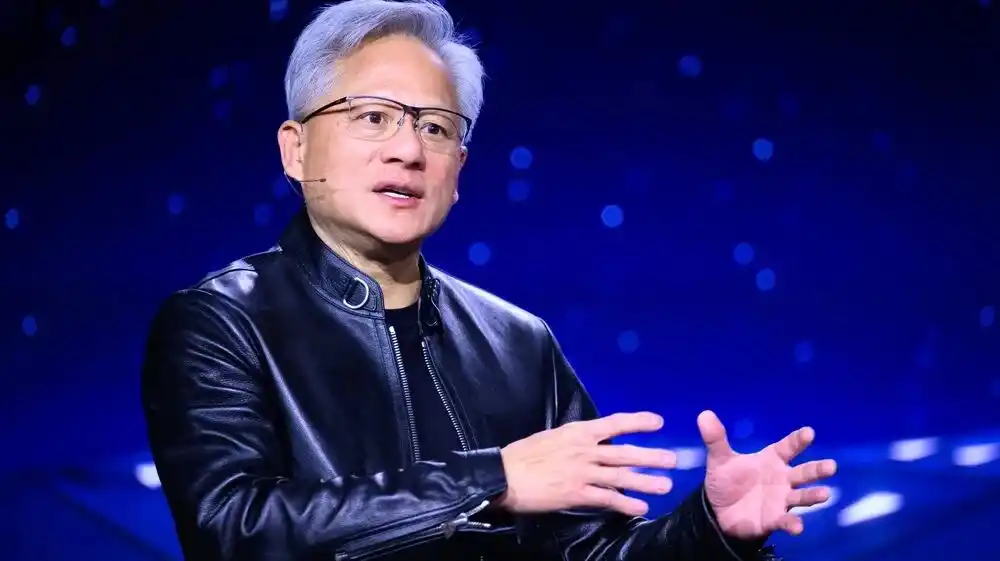
Jensen Huang is Satoshi Nakamoto

Summary: The article draws a compelling parallel between Jensen Huang, CEO of NVIDIA, and Satoshi Nakamoto, the pseudonymous creator of Bitcoin. It argues that both figures, though operating in different eras, fundamentally architected new "token economies" based on a core conversion rule: inputting computational power (electricity) to output a valuable token. Nakamoto's 2008 whitepaper defined a system where Proof-of-Work mining produces scarce cryptographic tokens, creating a decentralized "faith economy" based on speculative value. In 2026, Huang is portrayed as performing a structurally identical act at GTC. Instead of merely selling GPUs, he presented a complete "token economics" framework, segmenting the market into tiers (Free, Medium, High, Premium, Ultra) based on inference speed, model type, and price per million tokens. He defined valuable computation for the AI age. The key distinction lies in the tokens' purpose and resulting scarcity. Crypto tokens derive value from artificial, code-enforced scarcity (e.g., Bitcoin's 21 million cap) and are meant to be held. AI tokens derive value from their immediate consumption for productive tasks (coding, decision-making) and face a natural, physical scarcity governed by the laws of thermodynamics, land, and power grids, which Huang's hardware is designed to maximize. Ultimately, while Nakamoto created a speculative asset, Huang is building an indispensable utility. The AI token economy, powered by NVIDIA ecosystem, is argued to be more resilient and fundamental, as the author concludes, "You don't need to believe the token has value—your credit card bill has already proven it." Huang is presented as the visible, commercial architect of a tangible token future, the successor to Satoshi's anonymous, ideological blueprint.

marsbit2 h fa
Jensen Huang is Satoshi Nakamoto

marsbit2 h fa

NVIDIA Starts Installing Chips on Roads | Rewire Evening News Update

NVIDIA CEO Jensen Huang announced at GTC that the company's data center orders for Blackwell and Vera Rubin platforms are projected to exceed $1 trillion by 2027, doubling last year's estimates. He emphasized that computing demand will far surpass this figure. Beyond data centers, NVIDIA is expanding its autonomous driving ecosystem, adding BYD, Geely, Nissan, and Isuzu to its Drive Hyperion platform. A partnership with Uber aims to deploy robotaxis in Los Angeles and San Francisco by early 2027, expanding to 28 markets by 2028—a moment Huang calls "the ChatGPT moment for autonomous driving." In related news, Uber co-founder Travis Kalanick revealed his stealth robotics startup, Atoms, after eight years of operation. The company focuses on automating physical infrastructure, mining, and robotic platforms. Kalanick is reportedly acquiring autonomous driving firm Pronto, with Uber's support, signaling a strategic re-entry into automation. Meanwhile, Murata Manufacturing, the world's largest MLCC supplier with over 40% market share, raised prices for AI server and automotive-grade components by 15-35%, effective April 1. This marks its first major price hike in three years and highlights hidden cost pressures in AI infrastructure supply chains. The SEC is also considering allowing public companies to switch from quarterly to semi-annual financial reporting, reducing compliance costs and potentially benefiting tech firms making long-term AI investments. Additional updates include Alibaba providing employees with free AI tool tokens, FDIC moving to exclude stablecoins from deposit insurance, deepfake misinformation spreading during the Israel-Hamas war, and Picsart launching an AI Agent marketplace for creators.

marsbitIeri 19:08

NVIDIA Starts Installing Chips on Roads | Rewire Evening News Update

marsbitIeri 19:08

Firecrawl Launches Web Scraping Tool for Agents, NVIDIA Releases Nemotron 3 Super: What's the English Community Discussing Today?

Over the past 24 hours, key discussions in the English-speaking crypto and AI communities centered on several major developments. Firecrawl launched a CLI toolchain specifically for AI agents, enabling efficient web scraping and data extraction, though its pricing drew some criticism. Nvidia released Nemotron 3 Super, a 120B-parameter open-weight model with a 1M-token context window, raising both excitement and concerns over latency and safety. Google introduced Nano Banana 2, a high-speed image generation model, though its naming was met with mixed reactions. In AI agent infrastructure, Base44’s Superagent entered the cloud-based agent automation space, intensifying competition with local solutions like OpenClaw and raising debates over security and centralization. Ramp’s AI Index suggested Anthropic is gaining traction as the preferred enterprise AI vendor over OpenAI. In crypto, Solana continued to strengthen its infrastructure with DoubleZero Edge’s real-time market data via multicast technology and led in stablecoin transfer volume after filtering wash trading. Jupiter launched its Season 2 rewards program with a $2M JupUSD pool. Ethereum saw progress in L2 interoperability with on.eth addressing cross-chain identity fragmentation. Base ecosystem projects like Noise.xyz and rip.fun attracted significant attention, while Circle experimented with AI agents autonomously managing a hackathon using USDC. Perp DEX Lighter introduced a revised market structure to improve fairness, and prediction market platform Kalshi noted growing institutional engagement, with Marco Rubio emerging as an early favorite for the 2028 U.S. presidential election. Overall, themes included the shift toward cloud-based AI agents, model capability races, enterprise AI adoption, and the maturation of on-chain trading and prediction markets.

marsbit03/12 15:41

Firecrawl Launches Web Scraping Tool for Agents, NVIDIA Releases Nemotron 3 Super: What's the English Community Discussing Today?

marsbit03/12 15:41

Strongest Earnings Report in 15 Years Fails to Mask Trillion-Dollar Debt; Oracle Rumored to Lay Off 30,000 in 'AI Replacement' Move—Can It Fill the Computing Power Pit?

Oracle reported its strongest financial results in 15 years, with Q3 revenue reaching $17.2 billion, a 22% year-over-year increase, and cloud revenue surging 44%. The company's remaining performance obligations (RPO) grew 325% to $553 billion. Despite these gains, Oracle faces significant financial challenges, including negative free cash flow of -$13.18 billion over the past 12 months and total debt exceeding $100 billion, with an additional $248 billion in off-balance-sheet lease commitments. To fund its aggressive data center expansion—with capital expenditures projected to reach $50 billion this year—Oracle is reportedly planning to lay off up to 30,000 employees. Analysts estimate these cuts could save the company $8–10 billion in free cash flow. The shift toward an asset-light “AI infrastructure management” model, where clients prepay or supply their own GPUs, reduces balance sheet pressure but also transforms Oracle into a lower-margin service operator. Competitive pressures are mounting: key clients like OpenAI have canceled expansion plans due to rapid chip obsolescence, as NVIDIA’s new Vera Rubin chips offer significantly better performance. This reflects a broader industry trend where tech giants are cutting jobs to fund AI investments, transferring the cost of technological advancement onto their workforce.

marsbit03/11 05:57

Strongest Earnings Report in 15 Years Fails to Mask Trillion-Dollar Debt; Oracle Rumored to Lay Off 30,000 in 'AI Replacement' Move—Can It Fill the Computing Power Pit?

marsbit03/11 05:57

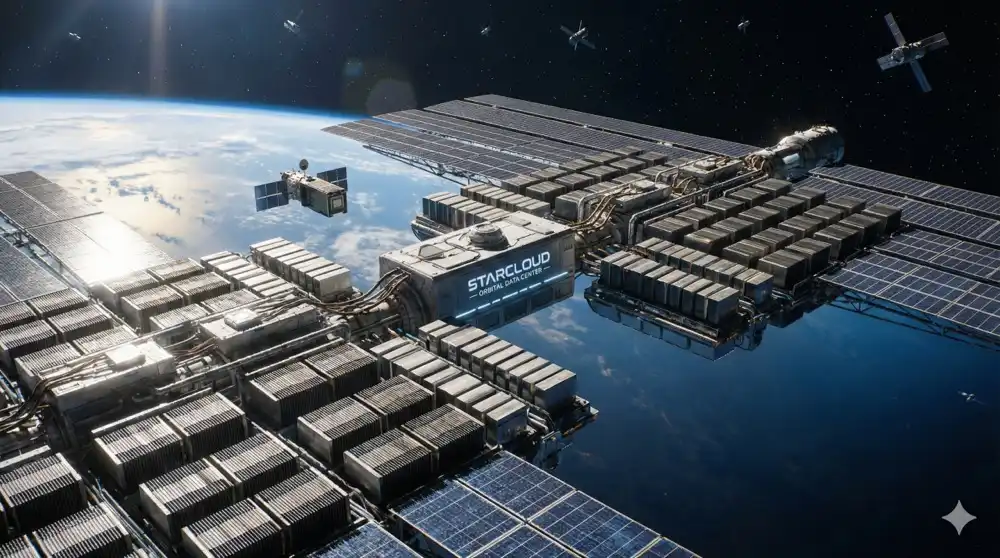
After Sending NVIDIA AI Servers into Space, This Space Startup Now Sets Its Sights on Bitcoin Mining

A space computing startup, Starcloud, is expanding its ambitions after successfully sending NVIDIA AI servers into orbit. The company now plans to launch Bitcoin mining operations into space, aiming to leverage the advantages of the extraterrestrial environment. CEO Philip Johnston revealed that Starcloud intends to deploy Bitcoin ASIC hardware on its Starcloud-2 satellite, scheduled for launch in 2026. If successful, it would mark the first-ever Bitcoin mining operation in space. The company believes space offers significant benefits, including near-limitless solar energy, reduced cooling costs due to extreme environmental conditions, and freedom from terrestrial energy constraints and regulatory pressures. However, the economic viability remains uncertain due to high launch costs, hardware durability challenges in high-radiation environments, and rapidly evolving mining technology. While the initiative may currently hold more symbolic than practical value, it reflects a growing trend of extending blockchain and computing infrastructure beyond Earth. Starcloud, backed by investors like a16z and Sequoia, has already made strides by training an AI model in orbit using an NVIDIA H100 GPU. The company, along with others like Google and SpaceX, is part of a broader movement to develop space-based data centers, signaling that the next frontier for AI and computing may indeed be in orbit.

marsbit03/10 05:33

After Sending NVIDIA AI Servers into Space, This Space Startup Now Sets Its Sights on Bitcoin Mining

marsbit03/10 05:33

活动图片