# Labs İlgili Makaleler

HTX Haber Merkezi, kripto endüstrisindeki piyasa trendleri, proje güncellemeleri, teknoloji gelişmeleri ve düzenleyici politikaları kapsayan "Labs" hakkında en son makaleleri ve derinlemesine analizleri sunmaktadır.

6th Man Ventures Founder: Forget the 'Token vs. Equity' Debate, What Really Needs to Be Trusted?

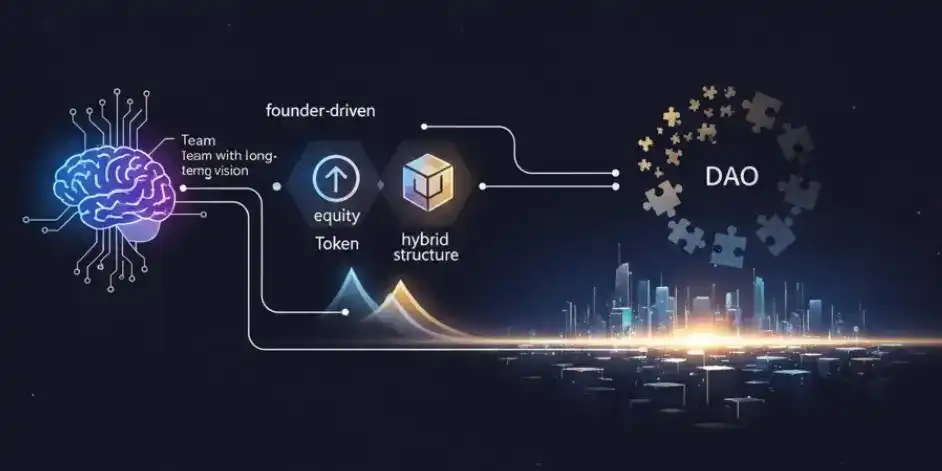
Mike Dudas, founder of The Block and 6th Man Ventures, argues that the debate between tokens and equity misses the point: the real question is what deserves trust. He suggests there is no one-size-fits-all answer to whether a "dual token + equity" structure works. Instead, the core principle is trusting a team that is not only exceptional but also long-term oriented, committed to building a founder-led, enduring business like Binance. Dudas notes that for application-layer projects requiring sustained leadership, tokens often underperform compared to equity. Many DeFi 1.0 founders have left their projects, which are now maintained by DAOs in "maintenance mode," struggling with slow and ineffective decision-making. Pure equity isn’t always superior either—tokens enable functions like fee discounts, staking for airdrops, and access rights, which equity can’t easily replicate. He proposes a hybrid model: an equity entity operates on a "cost-plus" basis to serve a token-driven protocol, aiming not to maximize its own profits but to maximize the token’s and ecosystem’s value. This requires high trust in the team, as token holders lack strong legal rights. Ultimately, success depends on the team’s capability, credibility, execution, vision, and action. The best tokens will thrive by 2026 if teams communicate well, conduct buybacks, enable substantive governance, and direct value to the token through utility.

marsbit01/12 08:09

6th Man Ventures Founder: Forget the 'Token vs. Equity' Debate, What Really Needs to Be Trusted?

marsbit01/12 08:09

6th Man Ventures Founder: How to Find the Most Valuable Crypto Projects?

Founder of 6th Man Ventures discusses the viability of the "dual-token + equity" structure, emphasizing that there is no one-size-fits-all answer. The key is backing an exceptional, long-term-focused team committed to building a founder-led, enduring enterprise, similar to Binance’s Changpeng Zhao. He argues that for application-layer projects requiring sustained leadership, tokens often underperform equity. Many DeFi 1.0 founders have departed, leaving DAOs and part-time contributors in "maintenance mode," struggling with slow and ineffective decision-making. In contrast, equity isn’t always superior—tokens enable unique utilities like fee discounts, staking for airdrops, and access rights, which equity cannot easily replicate. "Ownership tokens" currently face limitations in product integration and legal recognition in the U.S. due to regulatory gaps. However, a hybrid model is proposed: an equity entity operates on a "cost-plus" basis to serve a token-driven protocol, aiming to maximize token and ecosystem value rather than corporate profits. This structure benefits token holders with a well-funded Labs entity for development and a core team heavily incentivized via token holdings. Success hinges on trust in the team’s execution and vision, as token holders lack strong legal protections. Ultimately, team quality, credibility, and execution determine value. Over time, consistent delivery and clear value accrual to tokens—through buybacks, governance, and utility—will allow the best tokens to thrive by 2026, even with equity/Labs entities.

marsbit01/08 08:59

6th Man Ventures Founder: How to Find the Most Valuable Crypto Projects?

marsbit01/08 08:59

The Governance Struggle Behind the Power Play of Aave DAO and Aave Labs

The article details a governance conflict between Aave DAO and Aave Labs, centering on a dispute over revenue generated by the frontend. The controversy began when Aave Labs replaced the integrated ParaSwap with CoW Swap on its frontend and directed the resulting fees to its private address, rather than to the DAO treasury. An anonymous DAO member, EzR3aL, publicly criticized this move, accusing Labs of privatizing protocol value. Aave DAO represents the protocol layer, governed by $AAVE token holders who vote on proposals. Aave Labs is the development team responsible for building and maintaining the frontend, brand, and product partnerships. The core issue is whether Aave is a decentralized protocol owned by the DAO or a project built and controlled by Labs, and how this distinction affects revenue rights. DAO supporters argue that all value generated should benefit token holders, while Labs contends that frontend-related income rightfully belongs to them. The situation highlights a broader industry-wide governance dilemma: the tension between decentralized community control and the need for a centralized, efficient team to drive development and maintain market position. The article suggests that a potential compromise, such as transparent revenue-sharing agreements, may be necessary. It concludes that how Aave resolves this conflict could set a precedent for other DeFi projects facing similar governance challenges.

marsbit12/15 14:41

The Governance Struggle Behind the Power Play of Aave DAO and Aave Labs

marsbit12/15 14:41

活动图片