# Bridges Related Articles

HTX News Center provides the latest articles and in-depth analysis on "Bridges", covering market trends, project updates, tech developments, and regulatory policies in the crypto industry.


On-Chain Metrics Practical Guide: Identifying Real Signals, Avoiding Data Traps

A practical guide to on-chain metrics for traders, focusing on identifying genuine signals and avoiding data traps. Key concepts include distinguishing between transaction fees (user-paid costs), protocol revenue (actual earnings), and MEV (maximal extractable value), emphasizing that sustainable revenue matters more than high fees. Total Value Locked (TVL) is often misleading due to double-counting, incentive-driven "mercenary capital," and idle stablecoins. Traders should analyze TVL alongside transaction volume and incentives. Daily Active Addresses (DAA) can be inflated by bots and airdrop farmers; it’s only meaningful when correlated with fees and real activity. Cross-chain bridges enable asset transfers but carry risks like smart contract vulnerabilities and centralization. Monitor bridge volumes for liquidity flow insights. Stablecoin supply acts as crypto’s money supply (M2); increasing supply suggests market liquidity, while decreases may signal withdrawals. Token unlocks and emissions create sell pressure; avoid tokens nearing large unlocks unless trading short-term. The ratio of transaction volume to TVL indicates capital efficiency—high ratios reflect active usage, while low ratios suggest "ghost liquidity." In summary, on-chain metrics are analytical tools, not absolute truths. Cross-verify signals and interpret data contextually for informed decisions.

比推12/25 13:06

On-Chain Metrics Practical Guide: Identifying Real Signals, Avoiding Data Traps

比推12/25 13:06

We've Hoarded Trillions in Bitcoin, But Never Use It? That's Changing Now

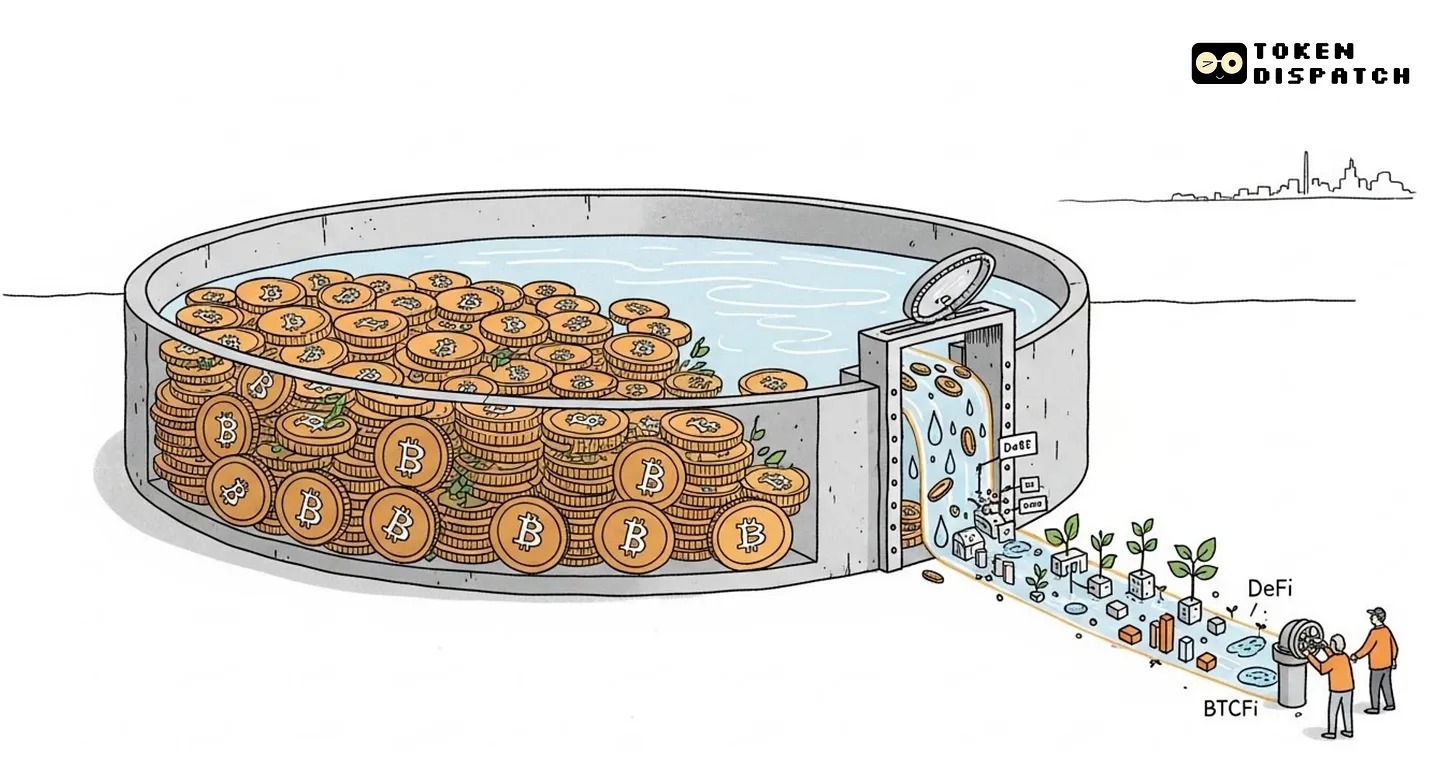
A significant portion of Bitcoin's trillion-dollar market cap remains dormant, with 61% of coins not moving in over a year and only 0.8% used in DeFi. While other ecosystems like Ethereum and L2s thrive with active use cases, Bitcoin has largely functioned as a passive store of value due to architectural and cultural constraints—prioritizing security over programmability, resisting upgrades, and lacking native interoperability. Previous solutions like wrapped BTC, federated systems, and bridges attempted to unlock Bitcoin’s liquidity but introduced new risks like custodial trust, security vulnerabilities, and reliance on external validators, contradicting Bitcoin’s trust-minimized ethos. However, this is changing with recent breakthroughs. Innovations like BitVM enable Bitcoin to verify external computations without executing them, allowing for Bitcoin-secured rollups and trust-minimized bridges. Upgrades like Taproot facilitate native assets and programmable vaults. New systems now support Bitcoin staking, restaking, and Lightning Network-based yield without requiring custodial wrapping or bridging. This emerging BTCFi ecosystem—comprising infrastructure, asset, and protocol layers—finally allows Bitcoin to participate in a functional economy while preserving its security model and self-custody principles. This could unlock a portion of the dormant capital, significantly impacting the broader crypto landscape.

marsbit12/09 02:55

We've Hoarded Trillions in Bitcoin, But Never Use It? That's Changing Now

marsbit12/09 02:55

Bitcoin's Dormant Capital Has Finally Awakened

Bitcoin, the largest and most secure cryptocurrency, has historically been underutilized, with over 60% of its supply dormant for more than a year and less than 1% engaged in DeFi. While other ecosystems like Ethereum and Solana evolved with smart contracts and vibrant economies, Bitcoin’s largely remained a passive asset due to its security-first architecture, limited scripting capabilities, slow upgrade processes, and cultural conservatism. Previous workarounds—wrapped BTC, federated systems, cross-chain bridges, and sidechains—introduced trust assumptions, custodial risks, and security vulnerabilities, failing to align with Bitcoin’s trust-minimized ethos. Recent breakthroughs are changing this. Innovations like BitVM enable Bitcoin to verify off-chain computations without executing them, allowing for Bitcoin-backed rollups, trust-minimized bridges, and programmable vaults. Upgrades like Taproot have expanded Bitcoin’s capabilities, enabling native assets (e.g., Taproot Assets for stablecoins) and more complex cryptographic structures. New models also allow Bitcoin to earn yield natively—through staking, restaking, and Lightning Network-based liquidity provision—without leaving self-custody. This emerging BTCFi ecosystem comprises infrastructure for secure execution environments, verifiable bridges, yield markets, and Bitcoin-native assets, all without compromising Bitcoin’s core security or self-custody principles. This marks the first time Bitcoin has a financial ecosystem capable of supporting its trillion-dollar market cap, potentially unlocking vast dormant capital and integrating it into a productive, decentralized economy.

深潮12/09 01:34

Bitcoin's Dormant Capital Has Finally Awakened

深潮12/09 01:34

活动图片