South Korea Crypto Market Research Report: Market Restart and the Next Growth Cycle

marsbitPublished on 2025-12-15Last updated on 2025-12-15

Abstract

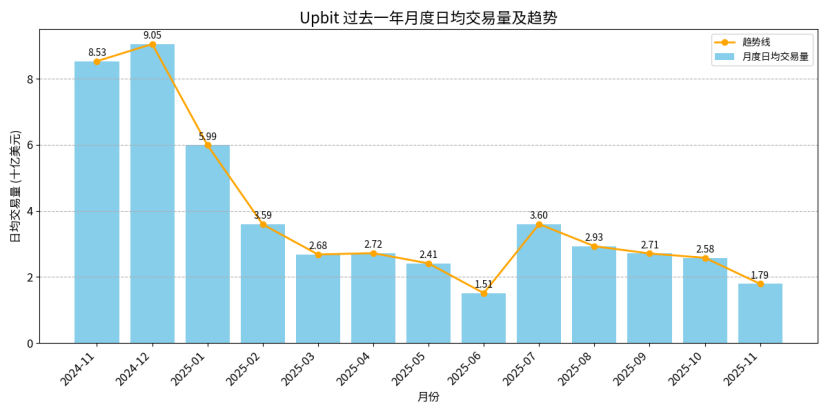
South Korea's crypto market is undergoing a significant structural reset, not a collapse. Key indicators show an 80% drop in Upbit's daily trading volume to $1.78 billion by November 2025, despite a 141% increase in new token listings. The "Kimchi Premium" has compressed to 1.75%, signaling reduced speculation. This normalization stems from regulatory delays in stablecoin legislation, strict capital controls under FETA limiting foreign liquidity, and capital rotation into the surging AI-driven stock market. Despite retail pullback, global giants like Binance are entering the market, attracted by Korea's high tech adoption rate, ongoing stablecoin pilots, and growing institutional interest in custody and tokenization. The market is shifting from speculation to utility-driven growth, with exchanges emphasizing user education and real product use cases. Future catalysts include potential Bitcoin ETF approval in 2026, which could unlock pension fund investments and improve liquidity. Partnerships between global chains (e.g., Sui, Solana, Arbitrum) and Korean giants (e.g., Shinhan Securities, Lotte Group) highlight Korea's evolution into a development hub. The reset represents a maturation toward a regulated, institution-friendly ecosystem, offering a strategic entry point for builders focused on real-world utility.

Key Signals

  • The South Korean digital asset market is undergoing one of the most significant structural resets in its history. Upbit's average daily trading volume fell from $9 billion in December 2024 to $1.78 billion in November 2025, a drop of approximately 80%. This occurred against a backdrop where the total number of new listings on Korean exchanges in 2025 actually increased by 141% year-on-year. Meanwhile, retail capital is fiercely rotating, flooding into the soaring stock market. Led by the AI chip sector, spearheaded by Samsung Electronics and SK hynix, the KOSPI index rose by about 70%.
  • The "Kimchi Premium," once seen as a hallmark phenomenon of the Korean market, historically maintained at around 10%, has now compressed to about 1.75%. This is not a massive capital flight, but a normalization process squeezing out speculative bubbles.
  • The Kimchi Premium refers to the price difference where cryptocurrencies like Bitcoin trade at a higher price on local Korean exchanges (e.g., Upbit, Bithumb) compared to global exchanges (e.g., Binance, Coinbase).
  • The core question is: Has Korea's crypto era ended, or is this a system reset before the next structural wave?

2. Behind the Freeze: Deconstructing the Slowdown in Korea's Crypto Market

This is not a short-term correction but a structural readjustment driven by a combination of regulation, capital controls, and investor fatigue.

2.1 Regulatory Delays and Uncertainty

  • The stablecoin bill, a core pillar for the future of digital assets in Korea, has been stalled for 7 months due to disputes over whether the "issuing entity should be a bank or a non-bank institution." There are currently 6 different proposals under review, and the Financial Services Commission (FSC) plans to consolidate them into a unified bill by the end of 2025.
  • This regulatory vacuum has slowed the pace of innovation on the institutional side and made Web2 companies exploring tokenization and settlement layer innovations more cautious, with the overall environment clearly shifting towards risk aversion.

2.2 Capital Outflow and Liquidity Trap

  • Korea's strict foreign exchange controls block overseas market makers and institutions from injecting liquidity, leading to a long-term trend of one-way capital outflow.
  • The Foreign Exchange Transactions Act (FETA): Non-residents cannot freely hold or flexibly use the Korean Won (KRW). The vast majority of large foreign exchange and capital movements require mandatory reporting or prior approval, significantly limiting the ability of overseas institutions to operate smoothly in the Korean market.
  • The Financial Supervisory Service's (FSS) "Foreign Exchange Business Processing Guidelines": Local banks face strict intraday position caps and are essentially prohibited from providing KRW liquidity to non-resident institutions, making it difficult for overseas market makers to establish KRW positions and provide truly bilateral liquidity services.
  • Although it is predicted that the revenue scale of Korea's digital asset market will reach $635 million by 2030, liquidity constraints remain prominent in the short term.
  • Interestingly, the Korean market is highly reliant on leveraged trading. Once a new catalyst emerges, such as regulatory clarity or a new global Bitcoin rally, the market could rebound extremely rapidly.

2.3 Constructive Correction, Not a True Crash

  • Rather than viewing the market cooling as a recession, it's better understood as a return to normalcy. Korea's cycle is aligning with global trends: shifting from speculation-driven extensive growth to a phase more focused on utility value. The focus of market participants is gradually moving from short-term trading to infrastructure, custody, compliance, and real-world application layers. Although painful, this phase is a necessary process to support sustainable future expansion.

3. Crypto Giants Land in Seoul Collectively

  • Even though local retail participation has significantly declined, global crypto giants are still actively increasing their bets on the Korean market. This counter-cyclical expansion precisely indicates that external players remain highly optimistic about Korea's population's technological literacy and the long-term potential of the institutional market.

3.1 Key Moves

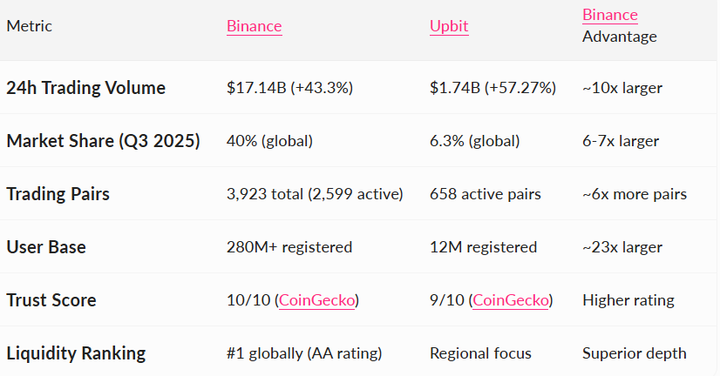
  • In October 2025, Binance re-entered the Korean market in a major way by acquiring Gopax, ending a four-year absence. This was partly facilitated by the relaxation of foreign ownership restrictions in Korea and also releases a signal that Korea is willing to open up further to global crypto companies.
  • This acquisition lays the groundwork for more intense market competition, smoother liquidity channels, and more sophisticated product offerings, significantly upgrading the products and services available to local users.
  • Core Performance Indicator Matrix

Source: Surf AI, 2025

3.2 Why Now?

This timing can be understood through three strategic factors:

  1. High Crypto Literacy and Extremely Fast Technology Adoption Rate
  • Korea remains one of the fastest markets globally in accepting and implementing emerging technologies, including AI and digital assets.
  1. Stablecoin Integration Prospects
  • Local banks, fintech companies, and internet giants like Kakao and Naver are exploring stablecoin pilots, potentially bridging the local financial system with the on-chain world.
  1. Sustained Institutional Demand
  • Korean institutional investors are increasingly interested in custody, asset tokenization, and legal, compliant digital asset allocation, laying the foundation for sustained long-term capital inflows.

4. Outlook

  • The current downturn is not an end, but a structural reset pushing the Korean market from pure speculative behavior towards utility value orientation, better aligned with institutional demand. Stablecoin legislation, institutional custody infrastructure, and a potential Bitcoin ETF are highly likely to become key pillars of the next growth phase. Korea is entering a new stage driven by real product value, user education, and compliant innovation.

4.1 Market Forecast

  • The Korean crypto market is expected to grow slowly at a compound annual growth rate (CAGR) of 2.94%, but the real inflection point is likely to come from a Bitcoin ETF potentially approved in 2026. This topic has been frequently discussed and rumored among Korean policymakers.
  • Once approved, potential changes include:
  • Formal participation by Korean pension and asset management institutions
  • Large-scale entry of overseas market makers
  • Higher quality price discovery and tighter bid-ask spreads

This could also potentially re-establish Korea's status as a regional "net inflow hub" for capital.

4.2 Korea's Web2 and Web3 Convergence

  • Korean large enterprise groups are delving deeper into the practical application layer of blockchain:
  • Banks, fintech companies, and large tech firms are testing stablecoin pilots and exploring payment and settlement rails related to the digital Korean Won.
  • Upbit and Bithumb have launched or expanded institutional custody services, enabling local institutions and overseas capital to re-enter the market in a compliant manner.
  • This signals a shift from speculation-dominated usage to an application model centered on infrastructure and practical use.

4.3 Global Comparison

  • Korea's regulatory direction is increasingly resembling Japan's: strict yet relatively predictable. If Korea can achieve similar regulatory clarity on key issues like stablecoins, asset tokenization, and digital asset ETFs, it has every opportunity to become one of Asia's most balanced crypto hubs, attracting both institutional builders and global liquidity.

4.4 From a Web3 Marketing Perspective: Why Korea Places Extra Importance on Product Usability

  • An important but often underestimated structural driver in Korea's next cycle is the increasing market demand for genuine product usability.
  • Korea is one of the few markets where exchanges and users actively test, verify, and deeply understand a project before truly accepting it. This trend is becoming more pronounced as the market transitions to a utility-driven phase.
  • For example:
  • Upbit's Quiz Events: Treating education as market infrastructure
  • Upbit often conducts quiz-based educational activities when listing new coins, requiring users to answer questions about:
  • The project's technical architecture
  • Token economic model
  • Use cases and real-world functions
  • Roadmap and risk profile
  • This is fundamentally different from the airdrop farming models common in other regions. The signal it sends is that Korean exchanges value verification, understanding, and user education more, and require projects to clearly and deeply explain their value.
  • Upbit X Surf Product Practical Usage Event
  • In 2025, Upbit and Surf collaborated on a product hands-on event, encouraging users to directly use the project's product, experience its functions, and produce meaningful usage results.
  • This clearly demonstrates a shift:
  • Korean exchanges are increasingly prioritizing validation based on actual usage experience, rather than superficial exposure marketing.
  • In Korea, a product being usable and user-friendly is itself the strongest marketing.
  • Narrative without execution cannot survive here long-term.

4.5 Investor Playbook

To position effectively during this reset phase, investors need to:

  • Continuously monitor key catalytic events, such as: FSC bill integration progress, Bitcoin ETF-related discussions, and upcoming stablecoin legislation.
  • Prioritize allocating to projects with long-term utility value, rather than tokens relying purely on sentiment and speculation.
  • Focus closely on macroeconomic indicators in the fourth quarter, as historically Korean retail investors have often re-entered the market en masse during risk-on recovery cycles.
  • Diversify allocations to reduce single holdings dependent entirely on political and regulatory timing for thematic narratives.

Furthermore, investors should focus on international ecosystems that are proactively establishing local presence and capabilities in Korea. A key trend shaping Korea's next cycle is the rapid formation of partnerships between global public chain ecosystems and Korean large enterprises. This预示着 Korea is transitioning from a market primarily focused on trading and consumption to a hub role of "co-development and deep infrastructure integration."

Case 1: Sui x t’order

  • Local Partner: t’order (Korea's dominant tableside ordering and POS network)
  • Integration Method: Supports KRW-pegged stablecoin payments,配合 QR code and facial recognition payment, zero fees for merchants, real-time settlement

Case 2: Solana x Shinhan Securities

  • Local Partner: Shinhan Securities (one of Korea's top securities firms)
  • Cooperation Method: Signed a strategic Memorandum of Understanding (MOU) to jointly support Web3 entrepreneurs, developers, and the Solana ecosystem in Korea, led by Superteam Korea

Case 3: Arbitrum x Lotte Group

  • Local Partner: Lotte Group (one of Korea's largest conglomerates)
  • Integration Method: Arbitrum provided significant developer grants to Caliverse (Lotte's metaverse platform) for integrating the Arbitrum blockchain

5. Korea's Crypto Winter is a Reset, Not a Retreat – And a Strategic Entry Window for Builders

Despite the current market contraction, Korea remains one of the world's most dynamic crypto markets. Stablecoins are helping Web2 large enterprises explore on-chain settlement and infrastructure tokenization; leading exchanges continue to expand custody and institutional services; and the possibility of a Bitcoin ETF approval significantly increases the probability of overseas liquidity flowing back to Korea.

Korea's crypto ecosystem is not coming to an end; it is maturing rapidly.

This reset means: Korea is transitioning from a hype-driven retail playground to a digital asset economic system with structural design, institutional support, and institutional participation as its core fulcrum.

Related Questions

QWhat is the 'Kimchi Premium' and how has it changed in the Korean crypto market recently?

AThe 'Kimchi Premium' refers to the price difference where cryptocurrencies like Bitcoin trade at a higher price on South Korean exchanges (e.g., Upbit, Bithumb) compared to global exchanges (e.g., Binance, Coinbase). Historically, it was around 10%, but it has now compressed to approximately 1.75%, indicating a normalization process where speculative泡沫 are being squeezed out rather than a massive capital flight.

QWhat are the main regulatory challenges currently facing the South Korean cryptocurrency market?

AThe main regulatory challenge is the delay and uncertainty surrounding stablecoin legislation. The bill, a core pillar for the future, has been stalled for 7 months due to debates over whether issuance should be led by banks or non-bank institutions. There are six different proposals under review, and the Financial Services Commission (FSC) aims to consolidate them into a unified bill by the end of 2025. This regulatory vacuum has slowed institutional innovation and made Web2 companies exploring tokenization more cautious.

QWhy are global crypto giants like Binance expanding into South Korea despite the current market downturn?

AGlobal crypto giants are expanding into South Korea due to its high crypto literacy, rapid technology adoption speed, the promising前景 of stablecoin integration being explored by local banks and tech giants, and growing institutional demand for custody, asset tokenization, and compliant digital asset allocation. They see long-term potential in the market's technical sophistication and institutional infrastructure, making it a strategic move despite short-term retail participation decline.

QWhat potential catalyst could significantly reverse the current market trend in South Korea?

AA significant potential catalyst is the approval of a Bitcoin ETF, which is frequently discussed among Korean policymakers and could be approved as early as 2026. This would likely lead to formal participation from Korean pension and asset management funds, large-scale entry of overseas market makers, higher-quality price discovery, tighter bid-ask spreads, and could re-establish South Korea as a regional 'net inflow hub' for capital.

QHow is the South Korean market's focus shifting from a Web3 marketing perspective according to the article?

AThe market is shifting towards a greater emphasis on product's real-world usability and functionality rather than mere narrative or hype. Exchanges like Upbit are implementing educational activities (e.g., quizzes on project technology and tokenomics) and product usage events (e.g., collaborating with Surf for hands-on experience) to validate projects. This trend indicates that a product being usable and useful is becoming the strongest marketing tool, and projects without execution cannot survive long-term in this market.

Related Reads

Bankless Co-founder: Why I Sold All My ETH

Author David Hoffman, founder of Bankless, explains his decision to sell all his ETH, despite being a prominent figure in the Ethereum ecosystem. He clarifies that his move is not a bearish take on Ethereum itself, which he remains highly optimistic about as a network. His core argument is that the "ETH is money" thesis, which he helped popularize, has largely played out. Hoffman argues that ETH has achieved the market valuation it deserves based on Ethereum's current success and competitive position. He details several reasons for this view. First, the path for ETH to become global money required nearly flawless execution and sustained dominance across Ethereum's entire technical and social stack—a coordination challenge he now believes had a narrower window for success than anticipated. Second, market data shows a strong correlation between L1 chain activity/fees and the price of its native asset; Ethereum's fee dominance has been challenged by competitors like Solana. Third, the "strong version" of crypto (decentralized, native crypto economies) that ETH's monetary thesis relied upon has struggled to maintain a positive mainstream narrative and stable adoption beyond a brief period. Finally, Ethereum's architecture as a "giver"—providing secure block space and tokenization capabilities at cost to L2s and applications—means it doesn't capture premium value directly. Its rollup-centric roadmap further directs most profits to L2s and applications ("fat app theory"). In conclusion, Hoffman believes the opportunity for ETH to be revalued significantly upward as money has diminished. He sold not because ETH will fail, but because its monetary thesis has matured, and he seeks to allocate capital to other opportunities he finds more compelling.

链捕手21m ago

Bankless Co-founder: Why I Sold All My ETH

链捕手21m ago

From Issuer to Infrastructure Owner: Circle's Arc Strategy and the Fatal Gap in the GENIUS Act

Circle raised $222 million for its proprietary Layer-1 blockchain, Arc, positioning itself not just as a stablecoin issuer but as the owner of the settlement infrastructure USDC relies on. This move, backed by investors like BlackRock and Apollo, highlights a significant structural conflict unaddressed by the GENIUS Act of 2025. While the act focuses on stablecoin reserves and issuer oversight, it remains silent on the market structure implications of an issuer controlling the underlying network—a scenario akin to a currency issuer also owning the payment rails. Traditionally, financial regulations separate issuers from settlement infrastructure to ensure neutrality. With Arc, Circle gains control over transaction ordering, fees, and network rules, potentially favoring USDC over competitors. The article argues that this creates a permanent structural temptation, even if no abuse occurs. The solution lies in applying established market infrastructure principles: mandating neutral transaction ordering, transparent fee schedules, and governance separated from Circle’s commercial interests. The current pre-mainnet phase offers a critical window for regulators to establish these rules before Arc becomes entrenched. Once operational, enforcing changes would be costly and disruptive. The core question remains: should a regulated stablecoin issuer be allowed to own the settlement network its competitors must use? The GENIUS Act doesn’t answer this, but Circle’s Arc strategy makes it urgent.

marsbit26m ago

From Issuer to Infrastructure Owner: Circle's Arc Strategy and the Fatal Gap in the GENIUS Act

marsbit26m ago

What Are the Key Variables Determining the AI Bull Market?

Title: What Determines the AI Bull Market? Key Variables Revealed Despite rising oil prices above $100/barrel, persistent inflation, and fragile Fed rate cut expectations—a traditionally hostile environment for high-valuation tech stocks—the AI sector continues to drive the market to new highs. According to analysts, the current AI boom is in a phase of "rational fervor": while bubbles exist, they are not yet out of control. The crucial shift is the emergence of Agentic AI, which is evolving from an assisting tool (Copilot) to an autonomous execution tool (Autopilot), creating a clearer commercial path from investment to revenue. This shift accelerates Token consumption and inference computing demand while boosting revenue forecasts for leading firms. The market is now rewarding capital expenditure as it transforms from a burden into a competitive moat, supporting hardware chains like GPUs, optical modules, and storage. However, valuations have already priced in growth expectations for 2027-2028. The forward P/E ratio for the "Magnificent Seven" tech giants is about 35x, compared to 25x for the rest of the S&P 500. This premium implies AI adoption must occur 5 to 8 times faster than past technological revolutions—a scenario with little room for error. The sustainability of the AI bull market hinges on three key variables: 1. **Short-term liquidity shocks**: Risks include sustained high oil prices, resurgent inflation, rising interest rates, and potential unwinding of the yen carry trade. The critical question is whether the upward revision speed of Annual Recurring Revenue (ARR) can outpace the rise in interest rates. 2. **Mid-term industry realization**: Can the actual pace of AI adoption and commercialization match the current lofty valuations? Historically, general-purpose technology revolutions follow a non-linear path with periods of acceleration and deceleration. 3. **Long-term structural constraints**: These include energy and power grid limitations, employment displacement and consumer purchasing power, social acceptance and potential backlash, and potential hardware technology breakthroughs that could disrupt current supply chains. While the long-term prospects for AI remain optimistic with potential for significant productivity gains, the stock market's pricing depends not just on the vision but on the actual speed of realization amid these growing constraints. The direction is clear, but the pace of execution will determine whether the bubble remains controlled or spirals out of control.

marsbit27m ago

What Are the Key Variables Determining the AI Bull Market?

marsbit27m ago

The AI Industrial Revolution: Where Are We Now?

This article explores the current stage of the AI industrial revolution, arguing we are still merely attaching new tools to old workflows rather than fundamentally redesigning production. The author compares this to the early Industrial Revolution, where factories simply replaced waterwheels with steam engines without changing their core structure. Similarly, today we embed AI chat windows into existing software but leave organizational processes unchanged. While massive investment floods into AI infrastructure (data centers, chips), akin to railway manias of the past, the real transformation lies in "dismantling the old workshop"—reorganizing companies around AI. Examples include Notion's use of hundreds of AI Agents and Y Combinator's experiments with self-improving AI systems that operate autonomously. The author notes a critical gap: while China has vast AI user growth, few companies have rebuilt core workflows. AI is beginning to impact entry-level jobs, and early adopters are gaining a compounding advantage. The conclusion is that the pivotal moment will not be the invention of better models, but when organizations decide to tear down old structures and rebuild around AI, shifting the bottleneck from human coordination to computing power. The future workplace and job titles are yet to be defined, but the imperative is to move away from legacy processes and position oneself where the new "railway" is being built.

marsbit59m ago

The AI Industrial Revolution: Where Are We Now?

marsbit59m ago

Trading

Spot
Futures

Hot Articles

Discussions

Welcome to the HTX Community. Here, you can stay informed about the latest platform developments and gain access to professional market insights. Users' opinions on the price of S (S) are presented below.

活动图片