Robinhood and Its Peers, Once Anti-Wall Street, Now Cater to the Wealthy

marsbitPublished on 2026-04-14Last updated on 2026-04-14

Abstract

A new trend is emerging among commission-free trading platforms like Robinhood, eToro, Revolut, and Public.com. Once known for democratizing finance and appealing to young retail investors, these firms are now aggressively targeting wealthy clients with premium services. They are introducing high-end credit cards, exclusive concierge services, wealth management, trust accounts, and luxury perks such as airport lounge access, VIP event invitations, and fine dining experiences. This strategic shift aims to retain users as they grow older and accumulate wealth, preventing them from moving to traditional Wall Street institutions. For instance, Robinhood’s user median age has risen from 31 to 36 over the past five years, with over 300,000 users now holding more than $100,000 in assets. The company offers a premium platinum credit card with a $695 annual fee and concierge support for users with over $1 million in assets. However, this move toward elitism contrasts with their original anti-Wall Street branding, making the transition challenging. Critics also point out that their premium offerings often don’t match established competitors like American Express or Chase Sapphire. Despite these hurdles, platforms continue to expand high-value services, betting that enhanced user experience and investment-focused rewards will foster loyalty among affluent customers.

Written by: Charlie Wells, Paulina Cachero

Compiled by: Chopper, Foresight News

Those trading apps that became famous for commission-free trades, fractional shares, and meme stocks, touting 'financial democratization,' are now going elite.

Robinhood, eToro, Revolut, and Public.com, once labeled as platforms for 'young people trading from their parents' basements,' are now offering investors airport lounge access, dinners, and F1 viewing perks. They are launching premium credit cards with annual fees of $695, providing exclusive concierge services for clients with million-dollar account balances, and venturing into complex tax planning, wealth management, and even trust accounts to compete with traditional legacy institutions.

A few months ago, when 29-year-old David Easterwood used his hefty 17-gram Robinhood Gold Card to buy a cowboy hat, the store clerk told him, 'You must be rich.'

And he is. The Phoenix-based retail trader registered for Robinhood as soon as he came of age in 2019, making his first trade in a few shares of Ford, followed by stocks like McDonald's. He said his account 'exploded' in 2023. According to an account screenshot he provided to Bloomberg News, he had made over $885,000 in profits since September of that year.

Beyond owning the Robinhood credit card, Easterwood also has access to Robinhood's concierge service, available only to users with assets exceeding $1 million or those with high platform activity.

'Whether I have a hundred bucks or a hundred million in my account,' he said, 'I'm staying with Robinhood.'

David Easterwood used his Robinhood Gold Card to buy this cowboy hat

As their user base ages and accumulates wealth, this is precisely the atmosphere these trading platforms are trying to create. During the pandemic, platforms like Robinhood built a young, anti-establishment, anti-Wall Street image with their low costs, 'financial democratization,' and appeal to retail investors.

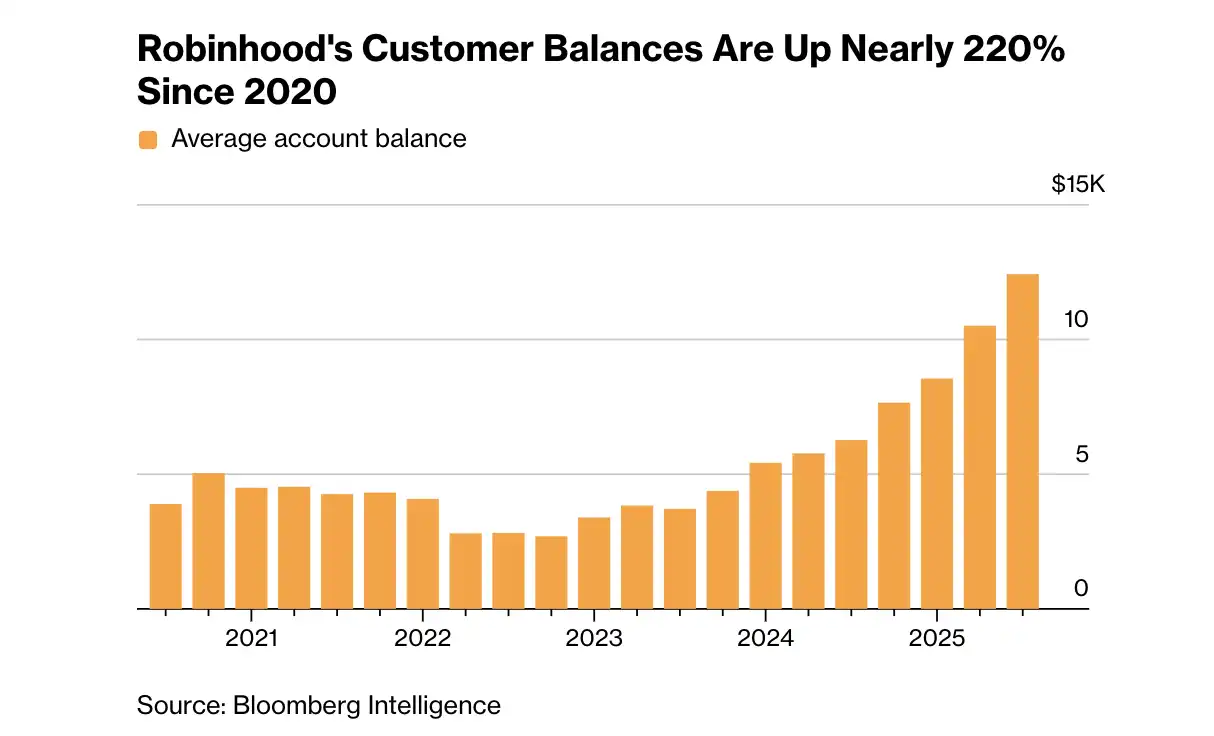
The median age of Robinhood users has risen from 31 five years ago to 36 today. The company now has over 300,000 clients with assets exceeding $100,000, an increase of more than 250% since 2022.
Public stated that its invite-only concierge service for users with assets over $500,000 or high trading activity continues to grow. eToro's membership club program offers similar high-end perks, with membership surpassing 720,000 by the end of last year, up from 579,000 a year earlier.

The evolution of these brokerage apps' products reflects both how former startups are catching up with their maturing users and the K-shaped divergence forming in many developed economies: those with limited funds get basic services, while those holding substantial assets, even if their wealth started with meme stocks, are fiercely competed for by financial institutions and enjoy various preferential treatments.

Public.com hosted a small dinner in New York in 2025, inviting members and content creators to discuss product updates and upcoming launches

'The core of our strategy is to ensure that users who build wealth on the platform don't leave,' said Deepak Rao, Vice President and General Manager of Robinhood Money. These companies don't want the clients they've painstakingly nurtured to流失 to large Wall Street wealth management institutions like Goldman Sachs, JPMorgan Chase, or Citigroup.

Abigail Sussman, a professor of marketing at the University of Chicago Booth School of Business, said this transformation is difficult, especially as brokerage apps pivot to a premium positioning that contradicts their initial brand image of 'democratizing finance.'

'It's much easier for a brand to go from high-end to mass market,' Sussman said. While a high-end fashion brand moving downmarket might dilute the brand, it already has established prestige; it's much harder for a fast-fashion retailer to move upmarket. 'Going the other way, building that high-end image and status is much more difficult.'

Nevertheless, these platforms are pushing forward with full force.

The invitation to Robinhood's launch event for its platinum card and other premium services read: 'Experience our new offerings from a first-class perspective, empowering every generation to achieve their financial goals.' The event was held at the TWA Hotel at New York's JFK Airport, unveiling a credit card with a $695 annual fee made of 99.9% pure platinum, as well as custodial and trust accounts for children.

Robinhood CEO Vlad Tenev launched the Robinhood Platinum Credit Card in New York in March

London-based fintech Revolut is aggressively moving into private banking and plans to launch more products targeting high-balance users. The company is also hiring multilingual private bankers to serve high-net-worth individuals, cross-sell products, and provide financial advice.

Public's COO, Stephen Sikes, said better data, content, and AI tools are making people more comfortable managing tens of millions of dollars on their own. The company has hired concierge specialists to communicate with high-value clients, build relationships, and optimize their experience.

Meanwhile, eToro CEO Yoni Assia said the platform's premium membership program is due for an upgrade. Currently, Diamond members, the highest tier for those with assets over $250,000, receive access to select sporting event tickets, airport lounge access, and a Visa card that offers stock rebates on spending.

'Ultimately, I want eToro to be your family office,' Assia said.
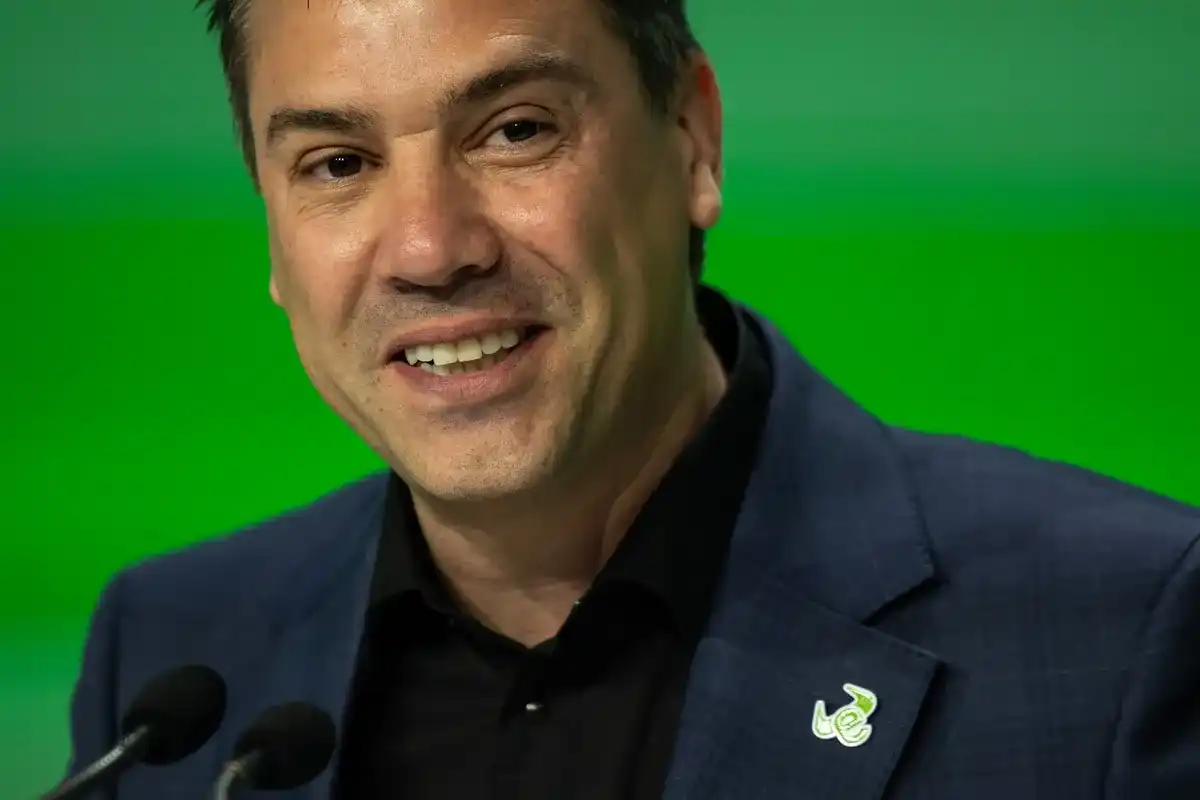
eToro CEO Yoni Assia

These emerging platforms face fierce competition from legacy Wall Street institutions that have served the wealthy for centuries. They retain generational clients through one-on-one dedicated services, access to private investments, and estate planning. At the same time, traditional banks, sitting on trillions in client assets, are also optimizing their own apps, eroding the core advantage of digital-only platforms. In this industry, great experience and marketing are far less important than trust.

And trust has been a long-standing issue for these digital brokerages. Robinhood faced major setbacks after its user base exploded during the pandemic. In 2021, the Financial Industry Regulatory Authority fined it $70 million for reasons including misleading customers and lack of internal controls, among others. Robinhood neither admitted nor denied the allegations but said it had made numerous improvements. In 2024, eToro agreed to pay $1.5 million to settle charges from the U.S. Securities and Exchange Commission that it operated as an unregistered broker-dealer and clearing agency.

The benefits of Robinhood's new platinum card are very similar to popular products from American Express and JPMorgan Chase: 5% cash back on dining, $250 in DoorDash credits annually, 10% back on hotels and rental cars, free Robinhood Gold membership, and a $250 annual credit for autonomous ride-hailing.

Ted Rossman, a senior industry analyst at Bankrate who focuses on credit cards, said this premium card doesn't surpass its competitors.

'To be honest, this card isn't as good as the Amex Platinum or the Chase Sapphire,' Rossman said. For example, the DoorDash credits have many restrictions and are far less valuable than they appear.

But Nick Ewen, Senior Editorial Director at The Points Guy, pointed out that the Robinhood card offers a different kind of value: 'Other points don't appreciate, but Robinhood's design is for you to invest long-term for growth.'

This is also why 32-year-old Polish investor John Ostrowski sticks with his eToro card. He opts for a 4% rebate in Mercedes-Benz stock, values its dividends, and says the card brings a new sense of identity.

'It's a social talking point,' he said. 'My dad uses an Amex, I use an eToro card.'

An eToro members-only event held in Dubai

However, even with the high-end光环, novelty isn't enough for some users. Some services intended to increase loyalty have backfired.

'They assigned me a CPA to help with taxes,' said 42-year-old Jason Sabshon from New York, who qualifies for Robinhood's concierge service. The platform's logic is that proper tax planning can enhance investment returns, and handling taxes within the investment process can reduce the burden at tax time. But Sabshon wasn't convinced: 'They said the person was from a company I'd never heard of. I wasn't very comfortable with that.'

Kai Schukowski, a 39-year-old man from Dubai, has accounts with multiple brokerages but says none treat their top clients as well as eToro. A few months ago, he was invited to a high-end event hosted by the platform at the Belcanto restaurant atop the Dubai Opera House, gathering top traders and executives, with an露天 reception offering views of the world's tallest building, the Burj Khalifa.
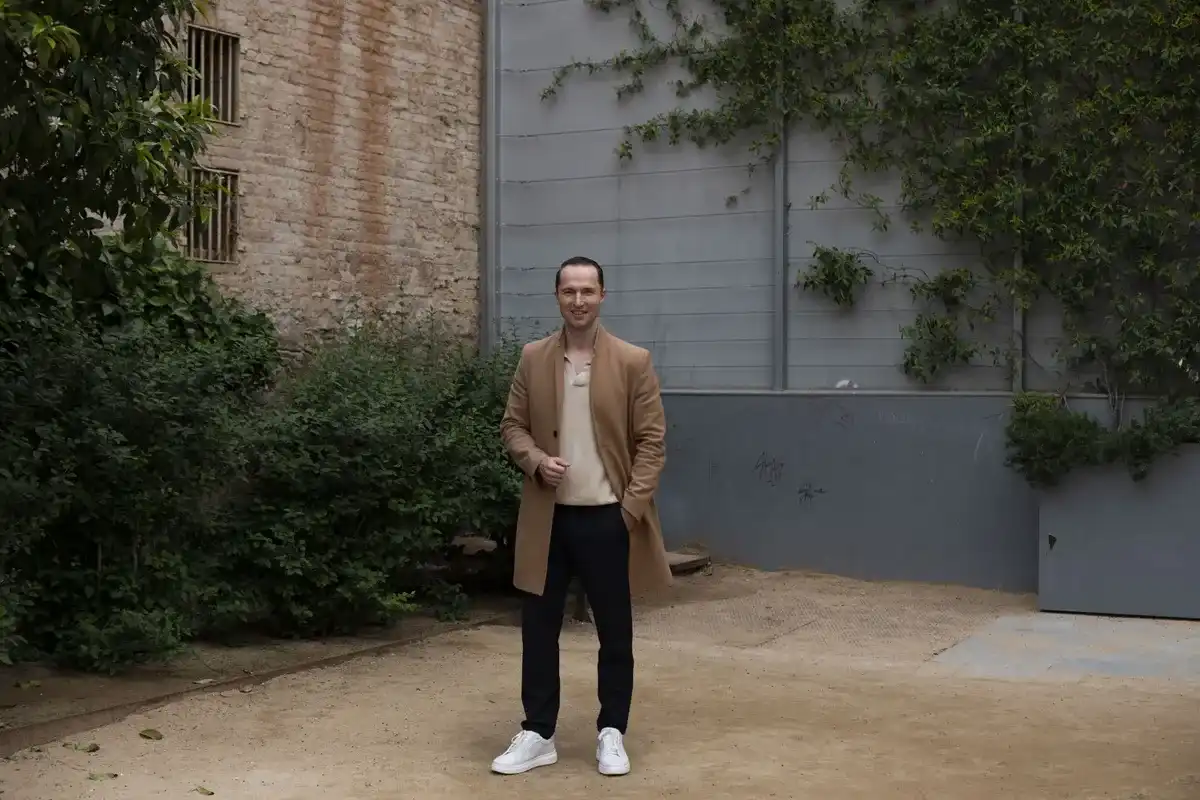
What impressed him was that the event was upscale and stylish, and there were genuinely wealthy people present. He said, 'They weren't just influencers or people trying to get famous; they were real, wealthy people.'


Related Questions

QWhat is the original brand image of trading apps like Robinhood, eToro, Revolut, and Public.com, and how is it changing?

ATheir original brand image was built on being anti-Wall Street, offering commission-free trading, fractional shares, and meme stocks to democratize finance for retail investors, often associated with young people trading from their parents' basements. This image is now shifting towards elitism as they introduce premium services like airport lounges, exclusive events, high-end credit cards, and wealth management tools to cater to wealthier clients.

QWhat specific premium services are these trading platforms offering to their high-value users?

AThey offer services such as airport lounge access, exclusive dinners, F1 racing event tickets, high-end credit cards (e.g., Robinhood's $695 annual fee platinum card), elite concierge services for users with over $1 million in assets, tax planning, wealth management, and trust accounts.

QHow has the user demographic of Robinhood changed over the past five years, and what does this indicate?

ARobinhood's median user age has increased from 31 to 36 over the past five years, and the platform now has over 300,000 clients with assets exceeding $100,000, a growth of more than 250% since 2022. This indicates that their user base is aging and accumulating more wealth, driving the platform's shift towards serving affluent customers.

QWhat challenges do these platforms face in transitioning from a 'democratizing finance' image to a premium service model?

AThe transition is challenging because building a high-end brand image and status is much harder than moving from premium to mass market. Their original anti-elitist, democratic brand identity conflicts with their new elite-focused services, making it difficult to establish trust and credibility as a premium provider compared to traditional Wall Street institutions.

QHow do traditional Wall Street institutions compete with these emerging trading platforms, and what advantages do they hold?

ATraditional institutions like Goldman Sachs, JPMorgan, and Citigroup compete by offering personalized one-on-one services, access to private investments, estate planning, and multi-generational client relationships. They hold advantages in long-established trust, extensive experience serving wealthy clients, and improving their own digital apps to rival the core strengths of digital-only platforms.

Related Reads

US Stock Market Trend (June 16): SpaceX Rises 42% in Two Days, New Fed Chairman Takes Office Today

**U.S. Stocks Trend (June 16): SpaceX Soars 42% in Two Days, New Fed Chair Takes Office Today** Markets surged on Monday following former President Trump's social media announcement of a completed U.S.-Iran deal to reopen the Strait of Hormuz, pending a June 19 signing. The news triggered a broad risk-on rally: oil prices crashed, tech stocks soared, bond yields fell, and defensive sectors lagged. **Market Performance:** The Nasdaq jumped 3.07%, led by semiconductor stocks like Micron (+9.2%). The S&P 500 gained 1.65%, and the Dow rose 0.92% to a record high. However, the Russell 2000 small-cap index underperformed (+0.72%). SpaceX continued its hot streak, rising another 5% pre-market after disclosures of large buys by an Australian billionaire and Cathie Wood's ARK. Boeing also rallied on the transportation optimism. Conversely, energy stocks like Chevron fell over 3% on the oil price plunge, with other defensive sectors also selling off. The day's action showed a clear rotation of funds from energy/defensive plays into AI and tech narratives. **Macro & Outlook:** The VIX fear index fell 8.37%. Treasury yields declined, and WTI crude dropped over 5%. Attention now shifts to a packed schedule: the Bank of Japan is widely expected to hike rates to 1.0% on Tuesday. The Fed's June meeting concludes Wednesday, marking new Chair Wash's debut. While rates are expected to hold, his tone on stubborn inflation and the "dot plot" will be crucial for gauging the 2024 rate path. The formal Iran deal signing is set for Friday. **Trend Perspective:** While the peace deal is a genuine positive, Monday's explosive rally may have gotten ahead of itself, pricing in a swift resolution to inflation concerns. The shortened trading week faces a triple test: BoJ tightening, the Fed's policy stance, and deal implementation details. Tech and semiconductors, which led the surge, remain vulnerable to any disappointment from these key events. The real price discovery begins with the central banks' communications this week.

marsbit19m ago

US Stock Market Trend (June 16): SpaceX Rises 42% in Two Days, New Fed Chairman Takes Office Today

marsbit19m ago

Xiaohongshu's Second Great Voyage, This Time Sailing Towards AI

Xiaohongshu's Second Voyage: Navigating Towards AI Since ChatGPT's emergence, Xiaohongshu's founder Mao Wenchao has been acutely aware of AI's potential threat, recognizing that the life advice people seek from chatbots overlaps directly with his platform's core business. Founded in 2013 as a PDF shopping guide for Chinese tourists, Xiaohongshu evolved into a massive community where millions share authentic, personal experiences—from product reviews to travel tips. This vast repository of "I've tried this" human judgment became its most valuable asset. However, the rise of AI, which delivers instant answers, challenges the very need for users to sift through numerous personal notes. Fearing its treasure trove of lived experience could become mere training data for others, Xiaohongshu is proactively adapting. In 2026, it established a dedicated AI division (Dots), launched RED Skill to turn user experiences into usable AI tools, and acquired the AI search product "Diandian." Its investments now extend to AI firms like MiniMax and hardware startups, moving upstream to address needs before they even become search queries. The platform's commercialization strategy is also evolving. With a newly acquired payment license and tools like the AIPS model to track consumer decision journeys, Xiaohongshu aims to seamlessly integrate recommendations with transactions, embedding commerce within AI-generated answers. Yet, a critical tension remains. While building smarter machines to organize and leverage its human experiences, Xiaohongshu must prevent AI from drowning out the authentic, flawed, and trustworthy "I've tried this" voices that built its community. Its core challenge is to harness AI's power without letting the map—the machine's perfect, synthesized answer—replace the territory of genuine human experience. This balance between technological advancement and preserving human trust defines its current journey and its future.

marsbit52m ago

Xiaohongshu's Second Great Voyage, This Time Sailing Towards AI

marsbit52m ago

SharpLink CEO: How to Understand Ethereum Developers Just Exceeded 1 Million?

SharpLink CEO reflects on the milestone of Ethereum surpassing 1 million historical developers, emphasizing that this figure represents the largest pool of technical talent ever assembled around an open, permissionless blockchain network. While approximately 232,000 developers remain active, the key question for the crypto industry is not which chain is fastest, but where the best builders choose to build long-term. Ethereum's advantage lies in a decade-long accumulation of infrastructure, standards, tools, liquidity, and a cohesive culture, making it the default operating system for programmable finance. This developer base is tackling complex challenges: the Glamsterdam upgrade aims to enhance scalability while preserving core principles; synchronous composability seeks to unify Rollup ecosystems; and significant efforts are underway for post-quantum security. Ethereum's deeper network effects stem from composability and shared standards (like the EVM and Solidity), creating a flywheel of more developers, tools, and liquidity. Three reinforcing strengths cement Ethereum's lead: credible neutrality (secured by ~900k validators), a modular architecture with interconnected Rollups, and a culture that attracts top researchers. The ecosystem is consolidating as the trusted coordination layer for internet-native finance, favored by large institutions valuing security and liquidity. The future of Ethereum is being built by this global community of founders and architects.

链捕手1h ago

SharpLink CEO: How to Understand Ethereum Developers Just Exceeded 1 Million?

链捕手1h ago

A Clod of Chinese Soil Chokes Two Japanese Giants

"Chinese Soil Chokes Japanese Giants" The production of a key electronic specialty gas, tungsten hexafluoride (WF6), vital for manufacturing AI chips, was halted by two leading Japanese producers—Kanto Denka and Central Glass. Their shutdown was not due to a technological failure but a sudden, critical shortage of a raw material they had long taken for granted: ultra-high-purity (6N-grade) tungsten powder, which is almost entirely sourced from China. Following a quiet Chinese export announcement in January 2026, tungsten powder shipments to Japan dropped to zero for months. Despite frantic efforts, Japanese companies found no viable alternative; imported powder was three times more expensive and lacked the required purity. Their existing stockpiles were exhausted by mid-2026. WF6 is essential for depositing tungsten into the microscopic contact holes of High Bandwidth Memory (HBM) chips, which are crucial for advanced processors like those from Nvidia. While Japanese firms had mastered producing ultra-pure WF6 gas, their entire supply chain relied on China's 6N tungsten powder—a dependency now revealed as a fatal vulnerability. China's dominance in this "soil" results from decades of painstaking R&D by companies like Xiamen Tungsten and China Tungsten & Hightech. They overcame immense technical hurdles, such as separating chemically similar molybdenum from tungsten, to achieve mass production of the world's purest tungsten powder. With their primary suppliers gone, Kanto Denka and Central Glass announced a permanent halt to WF6 production starting July 1, 2026. This immediately created a supply crisis for major semiconductor manufacturers like Samsung and SK Hynix, forcing them to urgently seek and certify new Chinese suppliers for WF6 itself. The reversal marks a dramatic shift: China has moved from exporting low-value raw materials to controlling the high-purity foundation of a critical global tech supply chain, upending a long-established industrial hierarchy.

marsbit1h ago

A Clod of Chinese Soil Chokes Two Japanese Giants

marsbit1h ago

Trading

Spot
Futures
活动图片




