Quantum Threat Becomes Key Narrative, Privacy Coin Sector Defies Trend with Capital Siphon

比推Published on 2026-01-29Last updated on 2026-01-29

Abstract

Quantum Threat Emerges as Key Narrative, Privacy Coins Defy Market Downturn with Capital Inflow Privacy coins like ZEC, XMR, and DASH have surged significantly since September 2025, outperforming the broader crypto market. ZEC rose from around $50 to over $700 in two months, a 12x return, despite a post-halving correction. Monero (XMR) climbed from $300 to a record $800, bolstered by its decentralized nature and real-world usage, even after being delisted from 73 exchanges. Dash also saw a 7x increase, peaking at $150 before settling around $62. A major catalyst is growing concern over quantum computing threats to Bitcoin. Although experts believe quantum computers cannot yet break Bitcoin's ECDSA algorithm by 2026, fears have driven institutional and whale investors toward privacy coins, which use zero-knowledge proofs and ring signatures to resist quantum attacks. Reports indicate large-scale fund shifts from BTC to privacy assets, with ZEC and XMR attracting significant hedging interest. Market dynamics and high-profile endorsements, such as from Arthur Hayes, have amplified the trend. Additionally, privacy coins are being used to launder stolen funds, with one day seeing $282 million in mixed Bitcoin transactions. While Bitcoin market remains stagnant around $85,000, privacy coins continue to benefit from both quantum anxiety and practical demand for anonymity. The sector's future may depend on broader market recovery and macroeconomic factors, including Fed policy and...

Author: Ma He, Foresight News

Original Title: Under the Quantum Threat, Are Privacy Coins About to Break the "Last Dance" Curse?


Privacy coins use zero-knowledge proofs, ring signatures, or coin mixing technology to ensure untraceable transactions. Against the backdrop of increasing global regulation, they have become the preferred choice for investors seeking refuge and privacy.

Starting from September 2025, the privacy coin sector began to break away from the broader market's slump and entered an accelerated upward trend.

Taking ZEC, the leading coin in the privacy sector surge, as an example, its price was around $50 in October 2025. Within just 2 months, it broke through $700, yielding a return of over 12 times.
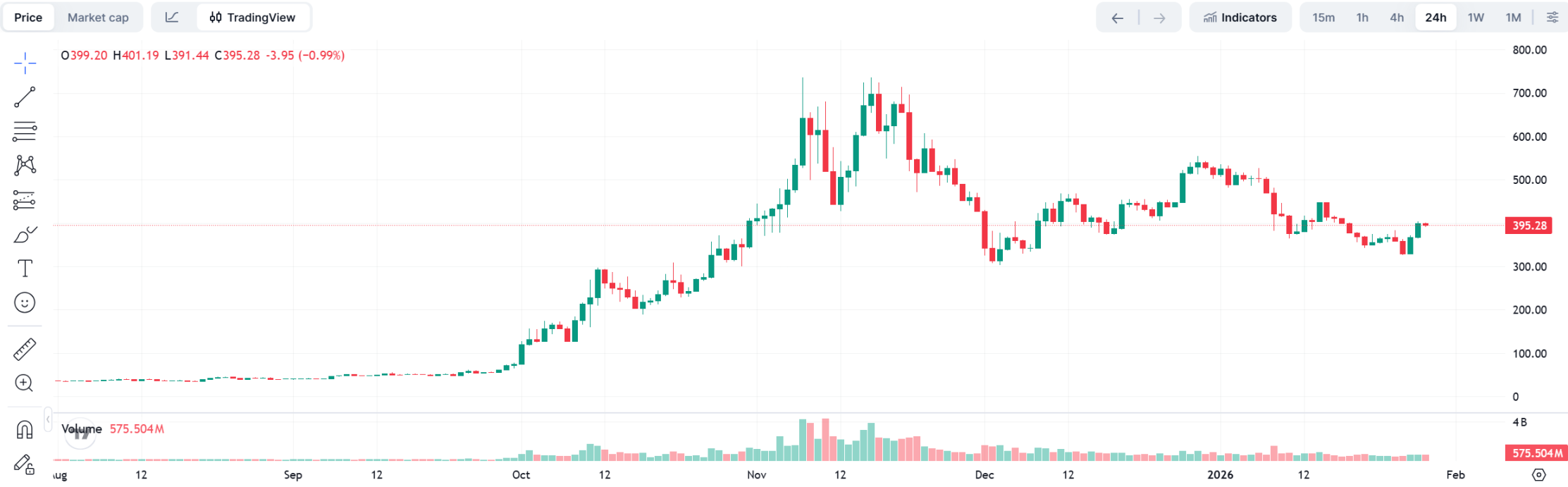
This trend is not an isolated case but a sector-wide explosion.

On November 18th, after the ZEC halving event, which reduced the block reward from 3.125 coins to 1.5625 coins, the price experienced short-term fluctuations before starting to decline and hover erratically.

Monero (XMR), the "big brother" of privacy coins, also showed a strong performance. From around $300 at the end of 2025, it skyrocketed to a high of $800, setting a new historical record.
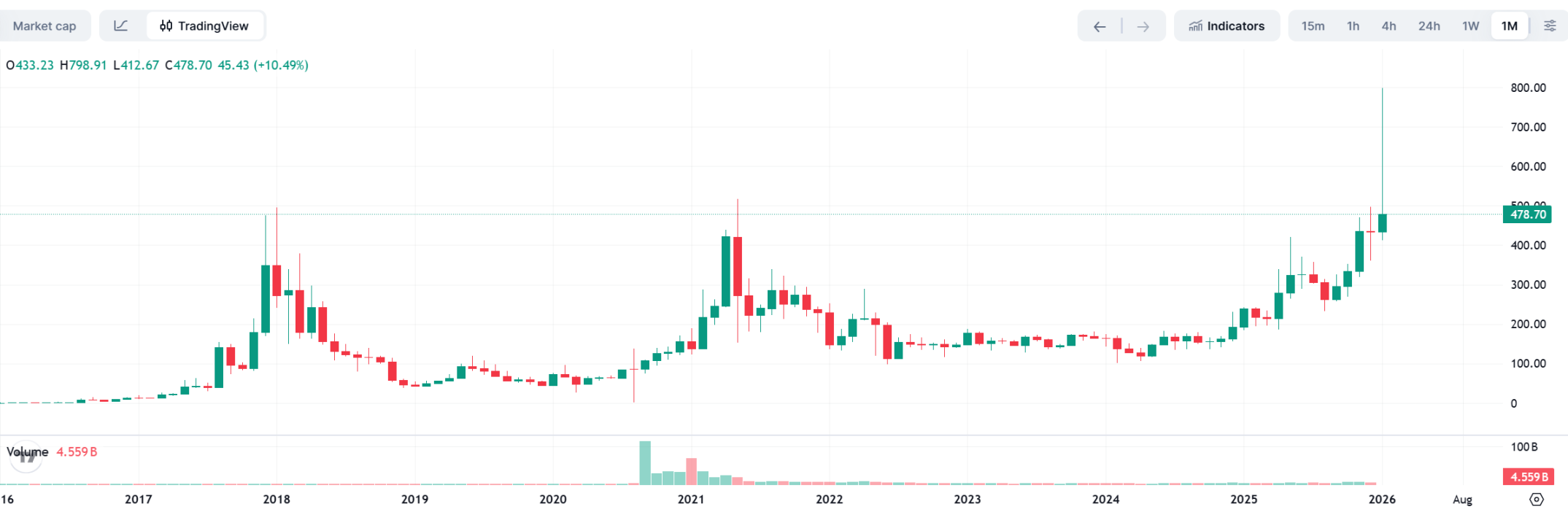
Unlike ZEC's halving-driven rise, XMR's increase relies more on its inherent decentralized nature and actual adoption rate. Despite being delisted from 73 exchanges previously, XMR's transaction volume grew against the trend, with a single-day mixing volume of stolen BTC reaching $282 million, proving the reliability of its privacy technology.

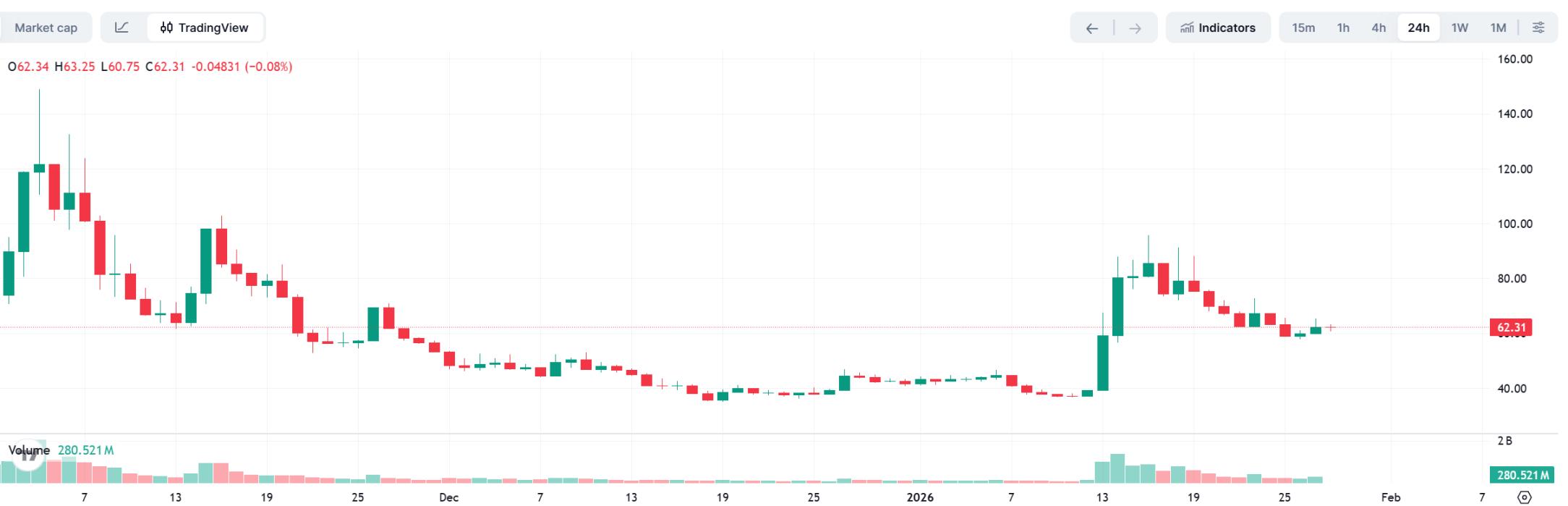
Another privacy coin, DASH, rose from nearly $20 to a high of $150, an increase of over 7 times, and has currently pulled back to $62.
Quantum Computing Threat and the Rise of the Privacy Narrative

The potential threat of quantum computing to Bitcoin became a significant catalyst for the surge in privacy coins from late 2025 to early 2026. Although experts generally believe that quantum computers cannot practically crack Bitcoin's ECDSA signature algorithm by 2026, this risk has already sparked market panic, driving capital away from BTC and towards privacy coins with better quantum resistance.

According to a report by Grayscale Research, although quantum computing is seen as a "false threat to the 2026 market," it amplified investors' concerns about exposed Bitcoin public keys in Q4 2025, leading institutional funds to reassess risk exposure and shift towards coins like ZEC and XMR. These privacy coins use zero-knowledge proofs and ring signature technology, which can better resist Shor's algorithm attacks and theoretically provide higher long-term security.

A CoinDesk report showed that the quantum upgrade discussed at the Bitcoin developer conference in December 2025 would take 5-10 years. During this window, whale investors moved hundreds of millions of dollars from BTC to privacy coins.

Secondly, market rotation and the amplification effect of capital inflows. In Q4 2025, the overall crypto market corrected, but privacy coins rose against the trend, attracting whales and large funds. BitMEX co-founder Arthur Hayes heavily invested in ZEC through the Maelstrom fund, calling it the "next BTC."

Additionally, multiple hacking incidents in 2025 (involving billions of dollars in theft) prompted funds to turn to privacy coins: stolen BTC was quickly converted to XMR, with a single-day mixing volume reaching $282 million. A CoinDesk report pointed out that 80% of privacy coins rose in 2026, with 14 out of 18 coins doubling in market capitalization.

Arthur Hayes warned that the "quantum ghost" would accelerate the privacy supercycle, predicting that ZEC and XMR would attract more hedging funds in 2026.

With the strong rise of privacy coins, some investors are happy while others are worried. Past market trends have often seen privacy coins gradually fade after their "last dance."

Wintermute stated that BTC's current price range shows fatigue, but the market structure is not bearish; instead, it is in a stalemate. The $85,000 support level has been tested multiple times—it is either a solid bottom or a trap waiting to be sprung. Although U.S. fund flows show net outflows and volatility continues to compress, this support level has held, indicating buying interest below (albeit mild). Gold is playing the role that Bitcoin should be playing. The stock market is waiting for earnings reports to validate valuation rationality. Bitcoin is stuck in "no man's land"—not weak enough to break support, nor strong enough to regain upward momentum. The macro environment is poised for a trending move, but the crypto market has been slow to follow.

This situation could change due to a reversal in ETF fund flows or shifts in the U.S. dollar's movement. If the Federal Reserve intervenes in the yen exchange rate and the dollar continues to weaken, it will become a clear catalyst for risk assets. If the "Magnificent Seven" tech stocks report better-than-expected earnings and the AI narrative continues to develop, it will drive the Nasdaq index higher, thereby boosting the crypto market. Conversely, if Powell sends hawkish signals or tariff conflicts escalate, the $85,000 support level will face severe tests. A 60-day consolidation period combined with such密集的事件风险, the market will eventually choose a direction.

If BTC's trend can stabilize and recover, privacy coins may perform well driven by the broader market.


Twitter:https://twitter.com/BitpushNewsCN

Bitpush TG Discussion Group:https://t.me/BitPushCommunity

Bitpush TG Subscription: https://t.me/bitpush

Original link:https://www.bitpush.news/articles/7607020

Related Questions

QWhat is the main reason for the recent surge in privacy coins like ZEC and XMR according to the article?

AThe surge is primarily driven by concerns over quantum computing threats to Bitcoin's security, leading investors to shift funds to privacy coins which offer better quantum resistance through technologies like zero-knowledge proofs and ring signatures.

QHow much did ZEC's price increase from October 2025 to its peak, as mentioned in the article?

AZEC's price increased over 12 times, from around $50 in October 2025 to over $700 within two months.

QWhat event specifically impacted ZEC's price in November 2025, causing short-term volatility?

AZEC underwent a halving event in November 2025, which reduced the block reward from 3.125 to 1.5625 coins, leading to price fluctuations.

QWhy did XMR's value rise despite being delisted from many exchanges, as per the article?

AXMR's value rose due to its strong decentralized attributes and practical adoption, evidenced by increased transaction volumes, including a single-day mixing volume of $282 million for stolen BTC, proving the reliability of its privacy technology.

QWhat broader market condition is suggested as necessary for privacy coins to maintain their positive performance?

AThe article suggests that if Bitcoin's price stabilizes and recovers, privacy coins could perform well under the broader market's upward momentum.

Related Reads

Near Returns to the AI Stage: Transformation into a Public Chain Due to 'Payroll Difficulties,' Agent and Privacy Emerge as New Growth Narratives

NEAR Returns to AI Origins: From Payroll Struggles to Blockchain, Now Focusing on AI Agents and Privacy NEAR Protocol's journey began not with grand blockchain ambitions, but from a practical hurdle: its AI startup founders, including Transformer paper co-author Illia Polosukhin, couldn't efficiently pay international developers in 2017. This led them to pivot and build a high-performance, scalable blockchain. After years navigating various crypto narratives like sharding and cross-chain interoperability, NEAR is now leveraging its AI roots to re-enter the AI arena. A key driver is its "NEAR Intents" layer, which abstracts complex cross-chain transactions. Users simply state their goal (e.g., swap BTC for ETH), and a solver network finds the optimal route. This system has processed over $20B in cross-chain volume, generating significant fee revenue. A major growth area is private transactions via "Confidential Intents/Swaps," which hide trade details until settlement to protect against MEV and front-running. Remarkably, private swaps recently accounted for over 40% of NEAR's transaction volume, highlighting strong demand but also potential regulatory scrutiny. With its AI-founder pedigree, NEAR is positioning itself at the intersection of blockchain, AI agents, and privacy, aiming to become infrastructure for the emerging agent economy while navigating the challenges of its rapid adoption.

marsbit2h ago

Near Returns to the AI Stage: Transformation into a Public Chain Due to 'Payroll Difficulties,' Agent and Privacy Emerge as New Growth Narratives

marsbit2h ago

From Ethereum to AI's 'CROPS': What Exactly is This Set of 'Slow Variables' That Vitalik Repeatedly Emphasizes?

In recent discussions, Vitalik Buterin has frequently emphasized the concept of "CROPS," a framework defining core values for Ethereum's development. CROPS stands for Censorship Resistance, Capture Resistance, Open Source, Privacy, and Security. Initially outlined in the Ethereum Foundation's "EF Mandate," it represents a commitment to user sovereignty, ensuring that the network resists external control, remains open, protects privacy, and prioritizes security. The relevance of CROPS extends beyond Ethereum's foundational principles, becoming crucial in the context of AI integration. As AI agents begin handling wallet operations and automated transactions, the risk increases that users may cede control over their digital assets, privacy, and intentions to centralized AI service providers. A "CROPS AI" would therefore emphasize local execution where possible, privacy-preserving remote model calls (e.g., using zero-knowledge proofs), and transparent, verifiable processes to maintain user agency. Vitalik highlights a significant convergence between "CROPS Ethereum access layer" and "CROPS AI." Both address the same fundamental challenge: how users can access powerful services—be it blockchain data via RPCs or AI models—without exposing sensitive information or relinquishing ultimate control. This intersection points toward a future digital entry point that is more private, secure, and user-controlled. Ultimately, CROPS is not merely an abstract ideal but a practical guidepost. It steers development—from protocol resilience and wallet design to AI agent safety—towards a future where users retain self-sovereignty even as digital systems grow more complex and powerful. In an era of accelerating AI adoption, these "slow variables" of censorship resistance, openness, privacy, and security may define Ethereum's enduring value.

marsbit2h ago

From Ethereum to AI's 'CROPS': What Exactly is This Set of 'Slow Variables' That Vitalik Repeatedly Emphasizes?

marsbit2h ago

Silicon Valley 'Startup Guru' Steve Hoffman: Web3 + AI Could Be a Trap

Silicon Valley investor and "Godfather of Startups" Steve Hoffman warns that combining Web3 with AI is likely a trap, not a promising venture. In an interview, Hoffman argues that while AI is a foundational technology touching all industries, Web3 adds complexity, friction, and regulatory risk without solving mainstream consumer or business needs. He advises founders to focus on deep, specialized applications where startups can out-iterate giants, rather than on generic features easily replicated by large tech companies. Hoffman observes that Silicon Valley will lead foundational AI research, while China excels at rapid, large-scale application and commercialization, particularly in robotics. He stresses that AI-driven autonomous agents capable of collaborative, multi-step tasks are 2-4 years away, which will cause significant job displacement. The solution is not to slow AI but to redesign business models around human-AI collaboration and reform social systems like education and retraining. For startups, Hoffman recommends focusing on vertical, expertise-heavy domains to build defensibility. He sees major opportunities in AI fraud detection and cybersecurity. Key founder mindsets include systemic thinking over feature-focus, relentless customer centricity, building adaptive teams, and deeply understanding AI's capabilities and limits. Hoffman is also leading a non-profit initiative to establish university centers aimed at training future leaders in responsible, human-value-aligned AI innovation.

marsbit3h ago

Silicon Valley 'Startup Guru' Steve Hoffman: Web3 + AI Could Be a Trap

marsbit3h ago

Token Inefficient, Economy Tokenless

The article "Tokens Aren't Economical, Economics Aren't Tokenized" analyzes a pivotal shift in the AI industry from a technology-driven narrative to one dominated by capital efficiency. It highlights two concurrent trends: a severe capital shortage due to the exorbitant and recurring costs of compute (e.g., OpenAI's high burn rate) and a wave of corporate spin-offs where major tech companies are separating their AI units (like Kuaishou's Kling and Baidu's Kunlunxin). The core argument is that AI's "anti-internet" business model, where user growth increases costs rather than profits, has created a disconnect between high valuations and actual cash flow. Spin-offs address this by allowing AI assets to be valued independently. Within a parent company, they are seen as cost centers, but as standalone entities, they are priced based on their growth potential and scarcity in the primary market, leading to massive valuation premiums (e.g., Kling's estimated value tripling post-spin-off). The industry is at an inflection point, moving from "model worship" to "value realization." The competition is evolving from a pure compute (GPU) race to a broader focus on systemic efficiency and full-stack engineering (involving CPUs and orchestration) to achieve viable commercialization. The year 2026 is framed as a critical moment where the industry must definitively answer how to economically translate AI capability into tangible business value, reshaping the sector's future power structure.

marsbit4h ago

Token Inefficient, Economy Tokenless

marsbit4h ago

Trading

Spot
Futures
活动图片