Powell: Weakening Employment, Inflation Still High, No One Talks About Rate Hikes Now

marsbitPublished on 2025-12-11Last updated on 2025-12-11

Abstract

In his latest address, Federal Reserve Chair Powell highlighted a noticeable cooling in the U.S. labor market, marked by slower hiring and reduced layoffs, declining challenges in recruitment, and diminished household expectations for job opportunities. The unemployment rate has risen to approximately 4.4%, with employment gains significantly weaker than at the start of the year. This slowdown stems partly from reduced labor supply—due to decreased immigration and lower participation rates—but also reflects weakening labor demand itself. On inflation, core PCE remains at 2.8% year-on-year, above the long-term 2% target. While goods inflation has edged up due to tariffs, service inflation continues to moderate. Although overall inflation has declined substantially from its 2022 peak, it has not yet reached a level that fully assures the Fed. The FOMC responded by cutting rates by 25 basis points and initiating short-term Treasury purchases to maintain ample reserves and ensure effective policy transmission. Powell emphasized that, with rising employment risks and persistently elevated inflation, there is no "risk-free" policy path. The Fed must carefully balance its dual mandate constraints. He noted that interest rates are nearing a neutral range, and future policy decisions will be data-dependent, avoiding preset directions and instead being assessed meeting by meeting based on economic conditions and risks.

At the latest press conference, Powell noted that the U.S. labor market is experiencing significant cooling: hiring and layoffs are slowing simultaneously, companies are finding it easier to recruit, households' expectations for job opportunities are declining, and the unemployment rate has risen to about 4.4%. Employment growth has weakened noticeably since the beginning of the year, partly due to a slowdown in labor supply, including reduced immigration and a decline in participation rates, but labor demand itself is also weakening.

Regarding inflation, core PCE remains at 2.8% year-on-year, above the long-term target of 2%. Some goods inflation has rebounded due to tariffs, but service inflation continues to show a slowing trend. Although overall inflation has fallen significantly from the 2022 peak, it has not yet reached a level that would fully reassure the Fed. The FOMC cut rates by 25 basis points again and initiated short-term Treasury purchases to maintain ample reserves and ensure the effective operation of policy rates.

Powell emphasized that against the backdrop of rising employment risks and still-high inflation, there is no "risk-free option" for the policy path. The Fed must strike a more delicate balance under the constraints of its dual mandate. He stated that interest rates are nearing the neutral range, and policy will not be preset in the future but will be judged meeting by meeting based on economic data and risk conditions.

Related Questions

QWhat did Powell say about the current state of the US labor market?

APowell noted that the US labor market is cooling significantly, with hiring and layoffs slowing simultaneously, reduced difficulty for companies in recruiting, declining household expectations for job opportunities, and the unemployment rate rising to about 4.4%.

QWhat is the current core PCE inflation rate and how does it compare to the long-term target?

AThe core PCE inflation rate is currently at 2.8% year-on-year, which is above the long-term target of 2%.

QWhat two key monetary policy actions did the FOMC take at this meeting?

AThe FOMC cut interest rates by 25 basis points and initiated short-term Treasury purchases to maintain ample reserves and ensure the effective operation of policy rates.

QAccording to Powell, what is the main challenge for the Fed's policy path given the current economic conditions?

APowell emphasized that with rising employment risks and inflation still elevated, there is no 'risk-free option,' and the Fed must perform a more delicate balancing act under the constraints of its dual mandate.

QWhat is the Fed's approach to future policy direction as stated by Powell?

APowell stated that interest rates are near the neutral range and that future policy will not be pre-set, but will instead be judged meeting-by-meeting based on economic data and risk assessments.

Related Reads

Detained for 37 Days: The First Wave of People Who Got Rich from 'AI Gateways' Are Starting to Go to Jail

A prominent AI proxy service operator was reportedly detained for 37 days and is now on bail pending trial, highlighting the legal risks in China's booming but unregulated AI intermediary market. These services act as "AI scalpers," providing domestic users with access to restricted overseas models (like OpenAI, Claude) by bundling APIs, handling payments, and bypassing network blocks, all for a fee. Their controversial profitability stems from practices like bulk-registering accounts to resell free credits, exploiting refund policies, overcharging for tokens, substituting cheaper models, and illegally selling user conversation data. Major figures, including cryptocurrency entrepreneurs, are now entering this space. Legally, these operations face severe risks. Their core model often involves unauthorized API access and operating without required telecom licenses, potentially constituting illegal business operations. They fail to meet data security obligations for the vast amounts of user data they process, risking charges for failing to fulfill network security duties. Crucially, the unauthorized collection and sale of user data, which can include personal and commercial secrets, easily meets the threshold for the crime of infringing on personal information. The case underscores a critical juncture for the AI industry. While proxies lower access barriers, they expose user data to unsecured middlemen and undermine the business models of AI developers, forcing them to divert resources to security and distorting market value perceptions. The article argues that the industry's sustainable future depends on building trust, protecting data, and fostering compliant competition, moving away from its current "wild growth" phase.

marsbit1h ago

Detained for 37 Days: The First Wave of People Who Got Rich from 'AI Gateways' Are Starting to Go to Jail

marsbit1h ago

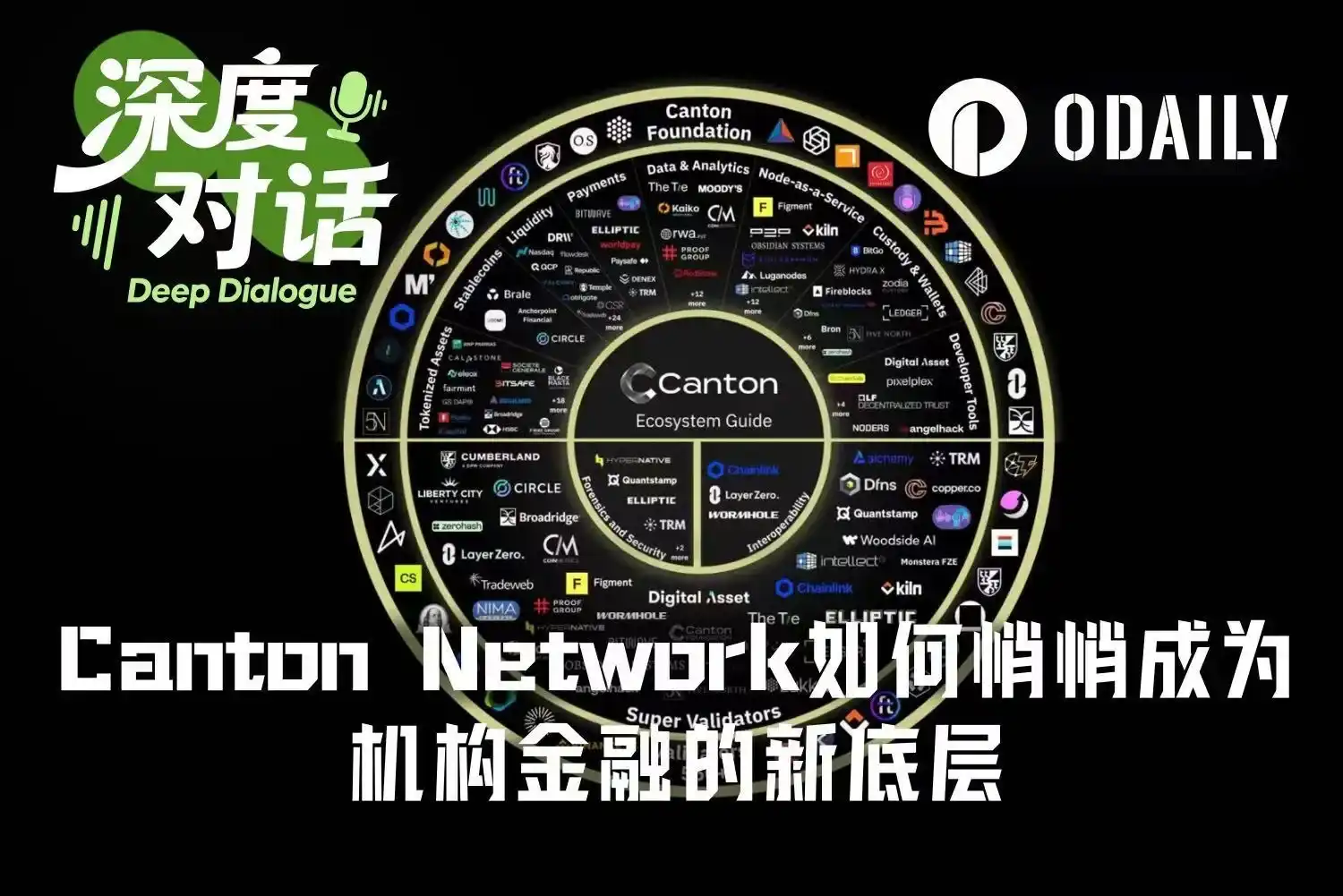
Putting Markets On-Chain: Canton Network Quietly Becomes the New Backbone of Institutional Finance

**Title: Letting the Market Itself Go On-Chain: Canton Network Quietly Becomes the New Backbone for Institutional Finance** **Summary:** The Canton Network, a blockchain platform designed for institutional finance, is gaining significant traction. A key sign of its maturity was Visa's recent entry as a super-validator, a proposal approved in just three days—highlighting prior, extensive collaboration between traditional finance and crypto. Unlike public chains like Ethereum that prioritize transparency and asset onboarding, Canton focuses on enabling confidential, compliant business operations for regulated institutions. Its core design features built-in **data visibility control**, meaning transaction details are only shared between direct counterparties. This privacy is fundamental, allowing competing institutions (like banks Goldman Sachs, JPMorgan, and BNP Paribas, all validators) to interact on the same network without exposing sensitive positions or strategies. Developed by Wall Street veterans at Digital Asset, Canton has taken a slow, deliberate approach to onboard real financial activity. It now handles over **$9 trillion monthly** in transaction volume, primarily from real-world institutional use cases like **tokenized repo agreements**, Treasury settlements, and collateral mobility. Major live applications include **JPM Coin** for institutional payments and **DTCC's tokenized U.S. Treasuries** project. Canton's native token, **CC**, is framed as a "network utility asset" with zero pre-mine or VC allocations. Its value is intended to be driven by the volume of real financial activity on the network. Looking ahead, Canton aims to become the invisible foundational layer for global finance—enabling atomic settlement (where payment and asset delivery occur simultaneously), 24/7 capital flows, and the native issuance and settlement of various asset classes, from corporate bonds to potentially equities. The main challenges are no longer technical but involve navigating fragmented global regulations and integrating with legacy financial systems.

marsbit2h ago

Putting Markets On-Chain: Canton Network Quietly Becomes the New Backbone of Institutional Finance

marsbit2h ago

Trading

Spot
Futures

Hot Articles

How to Buy ONE

Welcome to HTX.com! We've made purchasing Harmony (ONE) simple and convenient. Follow our step-by-step guide to embark on your crypto journey.Step 1: Create Your HTX AccountUse your email or phone number to sign up for a free account on HTX. Experience a hassle-free registration journey and unlock all features.Get My AccountStep 2: Go to Buy Crypto and Choose Your Payment MethodCredit/Debit Card: Use your Visa or Mastercard to buy Harmony (ONE) instantly.Balance: Use funds from your HTX account balance to trade seamlessly.Third Parties: We've added popular payment methods such as Google Pay and Apple Pay to enhance convenience.P2P: Trade directly with other users on HTX.Over-the-Counter (OTC): We offer tailor-made services and competitive exchange rates for traders.Step 3: Store Your Harmony (ONE)After purchasing your Harmony (ONE), store it in your HTX account. Alternatively, you can send it elsewhere via blockchain transfer or use it to trade other cryptocurrencies.Step 4: Trade Harmony (ONE)Easily trade Harmony (ONE) on HTX's spot market. Simply access your account, select your trading pair, execute your trades, and monitor in real-time. We offer a user-friendly experience for both beginners and seasoned traders.

3.6k Total ViewsPublished 2024.03.29Updated 2025.06.04

How to Buy ONE

Discussions

Welcome to the HTX Community. Here, you can stay informed about the latest platform developments and gain access to professional market insights. Users' opinions on the price of ONE (ONE) are presented below.

活动图片