On the Eve of Do Kwon's Trial, $1.8 Billion Is Betting on His Sentence

深潮Published on 2025-12-10Last updated on 2025-12-10

Abstract

Summary: On the eve of Do Kwon's final sentencing hearing, LUNA and LUNA2 contracts recorded a staggering $1.8 billion in trading volume despite having no fundamental value. The market is speculating on the outcome of the trial, with extreme divergence between short and long positions. Prosecutors are seeking a 12-year sentence, while the defense argues for 5 years. This legal event has turned LUNA into a speculative instrument, detached from its original utility, highlighting how crypto markets efficiently price even events like judicial outcomes and human freedom. Regardless of the verdict, LUNA's volatility is expected to collapse post-hearing as the event-driven speculation concludes.

Author: David, TechFlow

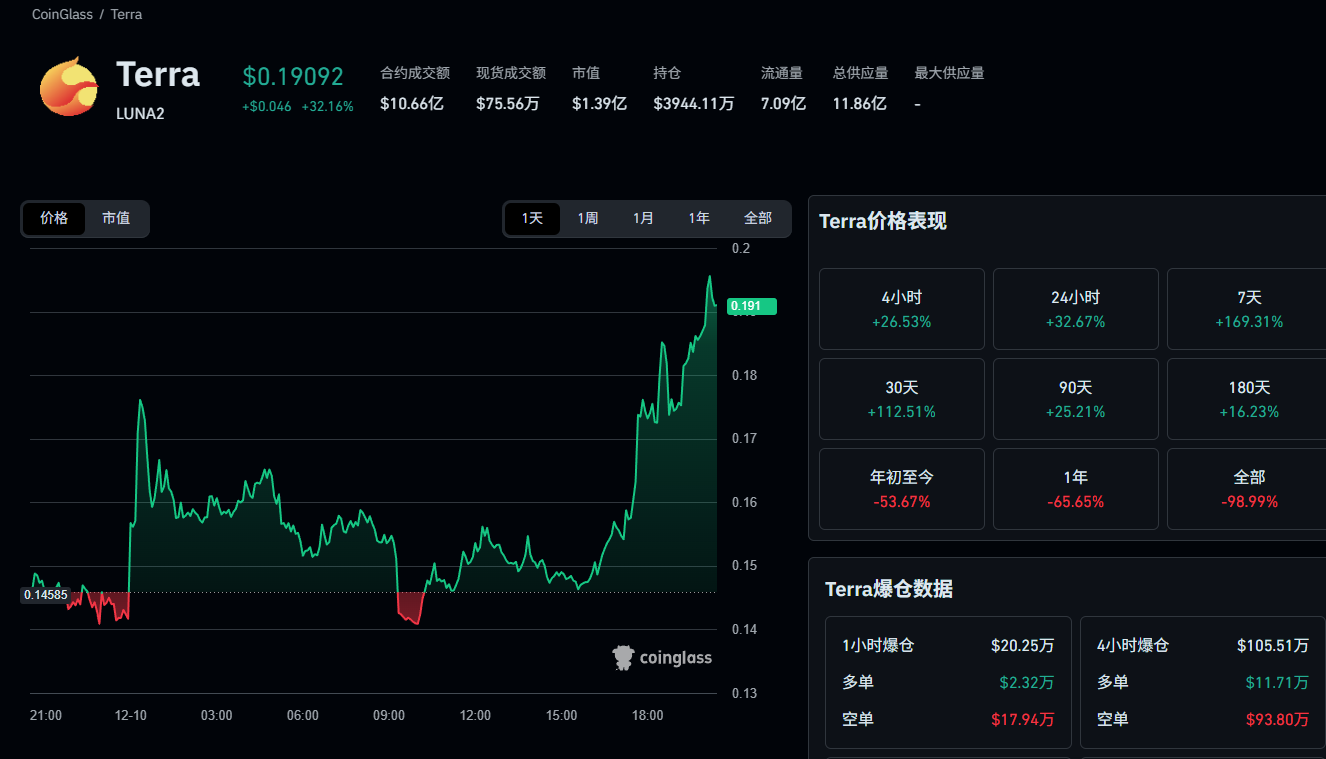
As of the evening of December 10th, you might not have noticed, but the contract data for the LUNA token is absolutely staggering.

Without any technical upgrades or positive ecosystem news, the 24-hour trading volume for the LUNA series contracts (including LUNA and LUNA2) across the entire market has approached a total of $1.8 billion.

And LUNA itself has surged 150% in the past week.

For comparison, the combined trading volume of LUNA and LUNA2 now ranks within the top ten for contract trading volume across the entire market, just behind HYPE's $1.88 billion.

Their respective funding rates are -0.0595% and -0.0789%.

Extremely negative funding rates indicate that the market is not only crowded but also in a state of extreme divergence: a significant amount of capital is shorting, while an even larger pool of capital is using this crowdedness to force a short squeeze.

We all know LUNA has little fundamental value left. This $1.8 billion in liquidity is essentially trading a bet on a prize about to be drawn:

Tomorrow, December 11th at 24:00, the former "Stablecoin King," Do Kwon, will face his final sentencing hearing in Courtroom 1305 of the U.S. District Court for the Southern District of New York.

The market is using real money to bet on the prison sentence of this crypto magnate from the last cycle.

The Sentence Can Be Long or Short, Speculation Never Rests

To understand this $1.8 billion in contract volume, one needs to look at the current real progress of this case.

For most people, the name Do Kwon faded from view after the epic collapse in 2022.

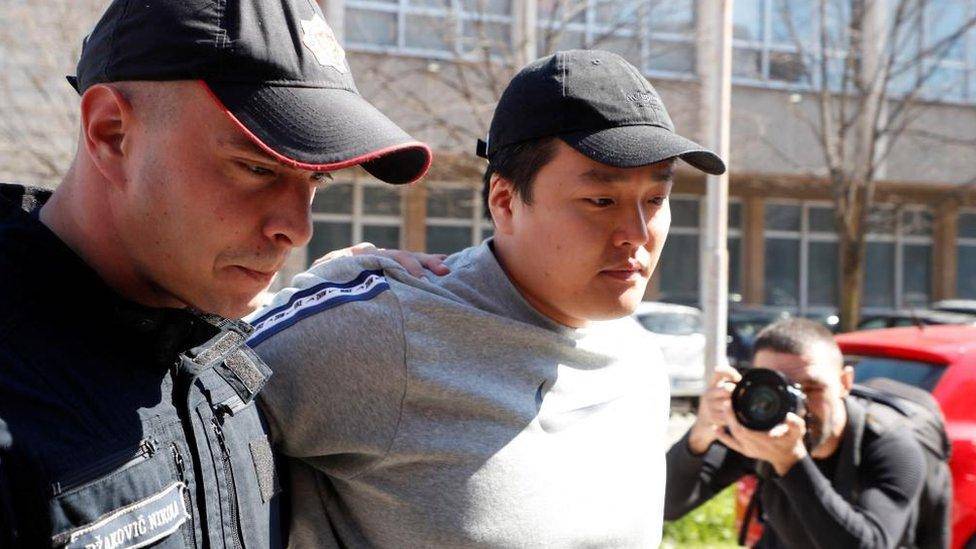
But in fact, this former crypto tycoon was extradited to New York, USA, in late 2024. And in August of this year, he formally pleaded guilty in Manhattan federal court to multiple charges, including securities fraud.

Tomorrow's hearing is not a debate about "guilty or not guilty," but the final ruling on the length of the sentence. According to the latest court documents, there is a vast chasm between the prosecution and defense regarding sentencing recommendations:

The prosecution is pushing for 12 years in prison.

The U.S. Attorney's Office is taking a hard line, citing the tens of billions in losses from Terra's collapse and Do Kwon's fraudulent behavior regarding the "fake on-chain" claims about the Chai payment app before the crash.

From the market's perspective, 12 years represents a definitive end. At a 4-year crypto cycle rate, that's three full cycles with no Do Kwon.

The defense is requesting 5 years in prison.

The defense team is playing the "sympathy card," emphasizing that Do Kwon has already been detained in Montenegro for some time, pleaded guilty in good faith, and cooperated with the SEC's penalty enforcement.
A 7-year gap is more than enough to fuel a day of speculation and capital games around the LUNA token.

The normal logic would be that if the founder gets a heavy sentence, the LUNA token is one step closer to zero. Hence the market is flooded with short positions, which we see in the negative funding rates;

But the main capital or market makers don't necessarily need to believe that Do Kwon will actually get a light 5-year sentence. They just need to use the uncertainty of the verdict to reverse the price, specifically hunting those overly crowded shorts.

This might also explain why LUNA surged on the eve of Do Kwon's sentencing. The market is certainly not celebrating justice but speculating on the verdict itself.

With the crypto market already lacking hotspots and generally weak, tomorrow's hearing has created one of the few pockets of volatility.

From Victims to Predators

You're awake. It's 2022 again.

If we had opened the LUNA holdings distribution chart in May 2022, we would have seen a much more tragic picture:

It was crowded with Korean retail investors who lost their life savings, crypto funds that suffered heavy blows, and speculators trying to buy the dip only to be buried. Trading then was filled with more anger, despair, and irrational attempts to save themselves.

Three years later, the market's microstructure has undergone a complete blood change.

The victims of that time have long since cut their losses and left. Sitting at the table now are perhaps a completely different set of participants. Think high-frequency quant teams, event-driven hedge funds, and speculators专门 hunting "junk assets."

For these new players, questions about whether Do Kwon is innocent or whether the Terra ecosystem has a future are not only irrelevant but even noise. The only metric they care about is Event Beta, the sensitivity of the asset's price to specific legal news.

In this context, LUNA's asset attributes have actually mutated into a derivative instrument centered around the legal outcome, much like how the fluctuations of certain Meme coins revolve around the actions of a public figure.

This is an extremely brutal form of maturity in the crypto market. Death or imprisonment can itself be "monetized."

The current trading of LUNA, and even many other shell tokens, is essentially disaster pricing. The main capital knows full well that the fundamentals are zero. But as long as there is divergence, as long as there is space for long-short games, this "empty shell" is a perfect trading target.

One could even say that it is precisely because there is no fundamental anchor that the token's price fluctuations are no longer constrained and depend entirely on emotional宣泄.

It also confirms the saying that most tokens in the crypto market are essentially memes.

Pricing Everything

After the sentencing tomorrow, whether Do Kwon hears "5 years" or "12 years," the outcome for LUNA as a trading instrument will likely be the same.

Once the event is over, the token will probably become毫无波动 again; not only can bad news kill the momentum, but confirmed good news can too.

If it's a heavy sentence, logic returns to fundamentals, price goes to zero; if it's a light sentence, it's "Sell the News," and profit-takers will retreat like a receding tide.
Objectively speaking, LUNA is actually a great lens for observation.

It has reflected a technological narrative of an algorithmic stablecoin, and it also reflects the extremely mature, extremely cold-blooded side of this market.

The current crypto market can efficiently repackage even a dead coin and a convicted founder into chips on the betting table, as long as there's a shred of news value.

The efficiency of liquidity in the crypto market has evolved to an extreme. It can price anything: sentiment, bugs, memes... and of course, a person's freedom and a form of judicial justice.

In the face of such extreme efficiency, moral judgment seems somewhat superfluous.

Do Kwon's future life might be spent sadly in prison, but the crypto market has no sadness, only volatility yet to be priced in.


Trending Cryptos

Related Questions

QWhat is the $1.8 billion in LUNA contract trading volume primarily betting on?

AThe $1.8 billion in LUNA contract trading volume is primarily a bet on the outcome of Do Kwon's final sentencing hearing, with traders speculating on whether he will receive a shorter or longer prison term.

QWhat are the sentencing recommendations from the prosecution and defense for Do Kwon?

AThe prosecution is advocating for a 12-year prison sentence, while the defense is requesting a 5-year sentence.

QWhat do the highly negative funding rates for LUNA contracts indicate about the market?

AThe highly negative funding rates indicate an extremely crowded and divided market, with a large number of short positions being squeezed by an even larger force of capital executing a short squeeze.

QHow has the nature of trading LUNA changed since the 2022 crash according to the article?

AThe nature of trading has changed from being driven by victims and desperate retail investors to being dominated by cold, efficient players like quantitative teams and event-driven funds who treat the asset as a legal derivative, betting purely on event-driven volatility rather than fundamentals.

QWhat is the expected price action for LUNA after the sentencing, regardless of the outcome?

ARegardless of whether the sentence is light or heavy, the price of LUNA is expected to lose volatility and likely decline afterwards, as the event-driven speculation concludes—either reverting to its fundamental value of near zero on a heavy sentence or experiencing a 'sell the news' event on a light sentence.

Related Reads

Treasury Secretary's Move to Suppress Treasury Yields Ignites 'Currency Debasement Trade'! Gold Hits Three-Month High, Bitcoin Surges Over 25% in a Single Week

US Treasury Secretary Besant's efforts to lower long-term Treasury yields by announcing expanded buybacks had only a brief market impact. However, this move fueled a "currency devaluation trade," weakening the US dollar while boosting both gold (to a three-month high) and Bitcoin (up over 25% for the week). Analysts attribute this reaction to deepening market concerns over the massive US fiscal deficit and structural pressures keeping long-term rates elevated, including fierce competition for capital from global government borrowing and massive AI sector financing. Despite the Treasury's actions, fundamental forces like growth, inflation, and capital demand are seen as limiting its ability to sustainably suppress yields. Bitcoin's strong positive correlation with gold has reinforced its narrative as a hedge against devaluation. While equity markets have shown resilience, some strategists warn that Treasury yields nearing 5% increase pressure on the dollar and high-leverage assets. Figures like Ray Dalio have advised reducing bond exposure in favor of gold and some Bitcoin, citing US debt risks. Market opinions are divided on the sustainability of the devaluation trade, with some noting the lack of a near-term catalyst for its next leg higher. The underlying tension between the Treasury's desire for lower borrowing costs and the Federal Reserve's focus on inflation and reducing market intervention remains a key theme. Upcoming events like Nvidia's earnings and the Jackson Hole symposium will test whether AI profits can continue supporting stocks and if the Fed aligns more with Washington's preference for easier financial conditions.

华尔街日报36m ago

Treasury Secretary's Move to Suppress Treasury Yields Ignites 'Currency Debasement Trade'! Gold Hits Three-Month High, Bitcoin Surges Over 25% in a Single Week

华尔街日报36m ago

Alexander Shokhin: Business Needs an Interest Rate Below 10% and the Dollar at 90-95 Rubles

Alexander Shokhin, head of the Russian Union of Industrialists and Entrepreneurs (RSPP), has advocated for potentially using "non-market" tools to keep the ruble within a target exchange rate corridor. This, he argues on August 21, would help avoid excessive volatility, though he called the topic a separate discussion. Shokhin had previously raised the idea of a currency corridor in late May, noting the ruble's current exchange rate is not fully market-driven due to a limited currency segment and reduced foreign currency demand. He stated that many business community colleagues propose fixing a corridor, even through non-market methods, to ensure predictability. The business community's key targets, as outlined by Shokhin in late December 2025, are a Central Bank key rate of 12%, inflation of 4–5%, and a US dollar exchange rate of 90–95 rubles by the end of 2026. A turning point for investment, he said, would be lowering the rate to 12% with 6% inflation, though truly comfortable business conditions would require a rate below 10%. He stressed the critical importance of currency predictability for corporate investment decisions. From a data analysis perspective, the idea of a ruble corridor is not new. A similar mechanism was used in Russia from 1995 to 1998, where the central bank held the dollar within fixed boundaries through regular interventions. This regime lasted three years before ending abruptly during the 1998 default, illustrating the fragility of rigid targets under external shocks. The macro-economic link is clear: stricter corridors require more reserves to defend against currency pressure. The key unresolved technical aspect is the specific sources and volume of such interventions given the current market's limited liquidity. Whether this discussion remains theoretical or leads to concrete corridor parameters will be seen in the coming months.

cryptonews.ru2h ago

Alexander Shokhin: Business Needs an Interest Rate Below 10% and the Dollar at 90-95 Rubles

cryptonews.ru2h ago

Trading

Spot

Hot Articles

Discussions

Welcome to the HTX Community. Here, you can stay informed about the latest platform developments and gain access to professional market insights. Users' opinions on the price of S (S) are presented below.

活动图片