Morning Post | Bitmine Plans to Raise $300 Million Through Preferred Stock Issuance; Polymarket Accuses Kalshi of Commercial Espionage

链捕手Published on 2026-06-05Last updated on 2026-06-05

Abstract

ChainCatcher's Daily Crypto Brief: Key developments from the past 24 hours include significant funding moves, regulatory actions, and market predictions. Bitmine announced a $300 million preferred stock fundraising. Polymarket accused rival prediction platform Kalshi of corporate espionage, citing numerous suspicious coincidences in product launches, a claim Kalshi strongly denied. The U.S. Department of Justice, in a joint "Disruption Week" anti-fraud operation with companies like Coinbase and Meta, froze over $3.8 million in cryptocurrency linked to scams. In infrastructure news, Macau completed its integration with the multi-central bank digital currency bridge, mBridge, aiming to build efficient cross-border payment channels. Cosmos Labs acquired the block explorer Mintscan. Market-wise, Geoffrey Kendrick, Standard Chartered's Head of Digital Assets Research, stated Bitcoin is nearing a bottom around $63,000, maintaining a year-end target of $100,000. He noted stability in U.S. spot Bitcoin ETF holdings. Ahead of SpaceX's anticipated IPO, internal insiders at Rocket Lab (RKLB) sold over $18.41 million in stock. In tokenization, Goldman Sachs partnered with Apex and Archax to launch a tokenized real estate fund. The meme token tracker GMGN reported the top trending tokens: on Ethereum, HEX, SHIB, LINK, PEPE, mUSD; on Solana, TROLL, swarms, WORLDCUP, neet, Buttcoin; and on Base, PEPE, toby, ODDS, ELSA, SKI.

Compiled by: ChainCatcher


Key News:

  • Bitmine Announces Plan to Raise $300 Million Through Issuing Preferred Stock
  • Polymarket Accuses Kalshi of Commercial Espionage, Citing Too Many 'Coincidences' in Product Launches
  • U.S. DOJ Collaborates with Coinbase, Meta, and Others in Anti-Scam Operation, Freezing Over $3.8 Million in Crypto Assets
  • Macao Completes System Integration with Multilateral Central Bank Digital Currency Bridge mBridge, Building an Efficient and Secure Cross-Border Payment Channel
  • Cosmos Labs Acquires Block Explorer Mintscan
  • Goldman Sachs Partners with Apex and Archax to Launch Tokenized Real Estate Fund

What were the key events of the past 24 hours?

Macao Completes System Integration with Multilateral Central Bank Digital Currency Bridge mBridge, Building an Efficient and Secure Cross-Border Payment Channel

U.S. DOJ Collaborates with Coinbase, Meta, and Others in Anti-Scam Operation, Freezing Over $3.8 Million in Crypto Assets

ChainCatcher news, according to a report by The Block, the U.S. Department of Justice stated that in the joint anti-scam operation codenamed "Disruption Week," private sector participants froze over $3.8 million in cryptocurrency assets related to scams. Participating institutions included Coinbase, Meta, Google, Microsoft, SpaceX, TRM Labs, among others.

The operation also led to the arrest of seven scam operators by Thai police and the identification of multiple scam platforms handed over to U.S. authorities for investigation. According to FBI data, reported losses from cryptocurrency investment scams in 2025 grew by 24% year-over-year, exceeding $7.2 billion.

Standard Chartered's Head of Digital Assets Research: Bitcoin 'Bottom is Near,' Maintains Year-End $100,000 Target

ChainCatcher news, according to a report by The Block, Geoffrey Kendrick, Head of Digital Asset Research at Standard Chartered, stated that Bitcoin's "bottom has almost arrived" following the recent sharp decline, and the current range around $63,000 is a "buying zone." He pointed out that holdings of U.S. spot Bitcoin ETFs have remained largely flat overall since February, with no concentrated redemptions as feared, indicating that the funds are more "structurally stable."

Kendrick expects that after Strategy, which triggered recent selling pressure, sold 32 BTC, it may follow historical precedent by repurchasing 10 times or even 100 times that amount, potentially signaling a confirmation of a cyclical low. He also noted that Bitcoin still faces downside risks of falling below $60,000 but believes averaging into purchases is preferable to trying to time the exact bottom. The bank maintains its year-end targets of $100,000 for Bitcoin and $4,000 for Ethereum.

Ahead of SpaceX's IPO, Rocket Lab (RKLB) Insiders Cash Out Over $18.41 Million in Stock

ChainCatcher news, according to a report by Barron's, ahead of SpaceX's IPO, Rocket Lab insiders collectively sold over 124,000 shares, cashing out more than $18.41 million. This included the company's General Counsel Arjun Kampani, Vice President of Space Systems Brad Clevenger, COO Frank Klein, and Alex Slusky, head of Vector Capital, the entity behind the SPAC that took the company public.

The company's stock price had previously risen significantly due to industry optimism fueled by SpaceX's valuation increase. On Monday this week, Rocket Lab's (RKLB) stock price once fell by 15% to $122.39.

Polymarket Accuses Kalshi of Commercial Espionage, Citing Too Many 'Coincidences'

ChainCatcher news, prediction market platform Polymarket believes its competitor Kalshi may have engaged in commercial espionage against its New York office and employees. A Polymarket marketing executive confirmed the company is conducting an internal investigation, stating there were "too many coincidences" and suspecting Kalshi had ill intentions.

Reports indicate that Polymarket internally compiled a file named "Copycat," documenting about a dozen suspicious incidents. These included Polymarket's original plan to launch a free grocery pop-up event on February 12, while Kalshi launched a similar event approximately 9 days earlier. Additionally, Polymarket planned to announce its perpetual contract product plans on April 21, but about an hour before the announcement, tech media The Information reported that Kalshi was also preparing to launch a similar product.

Polymarket employees also expressed concern that the office of Paradigm, a venture capital firm backing Kalshi, is located opposite their workplace, posing a risk of employees' computer screens being viewed. It is reported that Polymarket installed window films on some office windows this spring.

In response, a Kalshi spokesperson denied all allegations, calling Polymarket's suspicions "pathetic and bordering on delusional."

Meme Token Hotlist

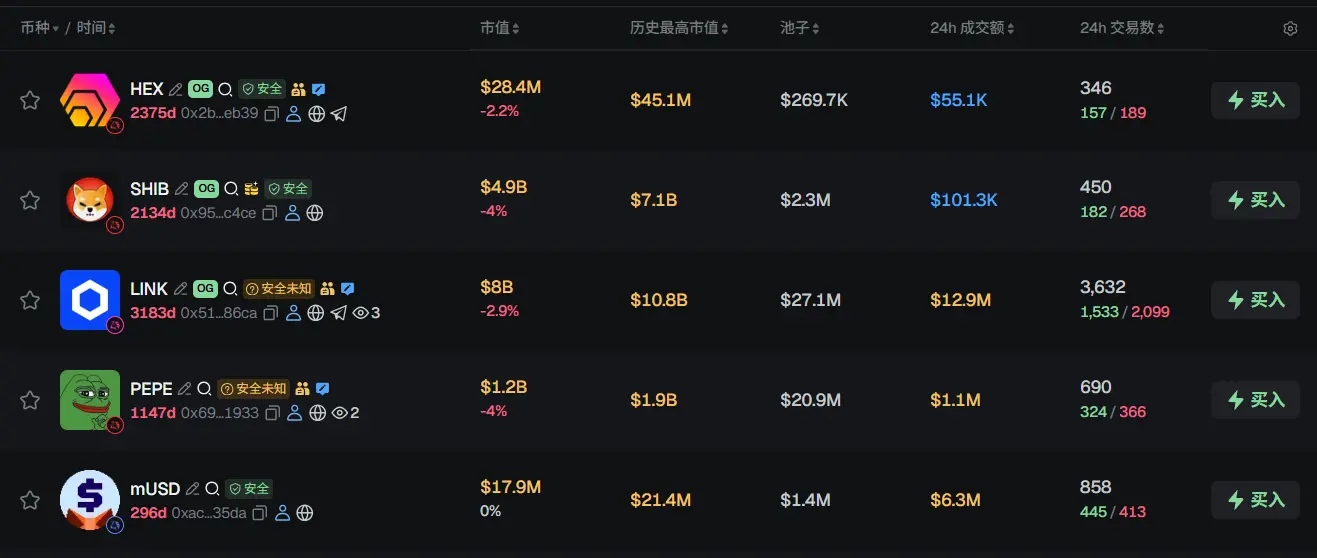
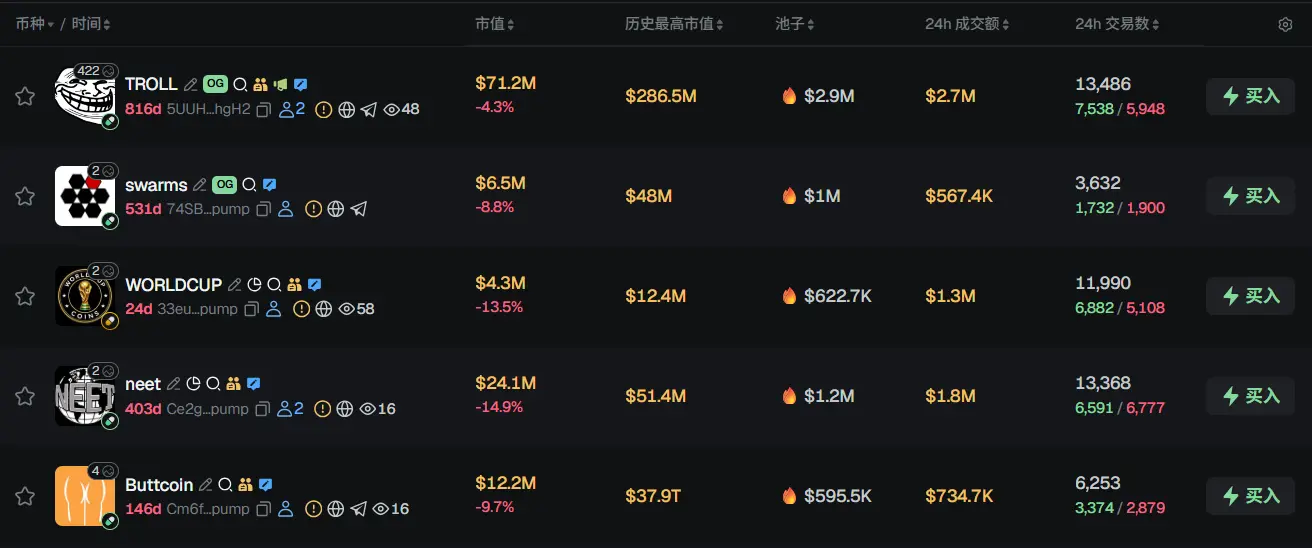
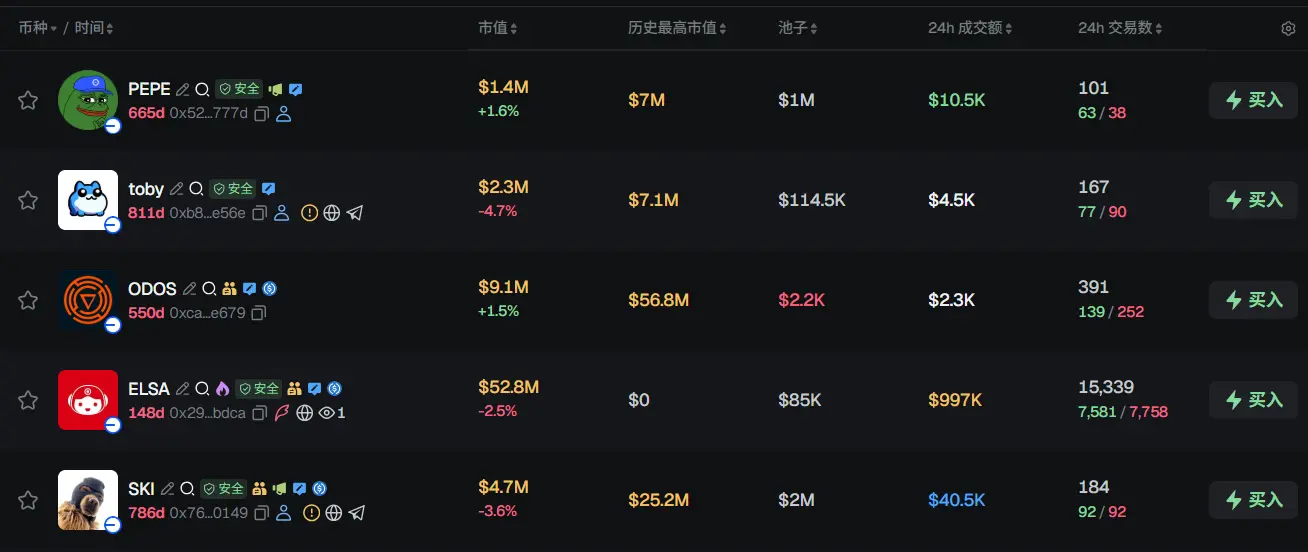
According to data from the meme token tracking and analysis platform GMGN, as of 09:00 on June 5th,

The top five popular tokens on ETH in the past 24h were: HEX, SHIB, LINK, PEPE, mUSD.
The top five popular tokens on Solana in the past 24h were: TROLL, swarms, WORLDCUP, neet, Buttcoin.
The top five popular tokens on Base in the past 24h were: PEPE, toby, ODDS, ELSA, SKI.
Related Questions

QWhat significant fundraising initiative has Bitmine announced, and how much does it aim to raise?

ABitmine has announced the issuance of preferred stock aiming to raise 300 million US dollars.

QWhat action has the US Department of Justice taken in collaboration with companies like Coinbase and Meta, and what was the outcome?

AThe US Department of Justice conducted a joint anti-fraud operation named 'Disruption Week' with companies including Coinbase, Meta, Google, Microsoft, SpaceX, and TRM Labs. The operation resulted in the freezing of over 3.8 million US dollars in cryptocurrency assets linked to scams.

QAccording to Geoffrey Kendrick of Standard Chartered Bank, what is the outlook for Bitcoin's price and what are his specific targets?

AGeoffrey Kendrick, Head of Digital Assets Research at Standard Chartered Bank, stated that Bitcoin's bottom is nearly in place after recent declines and considers the current price around 63,000 USD a 'buying range'. He maintains a year-end target of 100,000 USD for Bitcoin and 4,000 USD for Ethereum.

QWhat allegations has Polymarket made against its competitor Kalshi, and how has Kalshi responded?

APolymarket has accused its competitor Kalshi of potential corporate espionage, citing 'too many coincidences' in similar product launches and activities. Kalshi has denied all allegations, calling Polymarket's suspicions 'pathetic and bordering on delusional'.

QWhat major development has been completed regarding Macao and the mBridge system, and what is its purpose?

AMacao has completed system integration with the multilateral central bank digital currency bridge, mBridge. The purpose is to establish an efficient and secure cross-border payment and settlement channel.

Related Reads

Is the Sharp Decline Over? Let the Data Speak

**Has the Sharp Decline Ended? Let Data Speak** Bitcoin's recent significant drop has placed short sellers in a precarious position. Three concurrent pressures—sustained outflows from ETFs, miners offloading coins to exchanges, and short-term holders capitulating—pushed the price near $63k. The asset fell 13% this week and 21% this month, roughly halving from its all-time high. A critical data point is the extremely crowded short positioning, with a short-to-long ratio reaching 8:1, representing nearly $100 billion in short interest overhead. This creates conditions for a potential short squeeze if selling pressure merely pauses, similar to the event in November 2022 which triggered a 24% rally. The selling pressures are real: spot Bitcoin ETFs have seen a record $5.4 billion outflow over 20 days. Short-term holders moved 53k loss-held BTC to exchanges in a day, and miners sent 24k BTC to Binance, a six-month high. Capital is also rotating towards AI and tech stocks like SpaceX, with $400 billion invested in AI infrastructure recently. However, on-chain data shows accumulation by long-term holders, who added 200k BTC in a month, and institutions/miners have absorbed 1.24 million BTC since 2023. This indicates strong buying beneath the surface. Key levels to watch are the $67k-$70k zone (2021 high & 2024 breakout point). A swift recovery above it suggests a leverage washout; failure could test $60k-$55k. The direction also hinges on ETF flow reversal. Currently, the S&P 500 hits new highs driven by AI, while Bitcoin and DeFi (TVL down from $173b to $73.9b) lag. The most probable path is a grinding basing process between $60k-$58k with continued ETF outflows. A less likely but explosive scenario involves a sudden flow reversal, a surge above $70k triggering a short squeeze, and a rally back above $76k. The immediate trigger depends on when the relentless selling pauses. A final cautionary note questions Bitcoin's correlation: if the high-flying U.S. stock market corrects, will Bitcoin once again miss the rally but not the decline?

foresightnews_api6m ago

Is the Sharp Decline Over? Let the Data Speak

foresightnews_api6m ago

Single-Day Plunge of 30%, Arthur Hayes Suddenly Liquidates: Why Did ZEC Get Exploded by Security Issues?

On June 5th, Zcash founder Zooko Wilcox disclosed a critical soundness vulnerability in the project's latest Orchard privacy pool. This flaw, found in the elliptic curve multiplication constraints, could allow an attacker to create unlimited counterfeit ZEC within the shielded pool, with transactions appearing valid. The vulnerability was discovered in late May by security researcher Taylor Hornby, who utilized Anthropic's new Opus 4.8 AI model for a targeted audit. The Zcash ecosystem had already performed an emergency network upgrade to patch the issue. However, the detailed disclosure triggered severe market panic, causing ZEC's price to plummet over 30% in a single day. Notably, prominent investor Arthur Hayes announced he had sold his entire ZEC position following the news. The incident starkly challenges the "technological trust" narrative central to privacy coins. Despite years of top-tier cryptographic audits, the bug persisted until uncovered with advanced AI-assisted research. This highlights the growing gap between theoretical perfection and practical implementation in privacy technology. The event serves as a industry-wide warning: in an AI-driven security landscape, the assumption that "undiscovered equals safe" is obsolete. It underscores the urgent need for continuous, proactive security practices combining AI audits, formal verification, and rapid response mechanisms.

foresightnews_api1h ago

Single-Day Plunge of 30%, Arthur Hayes Suddenly Liquidates: Why Did ZEC Get Exploded by Security Issues?

foresightnews_api1h ago

Breaking the Curse of DeFi Cascading Liquidations, Vitalik Proposes a New Solution

**Vitalik Buterin Proposes New DeFi Design to Eliminate Forced Liquidations** Ethereum co-founder Vitalik Buterin has published a proposal for a new decentralized finance (DeFi) architecture aimed at removing the automatic liquidation mechanisms prevalent in current lending protocols. The core idea involves creating synthetic assets using options as building blocks, fundamentally avoiding the抵押借贷结构 that triggers forced sell-offs. The proposal responds to a recurring flaw in DeFi: during sharp market downturns, mass自动清算 of under-collateralized positions can exacerbate price declines, creating systemic selling pressure and market instability, as evidenced by recent crypto market volatility. Buterin's model would split an asset like 1 ETH into two option-like derivatives, P and N, pegged to a price index with a set strike price and expiration. At expiry, an oracle determines the settlement price to allocate the underlying ETH between P and N holders. This design eliminates the "cliff" of instant liquidation. Instead, a position's value would gradually drift from its target peg if not actively rebalanced by the user, transferring the rebalancing decision from the protocol to the user or automated tools. A key advantage is the reduced reliance on high-frequency, real-time oracle price feeds, which are vulnerable to manipulation and errors in current systems. The delayed settlement in the options model allows for more robust, fault-tolerant oracle designs. However, significant challenges remain for practical adoption. High transaction costs (slippage) from frequent rebalancing on automated market makers (AMMs) could erode user funds. The model may not be suitable for stablecoins requiring a strict 1:1 dollar peg, as it inherently allows for value drift. Success would depend on developing new liquidity provisioning models and deep markets for these synthetic assets. The proposal represents a fundamental rethinking of DeFi risk management, challenging the industry to explore alternatives to被动集中平仓 rather than merely optimizing existing liquidation processes. It remains a theoretical framework awaiting implementation and testing by development teams.

foresightnews_api1h ago

Breaking the Curse of DeFi Cascading Liquidations, Vitalik Proposes a New Solution

foresightnews_api1h ago

Bitcoin's Decline Marks the Transformation of Crypto

Title: The Decline of Bitcoin Marks the Transformation of Crypto While Bitcoin's price recently fell below $70,000, down approximately 45% from its peak, the broader crypto industry is not following it into decline. Instead, crypto is maturing and evolving beyond its dependence on Bitcoin's price movements. Two of Bitcoin's core functions are being usurped. First, AI has captured its role as the primary speculative asset. AI, with its tangible revenue, explosive demand, and massive capital inflows ($700-830 billion in 2024), is siphoning off the speculative "hot money" that once drove Bitcoin. It also contributes to a sustained high-interest-rate environment, further tightening liquidity for assets like Bitcoin. Second, dollar-pegged stablecoins like USDC and USDT have replaced Bitcoin as the crypto market's foundational currency and primary on/off-ramp. Most trading pairs and on-chain transactions are now settled in stablecoins, severing the historical link where all capital inflows had to pass through Bitcoin first. This decoupling allows projects to thrive based on their own fundamentals rather than Bitcoin's price. Examples include Hyperliquid, an on-chain derivatives exchange with annual revenues of $8-13 billion, and prediction market platform Polymarket, valued at $200 billion with $3.65 billion in annual fees. These projects are evaluated on traditional metrics like revenue and user growth. New opportunities are emerging, particularly around privacy. Privacy coins like Zcash (ZEC) are seeing surging demand, while infrastructure like NEAR enables private, cross-chain asset transfers without requiring users to hold a specific token—privacy becomes a universal service layer. In this new paradigm, stablecoins are the universal cash, various project tokens represent equity, and privacy-enabled cross-chain coordination layers (like NEAR) act as the critical infrastructure connecting a fragmented, multi-chain ecosystem. Bitcoin is now just one asset among many. The era where the entire crypto market moved in lockstep with Bitcoin is over. The industry's health should now be judged by project fundamentals—real revenue, active users, and tokenomics that capture value—and the development of the underlying infrastructure enabling a mature, dollar-denominated crypto economy.

foresightnews_api1h ago

Bitcoin's Decline Marks the Transformation of Crypto

foresightnews_api1h ago

Trading

Spot
Futures
活动图片





