MoonPay Launches Service for Payments via ChatGPT and Claude

cryptonews.ruPublished on 2026-07-29Last updated on 2026-07-29

Abstract

MoonPay has launched PayBox, a non-custodial payment wallet and storage service that enables users to make transactions directly within AI chatbot dialogues, such as ChatGPT and Claude. To use PayBox, users connect it to an AI model via a connector on the official website. The service then allows for a range of actions, including booking flights, swapping crypto assets, staking, and online shopping—essentially any payment supporting Coinbase's x402 protocol. Upon a user's request, the chatbot constructs the transaction for user confirmation, a process that can be automated with pre-set limits. Support for Gemini and Grok AI models is expected within a month. MoonPay emphasizes security as a top priority, stating that AI agents never have access to user wallet keys, card details, or funds. Keys are secured using Multi-Party Computation (MPC) combined with Trusted Execution Environments (TEE), preventing MoonPay or the AI from independently signing transactions. The service is built on the infrastructure of Sodot, a company acquired by MoonPay in 2026, which secures over $50 billion in assets. PayBox is designed to address common fraud vectors in agent-based payments, such as key theft, card number leaks, and systemic vulnerabilities, by closing each potential attack path individually.

The MoonPay project team has introduced PayBox, a payment vault and non-custodial wallet. The service allows users to conduct transactions without leaving the chatbot dialog window.

To utilize PayBox's features, a user needs to connect it to an AI model via a special connector on the official website. After that, the user will be able to make transactions using the dialog window.

Available functions include booking airline tickets, swapping crypto assets, staking, online purchases, and much more. PayBox enables payments in all services that support the Coinbase exchange's x402 protocol.

Upon receiving a corresponding request, the chatbot forms a transaction, which the user then confirms. Information on the official website suggests this process can be automated by pre-setting limits.

Currently, only ChatGPT and Claude are supported. Support for Gemini and Grok is expected within a month.

According to Neeraj Prasad, Lead Engineer at MoonPay Labs, PayBox provides users with something they haven't had before. If previously agents could suggest, for example, product options, now that list includes the payment itself.

Security is the Key Priority

The project team emphasized that within the service, the AI never has access to wallet keys, card data, or client funds.

Keys, in particular, are protected using multi-party computation (MPC) combined with trusted execution environments (TEE). Neither MoonPay nor the AI agent can access the code or independently sign a transaction.

The service is based on the infrastructure of Sodot, a company acquired by MoonPay in 2026. It secures over $50 billion in assets and more than 10 million wallets for leading crypto companies.

As explained by MoonPay, fraud in the field of agent payments typically occurs under one of three scenarios: theft of keys, leakage of card numbers, or vulnerabilities in the overall system that allow it to be 'broken' entirely.

PayBox is designed to close each of these attack vectors individually, MoonPay stressed.

end-content

Related Questions

QWhat is MoonPay's new service called and what does it allow users to do?

AMoonPay's new service is called PayBox. It is a payment storage service and non-custodial wallet that allows users to conduct transactions directly within the chat window of AI assistants like ChatGPT and Claude, without needing to leave the conversation.

QWhat are some examples of the transactions users can perform using PayBox within AI chatbots?

AUsers can perform a variety of transactions using PayBox within AI chatbots, including booking flight tickets, swapping crypto assets, staking, making online purchases, and more. It supports payments in any service that uses Coinbase's x402 protocol.

QWhich AI assistants are currently supported by PayBox, and which ones are expected to be added soon?

ACurrently, PayBox supports ChatGPT and Claude. Support for Gemini and Grok is expected to be added within a month.

QHow does PayBox ensure the security of user keys and funds, according to MoonPay?

APayBox ensures security by never giving the AI agent access to wallet keys, card data, or user funds. The keys are protected using Multi-Party Computation (MPC) combined with Trusted Execution Environments (TEE). Neither MoonPay nor the AI agent can access the code or sign a transaction independently.

QWhat company's infrastructure does PayBox utilize to provide security, and what is its significance?

APayBox is built on the infrastructure of Sodot, a company acquired by MoonPay in 2026. This infrastructure secures over $50 billion in assets and more than 10 million wallets for leading crypto companies, providing the foundational security for the PayBox service.

Related Reads

The Turning Point of the AI Bull Market: Leverage Blow-ups, Overcapacity in Compute, Why This Macro Analyst is Fully Bearish

AI Bull Market Reaches Inflection Point: Analyst Turns Bearish Due to Leverage, Chinese Competition, and Overcapacity Fidenza Macro analyst Geo Chen explains his decision to sell all AI semiconductor and infrastructure holdings in June, offering a comprehensive bearish thesis. He argues the AI-driven bull market has peaked, citing several key factors. First, unsustainable buying pressure: a massive influx of "low-quality" capital from Korean retail investors using highly leveraged ETFs on stocks like SK Hynix created a parabolic, fragile rally. Recent liquidations have wiped out billions and impacted over a million accounts, removing a key market driver. Second, a competitive threat: the rapid rise of powerful, cost-effective open-source AI models from China, such as MoonShot AI's Kimi K3 and Alibaba's Qwen 3.8, is commoditizing intelligence. This undermines the pricing power and high-valuation financing prospects of closed-source leaders like OpenAI and Anthropic, potentially creating a "single point of failure" for the ecosystem. Third, an impending capacity glut: while AI compute and components are currently in shortage, Chen warns this is typical of a cycle top. Massive, committed capex from cloud providers will likely lead to a supply overhang within 1-2 years. Data shows token spending has already peaked and declined since June, while bond spreads for data center companies are widening, signaling rising credit risk. Chen also highlights broader macro headwinds: the protracted Iran conflict acts as a persistent stagflationary force, and the Federal Reserve under Chair Kevin Warsh is losing credibility in its inflation fight. Long-term Treasury yields breaking above 5.2% present a new challenge for equities. In summary, Chen believes the convergence of speculative excesses, competitive disruption, looming overcapacity, and adverse macroeconomic conditions marks a significant turning point for the AI investment theme.

marsbit15m ago

The Turning Point of the AI Bull Market: Leverage Blow-ups, Overcapacity in Compute, Why This Macro Analyst is Fully Bearish

marsbit15m ago

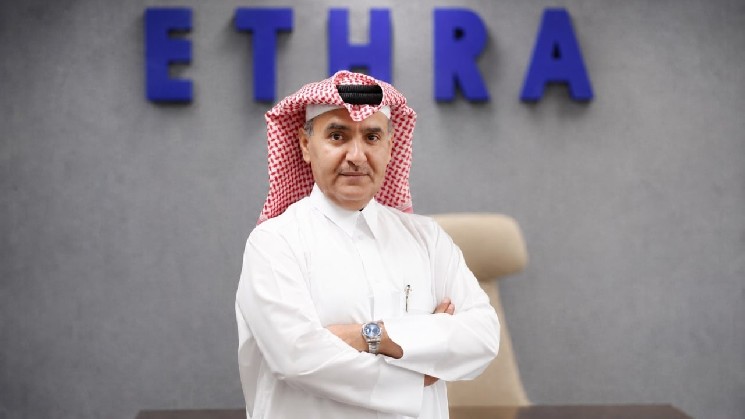
Saeed Al-Marri: How Tokenization Unlocks New Opportunities for Shipping Funds

Said Al-Marri: How Tokenization Opens New Opportunities for Shipping Funds For centuries, commercial shipping has been a capital-intensive asset class limited to institutional funds and shipping dynasties. Said bin Saleh Al-Marri, CEO of Ethra Invest and Ethra Ship, aims to break down these barriers by combining Real World Asset (RWA) tokenization with conservative private equity principles. This bridges decentralized finance (DeFi) with the physical realities of global trade. Tokenization allows fractional ownership of ships on a blockchain, giving smaller investors access to previously inaccessible markets. However, Al-Marri warns it is not a regulatory loophole or a cure for asset illiquidity. The core physical risks are isolated in Special Purpose Vehicles (SPVs) for qualified investors. While tokenization enhances transparency and ownership record-keeping, Al-Marri stresses that a liquid secondary market depends on transparent asset valuation and must not interfere with ship operations managed by professionals. Regarding legal enforcement, smart contracts cannot physically seize a ship. Legal recourse still relies on traditional maritime courts, ship mortgages, and flag state laws, with blockchain records needing to mirror legal ownership in the SPV perfectly. Beyond ownership, the industry faces administrative hurdles like paper-based bills of lading. Al-Marri argues the bottleneck is legal and operational standardization, not technology. He advocates for a hybrid model combining digital trade documents and programmable settlements with support from regulated financial institutions, rather than a full crypto replacement for tools like Letters of Credit. A major challenge is decarbonizing the global fleet by 2050. Transitioning to green fuels requires massive upfront investment. Al-Marri emphasizes a conservative, holistic approach to underwriting these projects, evaluating technology, fuel availability, safety, and resale value. Investments must be justified under conservative forecasts, not just optimistic ones. By combining pragmatic risk management with digital infrastructure, leaders like Al-Marri show that the evolution of maritime finance is about mobilizing capital to build a modernized and sustainable global fleet, not just putting ships on a blockchain.

cryptonews.ru30m ago

Saeed Al-Marri: How Tokenization Unlocks New Opportunities for Shipping Funds

cryptonews.ru30m ago

Trading

Spot
活动图片