Micron Invests $24 Billion in Singapore Factory, But Your RAM Sticks Are Not in the Plan

marsbitPublished on 2026-01-27Last updated on 2026-01-27

Abstract

Micron announces a $24 billion investment to build an advanced NAND wafer fabrication plant in Singapore, with production starting in late 2028. This follows a previous $7 billion investment in a high-bandwidth memory (HBM) advanced packaging facility at the same site, bringing total new investments in Singapore to over $30 billion. The move comes as Micron shifts its focus toward AI-driven demand and away from consumer products, having recently discontinued its Crucial consumer brand, which sold retail memory modules and SSDs. The strategic pivot is driven by surging demand from AI and data centers. Micron’s HBM revenue reached $1.98 billion in Q3 FY2025, with full-year 2026 HBM supply already sold out. The company predicts the HBM market will grow to around $100 billion by 2028, surpassing the entire DRAM market of 2024. In contrast, consumer memory market is lower-margin and highly competitive. This supply shift has contributed to significant price increases in consumer memory products, with DDR4 and DDR5 spot prices rising over 150% and 300% respectively in 2025. Although Samsung and SK Hynix have extended DDR4 production in response to soaring prices, overall supply remains tight. As AI continues to drive memory demand, consumer memory costs are expected to stay elevated.

Author: David, Shenchao TechFlow

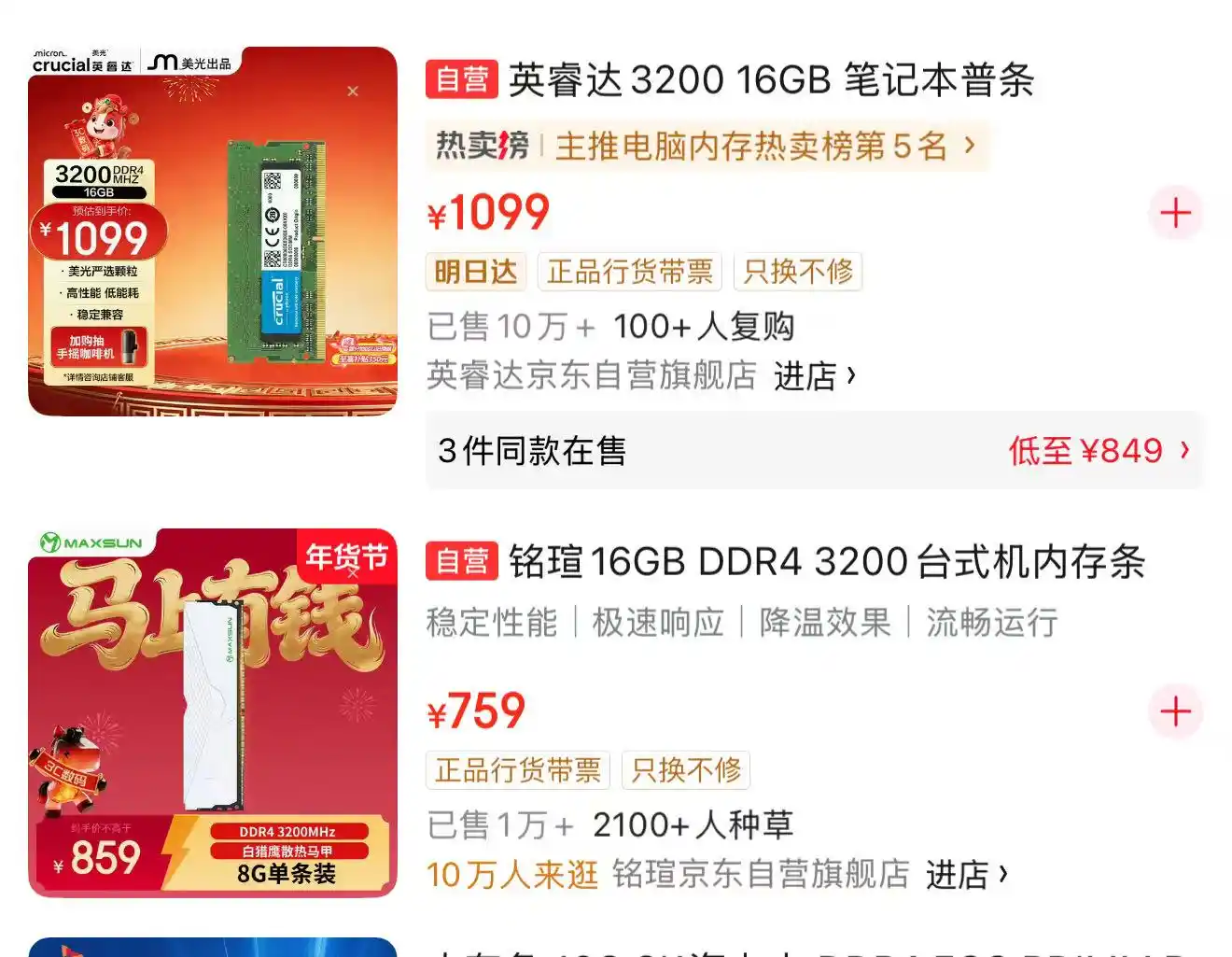
At this time last year, a 16GB DDR4 RAM stick cost just over 200 RMB. Now, the same model is priced at 600 RMB, with some models even approaching 700 RMB.

The direct reason for the price increase is a tightening of supply. The three major memory giants have collectively shifted their production capacity towards the AI market. And Micron is the latest to lay its cards on the table.

On January 27, Micron Technology announced a $24 billion (approximately S$31 billion) investment to build an advanced NAND (flash memory) wafer fabrication plant in Singapore. The investment will be phased over 10 years, with shipments starting in the second half of 2028. Singapore's Deputy Prime Minister Gan Kim Yong attended the groundbreaking ceremony.

This is Micron's second major investment in Singapore.

In January 2025, Micron had already begun construction on a $7 billion HBM (High Bandwidth Memory) advanced packaging facility within the same campus, scheduled for production in 2027. Combined, these two projects represent over $30 billion in new investments by Micron in Singapore.
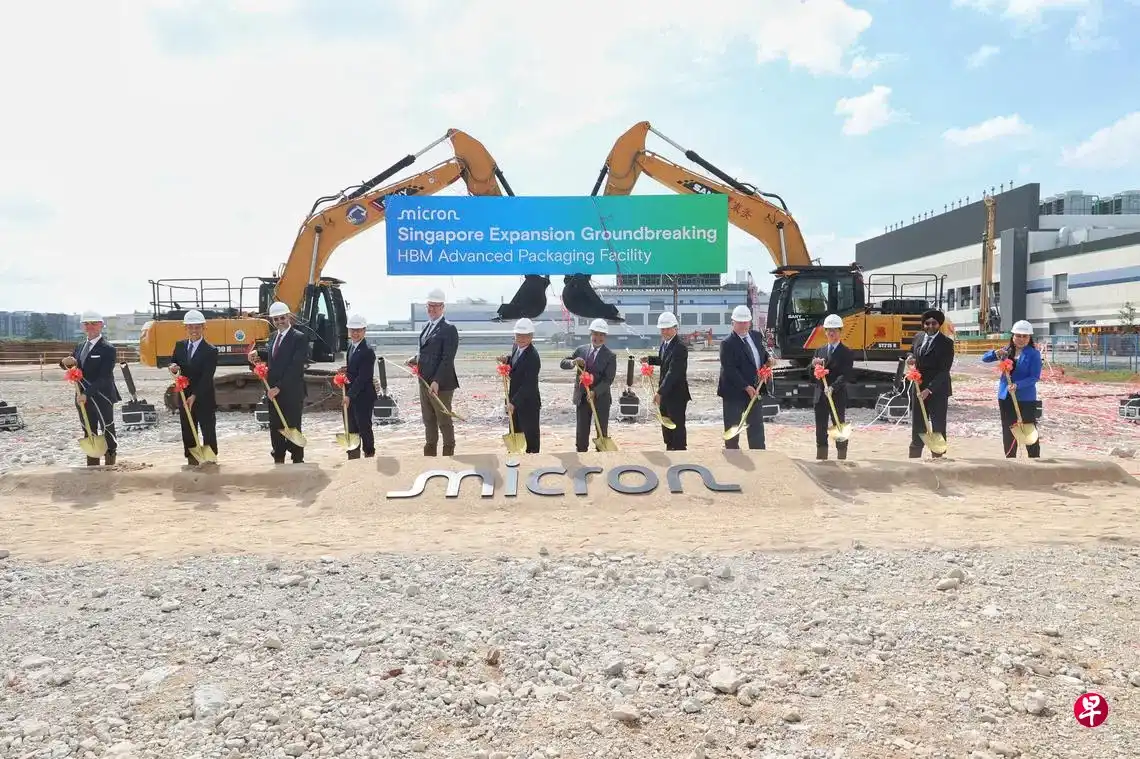
Image source: Lianhe Zaobao, photo by Tang Jiahong

Yet, this is the same company that just two months ago announced the shutdown of its 29-year-old Crucial consumer brand—the memory sticks and solid-state drives you can buy on JD.com and Taobao.

On one hand, spending billions to build factories; on the other, cutting the consumer business. Both point to the same clue: the demand for memory from AI remains high.

Capacity Reallocation After China Market Contraction

Micron's increased investment in Singapore has a clear geopolitical background.

In May 2023, China's Cyberspace Administration announced that Micron's products had not passed the cybersecurity review and required domestic critical information infrastructure operators to stop procurement. In 2018, the Chinese mainland market contributed 58% of Micron's revenue (approximately $17.36 billion); by fiscal year 2022, this had fallen to 10.8% (approximately $3.31 billion).

Production capacity needs a new outlet.

Currently, Micron already has three 3D NAND fabrication plants and several packaging and testing facilities in Singapore, employing about 9,000 people and producing 98% of Micron's flash memory chips.

Micron stated in its latest announcement that the HBM factory is expected to make a significant contribution to supply by 2027 and mentioned that as HBM becomes part of the Singapore manufacturing operations, "synergistic effects" in both NAND and DRAM (Dynamic Random-Access Memory, the common memory chips) production are anticipated.

But the priority of this "synergy" is clear: HBM capacity for 2026 is completely sold out, data center customer demand cannot be fully met, and the consumer brand is being shut down simultaneously.

Within the same campus, consumer-grade production lines are making way for AI production lines.

The Business Logic of Exiting the Consumer Market

On December 3, 2025, Micron announced via its official website a complete exit from the Crucial consumer business, including the sales of RAM sticks and SSD (Solid State Drive) products through global retailers, e-commerce platforms, and distributors.

Shipments will continue until the end of February 2026, at which point this brand, founded in 1996, will bid farewell to the retail market.

In the statement, Micron's Executive Vice President, Sadana, stated that the surge in memory and storage demand driven by AI in data centers prompted Micron to make the "difficult decision" to exit the Crucial consumer business in order to more effectively supply and support large strategic customers in high-growth areas.

Data supports this judgment.

Micron's fiscal year 2025 third-quarter HBM product income reached $1.98 billion, with an annualized revenue close to $8 billion. According to TrendForce data, the unit price of HBM memory required for AI servers is about 8 times that of ordinary servers.

Micron predicts the HBM market size will grow from approximately $35 billion in 2025 to about $100 billion in 2028, by which time it will exceed the size of the entire DRAM market in 2024.

In contrast, consumer-grade storage is a business with thin profits and fierce competition.

Micron's exit means the world's major consumer DRAM manufacturers are reduced from three—Samsung, SK Hynix, Micron—to two.

The AI Rally of Memory Stocks

The capital market has already priced in this shift.

According to statistics from *National Business Daily*, memory stocks occupied the top four spots on the U.S. stock gainers list for the full year 2025:

SanDisk rose 577%, becoming the S&P 500's top performer for the year; Western Digital rose 281%; Micron rose 236%; Seagate rose 216%.
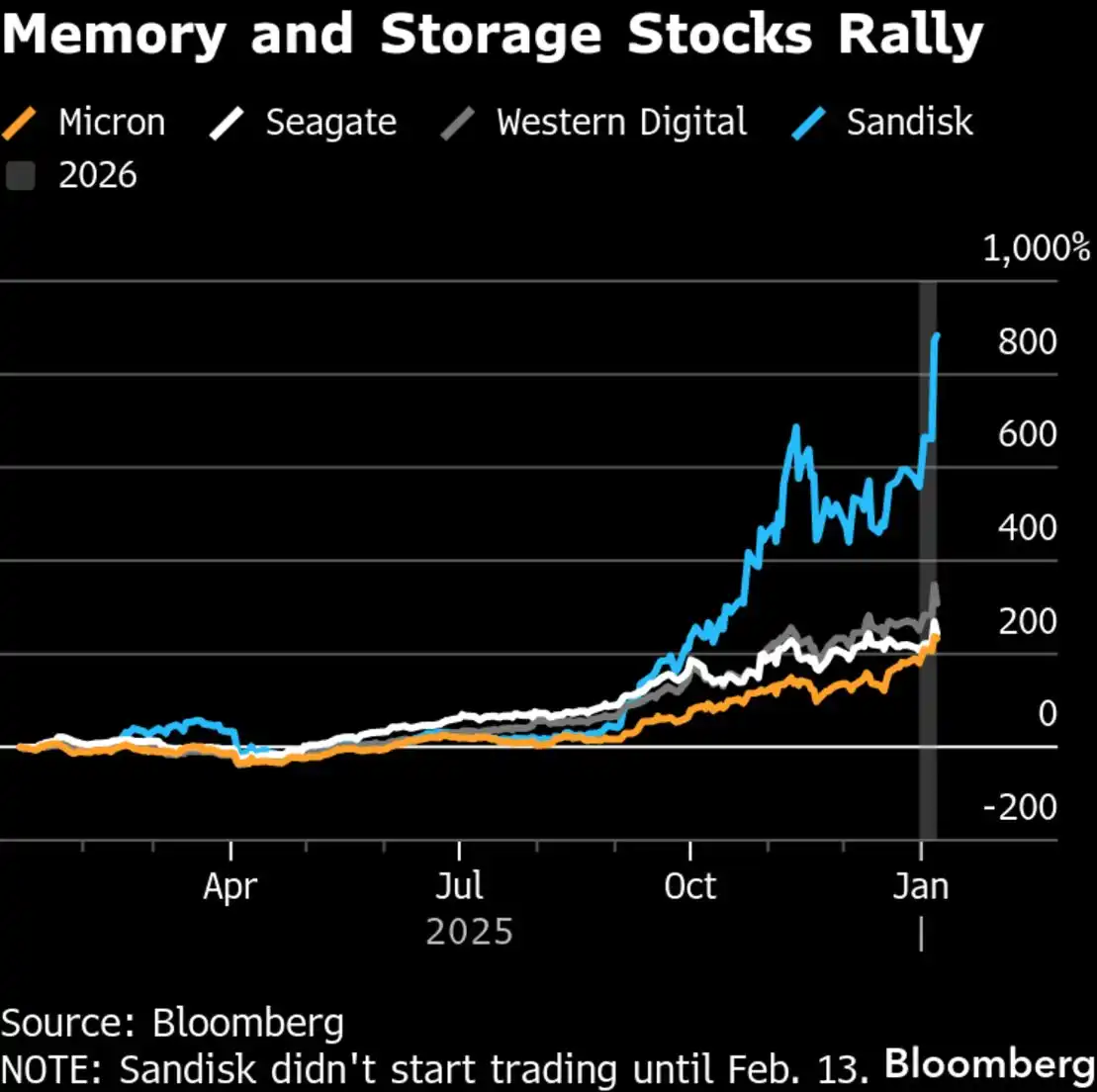
For comparison, Nvidia rose 39% in the same period, ranking 71st.

It was reported that tech giants like Google and Amazon presented Micron with "unlimited purchase demands" in October 2025. Micron CEO Mehrotra revealed on an earnings call that the company's entire HBM supply for 2026 is already sold out, and currently, it can only meet half to two-thirds of the demand from key customers.

Micron's latest financial report shows revenue of $13.6 billion for September-November 2025, a year-on-year increase of 57%, with DRAM revenue of $10.8 billion, up 69% year-on-year.

Consumer Side: Price Hikes May Continue

Samsung, SK Hynix, and Micron had all previously announced plans to gradually phase out DDR4 production from late 2025 to early 2026. Micron issued an end-of-life notice for DDR4/LPDDR4 in June.

Although Samsung and SK Hynix later extended their DDR4 production plans to the end of 2026 due to soaring DDR4 prices, the overall trend of tightening supply remains unchanged.

The price reaction has been intense. According to TrendForce data, since 2025, the spot price of DDR5 memory chips has risen over 300%, while DDR4 has risen over 150%. DDR4 has even seen a "price inversion," with the price of some specifications exceeding that of DDR5.
ADATA Chairman Chen Libai also publicly stated that the comprehensive shortage and price increase across the four major storage categories—DRAM, NAND, SSD, HDD—is a situation he is witnessing for the first time in over thirty years in the industry.

If you want to add memory to your old computer or build a new desktop, the cost remains high. Because AI needs computing power, and computing power needs memory. Your old computer is probably still behind AI demand in the queue.

Memory stocks have risen, and memory stick prices have risen too.

One is an investment opportunity; the other is paying the bill for that opportunity.

Related Questions

QWhy did Micron announce the closure of its Crucial consumer brand?

AMicron closed its Crucial consumer brand to reallocate resources and supply to meet the surging demand for memory and storage from data centers and large strategic customers driven by AI, as the consumer market is less profitable and highly competitive.

QWhat is the total investment Micron is making in Singapore for new manufacturing facilities?

AMicron is investing a total of over $30 billion in Singapore, including $24 billion for a new NAND wafer fab and over $7 billion for an HBM advanced packaging plant.

QHow has the price of consumer memory modules changed recently according to the article?

AThe price of a 16GB DDR4 memory module has increased from over 200 yuan to about 600 yuan, with some models nearing 700 yuan, due to tightened supply and shifted production focus to AI.

QWhat percentage of Micron's revenue came from the Chinese market in 2022 compared to 2018?

AIn 2018, the Chinese market contributed 58% of Micron's revenue, but by the 2022 fiscal year, it had decreased to 10.8%.

QWhich storage-related stocks were the top performers in the U.S. stock market in 2025 according to the article?

AIn 2025, the top-performing U.S. storage stocks were SanDisk (up 577%), Western Digital (up 281%), Micron (up 236%), and Seagate (up 216%).

Related Reads

Must-Watch Events Next Week|CLARITY Act Could Face Senate Vote; SpaceX, Circle to Report Earnings (8.3-8.9)

**Summary: Key Events and Developments to Watch (August 3-9)** The upcoming week is marked by significant financial disclosures, key legislative deadlines, and notable product updates. **Major Financial Events:** Several companies are scheduled to release their Q2 2026 earnings. American Bitcoin (ABTC) will report on August 3, followed by SpaceX and Hut 8 Mining Corp. on August 4, and Circle on August 5. Notably, a significant portion of SpaceX shares (up to 12% of total shares) will be unlocked on August 6 following their earnings release. **Key Legislative Deadline:** The U.S. Senate faces an August 7 deadline to secure 60 votes for the CLARITY Act, a bipartisan bill aiming to establish a federal regulatory framework for cryptocurrencies. The Senate may hold a full vote on the bill during the week. **Economic Data:** The U.S. July Non-Farm Payrolls report will be released on August 7, providing crucial labor market data. **Technology & Product Updates:** * **Shutdowns:** DeFi portfolio tracker Zapper and wallet app Ctrl Wallet will cease operations on August 3. * **Upgrades:** LayerZero will deprecate its v1 relayers on August 3. XRP Ledger's new version 3.3.0, featuring five new functions, is expected next week. * **AI:** Elon Musk announced that the advanced Grok 4.6 AI model is set for release around August 7. * **Bitcoin:** The BIP-110 forced signaling for a potential Bitcoin network change is scheduled to begin around August 8. **Other Notable Events:** Chinese robotics firm Unitree Tech has set its preliminary price inquiry for its IPO for August 5. South Korean exchange Upbit will delist AQT and AERGO tokens on August 3.

marsbit1h ago

Must-Watch Events Next Week|CLARITY Act Could Face Senate Vote; SpaceX, Circle to Report Earnings (8.3-8.9)

marsbit1h ago

Stocks Are Plummeting More Sharply Than Cryptocurrencies. Where Has the Money Gone?

Stock Markets Plunge Deeper Than Cryptocurrencies: Where Did the Money Go? In late July, Seoul's Kospi index triggered circuit breakers for two consecutive days, plummeting over 40% from its June high. The collapse was led by heavyweight stocks like SK Hynix, whose record profits still disappointed investors, and devastating leveraged ETFs, with one major product losing over 83% of its value. This signaled a global, forced deleveraging targeting the most crowded trades. Interestingly, while stocks exhibited extreme volatility akin to crypto markets, Bitcoin rose nearly 15% in July after a prior steep drop. Analysis shows the money fleeing equities did not flow into Bitcoin. Instead, Bitcoin had already absorbed its sell-off in May-June, when U.S. spot Bitcoin ETFs saw historic outflows. The true safe-haven beneficiary was gold, whose price rose over 20% year-on-year, highlighting a decoupling between Bitcoin and gold as "digital gold." The sell-off was a targeted unwinding of leveraged positions in tech and semiconductors, accelerated by broker-dealer risk management and shifts in the AI narrative, including new competition from Chinese memory chipmakers. The retreat path was clear: from high-valuation tech stocks to cash and U.S. Treasuries, then to gold. For Bitcoin to attract sustained institutional inflows, conditions like eased global liquidity pressure, a "soft-landing" Fed rate cut, and U.S. regulatory clarity via legislation like the stalled CLARITY Act are needed. Currently, Bitcoin is not a safe haven but an already-cleared asset. Its low correlation with tech stocks, however, makes it a potential diversification play for institutional portfolios once the storm passes. The money isn't here yet, but the positioning is underway.

marsbit1h ago

Stocks Are Plummeting More Sharply Than Cryptocurrencies. Where Has the Money Gone?

marsbit1h ago

In Conversation with Ray Dalio: We Are Currently in an AI Bubble, with 1% of My Portfolio in Bitcoin

Ray Dalio, founder of Bridgewater Associates, warns in an interview that the current AI boom shows classic bubble characteristics, which could lead to significant economic downturns as seen in past cycles like 1929 or 2000. He explains that speculative enthusiasm, fueled by debt and overvaluation, often precedes a crash when rising rates or taxation force asset sales, causing widespread losses and recession. Dalio also outlines his "Big Cycle" theory, describing an approximate 80-year pattern where widening wealth gaps, massive government deficits, and shifting geopolitical power (like China's rise) create internal conflict and global instability. He emphasizes that we are in a late-cycle, transitional phase where traditional powers like the US and UK face decline. For personal wealth protection, Dalio advises diversification beyond cash into assets like stocks, bonds, real estate, and particularly gold, which he prefers over Bitcoin. While he holds about 1% of his portfolio in Bitcoin as a non-printable hard asset, he views gold as more secure from technological or governmental threats. Regarding AI's impact, Dalio believes it will disproportionately benefit capital owners, worsening inequality by replacing both physical and cognitive labor. He suggests that human intuition and emotional intelligence, combined with AI, will be key for future workers. On taxation, Dalio argues that wealth taxes are impractical and risk triggering asset sell-offs, reducing productive investment. He points to the UK as a cautionary example of debt, low productivity, and political strife. Geopolitically, Dalio foresees a more regionalized world, with the US showing weakness in prolonged conflicts like with Iran, akin to past imperial declines. The ideal outcome, he suggests, is coexisting powerful blocs (e.g., Americas, China-Asia Pacific) without major war.

marsbit5h ago

In Conversation with Ray Dalio: We Are Currently in an AI Bubble, with 1% of My Portfolio in Bitcoin

marsbit5h ago

Trading

Spot
活动图片





