KuCoin Institutional Premiere 2026 Highlights Long-Term Growth and Market Resilience

TheNewsCryptoОпубликовано 2026-02-13Обновлено 2026-02-13

Введение

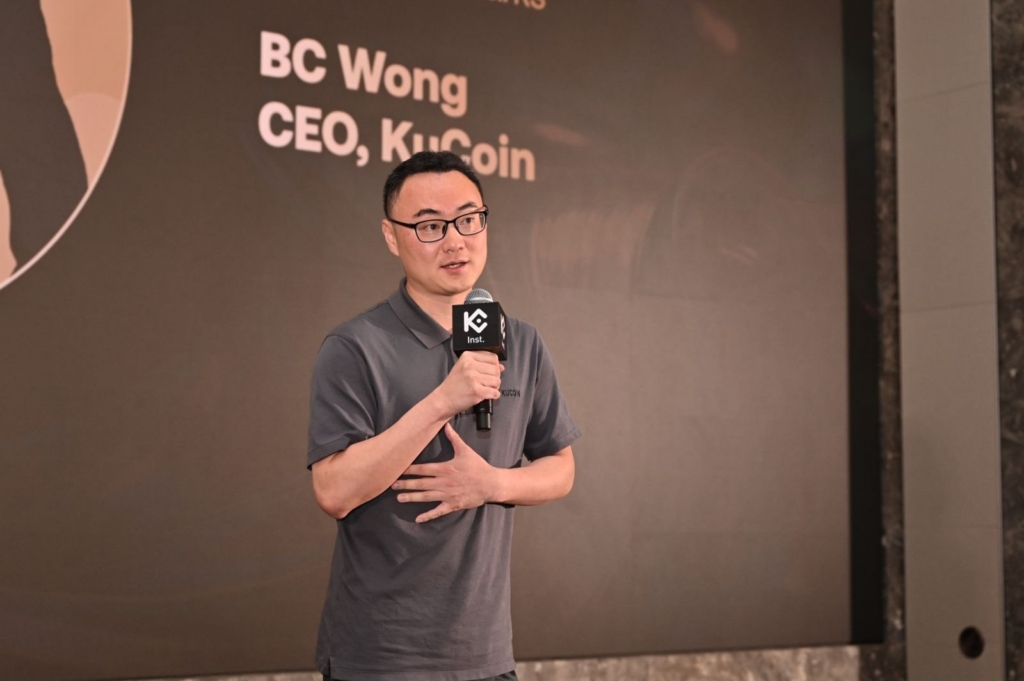
The inaugural KuCoin Institutional Premiere 2026, held in Hong Kong, emphasized long-term structural growth and institutional engagement over short-term price volatility. KuCoin CEO BC Wong and COO Ethan Cheng highlighted the importance of building credibility through discipline, transparency, and robust risk management during challenging market periods. Discussions centered on portfolio risk management, liquidity dynamics, execution efficiency, and security requirements, reflecting a shift toward structural stability and resilience. The event underscored that institutional participation in digital assets is increasingly driven by fundamentals rather than speculation, signaling the maturation of the cryptocurrency market.

A continuous focus on long-term structural growth and institutional participation was underlined during the first KuCoin Institutional Premiere 2026, which took place in Hong Kong. This event took place against the background of the recent movement of Bitcoin.

A total of over one hundred institutional customers and partners from various marketplaces across the world were present at the event. The Chief Executive Officer of KuCoin, BC Wong, and the Chief Operating Officer, Ethan Cheng, gave introductory comments in which they discussed the wider context of the current market cycle. Rather than basing conversation on short-term pricing swings, both CEOs focused on a broader fundamental question: how institutions and service providers may enhance long-term trust, governance standards, and operational resilience during times of downturn.

BC Wong, CEO of KuCoin, said:

“Volatility is a natural feature of digital asset markets. Long-term credibility is built not in periods of expansion, but through discipline, transparency, and robust risk management when market conditions are challenging.”

Ethan Cheng, COO of KuCoin, added:

“Institutional engagement in digital assets is increasingly driven by structural fundamentals rather than short-term price movements. Periods of volatility reinforce the importance of long-term alignment and risk-aware participation.”

This change in focus was mirrored in the conversations that took place throughout the evening. The viewpoints of the representatives of the institutions were discussed and shared about the management of portfolio risk, liquidity dynamics, execution efficiency, and security requirements. In a market climate that is more conservative, the conversation focused less on short-term success and more on how to preserve structural stability, responsiveness, and transparency in the market.

Amid the event, which was KuCoin Institutional’s first annual meeting of its sort, it acted as both a reflection on previous collaboration and an affirmation of ongoing commitment amid a period of less activity. A cautious posture was communicated to industry players during a gathering that took place in the midst of market uncertainties.

Although prices are subject to change, institutional discourse and structural development continue. The top actors in the sector have given a clear signal to the wider financial world, which is that the institutional underpinning of cryptocurrency is no longer founded on speculation, but rather on the methodical development of a mature, global market structure.

TagsexchangeKuCoin

Связанные с этим вопросы

QWhat was the main focus of the KuCoin Institutional Premiere 2026 event according to the article?

AThe main focus was on long-term structural growth, institutional participation, and building long-term trust, governance standards, and operational resilience during market downturns, rather than short-term price movements.

QWhich KuCoin executives spoke at the event and what key points did they emphasize?

ACEO BC Wong emphasized that long-term credibility is built through discipline, transparency, and robust risk management during challenging market conditions. COO Ethan Cheng added that institutional engagement is increasingly driven by structural fundamentals rather than short-term price movements.

QWhat topics were discussed by institutional representatives during the event?

AThey discussed portfolio risk management, liquidity dynamics, execution efficiency, security requirements, and how to preserve structural stability, responsiveness, and transparency in the market.

QHow does the article characterize the current institutional approach to cryptocurrency markets?

AThe article states that institutional involvement is no longer primarily based on speculation but on the methodical development of a mature, global market structure, focusing on long-term alignment and risk-aware participation.

QWhere did the KuCoin Institutional Premiere 2026 take place and what was significant about this event?

AThe event took place in Hong Kong and it was KuCoin Institutional's first annual meeting of its kind, serving as both a reflection on previous collaboration and an affirmation of ongoing commitment during a period of market uncertainty.

Похожее

Dalio Warns: AI Boom Shows Signs of a Bubble, Day of Reckoning Will Be the Time of Burst

Ray Dalio, founder of Bridgewater Associates, warns that the current artificial intelligence investment boom shows classic signs of a bubble, which he expects will eventually burst. In a Bloomberg Television interview, he noted that great technological revolutions often lead to capital inflows that create bubbles, making it difficult for investors and companies to calibrate their spending accurately—either overspending to capture market share or underspending and losing their competitive position. This caution comes amid significant rallies in AI-related assets, particularly chipmakers, driven by soaring demand for data centers and high-bandwidth chips, raising debates about overheating valuations. In contrast, Nvidia CEO Jensen Huang recently asserted that investors embracing the AI wave would see "crazy" returns and dismissed concerns over return on investment for data center spending as outdated. Dalio, however, focuses on the risks in the profit realization phase. He argues that bubbles tend to show signs of破裂 when markets transition from investment to the need for tangible returns, describing the burst as a process of converting paper wealth into cash. While acknowledging AI's intrinsic value, he expressed concern over the future profitability of some AI companies, suggesting the market is repeating a familiar pattern. The 76-year-old billionaire, who fully exited Bridgewater in 2025, has a net worth estimated at $21.5 billion according to the Bloomberg Billionaires Index.

marsbit4 мин. назад

Dalio Warns: AI Boom Shows Signs of a Bubble, Day of Reckoning Will Be the Time of Burst

marsbit4 мин. назад

Privacy Coin Crisis of Confidence! ZEC Plunges Over 56% in a Single Day

Zcash (ZEC), a leading privacy-focused cryptocurrency, experienced a severe crash on June 5th, plummeting over 56% in a single day and erasing nearly two months of gains. The flash crash was triggered by the disclosure of a critical zero-knowledge proof vulnerability within Zcash's Orchard privacy pool, which had existed since the pool's launch in May 2022. The flaw theoretically allowed an attacker to forge unlimited ZEC undetectably due to the pool's privacy features. The vulnerability was discovered on May 29th by independent security researcher Taylor Hornby during a proactive audit commissioned by Shielded Labs, utilizing AI-assisted analysis. The Zcash development team responded swiftly, implementing an emergency soft fork to disable Orchard transactions on June 2nd and executing a permanent hard fork fix (NU6.2) on June 3rd. Despite the technical fix, a major crisis of confidence emerged. The core issue is that Orchard's privacy design makes it cryptographically impossible to prove whether the vulnerability was exploited over the past four years, casting permanent doubt on the historical supply integrity of ZEC. While Shielded Labs argues exploitation was unlikely, the inability to provide definitive proof has severely damaged market trust. This sentiment was exacerbated when BitMEX co-founder Arthur Hayes, a prominent ZEC supporter, announced he was selling his entire position. He stated that privacy assets require "perfect security" rather than "probable safety." The combined effect of the disclosure and Hayes's exit ignited widespread panic selling, leading to massive liquidations and significant price decline. Analysts note the event highlights a fundamental tension within privacy coins: the conflict between verifiable supply and cryptographic privacy.

链捕手6 мин. назад

Privacy Coin Crisis of Confidence! ZEC Plunges Over 56% in a Single Day

链捕手6 мин. назад

Торговля

Спот
Фьючерсы
活动图片