Just Now, Ilya Drops Another Mind-Blowing Image ‘The Thinker’: What’s on His Mind in the Ocean of AI Chips?

marsbitPublished on 2026-05-25Last updated on 2026-05-25

Abstract

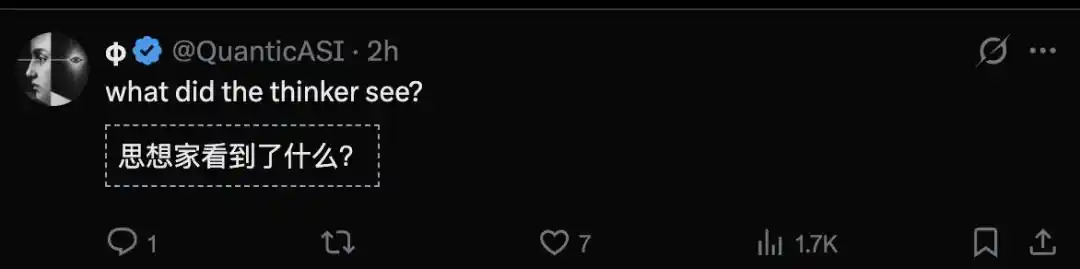
Shortly after going quiet, Ilya Sutskever, AI's enigmatic spiritual leader, posted a mysterious sketch titled "The Thinker" on Instagram. The drawing depicts Rodin's iconic sculpture perched on a cliff, contemplating a vast, purple microscopic universe made of transistors and digital circuits—a chip die shot—signed "IS 2026." This cryptic image, saying "nothing yet everything," ignited widespread speculation in Silicon Valley. Some see it as a search for sacred meaning in silicon, others as a silent critique of brute-force compute scaling. It echoes Ilya's past influence, like the original OpenAI logo he once doodled on a wall. The post coincided with a triple announcement from OpenAI, intensifying the frenzy. First, an internal reasoning model discovered new geometric constructions, challenging a long-standing conjecture and impressing Fields Medalist Tim Gowers. Second, Codex for Mac introduced "Appshots," allowing it to access application windows—even text outside the view—and gained features like Goal Mode, a built-in browser, and plugin capabilities, evolving from a coding assistant into a persistent "resident engineer." Third, reports surfaced that OpenAI is preparing for a confidential IPO filing with banks like Goldman Sachs and Morgan Stanley, potentially eyeing a fall public listing. Together, these moves signal that AGI (Artificial General Intelligence) is not a distant slogan but an active force reshaping science, software engineering, and capital markets. Ilya...

[Introduction] "Saying nothing, yet saying everything." Ilya ignited the internet with a depiction of "The Thinker" on a Die Shot.

Just now, Ilya, the most enigmatic spiritual leader in the AI community, posted a painting on Instagram.
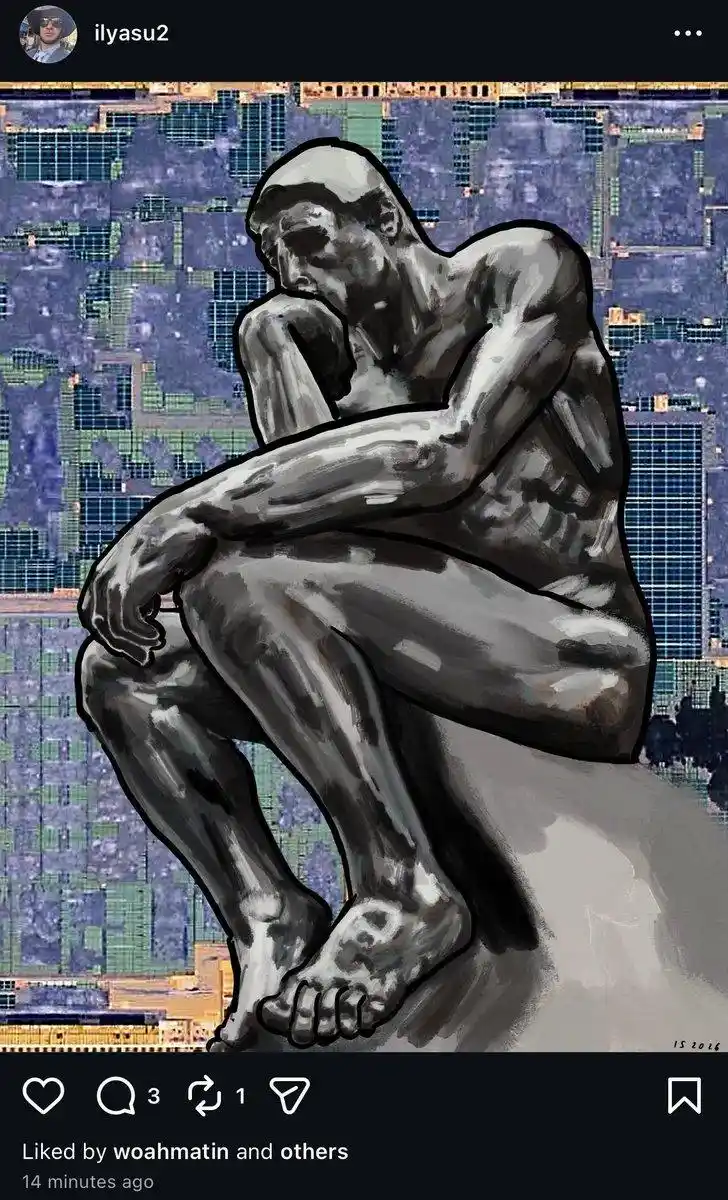
In the image, Rodin's "The Thinker" stands on the edge of a cliff, gazing down at a microscopic universe woven from purple transistors and digital circuits.

That ocean is technically known as a Die Shot – the microscopic cross-section of a chip, a pure jungle of silicon transistors.

In the bottom right corner, a black signature reads: IS 2026.

And just like that, Silicon Valley exploded.

Saying Nothing, Yet Saying Everything

He had vanished for a long time.

This time, people began frantically interpreting the painting.

Does "IS" stand for his initials Ilya Sutskever, or does it imply something else? Is the figure contemplating on the chip suggesting he's holding something?
This kind of silent detonation is not Ilya's first time.

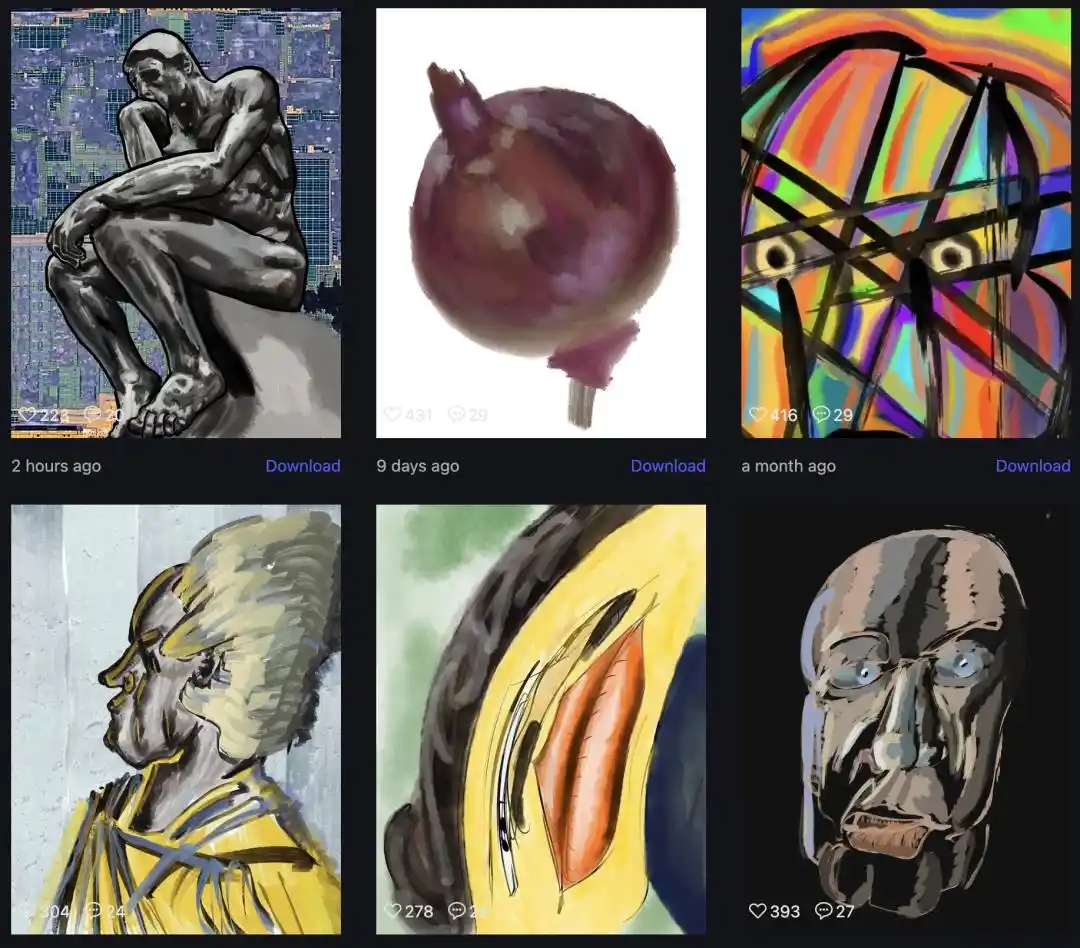
Many don't know that OpenAI's long-standing three-flower logo originated from a casual doodle he sketched on a hallway wall.

That unremarkable draft later became the face of the AI company with the highest valuation.

Now, in the same manner, he has forcefully pressed an ancient symbol of human philosophy onto the cold, hard substrate of a semiconductor.

Some say he's seeking a sense of the sacred.

Others say it's his silent mockery of the old path that "intelligence can be stacked by stacking computing power."

At the Same Time, OpenAI Insiders Can't Sit Still

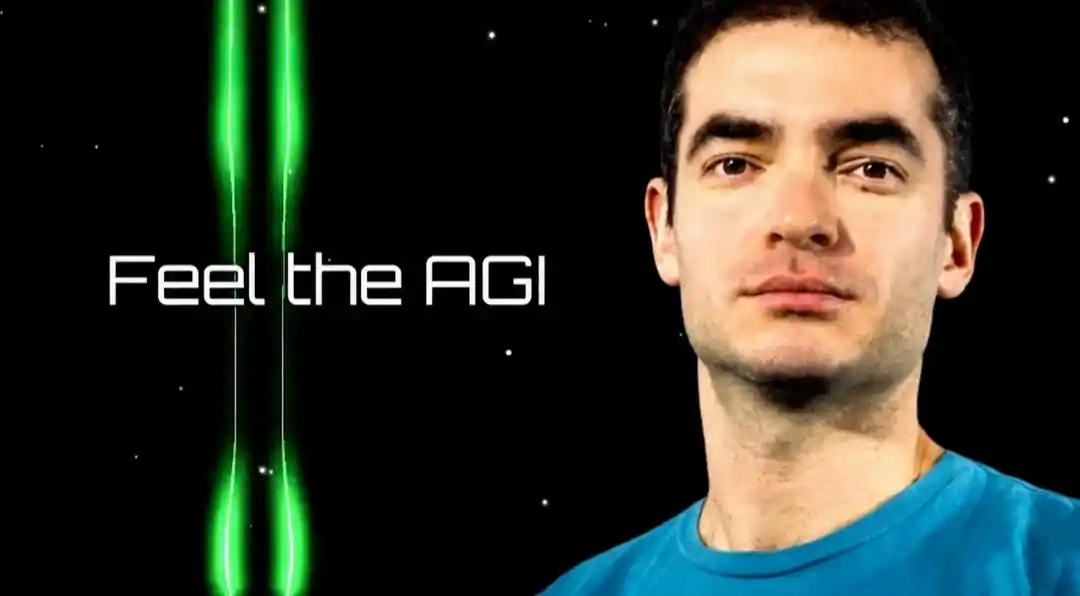
This time, the frenzy isn't just employees lining up on X to shout "Feel the AGI."

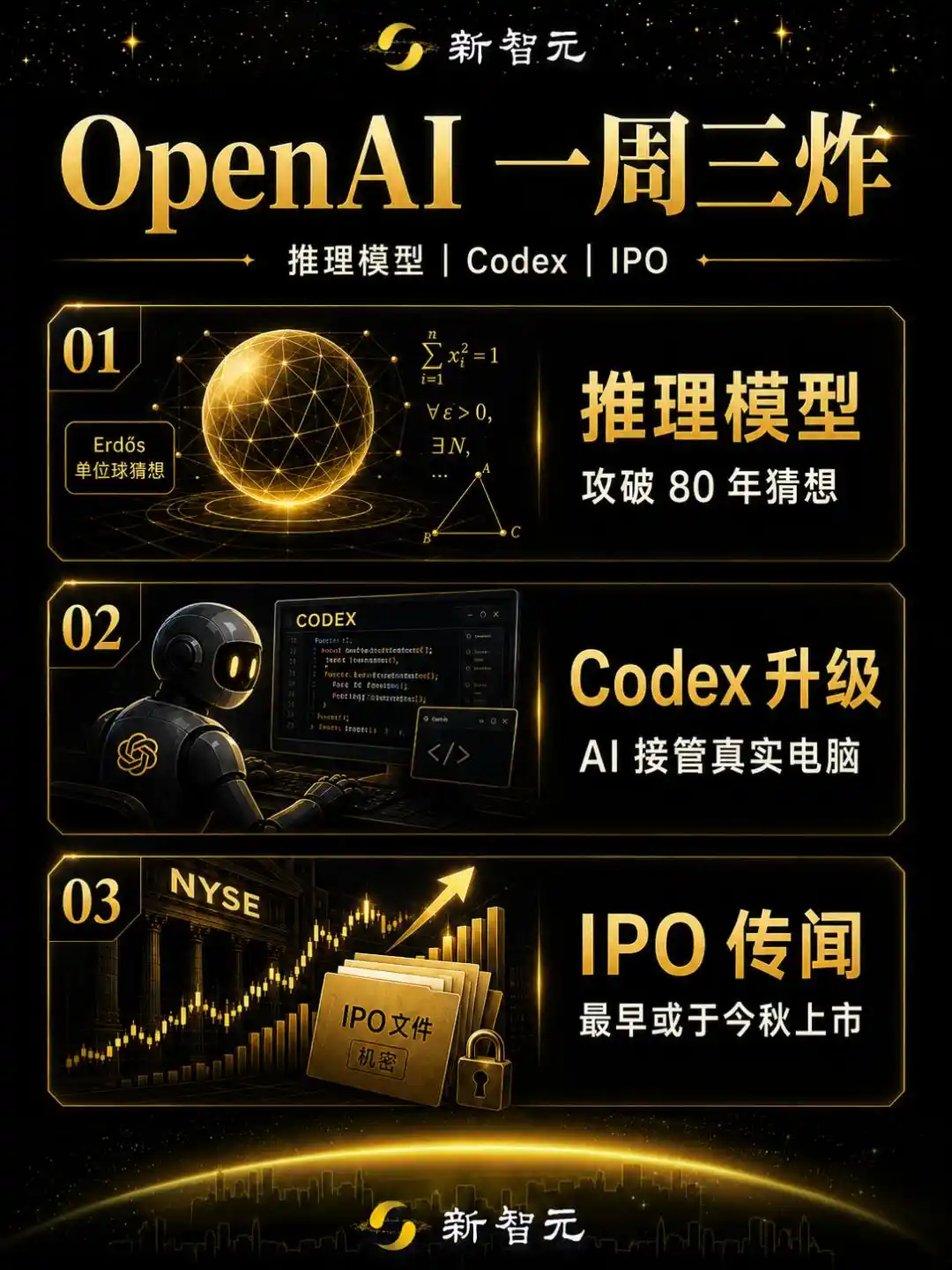
Almost within the same week, OpenAI dropped three bombshells in succession:
First, mathematics.

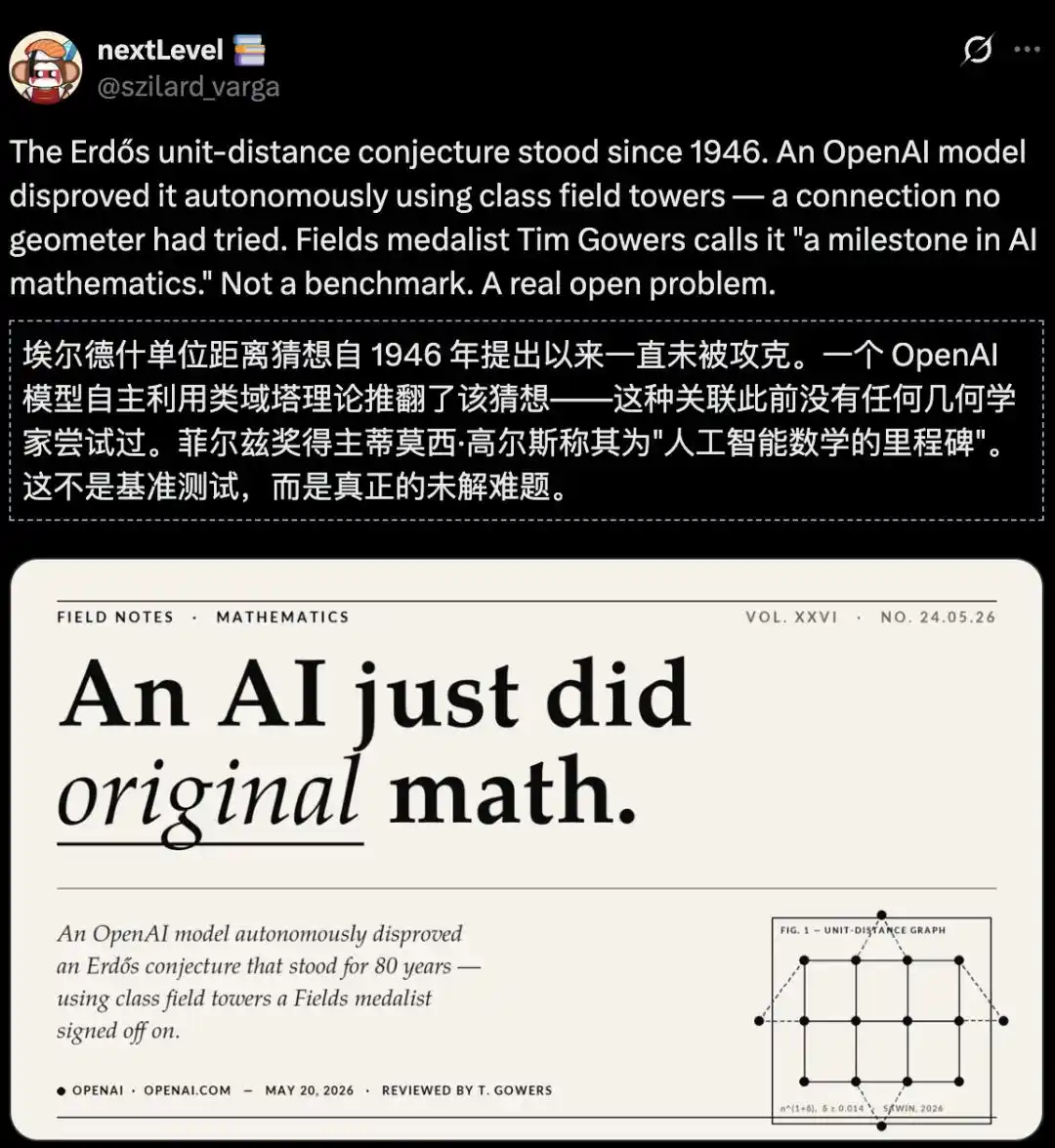
OpenAI announced that one of its internal general-purpose reasoning models discovered a whole new family of geometric constructions, overturning a long-standing conjecture regarding the "planar unit distance problem."
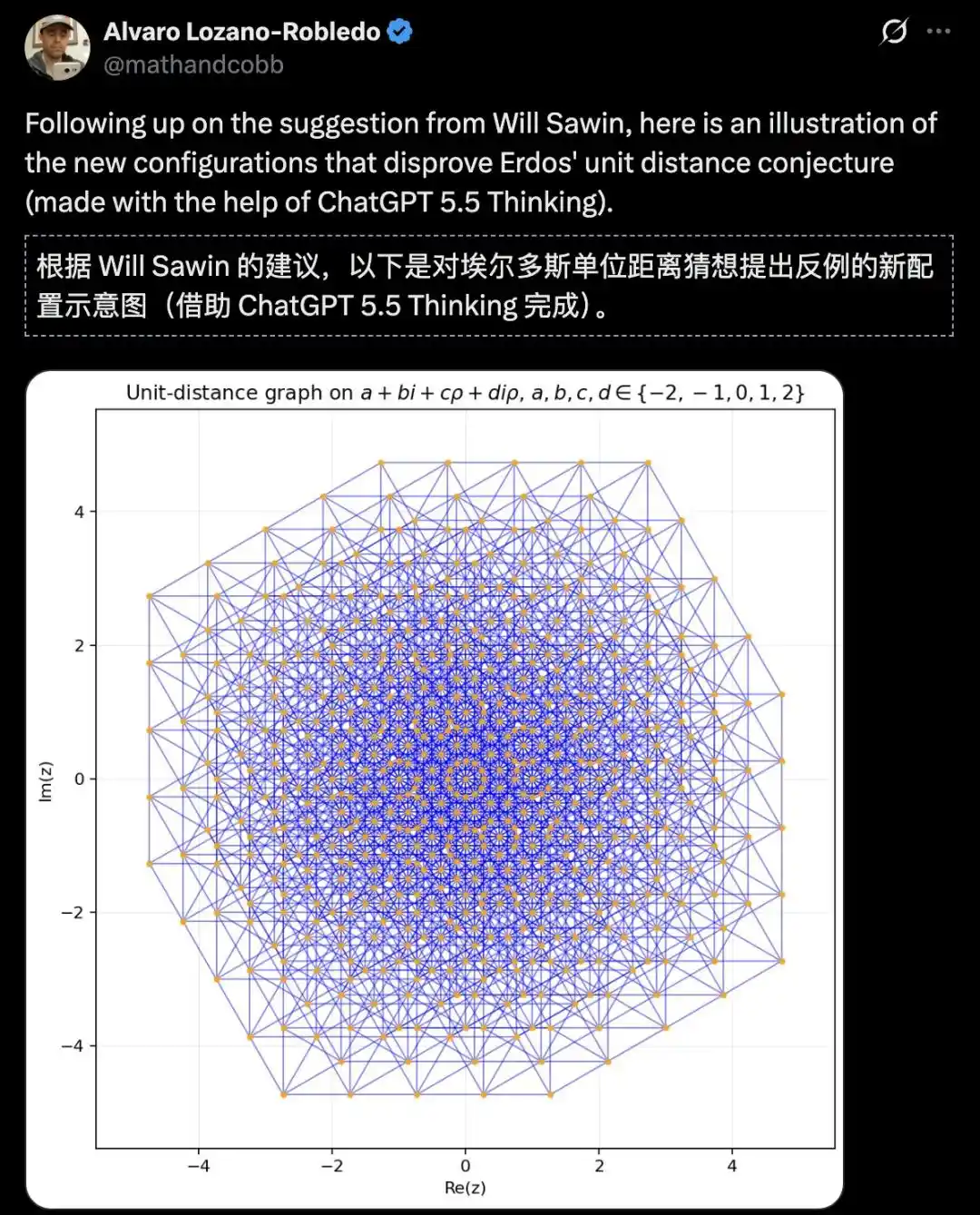
OpenAI stated that its proof has been checked by external mathematicians, refreshing the understanding of AI held by Fields Medalist Tim Gowers.
Next, came Codex.

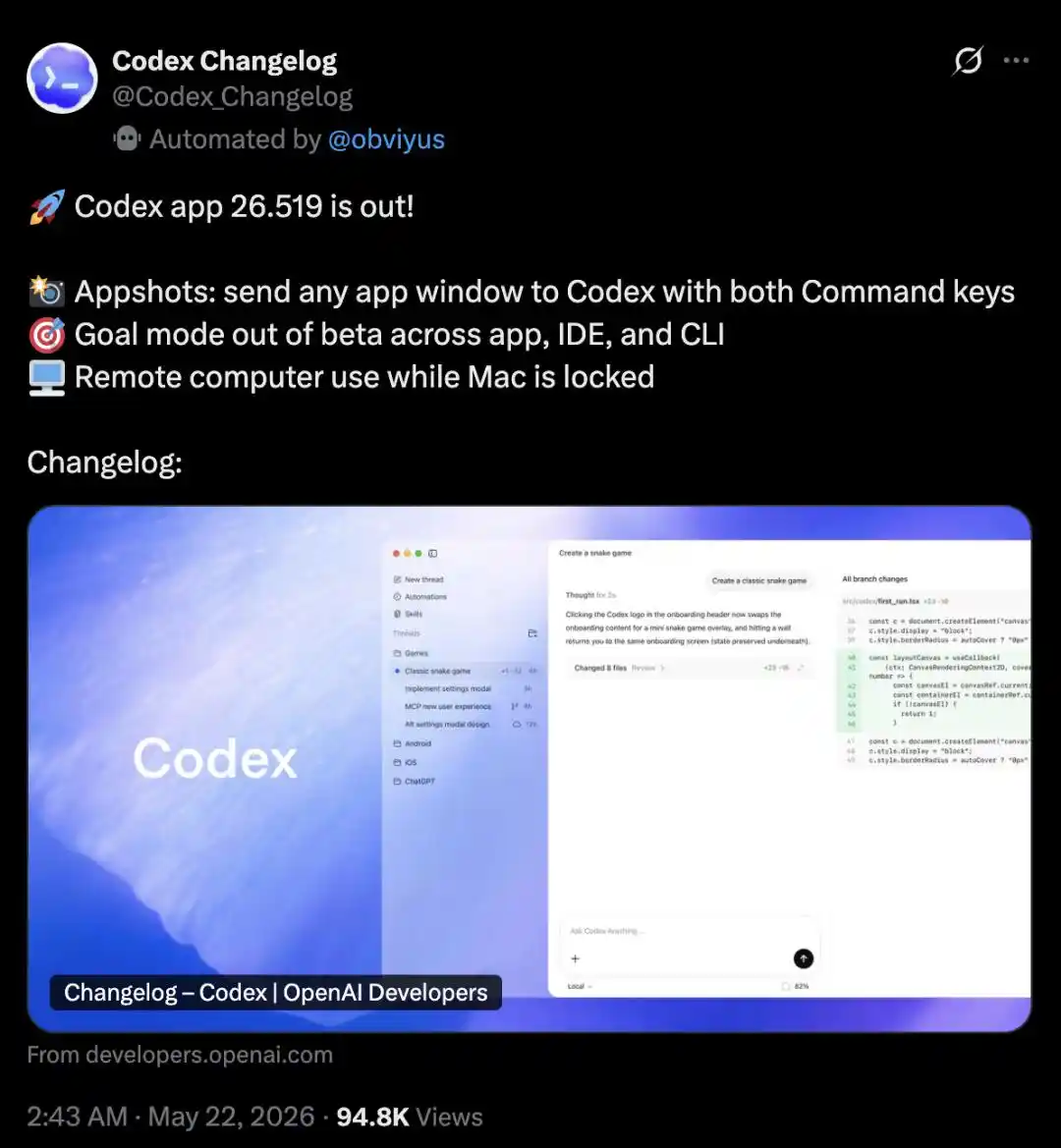
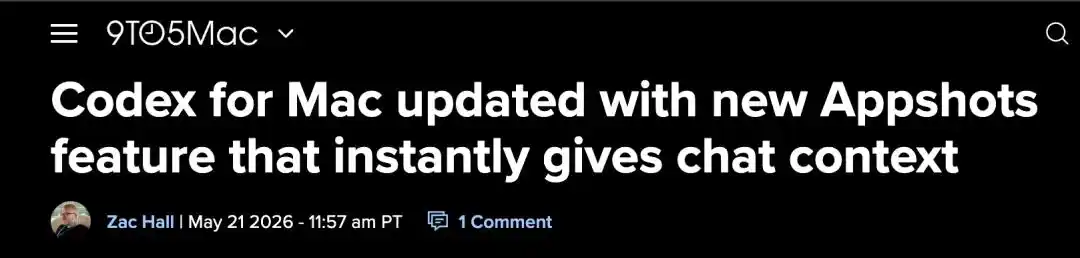
The Mac version of Codex introduced Appshots. Just press Command-Command, and the current application window can be directly handed over to a Codex thread.

It receives not just a screenshot, but also the text within the window, even content not visible off-screen.

Simultaneously, Codex upgraded its Goal Mode, built-in browser, and plugin capabilities.
More radically, the media noted:

Codex can now continue to call applications even when the Mac is locked, truly evolving from a "coding assistant" to an "on-site engineer."
What most excites Silicon Valley, however, is the IPO.

According to multiple media reports, OpenAI is collaborating with investment banks like Goldman Sachs and Morgan Stanley to prepare a confidential submission of IPO filing documents.
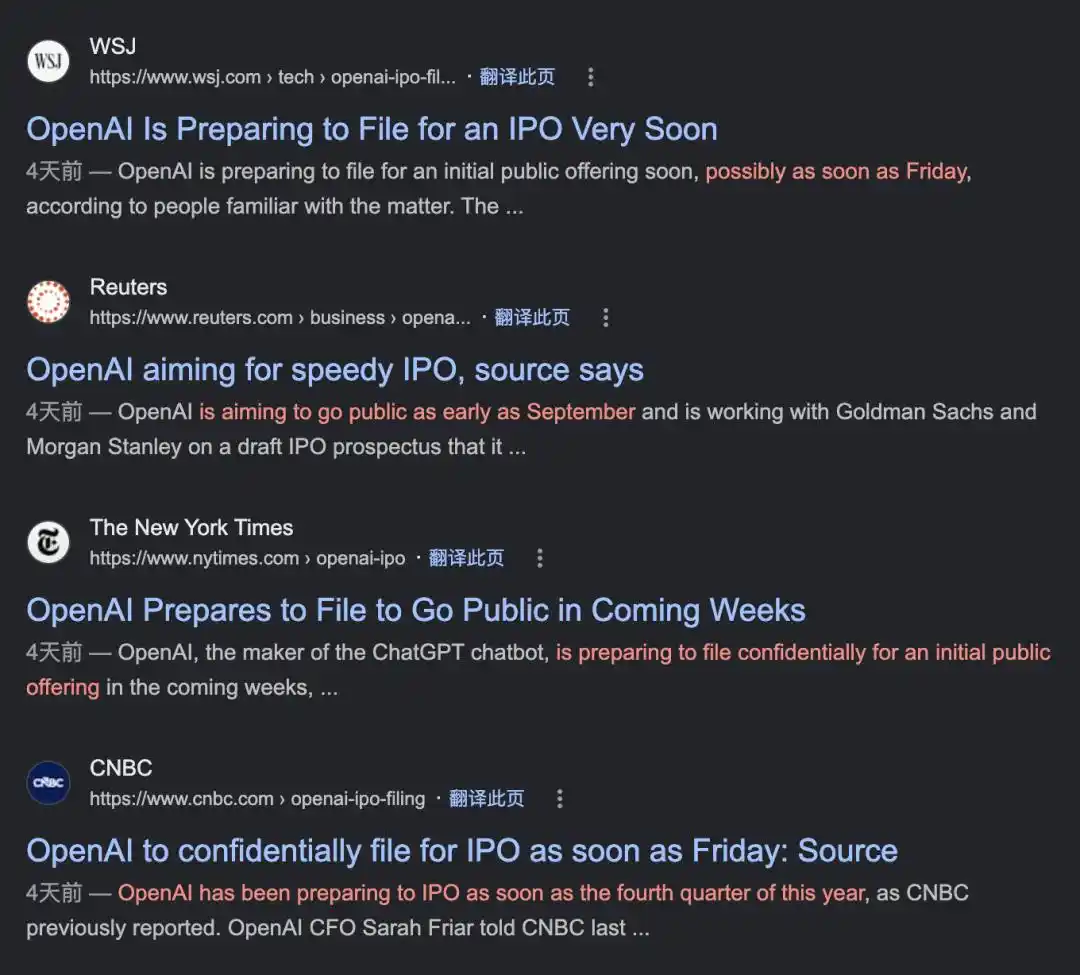
Relevant documents could be filed soon, coinciding with SpaceX's listing timeline.

Bloomberg, citing informed sources, reported that OpenAI aims to go public this fall, though the specific timing may still change.

When these three events are placed together, the implication is entirely different.
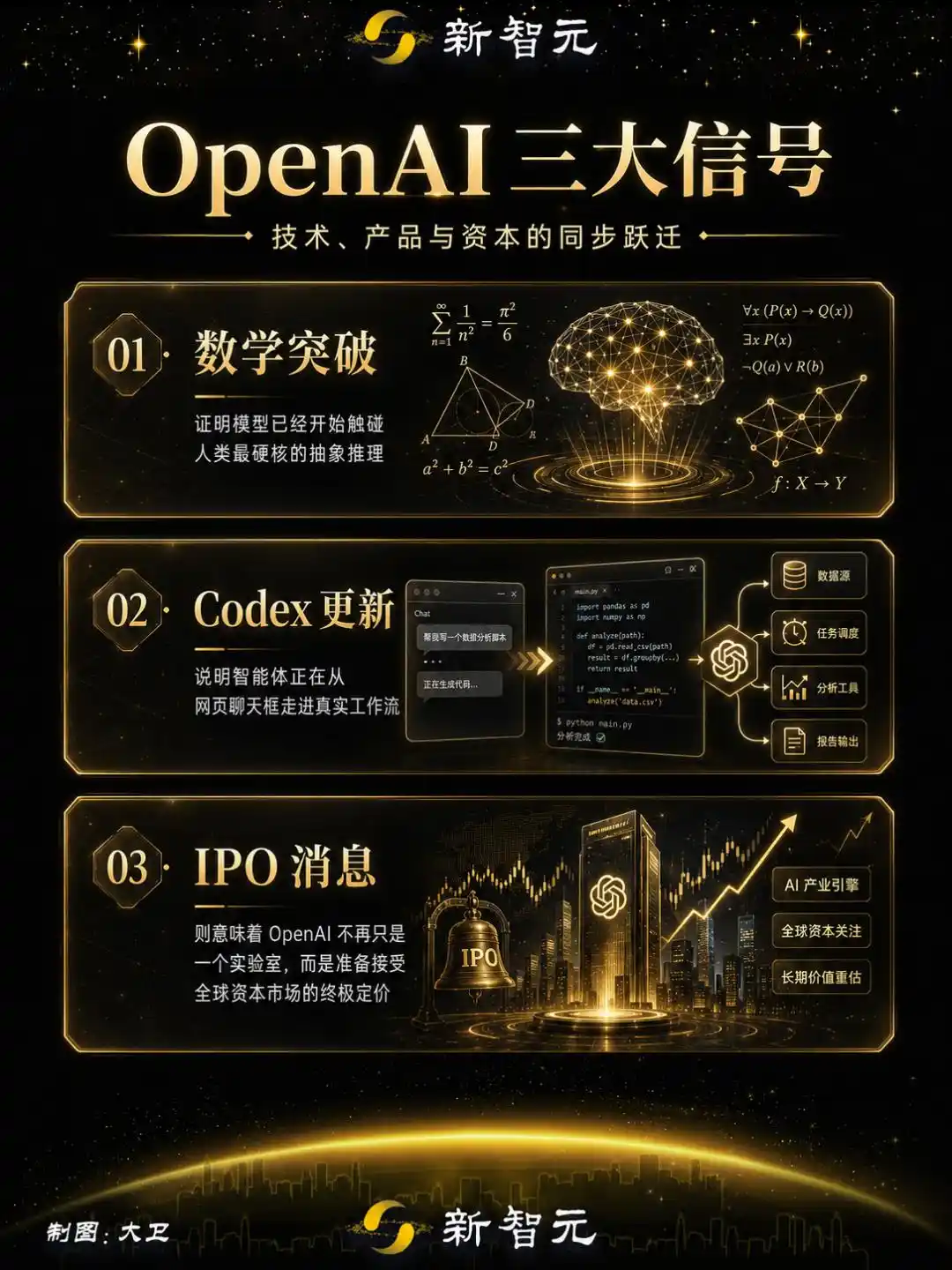
This is the core of the latest round of OpenAI-style frenzy: tearing open new frontiers in mathematics, having AI take over programmers' computers, and propelling itself towards what could be the most significant IPO window in AI history.

This is OpenAI signaling to the outside world: AGI is not a distant slogan, but a real variable that is simultaneously rewriting science, software, and capital markets.

Conclusion

Three events combined point to the same question: Is that door truly about to open?

Behind a casually drawn sketch lies the silent transistor base within the Die Shot – the boundary between human intelligence and the silicon-based world is becoming increasingly blurred.

Ilya is betting not on a feature, but on a paradigm shift.

And the internal OpenAI phrase "Feel the AGI" is the most genuine signal from the research frontlines – not marketing, but an inability to hold back any longer.
Our generation will most likely witness the answer with our own eyes.

References:

https://www.instagram.com/ilyasu2/

https://x.com/ns123abc/status/2058687603285586245?s=20

This article is from WeChat official account "New Zhiyuan", author: ASI Revelation

Related Questions

QWho is Ilya and what is the significance of the 'Thinker' image he posted?

AIlya is a mysterious spiritual leader in the AI community, often associated with OpenAI. The 'Thinker' image he posted, which depicts the famous sculpture standing over a chip die shot, is significant because it ignited widespread discussion and interpretation. It's seen as a symbolic gesture, potentially hinting at deep contemplation about the relationship between human intellect and silicon-based AI, or a critique of the belief that brute-force computing alone can lead to intelligence.

QWhat are the three major announcements or developments from OpenAI mentioned in the article?

AThe article mentions three key developments from OpenAI: 1) An internal general reasoning model discovered a new family of geometric constructions, overturning a long-standing conjecture about the 'plane unit distance problem'. 2) Codex for Mac received significant upgrades, including Appshots for capturing application windows, Goal Mode, a built-in browser, and plugin capabilities, evolving it from a code assistant to a 'resident engineer'. 3) OpenAI is reportedly preparing for a secret IPO filing with banks like Goldman Sachs and Morgan Stanley, aiming for a potential public listing in the fall.

QWhat is a 'Die Shot' as described in the context of Ilya's image?

AIn the context of Ilya's image, a 'Die Shot' refers to a microscopic cross-sectional view or image of a computer chip. It reveals the intricate landscape of transistors and digital circuits etched onto the silicon wafer, described in the article as a 'purple transistor and digital circuit woven microscopic universe' or a 'transistor jungle'.

QAccording to the article, what does the collective timing of OpenAI's announcements and Ilya's post suggest?

AThe article suggests that the collective timing of OpenAI's announcements (mathematical discovery, Codex upgrades, IPO preparations) and Ilya's symbolic post sends a powerful signal. It indicates that AGI (Artificial General Intelligence) is not a distant slogan but a real variable currently reshaping science, software development, and capital markets simultaneously. It points to a potential paradigm shift.

QWhat is the origin of OpenAI's three-flower logo according to the article?

AAccording to the article, OpenAI's iconic three-flower logo originated from a casual doodle that Ilya sketched on a corridor wall. This simple draft later became the official face of what is now one of the highest-valued AI companies.

Related Reads

We Captured Thousands of Job Postings and Discovered ByteDance is Reviving Smartphone R&D

This article analyzes ByteDance's recent hiring activities, revealing a potential restart of smartphone hardware development. By scraping and analyzing thousands of ByteDance job postings, the authors identify three key categories: roles for the "Doubao Phone Assistant" (an AI agent), for a "Mobile OS" (system-level development), and for hardware/engineering positions in Shenzhen (a manufacturing hub). The piece traces the context to the 2025 launch of the "Doubao Phone," a concept device that integrated an AI agent directly into a smartphone, allowing it to see the screen, operate apps, and perform tasks like shopping or booking tickets. While innovative as an early AI Agent prototype, it faced operational restrictions from major platforms like WeChat and Alipay. The new hiring signals a deeper commitment. "Doubao Phone Assistant" roles focus on core Agent capabilities (task execution, memory, cross-app operation). "Mobile OS" positions involve deep system work (kernel, chip adaptation, power/thermal management) necessary for a responsive, always-on AI. Shenzhen-based hardware roles (structure design, testing, production) suggest preparation for physical device manufacturing. The article concludes that in the AI era, where phones may become an Agent's "body," controlling the operating system and hardware is critical. For a company like ByteDance, being merely an app within others' ecosystems is no longer sustainable if it aims to own the next-generation user interface. Therefore, while a consumer phone brand isn't confirmed, ByteDance is decisively moving beyond app development into the complex domain of system-level and hardware-integrated AI.

marsbit17m ago

We Captured Thousands of Job Postings and Discovered ByteDance is Reviving Smartphone R&D

marsbit17m ago

AI Impact on SaaS Software Stocks: Deconstructing the Bottom-Fishing Logic of Salesforce, ServiceNow, and Snowflake

"AI Nightmare for SaaS Stocks: Unpacking the Bottom-Fishing Logic for Salesforce, ServiceNow, and Snowflake" A deep dive analysis argues that the recent collapse in SaaS software stocks, dubbed the "SaaS Doom," presents a contrarian buying opportunity. The market panic, triggered by fears that AI will disrupt traditional per-user subscription models through "seat compression" and AI agents bypassing software UIs, has led to extreme selling in the software sector. The analysis evaluates three major players under a unified framework: 1. **Salesforce (CRM):** Positioned as a "margin of safety" play. Trading at historically low valuations (13-14x forward P/E), with strong cash flow and a massive buyback, it offers value. Its key challenge is transitioning from a "seat economy" to an AI-driven "task economy" with its Agentforce platform. 2. **ServiceNow (NOW):** The "clearest AI narrative" play. Its "AI Control Tower" strategy aims to become the governance and orchestration layer for enterprise AI agents, benefiting from AI proliferation. Backed by Nvidia's CEO, it trades at a relatively low valuation post-correction. 3. **Snowflake (SNOW):** The "high-risk, high-reward" bet. Its consumption-based model aligns with rising AI workloads, and its RPO growth is strong. However, it faces intense competition (e.g., Databricks), is not yet GAAP profitable, and carries the highest valuation. The conclusion counters the simplified "AI kills software" narrative. AI is eliminating software that sells only functional interfaces but rewarding platforms that provide essential infrastructure, data, and governance. The current sell-off may have created a buying opportunity for resilient software leaders positioned as future AI infrastructure platforms.

marsbit39m ago

AI Impact on SaaS Software Stocks: Deconstructing the Bottom-Fishing Logic of Salesforce, ServiceNow, and Snowflake

marsbit39m ago

Vitalik on the Future of the Ethereum Foundation: A Smaller, More Distinct, but Longer-Lasting Ship

Vitalik discusses the future direction of the Ethereum Foundation (EF), emphasizing a shift towards a smaller, more focused, and longer-lasting organization. He clarifies this is his personal view and that his own influence within EF is diminishing, which he welcomes. The key driver is aligning EF's actions with its stated values of decentralization, privacy, and being a "sanctuary technology," addressing criticism that its operations haven't fully reflected these ideals. He argues that EF should not be the "center" of Ethereum but one node among many with a specific mandate. With limited resources (holding only ~0.16% of all ETH), EF must focus its remaining efforts on long-term, mission-critical activities that wouldn't happen without its push, particularly those reinforcing Ethereum's core CROPS values (Censorship-Resistance, Resilience, Openness, Privacy, Security). This means making hard choices, potentially spinning out even respected projects to attract external capital, and cultivating a distinct cultural stance. The core technical vision is for Ethereum to be "amazing" not by chasing maximal throughput, but by excelling in the CROPS dimension. Key goals include: a provably bug-free Ethereum via AI-assisted formal verification; high-availability chain consensus combining the best of BFT and Bitcoin-style security; and minimization of intermediaries in transaction sending and user experience. These "unreasonable" ambitions aim to make Ethereum profoundly impressive in its core values, which also support ETH as a robust asset. The future EF will be a smaller, more opinionated ship built for longevity and meaningful impact.

链捕手1h ago

Vitalik on the Future of the Ethereum Foundation: A Smaller, More Distinct, but Longer-Lasting Ship

链捕手1h ago

Leading Players in Large Models Drain the Primary Market

The AI industry is witnessing an unprecedented concentration of capital into a handful of leading players, signaling what insiders call the "eve of a final shakeout." A staggering funding surge exceeding $7 billion hit just three Chinese companies in May alone—Kimi, StepFun (接近完成融资), and DeepSeek—with the latter's valuation reaching $45-$50 billion. Globally, giants like OpenAI, Anthropic, and SpaceX (set to merge with xAI) are preparing for public listings, collectively eyeing valuations over $3 trillion. This capital is no longer fueling a broad "hundred-model war" but is being funneled to "refuel" the final few contenders, following a sector-wide attrition rate exceeding 90%. This frenzy is driven by a fundamental shift in industry logic. The focus has moved from比拼模型智商 (competing on model intelligence) to "token factory economics." The explosion of long-context AI agents has massively increased token consumption per task. With token supply constrained by bottlenecks in HBM memory and power infrastructure—key factors in production costs—dominance now hinges on owning and efficiently operating large-scale compute resources. Major tech firms are investing hundreds of billions annually in this AI "power grid." Consequently, competition pivots to three core areas: 1) **Monetization** as the "AGI premium" cools, forcing a shift from user growth to revenue; 2) **Cost efficiency**, where reducing inference costs becomes the ultimate KPI as model capabilities commoditize; and 3) **Strategic path divergence** between enterprise-focused AI (prioritizing integration and reliability) and consumer-facing applications (betting on scale and user engagement). The message is clear: the final capital injections are determining the endgame lineup. Success will depend not just on technical prowess, but on transforming technology into a sustainable, profitable business model with demonstrable return on massive compute investments.

marsbit1h ago

Leading Players in Large Models Drain the Primary Market

marsbit1h ago

Trading

Spot
Futures

Hot Articles

Discussions

Welcome to the HTX Community. Here, you can stay informed about the latest platform developments and gain access to professional market insights. Users' opinions on the price of S (S) are presented below.

活动图片