Japanese Interest Rates to Hit 30-Year High? Inflation and Middle East Situation Become Key Variables

marsbitPublished on 2026-06-12Last updated on 2026-06-12

Abstract

The Bank of Japan is expected to raise its key interest rate to 1% at its June policy meeting, which would mark the highest borrowing cost in Japan since 1995. The primary driver behind this tightening move is rising inflationary pressure, fueled by surging global energy prices due to escalating tensions in the Middle East. Japan, heavily reliant on energy imports, faces the risk of these higher wholesale costs being passed on to consumers. While recent hawkish signals from BOJ officials indicate a growing consensus to prioritize tackling inflation over growth concerns, the final decision remains contingent on developments in the Middle East. A significant escalation of the conflict could disrupt markets and hurt economic stability, potentially derailing the planned rate hike. If the situation does not worsen dramatically, the central bank is likely to proceed with the increase as part of its ongoing monetary policy normalization efforts.

Editor's Note: Expectations for a June rate hike by the Bank of Japan continue to rise. The market currently predicts a relatively high probability that it will raise its short-term policy rate from 0.75% to 1%; if implemented, Japan's borrowing costs would reach their highest level since 1995.

The core factor driving the heightened expectations for this rate hike is inflationary pressure stemming from rising energy prices. Tensions in the Middle East are pushing up global oil and gas costs, and Japan, highly dependent on energy imports, is facing the risk of continued pass-through of corporate costs to consumer prices.

This places the Bank of Japan in a delicate position. On one hand, rising wholesale inflation and an increase in hawkish comments from central bank officials indicate policymakers' growing concern about inflation remaining above the 2% target for an extended period. On the other hand, a further escalation of conflict in the Middle East could trigger market turmoil and weigh on economic growth.

For the Bank of Japan, a June rate hike would not only be a response to inflationary pressures but also a significant step in continuing its monetary policy normalization after ending long-term easing. The real variables going forward will be whether the energy shock can be contained and whether geopolitical risks might change the central bank's judgment at the last moment. In other words, whether the Bank of Japan can raise rates to 1% in June will depend simultaneously on three factors: inflation trends, energy prices, and the situation in the Middle East.

The following is the original text:

Key Takeaways

· The Bank of Japan is expected to raise interest rates to 1% in June.

· Rising energy costs are intensifying Japan's inflation concerns.

· Escalation of the Middle East situation could disrupt this rate hike plan.

· Provided the Middle East conflict does not sharply escalate, the Bank of Japan is expected to raise its benchmark interest rate to 1% at its policy meeting on June 15-16. The rationale for tightening monetary policy is strengthening as rising energy costs push inflation higher.

Bank of Japan Signals June Rate Hike

According to market estimates, investors currently assign an approximately 80% probability that the Bank of Japan will raise its short-term policy rate from 0.75% to 1%. If this decision is approved, Japan's borrowing costs would reach their highest level since 1995.

This expectation has intensified due to a series of hawkish signals recently released by Bank of Japan officials. Among them, Bank of Japan Governor Kazuo Ueda stated on Wednesday that the central bank is shifting its policy focus toward curbing inflation. Analysts believe this statement strongly suggests policymakers are preparing to proceed with another rate hike.

A source familiar with the Bank of Japan's thinking said: "Unless the conflict escalates severely, the Bank of Japan is highly likely to raise rates in June."

Two other informed sources expressed similar views, stating that despite rising geopolitical uncertainty, current economic conditions still support further rate hikes.

Energy Shock Intensifies Inflation Concerns

Renewed conflict surrounding Iran has pushed up global energy prices, increasing pressure on Japan, an import-dependent economy. Policymakers are concerned that rising fuel costs may prompt businesses to pass on higher costs to consumers, thereby further driving up inflation.

Recent data showing a significant rise in Japan's wholesale inflation has further intensified these concerns. Bank of Japan officials worry that if cost increases persist, consumer inflation could remain above the central bank's 2% target for longer than previously expected, thereby reinforcing market expectations for a Bank of Japan rate hike in June 2026.

Bank of Japan board members Yukio Hasegawa and Junko Oeda have both recently warned that price pressures are rising, signaling support for tightening monetary policy. Their statements indicate an increasingly strong consensus within the decision-making layer that inflation risks now outweigh concerns about slowing economic growth.

Since ending its decade-long stimulus program in 2024, the Bank of Japan has raised rates several times. Officials believe that after years of weak price growth, Japan is now closer to achieving a stable, long-term inflation target.

Middle East Conflict Remains Key Risk

Although market expectations for a Bank of Japan rate hike in June 2026 are heating up, policymakers are still closely monitoring developments in the Middle East before making a final decision.

Sources said Bank of Japan officials will continuously assess market conditions and the conflict's impact on the economy until the last moment. The central bank's plans could change if the situation escalates significantly, triggering market turmoil or threatening economic stability.

This conflict presents a dilemma for policymakers: rising energy prices push up inflation on one hand, but also weigh on economic activity on the other. Japan, still heavily reliant on imported fuel, is particularly vulnerable to disruptions in the global energy market.

The bond market has already reacted to inflation concerns. As investors increased bets on the Bank of Japan further tightening monetary policy, Japanese government bond yields surged to near 30-year highs last month.

For now, however, the overall evidence still points toward another rate hike by the Bank of Japan. This reflects the central bank's growing conviction that inflationary pressures are becoming more entrenched, requiring a more forceful policy response.

Related Questions

QWhat is the market's current expectation for the Bank of Japan's June policy meeting?

AThe market expects the Bank of Japan (BOJ) has a high probability, around 80%, of raising its short-term policy rate from 0.75% to 1% at its June policy meeting.

QWhy is inflation pressure a key driver for the potential June rate hike in Japan?

AInflation pressure is a key driver due to rising energy costs, exacerbated by tensions in the Middle East. As a nation heavily reliant on energy imports, Japan faces the risk of higher wholesale inflation being passed on to consumers, potentially keeping inflation above the BOJ's 2% target for longer.

QWhat would be the significance of a rate hike to 1% for Japan's borrowing costs?

AIf the BOJ raises the short-term policy rate to 1%, it would mark Japan's highest borrowing cost level since 1995.

QWhat is the main geopolitical risk that could disrupt the Bank of Japan's plan to hike rates in June?

AThe main geopolitical risk is a significant escalation of the conflict in the Middle East. Such an escalation could trigger market turmoil, threaten economic stability, and potentially cause the BOJ to change its plans.

QHow have Japanese government bond (JGB) yields reacted to the anticipation of further monetary tightening?

AIn response to inflation concerns and anticipation of tighter BOJ policy, Japanese government bond (JGB) yields have risen, reaching a near 30-year high last month.

Related Reads

Do Robots Also Need Encrypted Wallets? Stablecoin Giant Tether Bets on German Company NEURA Robotics

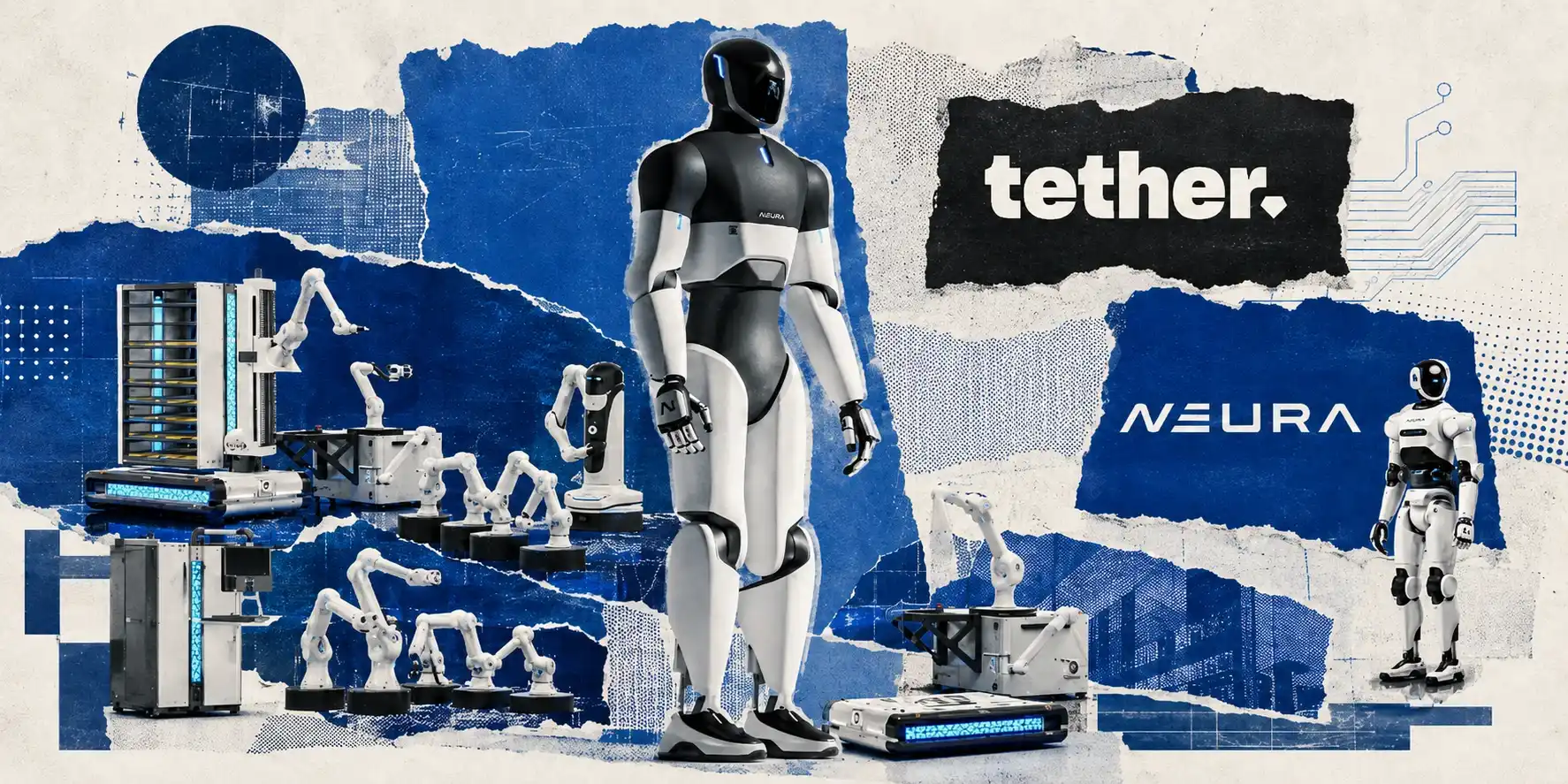
Do Robots Need Crypto Wallets? Stablecoin Giant Tether Bets on German Firm NEURA Robotics German robotics company NEURA Robotics has secured up to $1.4 billion in what is claimed to be the largest-ever funding round in the full-stack robotics industry, valuing the company at $7 billion. The Series C round attracted major investors like Tether, Qualcomm, Amazon, NVIDIA, Bosch, and the European Investment Bank. NEURA, founded in 2019, initially focused on AI-powered collaborative robots (cobots) for industrial automation, later expanding to autonomous mobile robots, service robots, and humanoid robots. Its core strategy is evolving from a hardware manufacturer to the operator of "Neuraverse," a platform designed to enable different robots to share learned experiences and data, creating network effects. A key, crypto-focused aspect of this investment is Tether's involvement. Tether plans to integrate its open-source Wallet Development Kit (WDK) into NEURA's robot platforms. This would embed self-custody wallet functionality, allowing robots to autonomously handle payments and settlements for tasks under pre-set rules—envisioning use cases in logistics or Robotics-as-a-Service (RaaS) models. This move could position stablecoins and crypto wallets as potential "machine payment infrastructure." Additionally, the partnership will see Tether's QVAC (QuantumVerse Automatic Computer) edge-AI framework tested and deployed within Neuraverse. This aims to enable low-latency, offline-capable AI decision-making directly on robots, reducing reliance on cloud computing for critical, time-sensitive operations. The investment underscores Tether's broader ambition to expand beyond being just a stablecoin issuer into AI, energy, and digital infrastructure, with NEURA's robotics network serving as a testbed for merging crypto-based financial layers with edge-based intelligence for the future of automation.

marsbit14m ago

Do Robots Also Need Encrypted Wallets? Stablecoin Giant Tether Bets on German Company NEURA Robotics

marsbit14m ago

AMD Launches Compact AI Host, Directly Challenging NVIDIA DGX Spark

In June 2026, AMD announced the Ryzen AI Halo, a compact AI developer desktop to rival NVIDIA's DGX Spark. Both feature 128GB unified memory for running 200B+ parameter models locally. Priced from $2,949 to $3,999, AMD undercuts NVIDIA's $3,999+ DGX Spark. The core divergence lies in architecture and philosophy. Ryzen AI Halo uses an x86-based Ryzen AI Max+ 395 APU (CPU+GPU+NPU), runs standard Windows/Linux, and emphasizes general-purpose PC flexibility. DGX Spark uses an ARM-based Grace Blackwell Superchip, runs a custom DGX OS, and includes a high-speed ConnectX-7 NIC for cluster prototyping, anchoring it to NVIDIA's full-stack CUDA ecosystem. AMD's ROCm software has improved, with simpler installation and support for major frameworks, but still lags behind CUDA's 17-year maturity in community support and cutting-edge library availability. AMD's broader strategy focuses on becoming a viable second-source supplier. Key moves include acquiring design capabilities via ZT Systems (while outsourcing manufacturing) and securing two major 6GW GPU supply deals with OpenAI and Meta in late 2025/early 2026. These contracts validate AMD's role in diversifying the AI supply chain, rather than outright beating NVIDIA. NVIDIA counters with a tightly integrated stack from desktop (DGX Spark) to data center, emphasizing seamless scalability and enterprise software subscriptions (AI Enterprise). In summary, Ryzen AI Halo represents AMD's pragmatic path: offering a cost-effective, open-ecosystem alternative for developers wary of vendor lock-in, while its large data center contracts aim to capture share from customers seeking a second GPU supplier. The choice boils down to a familiar, flexible PC environment with potential software gaps (AMD) versus a premium, optimized, but locked-in ecosystem (NVIDIA).

marsbit14m ago

AMD Launches Compact AI Host, Directly Challenging NVIDIA DGX Spark

marsbit14m ago

Sharplink CEO: One Million Ethereum Developers, Who Can Compete?

Etherean Ecosystem: One Million Developers and a Formidable Moat The Ethereum network has surpassed a significant milestone: over one million unique lifetime developers, with approximately 232,000 active in the past year. This vast and growing talent pool is Ethereum's core advantage, far more critical than transient metrics like speed or transaction fees. The central question is not which blockchain is fastest, but where the best builders choose to build long-term. Ethereum's answer lies in a decade-long accumulation of infrastructure, standards, tools, liquidity, and collaborative culture that is exceptionally difficult to replicate. It has become the default operating system for programmable finance. This massive developer base is actively working on complex, high-risk challenges that deepen Ethereum's strategic moat: * **Glamsterdam Upgrade (2026):** Focused on core protocol scalability (ePBS, parallel execution) while preserving core values like credible neutrality. * **Synchronous Composability:** Aims to make numerous Rollups interoperate like a single chain, directly addressing fragmentation concerns. * **Quantum Resistance:** Ethereum leads mainstream ecosystems in coordinated preparation for post-quantum cryptography, with a targeted migration plan around 2029. This developer advantage is self-reinforcing, fueled by: * **Deep Composability:** Applications interact like interoperable financial Lego bricks via shared standards (e.g., EVM, Solidity). * **Credible Neutrality:** Secured by over 900,000 validators, making it trusted by major institutions. * **Modularity:** Rollups (Base, Arbitrium, etc.) expand, rather than fracture, the ecosystem into a tightly connected modular internet economy. * **Culture:** Attracts top-tier researchers and standard-setters who guide the entire industry. In essence, while other chains generate activity, Ethereum is consolidating as the trusted, long-term coordination layer for internet-native finance. Its future is being built now by the architects of the next-generation financial infrastructure.

Odaily星球日报1h ago

Sharplink CEO: One Million Ethereum Developers, Who Can Compete?

Odaily星球日报1h ago

Ethereum Reaches the Milestone of One Million Developers, Sharplink CEO Delves Deep into Ethereum's Future Possibilities

Ethereum Surpasses One Million Developers Milestone: A Look at Its Unshakeable Dominance and Future Joseph Chalom, CEO of Sharplink, reflects on his recent Asia trip where he engaged deeply with Ethereum developers and ecosystem leaders. The most striking takeaway was not just the industry's vibrancy, but the rigorous, long-term vision of local builders. This context brings to life a pivotal statistic: Ethereum has now surpassed one million cumulative developers (1,012,824), with approximately 232,000 remaining active in the past year—a talent pool unmatched by any other crypto ecosystem. The critical question isn't which blockchain is fastest, but where top developers choose to build long-term. Ethereum's answer is unequivocal. Its decade-long lead stems from a unique convergence of technology, institutional culture, economic systems, and composability, cementing its role as the foundational operating system for programmable finance. This massive developer base is tackling the industry's hardest problems, continuously strengthening Ethereum's moat. Key initiatives include: * **The Glamsterdam Upgrade (planned 2026):** Introducing ePBS and Block-level Access Lists for parallel execution and higher throughput while preserving core values like credible neutrality and fair MEV distribution. * **Synchronous Composability:** Projects are working to enable atomic transactions across dozens of Rollups, making them function as one unified chain and eliminating ecosystem fragmentation. * **Post-Quantum Security:** Ethereum is far ahead in preparing for quantum computing threats, with a dedicated foundation working group and testnets targeting a full migration by ~2029—a crucial factor for institutional adoption. Beyond developers, Ethereum's core network effects are its unparalleled composability and unified standards (like EVM and Solidity), which create a powerful flywheel: more developers → better tools → greater liquidity → more institutional participation. Its other decisive advantages include credible neutrality (over 900k validators), a secure modular architecture with interconnected Rollups, and a deeply entrenched culture shaped by top-tier researchers. Ultimately, there's a vast difference between generating short-term activity and becoming the trusted, long-term coordination layer for global native finance. Major institutions prioritize security, trust, and liquidity—areas where Ethereum holds dominant mindshare. The industry's trajectory shows resources consolidating around unified standards, deep liquidity, and developer consensus. After meeting the builders in Seoul and Hong Kong, Chalom is more convinced than ever: Ethereum's unshakeable future is being built right now.

Foresight News1h ago

Ethereum Reaches the Milestone of One Million Developers, Sharplink CEO Delves Deep into Ethereum's Future Possibilities

Foresight News1h ago

Saylor's Latest Long Read: Bitcoin is Not Money, It's Digital Capital, and Money is Built Upon It

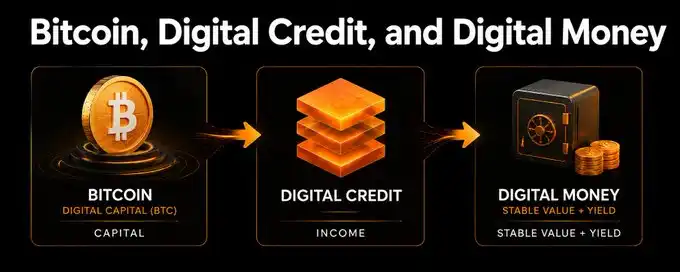
Michael Saylor presents his "Digital Asset Stack" theory, positioning Bitcoin as the foundational layer of digital capital. He argues Bitcoin itself should remain unchanged—no staking, inflation, or protocol alterations. Instead, a five-layer financial architecture should be built atop it: Digital Capital (BTC), Digital Credit (e.g., yield instruments like STRC), Digital Currency (stable, yield-bearing instruments pegged to fiat), Digital Yield (leveraged/structured products), and Digital Equity (e.g., MSTR stock, absorbing residual volatility). Saylor asserts this stack transforms Bitcoin's high-volatility, high-energy capital into tailored products: stable currencies for payments/savings, yield instruments for income seekers, and equity for growth investors. This approach meets diverse needs—corporate treasuries, banks, retirees, emerging market users—without compromising Bitcoin's core properties (scarcity, decentralization). The "killer use case" is rebuilding global money, credit, and capital markets on Bitcoin, bridging the fiat world with a superior digital asset foundation. The system leverages traditional finance principles (risk layering, structured products) while using Bitcoin as the ultimate collateral. This expands Bitcoin's utility, drives adoption, and offers a better monetary experience: digital, yield-bearing, stable-value tools for everyday use.

marsbit1h ago

Saylor's Latest Long Read: Bitcoin is Not Money, It's Digital Capital, and Money is Built Upon It

marsbit1h ago

Trading

Spot
Futures

Hot Articles

How to Buy T

Welcome to HTX.com! We've made purchasing Threshold Network Token (T) simple and convenient. Follow our step-by-step guide to embark on your crypto journey.Step 1: Create Your HTX AccountUse your email or phone number to sign up for a free account on HTX. Experience a hassle-free registration journey and unlock all features.Get My AccountStep 2: Go to Buy Crypto and Choose Your Payment MethodCredit/Debit Card: Use your Visa or Mastercard to buy Threshold Network Token (T) instantly.Balance: Use funds from your HTX account balance to trade seamlessly.Third Parties: We've added popular payment methods such as Google Pay and Apple Pay to enhance convenience.P2P: Trade directly with other users on HTX.Over-the-Counter (OTC): We offer tailor-made services and competitive exchange rates for traders.Step 3: Store Your Threshold Network Token (T)After purchasing your Threshold Network Token (T), store it in your HTX account. Alternatively, you can send it elsewhere via blockchain transfer or use it to trade other cryptocurrencies.Step 4: Trade Threshold Network Token (T)Easily trade Threshold Network Token (T) on HTX's spot market. Simply access your account, select your trading pair, execute your trades, and monitor in real-time. We offer a user-friendly experience for both beginners and seasoned traders.

12.0k Total ViewsPublished 2024.03.29Updated 2026.06.02

How to Buy T

Discussions

Welcome to the HTX Community. Here, you can stay informed about the latest platform developments and gain access to professional market insights. Users' opinions on the price of T (T) are presented below.

活动图片