Jane Street Halts "10 AM Dump", BTC Stages Strong V-Shaped Rebound Nearing $70K Mark

Odaily星球日报Published on 2026-02-26Last updated on 2026-02-26

Abstract

BTC experienced a strong V-shaped rebound, approaching the $70,000 mark, with ETH and SOL also showing significant gains. Market sentiment improved as Bitcoin spot ETFs recorded net inflows, potentially ending a five-week outflow streak. The rally was fueled by a mix of market dynamics, including allegations against Jane Street for allegedly suppressing Bitcoin’s price through systematic trading practices, though some analysts dismissed long-term manipulation claims. Positive quarterly earnings from Circle and Nvidia further boosted confidence, highlighting strong demand for stablecoins and AI-related investments. Institutional interest grew, with university endowments beginning to allocate to crypto ETFs, and mining firms showed resilience amid market volatility. The rebound provided a renewed narrative for market optimism, though its sustainability remains to be seen.

Original | Odaily Planet Daily (@OdailyChina)

Author | Ding Dang (@XiaMiPP)

OKX market data shows that over the past 24 hours, BTC experienced a strong V-shaped rebound, once approaching the key $70,000 level, currently trading at $68,000 with a 24H gain of 6.1%. ETH and SOL also showed very strong performance, following Bitcoin's rebound with significant rallies. ETH once broke through $2,100, with a 24H maximum gain of 15%, currently trading at $2,050; SOL once broke through $90, currently trading at $87 with a 24H gain of 8.1%. Market sentiment has noticeably warmed up. All three have now reached key resistance levels; watch whether they can hold and continue to advance.

In US stocks, the Dow rose 0.63%, the S&P 500 rose 0.81%, and the Nasdaq rose 1.26%; the crypto sector collectively strengthened, with Circle surging 35.47%, recouping losses from the past month in a single day.

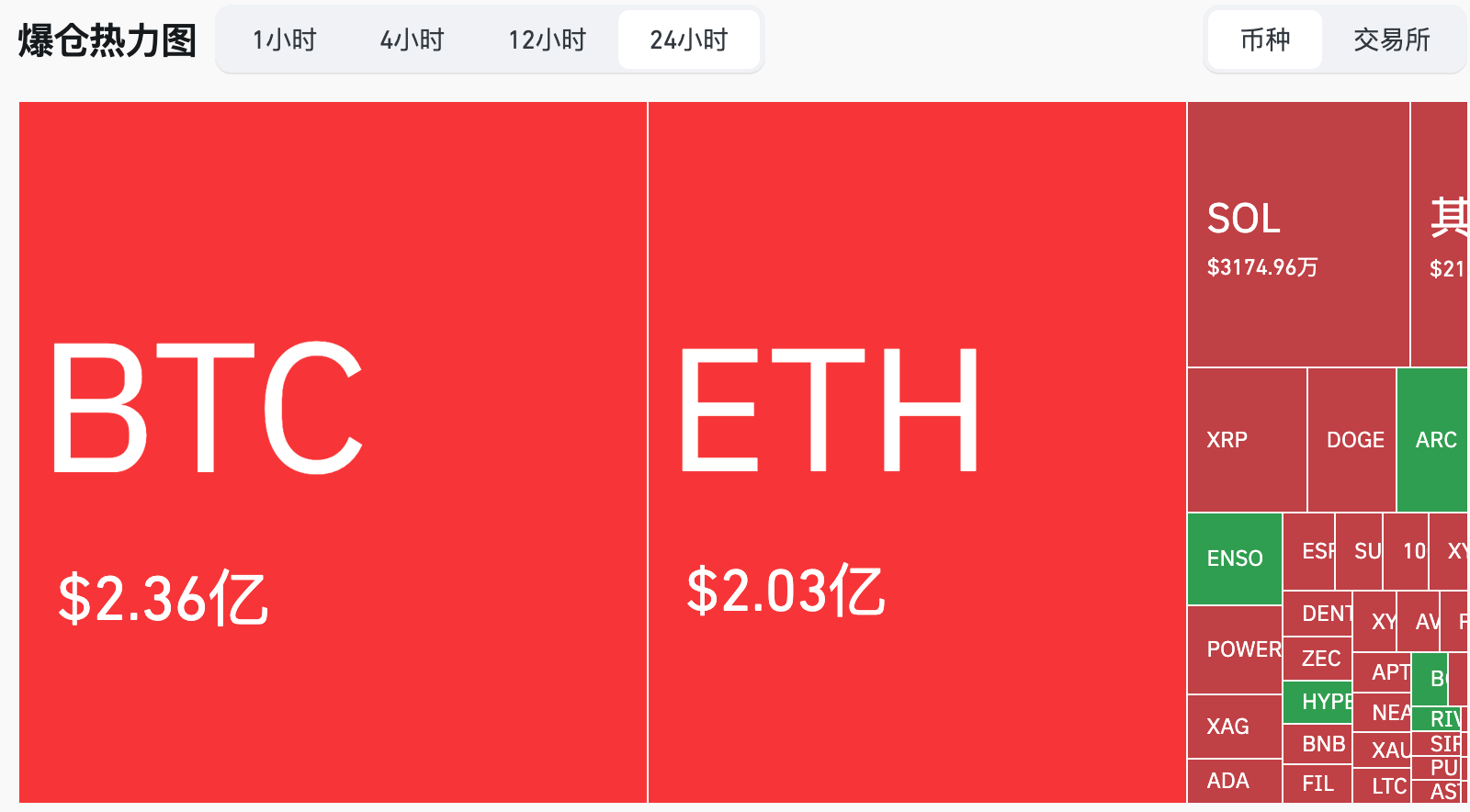
In derivatives, over the last 24 hours, the total liquidation amount was $579 million, with long liquidations at $115 million and short liquidations at $464 million. The largest single liquidation occurred on Hyperliquid - BTC-USD, worth $10.4154 million.
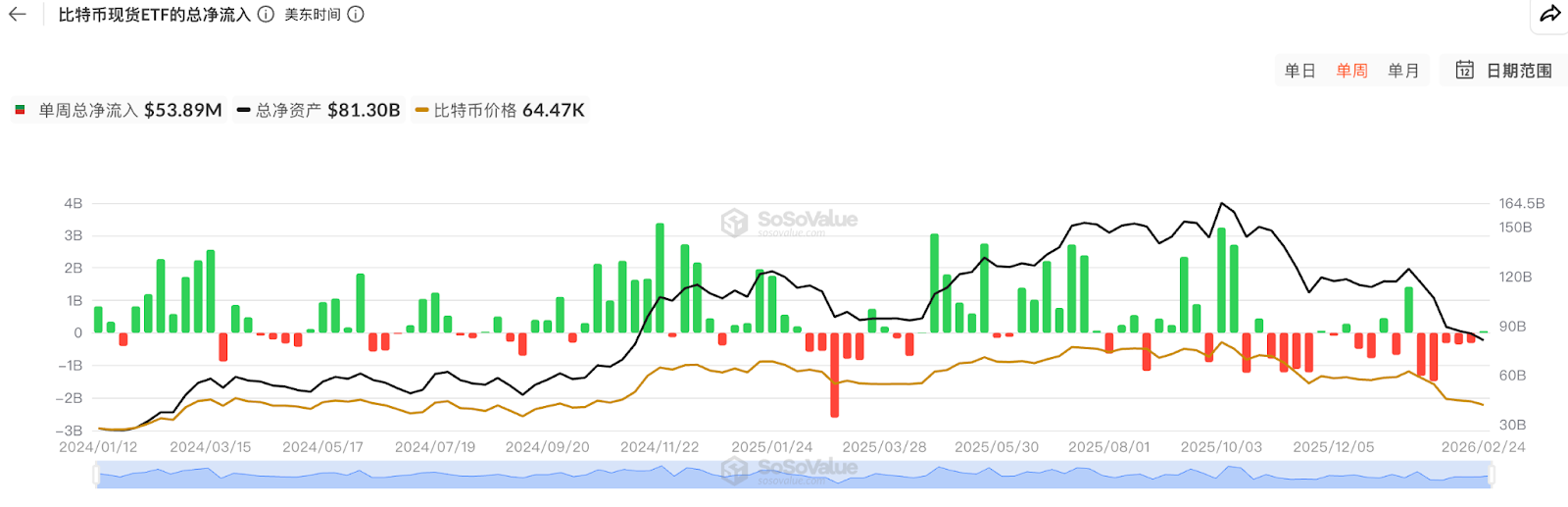
On the capital front, according to sosovalue data, Bitcoin spot ETFs recorded a net inflow of $250 million yesterday, potentially ending the previous five consecutive weeks of net outflows. Lookonchain monitoring showed that in the past 5 hours, BlackRock's Bitcoin exchange-traded fund IBIT saw a net inflow of 1,225 BTC, valued at $83.92 million.
"Bitcoin Should Be Worth at Least $150,000"

This morning, the crypto industry was shaken by one sentence: "As everyone knows, Bitcoin should be worth at least $150,000 right now."

The reason is that as the liquidators of Terraform Labs sued the renowned US market maker Jane Street, it unveiled a storm of market speculation that had been brewing for months. A widely circulated long post on X (by Justin Bechler) connected three clues, pointing directly to Jane Street systematically suppressing the Bitcoin price through its privileged position, keeping it far below its "deserved" level.

The core allegations are divided into three acts: First, the "insider old account" of the Terra/LUNA collapse. It allegedly used insider information obtained through a private group "Bryce's Secret," created by former intern Bryce Pratt, to exit early and accelerate the crash. The lawsuit claims these trades "could not have been achieved without non-public information" and seeks compensation;

Second, the "10 AM sharp dump" pattern. Almost every trading day, Bitcoin would mysteriously plummet by 2-3% around this time, precisely liquidating leveraged positions, only to rebound hours later. On-chain analysis from Glassnode and others showed this algorithmic selling pressure was highly regular. Coincidentally: After the Terra lawsuit was exposed, this "10 AM plunge" pattern briefly disappeared; once the spotlight faded, it returned;

Third, super bullish on the surface, but疑似 massive net short in reality. Public 13F filings show Jane Street holds over 20 million shares of IBIT (once nearing a market value of $2.5 billion), with MSTR holdings surging 473%, appearing super bullish on the surface. But industry insiders claim Jane Street表面上 accumulated large Bitcoin spot inventories through the ETF creation/redemption mechanism, but实际上 likely used this as a basis to issue大量 Bitcoin options, hedging with derivatives to remain directionally neutral. This is equivalent to continuously投放 synthetic Bitcoin supply into the market, thereby削弱 Bitcoin's scarcity narrative and creating long-term upward resistance for the spot price.

The storm triggered by this statement continues to发酵. Whether the allegations against Jane Street by the Terraform liquidators are substantiated awaits court裁决. However, this controversy has provided an emotional outlet for the market.

For more insider details, also refer to Odaily Planet Daily's just-published article 《From the Terra Collapse to the "10 AM Strike", How Did Jane Street Play the Markets Across Two Continents?》

However, Monad co-founder Keone Hon also stated that the conspiracy theory of Jane Street suppressing Bitcoin below $150,000 doesn't hold water. Hedging short IBIT positions with long futures means that, on average, other parties end up holding short futures positions, which they must hedge with long spot positions. The sum of all positions in the market (converted to delta) always equals the total supply of Bitcoin (approx. 20 million). Of course, any single party can decide to go short, thereby increasing long positions. In short, hedging futures with ETFs means there are always offsetting positions in the market; the market can be distorted short-term but can hardly defy the conservation of supply and demand long-term.

Market Confidence from Two Earnings Reports

If the conspiracy theory provided emotional tension for the market, what truly pushed the price upward were perhaps two better-than-expected earnings reports.

First, Circle delivered an exceptionally漂亮 Q4 and full-year 2025 earnings report. Q4 revenue reached $770 million, a year-on-year increase of 77%, up 4.1% quarter-on-quarter, exceeding previous market expectations of $749 million. Most importantly, EPS (earnings per share) also far exceeded expectations, indicating significantly enhanced profitability, primarily benefiting from the recovery in USDC scale and interest income brought by the high-interest-rate environment. Simultaneously, USDC circulation increased significantly year-on-year, and on-chain transaction volume continued to expand, indicating that the structural demand for stable币 is still rising. This is the core reason for the market's positive feedback. It at least proves that the panic caused by previous whale sell-offs was more about portfolio rebalancing, and the funds are still within the crypto industry—they might just be waiting for the right moment to "buy the dip."

The second earnings report came from NVIDIA. Its Q4 revenue of $68.1 billion and data center revenue of $62.3 billion both exceeded market expectations, and it once again provided an optimistic quarterly revenue forecast, guiding around $78 billion, higher than the market's estimate of $73 billion, indicating that large-scale AI computing construction remains on track.

This is crucial for the AI narrative. The market needs NVIDIA to prove that the AI investment boom can translate into sustained real money, alleviating concerns about an AI bubble.

Institutional Allocation and Miner Movements

Subtle changes have already appeared on the demand side.

Several university endowment funds are adjusting their investment strategies against the backdrop of declining returns on traditional assets and beginning to allocate to cryptocurrency ETFs. Harvard University and Brown University have disclosed holdings of Bitcoin and Ethereum ETF positions in their latest 13F filings. Although relatively small compared to their overall portfolio size, it shows that digital assets have moved from the fringe of institutional finance into the mainstream toolbox.

Amid Bitcoin's successive declines, many small and medium-sized DATs have surrendered one after another, choosing to sell their held Bitcoin or terminate buying plans. It seemed like only Strategy remained the market's sole major bullish force. However, DDC Enterprise Limited announced an additional purchase of 50 BTC this week, bringing its total Bitcoin holdings to 2,118. This marks the company's seventh consecutive week of increasing its Bitcoin holdings, currently ranking 34th globally among publicly listed companies by Bitcoin holdings.

Movements in the mining sector are also worth noting. While the Bitcoin price fell, several mining company stock prices rose against the trend. For example, TeraWulf's stock price rose 31% month-to-date, Cipher Mining rose 8%; Hut 8 rose 6%; Core Scientific remained basically flat. Analysis suggests that Bitcoin miners are currently among the targets with high short interest from hedge funds. If fundamentals improve, it could trigger short-covering rallies. Moreover, these companies have locked in long-term and attractive power contracts, giving them a structural advantage on the energy cost side. Their strategic value extends beyond单纯的 Bitcoin mining operations. Capital is flowing to "structural winners", while traditional miners may face the risk of being marginalized.

Conclusion

This V-shaped rebound may not be the starting point of a trend reversal, but it accomplished something more important: providing the market with a new explanatory framework. When the market regains reasons to explain price increases, risk appetite has the potential to rebuild.


Related Questions

QWhat was the key accusation against Jane Street in the recent market controversy?

AJane Street was accused of systematically suppressing Bitcoin prices through privileged market positions, including alleged insider trading related to Terra/LUNA's collapse, a pattern of '10 AM sharp price dumps' in Bitcoin, and holding massive net short positions while publicly appearing bullish via ETF holdings.

QWhat were the main factors that contributed to Bitcoin's strong V-shaped rebound according to the article?

AThe rebound was driven by a combination of market sentiment shift due to the Jane Street controversy, two better-than-expected earnings reports from Circle and Nvidia, and renewed institutional interest from university endowments and continued Bitcoin accumulation by companies like DDC Enterprise.

QHow did Circle's Q4 2025 financial performance impact market confidence?

ACircle's Q4 revenue reached $770 million, a 77% year-over-year increase, exceeding expectations. Its EPS also significantly surpassed forecasts, demonstrating enhanced profitability. The growth in USDC circulation and on-chain transaction volume indicated strong structural demand for stablecoins, boosting market confidence.

QWhat unusual trading pattern was allegedly linked to Jane Street's activities?

AA highly regular algorithmic selling pattern was observed where Bitcoin would drop 2-3% almost precisely around 10 AM Eastern Time each trading day, liquidating leveraged long positions before often rebounding hours later. This pattern briefly disappeared after the Terra lawsuit was publicized.

QWhat does the article suggest about the current state of Bitcoin mining companies?

ADespite Bitcoin's price decline, some mining company stocks like TeraWulf and Cipher Mining saw significant gains. This is attributed to their attractive long-term power contracts providing a structural cost advantage, making them 'structural winners' and potential targets for short covering, while traditional miners risk being marginalized.

Related Reads

Goldman Sachs Bows Down, Bitcoin Finally Breaks Through the Gates of Wall Street

Wall Street giants, including Goldman Sachs, Morgan Stanley, Charles Schwab, and the New York Stock Exchange, have reversed their long-standing opposition to Bitcoin and are now actively embracing it. After years of dismissing Bitcoin as a scam, a bubble, or a tool for illicit activities, these institutions are launching Bitcoin ETFs, enabling spot trading, and building dedicated crypto infrastructure. Goldman Sachs, which once called Bitcoin a "fraud tool," is now offering Bitcoin ETFs. Morgan Stanley, which internally banned the term "cryptocurrency," has launched its largest-ever ETF backed by Bitcoin. Charles Schwab has opened spot crypto trading for its retail clients, integrating Bitcoin alongside traditional assets. The NYSE is building robust infrastructure to support digital assets, signaling a long-term commitment. This dramatic shift is driven not by a change in ideology but by economic necessity. As Bitcoin repeatedly survived market crashes and grew into a multi-trillion-dollar asset class, ignoring it became too costly. Wall Street’s business model relies on capturing fees, and Bitcoin’s rise represented a massive wealth transfer occurring outside their ecosystem. The fear of missing out (FOMO) and client demand forced these institutions to capitulate. The article frames this as a historic surrender to Bitcoin’s mathematical inevitability. Unlike the trust-based traditional financial system, Bitcoin operates on decentralized, transparent, and unchangeable rules. Its scarcity and resilience make it a hedge against fiat currency devaluation and systemic risk. The narrative has flipped: not holding Bitcoin is now seen as the greater risk. The author concludes that Bitcoin has not been co-opted by Wall Street; instead, it has co-opted Wall Street, marking a fundamental shift in the global financial architecture.

marsbit46m ago

Goldman Sachs Bows Down, Bitcoin Finally Breaks Through the Gates of Wall Street

marsbit46m ago

Trading

Spot
Futures

Hot Articles

What is $BITCOIN

DIGITAL GOLD ($BITCOIN): A Comprehensive Analysis Introduction to DIGITAL GOLD ($BITCOIN) DIGITAL GOLD ($BITCOIN) is a blockchain-based project operating on the Solana network, which aims to combine the characteristics of traditional precious metals with the innovation of decentralized technologies. While it shares a name with Bitcoin, often referred to as “digital gold” due to its perception as a store of value, DIGITAL GOLD is a separate token designed to create a unique ecosystem within the Web3 landscape. Its goal is to position itself as a viable alternative digital asset, although specifics regarding its applications and functionalities are still developing. What is DIGITAL GOLD ($BITCOIN)? DIGITAL GOLD ($BITCOIN) is a cryptocurrency token explicitly designed for use on the Solana blockchain. In contrast to Bitcoin, which provides a widely recognized value storage role, this token appears to focus on broader applications and characteristics. Notable aspects include: Blockchain Infrastructure: The token is built on the Solana blockchain, known for its capacity to handle high-speed and low-cost transactions. Supply Dynamics: DIGITAL GOLD has a maximum supply capped at 100 quadrillion tokens (100P $BITCOIN), although details regarding its circulating supply are currently undisclosed. Utility: While precise functionalities are not explicitly outlined, there are indications that the token could be utilized for various applications, potentially involving decentralized applications (dApps) or asset tokenization strategies. Who is the Creator of DIGITAL GOLD ($BITCOIN)? At present, the identity of the creators and development team behind DIGITAL GOLD ($BITCOIN) remains unknown. This situation is typical among many innovative projects within the blockchain space, particularly those aligning with decentralized finance and meme coin phenomena. While such anonymity may foster a community-driven culture, it intensifies concerns about governance and accountability. Who are the Investors of DIGITAL GOLD ($BITCOIN)? The available information indicates that DIGITAL GOLD ($BITCOIN) does not have any known institutional backers or prominent venture capital investments. The project seems to operate on a peer-to-peer model focused on community support and adoption rather than traditional funding routes. Its activity and liquidity are primarily situated on decentralized exchanges (DEXs), such as PumpSwap, rather than established centralized trading platforms, further highlighting its grassroots approach. How DIGITAL GOLD ($BITCOIN) Works The operational mechanics of DIGITAL GOLD ($BITCOIN) can be elaborated on based on its blockchain design and network attributes: Consensus Mechanism: By leveraging Solana’s unique proof-of-history (PoH) combined with a proof-of-stake (PoS) model, the project ensures efficient transaction validation contributing to the network's high performance. Tokenomics: While specific deflationary mechanisms have not been extensively detailed, the vast maximum token supply implies that it may cater to microtransactions or niche use cases that are still to be defined. Interoperability: There exists the potential for integration with Solana’s broader ecosystem, including various decentralized finance (DeFi) platforms. However, the details regarding specific integrations remain unspecified. Timeline of Key Events Here is a timeline that highlights significant milestones concerning DIGITAL GOLD ($BITCOIN): 2023: The initial deployment of the token occurs on the Solana blockchain, marked by its contract address. 2024: DIGITAL GOLD gains visibility as it becomes available for trading on decentralized exchanges like PumpSwap, allowing users to trade it against SOL. 2025: The project witnesses sporadic trading activity and potential interest in community-led engagements, although no noteworthy partnerships or technical advancements have been documented as of yet. Critical Analysis Strengths Scalability: The underlying Solana infrastructure supports high transaction volumes, which could enhance the utility of $BITCOIN in various transaction scenarios. Accessibility: The potential low trading price per token could attract retail investors, facilitating wider participation due to fractional ownership opportunities. Risks Lack of Transparency: The absence of publicly known backers, developers, or an audit process may yield skepticism regarding the project's sustainability and trustworthiness. Market Volatility: The trading activity is heavily reliant on speculative behavior, which can result in significant price volatility and uncertainty for investors. Conclusion DIGITAL GOLD ($BITCOIN) emerges as an intriguing yet ambiguous project within the rapidly evolving Solana ecosystem. While it attempts to leverage the “digital gold” narrative, its departure from Bitcoin's established role as a store of value underscores the need for a clearer differentiation of its intended utility and governance structure. Future acceptance and adoption will likely depend on addressing the current opacity and defining its operational and economic strategies more explicitly. Note: This report encompasses synthesised information available as of October 2023, and developments may have transpired beyond the research period.

363 Total ViewsPublished 2025.05.13Updated 2025.05.13

What is $BITCOIN

Discussions

Welcome to the HTX Community. Here, you can stay informed about the latest platform developments and gain access to professional market insights. Users' opinions on the price of BTC (BTC) are presented below.

活动图片