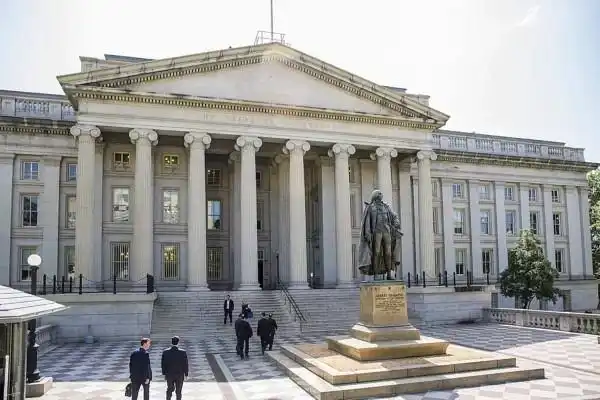
International oil prices experienced a certain degree of profit-taking after consecutive gains, but supply-side risks have not significantly subsided. On Monday, U.S. Treasury Secretary Bessant announced an expansion of sanctions targeting Iran's economic network and explicitly stated that the measures would not stop at what was announced that day. Bessant also indicated that the U.S. expects to announce sanctions against a major financial institution before the end of this week, but the specific institution was not named. The market has thus begun to reassess the potential impact of sanctions on Iranian crude oil exports, financial settlements, and regional energy transportation.
The market significance of this action is not limited to Iran itself. The expansion of secondary sanctions by the U.S. Treasury Department means that third-party institutions maintaining economic ties with Iran may also face higher financial risks. When asked whether major Asian banks financing Iranian oil imports might become targets, Bessant did not name them directly but emphasized that no institution is beyond the reach of U.S. sanctions. This shifts the market focus from "will Iranian crude supply decline" further to "will major buyers and financial institutions adjust settlement and procurement behaviors."
From an energy market perspective, the real impact of sanctions depends on enforcement strength and the responses of Iran's major economic partners. If regional financial institutions, refiners, and shipping companies proactively reduce their exposure to Iran-related business, Iranian crude exports could face greater discounts and logistical obstacles. If some market participants continue to seek alternative settlement and shipping channels, the impact on actual supply volumes may be weaker than initially expected by the market. Therefore, the market is currently pricing not only the supply losses that have already occurred but also the risk premium for further supply chain tightening in the future.
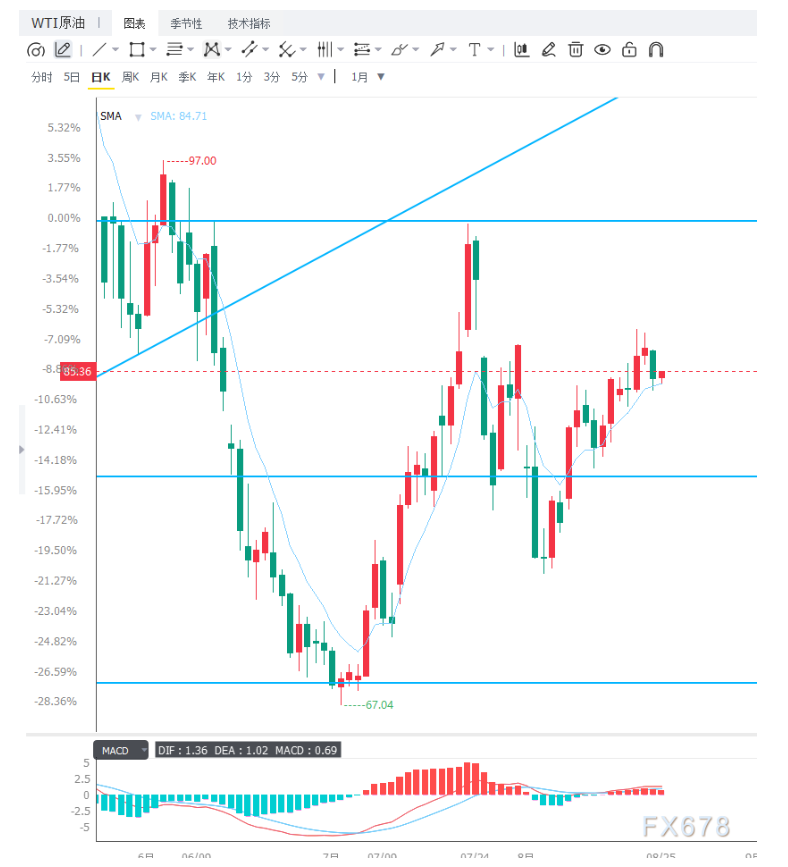
This risk is already reflected in recent oil price movements. WTI crude had been rising for several consecutive trading sessions, once approaching $86, while Brent crude climbed above $90. Prices retreated on Monday, mainly due to investor profit-taking and the market awaiting details of the new sanctions round, rather than a complete disappearance of supply risks. The latest market data shows Brent crude retreated to around $93 on Monday, with WTI falling to around $85.
More noteworthy is that the oil price increase is gradually evolving from a purely energy market issue into a macro asset pricing problem. Morgan Stanley strategist Michael Wilson believes that if oil continues to rise, it could push bond yields higher and increase the difficulty for the Federal Reserve in tackling inflation pressures. The institution has already raised its price forecast for Brent crude in the fourth quarter of this year to $100 per barrel. According to this logic, if oil prices break through $100 again, the market might once again face a combination of energy-driven inflation increases, rising bond yields, and tightening financial conditions.
The impact of oil prices on the bond market is particularly worth noting. High oil prices first raise energy costs for consumers and businesses, thereby affecting inflation expectations. If investors consequently lose confidence in inflation declining, long-term Treasury yields may rise again. Simultaneously, higher financing costs can suppress corporate investment and household consumption, creating typical stagflationary pressure. Therefore, every $10 increase in oil prices doesn't only mean increased profits for the energy sector; it may also generate broader financial market impacts through inflation expectations, bond yields, and risk asset valuations.
This is also one reason Goldman Sachs' strategy team placed oil prices among the top important market variables this week. The market currently faces multiple factors simultaneously, including U.S. fiscal pressure, technology stock valuation adjustments, and changes in Fed policy expectations. However, energy prices have strong macro transmission capabilities. If oil prices continue to rise, the market may reprice the U.S. inflation path, affecting U.S. Treasury bonds and stock valuations. Conversely, if oil prices significantly retreat, it could ease inflation expectations, improve consumers' real purchasing power, and to some extent lower long-term yields.
Looking at risk asset performance, recent pressure on technology stocks has also increased market sensitivity to oil price gains. Nasdaq's performance has been weaker than the broader market, with noticeable position adjustments in AI-related assets. Nvidia's earnings report is another key event this week, but its impact is more concentrated on the technology sector and growth stock valuations, whereas oil prices may simultaneously affect bond, stock, currency, and commodity markets. If energy prices continue to climb, the market might shift from a pure growth and tech investment logic to a macro trading logic centered on "inflation-yields-valuation."
Another core variable this week is Federal Reserve policy expectations. The U.S. Personal Consumption Expenditures (PCE) price index is about to be released. The market will use the inflation data to judge whether energy price increases are spreading into the core price system. If the PCE continues to show strong inflation stickiness, the Fed's future policy space may be constrained. If inflation data falls significantly below expectations, the short-term shock from oil price increases might be temporarily absorbed by the market.
Additionally, Federal Reserve Chairman Kevin Walsh will speak at the Jackson Hole Symposium. The market will closely look for signals regarding inflation targets, interest rate policy, and financial stability. If oil prices have already risen significantly and the Fed simultaneously releases hawkish signals, then U.S. real interest rates and the dollar may gain support, while risk assets could face greater pressure. Conversely, if the Fed shows greater concern about economic growth risks, the impact of high oil prices on policy expectations might somewhat weaken.
The supply side should not be ignored either. The market currently expects that crude oil supply recovery in the Middle East may be slower than previously anticipated. This means that even if Iranian exports do not see a significant decline, slow regional supply recovery is enough to maintain market risk premiums. If sanctions further affect Iranian crude transportation, insurance, financing, or refining, the global available supply may tighten further. While oil prices have pulled back after consecutive gains, as long as supply risks are not substantially removed, WTI may still find strong buying support around $82.
Looking at the daily chart, WTI crude is currently still in a high-level converging consolidation structure. The previous upward move pushed prices back above key medium-term moving averages, but there is clear resistance near $88. Although the current price has retreated somewhat, it has not yet broken the daily bullish structure. The $82 level is currently the most important daily support area. If prices can sustain above $82, the market action can still be considered strong range-bound trading. If it effectively breaks above $88, it may open up space towards $90 or even $92. Conversely, if $82 is decisively broken, the short-term bullish structure will weaken significantly, with support levels to watch near $80 and $78.
From a 4-hour cycle perspective, WTI entered high-level consolidation after consecutive gains, with short-term momentum cooling somewhat, but the price has not yet formed a clear reversal structure. The current focus should be on the battle near $85. If oil prices stabilize above $85 again and break above $86, short-term bulls may retest $88. If the rally fails and prices fall below $83, they may retreat towards $82. If short-term momentum indicators like MACD form upward expansion again, it will favor prices challenging previous highs. If a high-level death cross appears accompanied by prices breaking below short-term moving averages, further profit-taking should be guarded against. Therefore, $82-$88 remains the most important technical trading range for WTI at present.
The U.S. expansion of sanctions on Iran's economic network has provided the crude oil market with renewed supply risk premiums. However, the recent price retreat also shows the market is awaiting the actual enforcement effect, rather than simply chasing policy expectations. The key factor truly affecting oil prices in the future lies in whether sanctions can significantly compress Iranian crude exports and whether further disruptions occur in regional shipping, financing, and refining systems. From a macro perspective, oil prices have become an important variable connecting the energy market with global financial markets. If WTI breaks above $88 and moves further towards $90+, the market needs to be alert to the cascading impact of high oil prices on inflation expectations, U.S. Treasury yields, and risk asset valuations. If the $82 support is broken, it would mean the current supply risk premium may begin to recede. In the short term, oil prices remain in a phase where bulls hold an advantage but face significant overhead pressure. Sanction details, U.S. PCE data, the Jackson Hole Symposium, and tech giant earnings will jointly determine market risk appetite this week. For crude oil, $82 is the key line for judging whether the strong structure can be maintained, and $88 is the core breakout level for opening a new round of upward space. As long as supply risks have not subsided, price pullbacks should be viewed in terms of support effectiveness rather than simply as trend reversal signals.