HYPE steadies as LIT’s post-airdrop sell-off deepens: What happens next?

ambcryptoPublished on 2025-12-30Last updated on 2025-12-30

Abstract

The article discusses the competitive landscape of perpetual decentralized exchanges (Perp DEXes), focusing on Hyperliquid (HYPE) and its rival Lighter (LIT). Despite Lighter being seen as a major threat, Messari analyst Sam downplays its impact, predicting HYPE will outperform LIT in the mid-term as Lighter's trading volume declines post-airdrop farming. Hyperliquid saw a 60% drop in volume and a 65% revenue shortfall in H2 2025 due to competition and lower trading activity, affecting its token buybacks. Meanwhile, LIT's token debuted at $3.3 but fell 21% in its first week. HYPE showed a slight rebound, with potential for further gains if it breaks key resistance levels. The piece concludes that Lighter's traction has waned after its airdrop, while HYPE's recovery remains uncertain.

The cut-throat competition in the perpetual decentralized exchanges, popularly known as Perp DEXes, has stalled the market leader, Hyperliquid.

Rivals such as Binance-backed Aster saw significant traction in H2 2025. But most analysts considered Lighter the real threat to Hyperliquid, citing several features, including privacy.

However, ahead of the Lighter [LIT] token debut and airdrop for early users, Messari research analyst Sam has downplayed its threat.

In fact, Sam projected that HYPE could outperform LIT in the mid-term, adding that,

“HYPE will reprice back to the ‘endgame perp DEX.’ HYPE investors won’t have to worry about fee compression for the foreseeable future.”

For Sam, Lighter’s perp volume was ‘falling off a cliff’ because the initial farming period that attracted most traders from Hyperliquid is almost over.

Will Hyperliquid revenue recover?

In H2, Hyperliquid’s perpetual volume dropped significantly amid rising competition and lower trading activity in Q4 2025. It fell from $396 billion to $165 billion — That’s about 60% decline in traction.

The cool-off also compressed the generated fees and revenues used to drive HYPE buybacks.

In fact, average weekly revenue dropped from $20 million in Q3 to as low as $7 million in late December -A whopping 65% revenue shortfall.

With ongoing monthly unlocks alongside the low pace of token buybacks, bears had a field day with HYPE. However, Sam believes a reversal could be likely if Lighter farmers return to Hyperliquid.

HYPE vs. LIT price action

Meanwhile, Lighter officially announced the LIT token, noting that 25% of the total supply of 1 billion tokens will be immediately airdropped to early users.

The rest of the tokenomics mirrored HYPE, including a 1-year vesting period for teams and utilizing revenue for buybacks.

“Revenues from our core DEX product will be allocated between growth and buybacks depending on market conditions.”

The token’s TGE listing price was $3.3, but it has dropped to $2.7, representing a 21% decline in the past seven days of trading. It experienced a 16% decline over the past 24 hours.

On the other hand, HYPE was up over 2% in the 24 hours and could flip short-term bullish if it clears the recent peak at $26.4. The next roadblock and overheat resistance would be $27.


Final Thoughts

  • Lighter perp volume has dropped following the end of airdrop farming, and the LIT price also declined.
  • HYPE experienced a short-term bounce, but it was unclear whether the recovery would extend.

Related Questions

QAccording to Messari analyst Sam, why could HYPE outperform LIT in the mid-term?

ASam projected that HYPE could outperform LIT because Lighter's perp volume was 'falling off a cliff' as the initial farming period that attracted traders is almost over, and he believes HYPE will reprice back to the 'endgame perp DEX' without worrying about fee compression in the foreseeable future.

QWhat was the percentage decline in Hyperliquid's perpetual volume from its peak to the level mentioned in the article?

AHyperliquid's perpetual volume declined by about 60%, falling from $396 billion to $165 billion.

QHow much did the average weekly revenue for Hyperliquid drop from Q3 to late December?

AThe average weekly revenue dropped from $20 million in Q3 to as low as $7 million in late December, representing a 65% revenue shortfall.

QWhat was the initial listing price of the LIT token and what was its price after a week of trading?

AThe LIT token's initial listing price was $3.3, and it dropped to $2.7 after a week of trading, representing a 21% decline.

QWhat are the two key price levels mentioned for HYPE to flip short-term bullish?

AFor HYPE to flip short-term bullish, it needs to clear the recent peak at $26.4, with the next resistance level being $27.

Related Reads

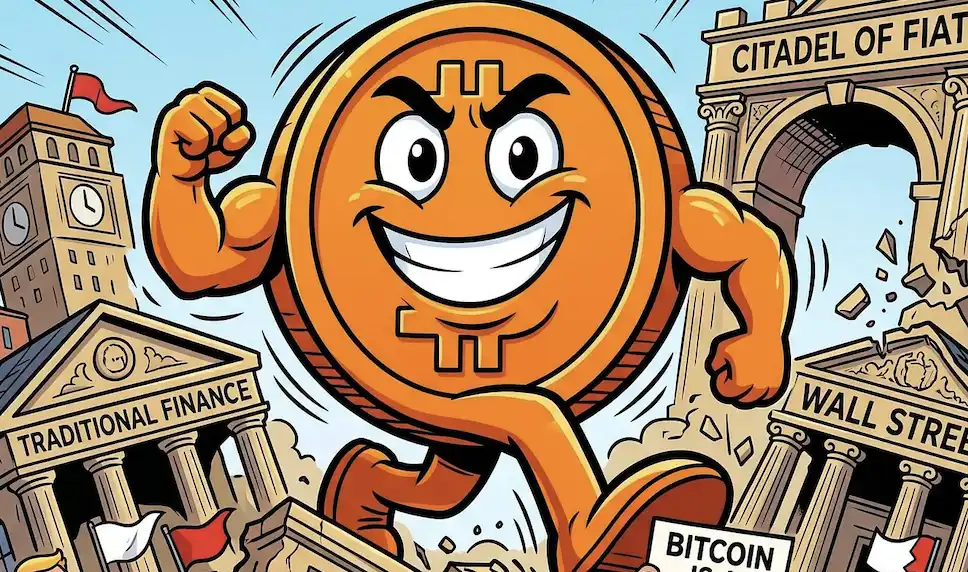
Goldman Sachs Bows Down, Bitcoin Finally Breaks Through the Gates of Wall Street

Wall Street giants, including Goldman Sachs, Morgan Stanley, Charles Schwab, and the New York Stock Exchange, have reversed their long-standing opposition to Bitcoin and are now actively embracing it. After years of dismissing Bitcoin as a scam, a bubble, or a tool for illicit activities, these institutions are launching Bitcoin ETFs, enabling spot trading, and building dedicated crypto infrastructure. Goldman Sachs, which once called Bitcoin a "fraud tool," is now offering Bitcoin ETFs. Morgan Stanley, which internally banned the term "cryptocurrency," has launched its largest-ever ETF backed by Bitcoin. Charles Schwab has opened spot crypto trading for its retail clients, integrating Bitcoin alongside traditional assets. The NYSE is building robust infrastructure to support digital assets, signaling a long-term commitment. This dramatic shift is driven not by a change in ideology but by economic necessity. As Bitcoin repeatedly survived market crashes and grew into a multi-trillion-dollar asset class, ignoring it became too costly. Wall Street’s business model relies on capturing fees, and Bitcoin’s rise represented a massive wealth transfer occurring outside their ecosystem. The fear of missing out (FOMO) and client demand forced these institutions to capitulate. The article frames this as a historic surrender to Bitcoin’s mathematical inevitability. Unlike the trust-based traditional financial system, Bitcoin operates on decentralized, transparent, and unchangeable rules. Its scarcity and resilience make it a hedge against fiat currency devaluation and systemic risk. The narrative has flipped: not holding Bitcoin is now seen as the greater risk. The author concludes that Bitcoin has not been co-opted by Wall Street; instead, it has co-opted Wall Street, marking a fundamental shift in the global financial architecture.

marsbit10m ago

Goldman Sachs Bows Down, Bitcoin Finally Breaks Through the Gates of Wall Street

marsbit10m ago

Trading

Spot
Futures

Hot Articles

Discussions

Welcome to the HTX Community. Here, you can stay informed about the latest platform developments and gain access to professional market insights. Users' opinions on the price of S (S) are presented below.

活动图片