Historical Bottom Signal Reappears? Messari Valued at $300 Million Sells for $10 Million

marsbitPublished on 2026-06-17Last updated on 2026-06-17

Abstract

Messari, a major crypto data and research platform once valued at $300 million, was sold to rival Blockworks for just over $10 million in June 2026. This sale marks a broader, quiet contraction in the crypto industry. Data platforms like DappRadar and Parsec have shut down, media outlets like CoinDesk have been sold at steep discounts, and companies across the sector are laying off staff or pivoting to AI, which is disrupting traditional research and data business models. Venture capital investment in crypto has plummeted, with funding in Q1 2026 at its lowest since 2020, as capital and talent shift aggressively toward AI. Prominent crypto investors are leaving the space, and many funds are struggling. However, these extreme pessimism signals may historically indicate a market bottom. Bitcoin is down nearly 50% from its 2026 high, the Crypto Fear & Greed Index has been in "extreme fear" for months, and long-term Bitcoin holders control a near-record 80% of the supply. Similar combinations of deeply negative signals—including low VC activity and distressed asset sales—preceded major bull markets in 2018, 2020, and 2022. While Messari's downfall symbolizes a tough period, it also aligns with patterns seen at cycle lows.

Author: BibiNews

Messari was once the data platform in the crypto industry closest to Bloomberg, with a peak valuation of $300 million USD.

Its founder, Ryan Selkis, was one of the first to expose Mt. Gox's insolvency, establishing his reputation with this feat before founding Messari with the goal of consolidating the crypto world's data, research, and disclosures into a professional platform. It covers over 40,000 crypto assets, and its annual Mainnet conference in New York is one of the industry's most important summits.

In September 2022, the crypto arm of hedge fund giant Brevan Howard led its Series B funding round, with Point72 and Coinbase Ventures participating, valuing the company at approximately $300 million.

On June 12, 2026, Messari was acquired by competitor Blockworks for a price just over ten million dollars.

This is not the situation of just one company. When primary market valuations and the tokens in your wallet are both shrinking significantly, has the collective repricing of the entire crypto industry finally hit bottom?

Collective Contraction of Crypto Companies

In July 2024, Messari founder Selkis resigned as CEO following a series of controversial statements, with co-founder Eric Turner taking over. In March 2026, Turner also left, CTO Diran Li took the helm, and the company underwent significant layoffs, pivoting towards AI and announcing it would become an AI-first company.

But for Messari, AI is not just a pivot direction; it's also a reason for its decline. Messari's core product was selling research reports and data curation. An industry report that once took an analyst a week to write can now be completed in a few hours with AI tools. When research costs approach zero, the business of selling research reports becomes hard to monetize. This is not a cyclical difficulty but a structural threat.

Ultimately, Messari's data platform and API were merged into Blockworks, ending an eight-year entrepreneurial journey.

But Messari is not an isolated case.

From 2025 to 2026, a quieter, deeper change is underway: those companies that don't issue tokens and rely on selling products and services are also struggling to survive.

Data platforms are shutting down. DappRadar, after seven years of operation, tracking over 18,000 decentralized applications across 93 blockchains with 500,000 monthly active users, announced its closure in November 2025, citing "financial unsustainability." On-chain analytics platform Parsec, operational for five years, shut down in February 2026. CoinGecko is currently in talks for an outright sale and has hired investment bank Moelis as an advisor.

Media outlets are being sold for cheap or laying off staff. CoinDesk, the benchmark for crypto media, once rumored to be worth $300 million, cut 45% of its editorial team in August 2023 and was acquired by Bullish for approximately $75 million in November of the same year. Bankless, one of the most influential brands in crypto podcasts with over 1,300 episodes and a $35 million VC fund, quietly laid off most of its team in May of this year.

Blockworks, which acquired Messari, itself shut down its entire news department in October 2025, shifting all resources to its data business. Its founder stated bluntly: users increasingly use data as their primary source of information, not news.

On-chain data company Dune laid off 25% of its staff in May 2026.

VCs Have Stopped Investing

Since 2017, over 800 crypto-focused investment funds have been established globally. Today, only about half remain operational. In 2025, 63% of crypto hedge funds were unprofitable.

New funds are also unable to raise money. In Q1 2026, only 8 new crypto VC funds were established, the lowest number since Q3 2020, with fundraising volume at just 12% of the peak in 2022. From October 2025 to April 2026, monthly crypto VC investment plummeted from $3.85 billion to $660 million, a drop of over 80% in six months.

Where has the money gone? To AI. In 2025, VC funding in the AI sector reached $192.7 billion, surpassing half of the global VC total for the first time. A partner at Robot Ventures, a crypto fund founded by the Compound founder, made a direct statement: "AI is sucking out the oxygen; both talent and LPs' attention are being diverted. Many who should have been doing crypto startups are now starting AI companies."

People are leaving too. Kyle Samani, co-founder of Multicoin Capital, managing $5.9 billion in assets and one of Solana's earliest and most steadfast institutional investors, announced his departure in February of this year to focus on AI and robotics.
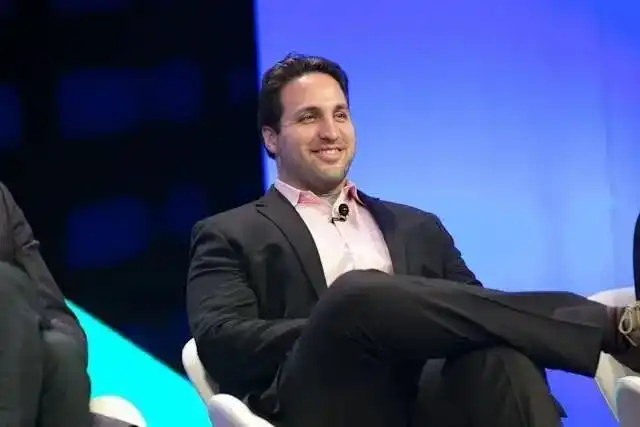
He wrote in a later-deleted tweet: "Crypto isn't as interesting as many people (including myself) once thought." Even Paradigm, once one of the purest crypto VCs, has begun expanding its investment scope to include AI and robotics.

Those crypto VC funds from 2020 to 2022 invested heavily during periods of high valuations and have yet to return capital to their LPs. LPs are not re-upping, funds cannot raise new capital, startups cannot secure financing, products fail to materialize, leading to closures or fire sales. This is a complete transmission chain currently playing out the final steps in the crypto primary market.

A partner at Dragonfly Capital used a term to describe the current environment: the great extinction.

Perhaps, This is a Good Signal

Bitcoin has fallen from its high of $126,000 last October to around $65,000 currently, a drop of nearly 48%. Altcoin bubbles are rapidly clearing. Starknet, once valued at $8 billion, saw its market cap drop to $200 million, a 95% decline. Scroll, Wormhole, Magic Eden have all fallen over 95%. Over 70% of tokens issued between 2021 and 2022 are either worthless today or have fallen below one-tenth of their peak value.

The Crypto Fear & Greed Index dropped to as low as 5 in February this year, 11 in March, and 13 in early June, remaining in the "Extreme Fear" zone for over 50 consecutive days.

Historically, this index has only fallen below 10 three times: December 2018, the March 2020 Covid crash, and November 2022 FTX collapse. Each time, Bitcoin subsequently surged over 500% within three years, with the most extreme being the 2018 case which saw a 2050% increase.

Another quieter signal comes from on-chain data: Bitcoin long-term holders currently control nearly 80% of the circulating supply. Although this proportion has been on a slow upward trend long-term, it has remained at elevated levels and continued to rise during the nearly 50% price correction from the $126,000 high, forming a clear divergence from price action. This means the remaining market mainly consists of long-term holders unwilling to sell.

Historically, when this proportion approaches or exceeds 75-80% accompanied by a deep price adjustment, it often corresponds to a bear market bottom area.

Looking at the primary market. The last time crypto VC deal count was this low was in 2020, just before DeFi Summer. The last time new fund formation was this low was also in 2020.

And Dragonfly Capital, which used the term "great extinction," raised a $650 million new crypto fund against the trend in February this year, exceeding its target by 30%. Its managing partner said: "Morale is low, fear is extreme, the gloom of the bear market has descended." But his action was to keep investing. The last time Dragonfly raised funds during peak market panic was in 2022; that fund invested in Polymarket and Ethena, becoming its best-performing fund historically.

Blockworks, which acquired Messari, just completed a funding round at a $192 million valuation on April 29, stating its purpose clearly: to consolidate the crypto data industry. It is not expanding its business but acquiring peers on the cheap.

Token prices halved, the fear index drops to single digits, long-term holder proportion nears extreme levels, VC deal count returns to five-year lows, infrastructure companies collectively shut down or sell for cheap. Viewed individually, each of these signals is pessimistic. But when they appear simultaneously, it has only happened three times in history, each followed by a new major cycle.

A fall from $300 million to $10 million looks like the end of an era. But every true bottom never looks like an opportunity.


Related Questions

QWhat were the main factors that led to Messari's decline and eventual acquisition for a fraction of its peak valuation?

AMessari's decline was driven by a combination of internal turmoil, a failed strategic pivot, and a structural threat to its core business. The company faced leadership instability, with its founder and his successor both resigning within two years. Its attempt to pivot to AI was undermined by the very technology it adopted, as AI tools drastically reduced the cost and value of the research reports Messari sold. This created a 'structural threat' to its primary revenue model. Ultimately, these factors led to its acquisition by competitor Blockworks for approximately $10 million, a sharp drop from its $300 million valuation in 2022.

QHow does the article describe the current state of the broader crypto infrastructure and media sector?

AThe article describes a sector undergoing a severe and widespread contraction. Data platforms like DappRadar and Parsec have shut down, while others like CoinGecko are seeking buyers. Media companies are being sold at deep discounts (e.g., CoinDesk) or conducting major layoffs (e.g., Bankless, Blockworks' own news division). Even data leader Dune has downsized. This signifies a 'quiet, deeper change' where companies not issuing tokens but selling services are also failing, indicating the downturn extends beyond market cycles to affect core industry infrastructure.

QWhat key indicators does the article cite to suggest the crypto market might be at or near a historical bottom?

AThe article cites several concurrent indicators reminiscent of past market bottoms: 1) Bitcoin's ~48% price drop from its recent high. 2) The Crypto Fear & Greed Index lingering in 'Extreme Fear' territory for over 50 days, a level historically followed by major rallies. 3) Bitcoin's Long-Term Holder supply approaching 80%, a level associated with bear market capitulation where weak hands have sold. 4) Crypto VC investment activity plummeting to levels last seen in 2020, just before the DeFi Summer bull run. The simultaneous occurrence of these signals has historically preceded new major cycles.

QAccording to the article, what impact has the rise of AI had on the crypto venture capital and startup landscape?

AThe rise of AI has significantly diverted capital, talent, and attention away from the crypto sector. In 2025, AI attracted over half of all global VC funding. This has made it difficult for crypto funds to raise new capital, with the number of new crypto VC funds hitting a multi-year low. Prominent crypto investors like Kyle Samani of Multicoin Capital are leaving the space for AI and robotics. A VC partner quoted in the article states that 'AI sucked away the oxygen,' capturing the focus of both Limited Partners (LPs) and entrepreneurs who might have otherwise built crypto companies.

QWhat contradictory actions by industry players does the article highlight as potential contrarian bullish signals?

AThe article highlights actions that contradict the prevailing pessimism, suggesting some players see opportunity. First, Dragonfly Capital raised a $650 million crypto fund *exceeding* its target during this period of low morale, just as it did successfully in 2022. Second, the acquirer of Messari, Blockworks, itself recently raised funding with the explicit goal of consolidating the struggling crypto data industry by buying distressed competitors at low prices. These moves indicate that certain experienced investors and firms are actively deploying capital to build or acquire assets when prices are depressed, a classic bottom-signaling behavior.

Related Reads

Dalio's Latest Warning: Don't Get Carried Away by AI, Real Returns on US Stocks in the Next 5-10 Years Could Be -5% to -10%

Ray Dalio, founder of Bridgewater Associates, warns investors against excessive concentration in AI stocks. He argues the current market, dominated by a few AI giants, mirrors historical patterns where revolutionary new technologies lead to high risk, volatility, and uncertainty. While acknowledging AI's transformative potential, Dalio emphasizes that most investors fail at this stage of the cycle by over-concentrating in a handful of leading companies. He cites inherent risks: companies cannot accurately forecast investment needs or external shocks (e.g., monetary policy, geopolitics, taxes), face potential disruption from future technologies and international competition (notably from China), and experience significant price swings. Dalio's core advice is diversification, calling it his "Holy Grail of Investing." He presents a mathematical case that a well-diversified portfolio of 15-20 uncorrelated, good bets offers a superior risk-adjusted return compared to a concentrated position. Dalio also offers a cautious outlook, suggesting U.S. stocks may deliver real returns of -5% to -10% over the next 5-10 years based on valuation and bubble indicators. He concludes that in the face of high uncertainty, the prudent strategy is not to avoid betting entirely, but to avoid large, concentrated bets where one lacks sufficient informational edge. Instead, investors should build a strategically balanced, diversified portfolio.

marsbit23m ago

Dalio's Latest Warning: Don't Get Carried Away by AI, Real Returns on US Stocks in the Next 5-10 Years Could Be -5% to -10%

marsbit23m ago

Rain Valuation Approaches $20 Billion: The Battle for U-Cards Extends to Rewards Systems

Rain, a stablecoin payments infrastructure company, is shifting the competitive focus for U Cards from simple issuance to user retention and repeated usage. On June 15, Rain launched "Rain Rewards," an embedded loyalty program capability within its card-issuing infrastructure. This allows partner businesses—like fintech platforms and neobanks—to configure branded loyalty points, earning rules, redemptions, and merchant promotions directly within their card products. The system, built from the 2025 acquisition of Uptop, ensures points are only issued upon final transaction settlement, preventing liabilities from refunds. Trials, such as with Avalanche Card, reportedly boosted spending by 25% among enrolled users. Founded by Farooq Malik and Charles Yoo-Naut, Rain evolved from a tool for managing Web3 company expenses into a full-stack enterprise platform. It is a Principal Member of Visa and Mastercard, enabling partners to issue stablecoin-backed cards and wallets while leveraging traditional payment networks. Notably, the popular U Card Plasma One is issued by Rain under Visa's authority. Rain also integrates with Visa's stablecoin settlement pilot, using USDC for network settlement. Rain's rapid funding reflects growing institutional interest in stablecoin payment infrastructure. It raised a $245 million Series A in March 2025, a $58 million Series B in August 2025, and a $250 million Series C in January of this year, reaching a $19.5 billion valuation. Annualized transaction volume exceeds $3 billion, serving over 200 partners including Western Union and Nuvei. Beyond cards, Rain is expanding into programmable payments. Its June 2026 "Agent Control Layer" allows businesses to set spending rules—like merchant categories, amounts, and frequency—for AI agents before transactions occur. This positions Rain not as a single product but as an operating system for stablecoin payments, handling everything from card issuance and wallet management to rewards, on/off-ramps, and automated compliance. The goal is to enable seamless, often invisible, real-world spending of on-chain assets.

Foresight News26m ago

Rain Valuation Approaches $20 Billion: The Battle for U-Cards Extends to Rewards Systems

Foresight News26m ago

Google TPU Shipments Revised Up by 50%

Recent industry research indicates a significant upward revision in the shipments of Google's TPU (Tensor Processing Unit) chips. Previous expectations for 2027 were set at around 10 million units, but new estimates now point to 15 million units, a 50% increase. This substantial boost directly translates to higher demand across the entire supporting supply chain. Google's TPU clusters utilize a standardized all-optical interconnect architecture. Consequently, key hardware components are deeply integrated and scaled in fixed ratios with the chips. The 15 million TPU target will drive corresponding demand increases for NPO optical engines (roughly a 1:1 match), 1.6T optical modules, OCS optical switches, high-end server power supplies, fiber optics & MPO connectors, and liquid cooling solutions. Among these, liquid cooling is highlighted as the sector experiencing the most significant transformation and offering the most stable potential for excess returns. As next-generation TPU chips reach power levels where traditional air cooling is insufficient, liquid cooling becomes essential. 2026 is forecasted as the first year of substantial adoption for Google's liquid cooling solutions. This shift, coupled with delivery and capacity bottlenecks faced by incumbent overseas manufacturers, is creating a prime window for domestic Chinese suppliers to enter and secure Google's core supply chain. The market size for Google-specific liquid cooling is projected to potentially triple from a baseline of hundreds of billions to around 300 billion units by 2028. The logic for the fiber optic sector is also being rewritten. Once considered a cyclical commodity tied to telecom operator procurement, fiber is now a strategic and scarce resource for AI Data Centers (AIDC). A severe supply-demand imbalance, driven by the long lead time for preform production (18-24 months) and surging demand from cloud giants, is supporting strong performance. Chinese fiber manufacturers are well-positioned to capture a significant share of global AIDC demand, with exports potentially reaching 200-300 million core kilometers in 2026. Overall, the investment focus within the AI computing industry is shifting from pure "chip performance speculation" towards the more certain incremental growth in computing infrastructure and its supporting ecosystem. The upward revision in Google TPU shipments, along with the potential for further doubling by 2028, is seen as solidifying performance visibility for the entire supporting supply chain over the next two years.

marsbit2h ago

Google TPU Shipments Revised Up by 50%

marsbit2h ago

What Wall Street Really Wants After the Crypto Story Recedes

The tide of speculative crypto narratives has receded, revealing Wall Street's true objective: building a controlled, yield-generating, and compliant financial pipeline on distributed ledgers. They are migrating core functions onto blockchains, not for decentralization, but for efficiency and new revenue streams. Key developments include BlackRock's BUIDL fund, a tokenized treasury fund acting as a foundational reserve asset, and the rise of Securitize, which is going public and partnering with the NYSE to build a 24/7 digital securities trading and settlement system. This signals a major shift of securities clearing to blockchain technology. To make volatile assets like Bitcoin palatable for institutional investors, firms like BlackRock and Goldman Sachs are creating "covered call" ETFs (e.g., BITA). These products systematically sell options on Bitcoin holdings, transforming price volatility into stable monthly income, effectively repackaging crypto as a yield-bearing asset. Stablecoins are being positioned not as speculative tools but as efficient payment rails. Companies like Stripe and Mastercard are integrating them for instant, low-cost merchant settlements and cross-border card payments, respectively. Critically, new legislation like the GENIUS Act shapes them as non-interest-bearing, heavily regulated extensions of the US dollar system. In summary, Wall Street is quietly constructing a parallel, blockchain-based financial infrastructure featuring tokenized traditional assets, structured crypto yields, and programmable dollar pipelines—all under its control and fully integrated with existing regulatory and credit frameworks.

marsbit2h ago

What Wall Street Really Wants After the Crypto Story Recedes

marsbit2h ago

Tying Itself to SpaceX: Cursor's $60 Billion Rise

This article recounts the rapid rise of AI-powered coding startup Cursor and its 25-year-old MIT graduate CEO, Michael Truell. Launched in 2023, Cursor achieved explosive growth, reaching over 10 billion USD in revenue by late 2025. However, its journey highlights a central dilemma for AI application companies: dependence on foundational model providers. Cursor initially relied heavily on Anthropic's models but faced an existential threat when Anthropic launched its own competing coding tool, Claude Code. In response, Cursor declared an internal emergency in early 2026 and accelerated development of its own model, Composer. To secure the immense computing power needed, Truell struck a pivotal deal with Elon Musk's SpaceX in April 2026. The collaboration grants Cursor access to SpaceX's supercomputing resources for Composer, while SpaceX's Grok model benefits from Cursor's programming data. The agreement includes a potential 600 billion USD acquisition of Cursor by SpaceX later in the year, though a substantial termination fee is in place if the deal falls through. The story explores Cursor's intense, sometimes controversial hiring practices involving lengthy unpaid "work trials," its complex partnership-turned-rivalry with Anthropic, and its high-stakes gamble to ensure independence through the SpaceX alliance. The core question remains: will Cursor evolve into a defining, independent "generational" software company, or become a key piece in a tech giant's AI arsenal?

marsbit2h ago

Tying Itself to SpaceX: Cursor's $60 Billion Rise

marsbit2h ago

Trading

Spot
Futures
活动图片




