Original Title: "Don Colossus" a Golden Statue of President Trump, Waits for Its Home
Original Author: David Yaffe-Bellany, The New York Times
Original Compilation: Luffy, Foresight News
Original Title: Gilded Idols and Zeroed Memes: The Absurd Crypto Drama Behind Trump's Giant Statue
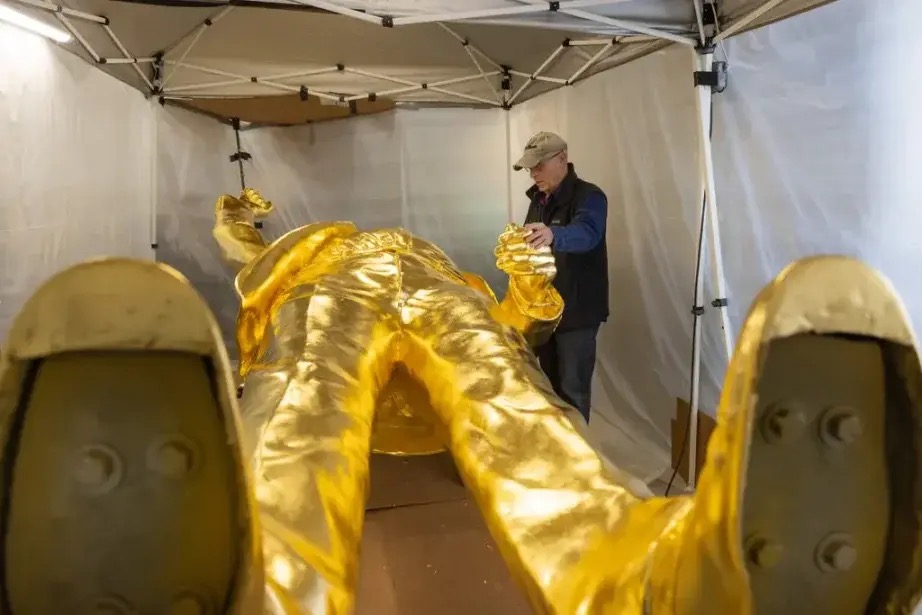
This statue of President Trump is called "Don Colossus." It stands 15 feet tall, mounted on a base weighing 7,000 pounds, making its total height comparable to a two-story building. The colossal statue is cast in bronze and coated with a thick layer of gold leaf. (Note: Don Colossus translates directly to "Giant Don," referring to Trump as a giant.)
For over a year, this gilded statue has been at the heart of one of the strangest money-making schemes of the Trump era. A group of cryptocurrency investors spent $300,000 to commission a sculptor to create this statue as a tribute to Trump, who has been outspoken in his support for cryptocurrency.
Subsequently, they used the statue to promote a Meme coin named PATRIOT.
Now, unexpectedly, this plan seems to be coming to fruition. Last month, a base made of concrete and stainless steel was completed at Trump's Doral golf resort complex in Florida. According to message records reviewed by The New York Times, Mark Burns, one of the project's organizers and a friend of Trump, told collaborators that the President plans to attend the statue's unveiling ceremony there.
"The statue looks great," Trump wrote in a letter to Burns last December.
Almost everyone in the cryptocurrency space has tried to profit from Trump's presidency: either by striking business deals with his family or seeking regulatory leniency from his administration. But few have been as bold as the backers of PATRIOT.
Meme coins are a type of cryptocurrency with almost no practical function beyond speculation, typically built around viral internet jokes or celebrity images. Their value depends entirely on the price that online fans are willing to pay. The key to creating a Meme coin is generating enough online buzz to make potential buyers believe its price will continue to rise.
Building a giant statue is an expensive way to create social media hype, but it's also a potentially profitable plan. According to one of the project's organizers, the investors who funded the statue received large quantities of the token, the price of which sometimes skyrocketed. For months, the supporters of "Don Colossus" posted progress pictures of the statue's creation on platform X and forged alliances within the "Make America Great Again" camp, aiming for a marketing coup: placing the statue on Trump's official property.
In late 2024, the PATRIOT Meme coin was officially launched, coinciding with Trump's promise to make the U.S. the "cryptocurrency capital of the world." The token's price surged initially. During an event in Washington on the presidential inauguration weekend, the token's supporters presented a miniature bronze statue to Trump's former advisor Steve Bannon and interacted with other conservative figures.
However, repeated project delays and internal disputes cast a shadow over this money-making scheme and offered a glimpse into the volatility of the Meme coin market: a market rife with scams where investors often end up losing everything. Last year, PATRIOT's price plummeted, nearly reaching zero. To rush the statue's completion to boost the token, the investors also clashed with the sculptor Alan Cottrill, based in Ohio.
In text messages reviewed by The New York Times, Cottrill stated that the investors still owed him $75,000 for the statue's intellectual property rights.
"You are using my copyrighted statue image to market your token!" he wrote in a message to one of the token supporters last month.
"Yeah, lol, we planned to do that from day one," replied Ashley Sansalone. Sansalone is a cryptocurrency developer involved in another token project called Elon GOAT, besides PATRIOT.
Sansalone said in a statement that Cottrill would be paid in full before the statue's unveiling. "In any business agreement, a portion of the payment is withheld until the final product is delivered," he said.
But it remains unclear when the statue will actually be displayed.
On Monday, after The New York Times inquired with the White House and the Trump Organization about the PATRIOT token, the President's son Eric Trump issued a statement on platform X.
"We appreciate everyone's support and enthusiasm," he said, "but it must be clear that we are not involved in any matters related to this token."
Creating "Don Colossus"
The plan to create "Don Colossus" was born in a group chat on the instant messaging app Telegram, a platform where cryptocurrency enthusiasts often exchange investment tips and promote tokens. It was July 2024, just after Trump had narrowly survived an assassination attempt in Butler, Pennsylvania, where he raised his fist with a determined expression.
Sansalone wanted to make this defiant image the core of a Meme coin. He collaborated with right-wing activist Dustin Stockton, and the well-connected cryptocurrency investor Brock Pierce also joined, though Pierce has long been embroiled in various legal and financial disputes.
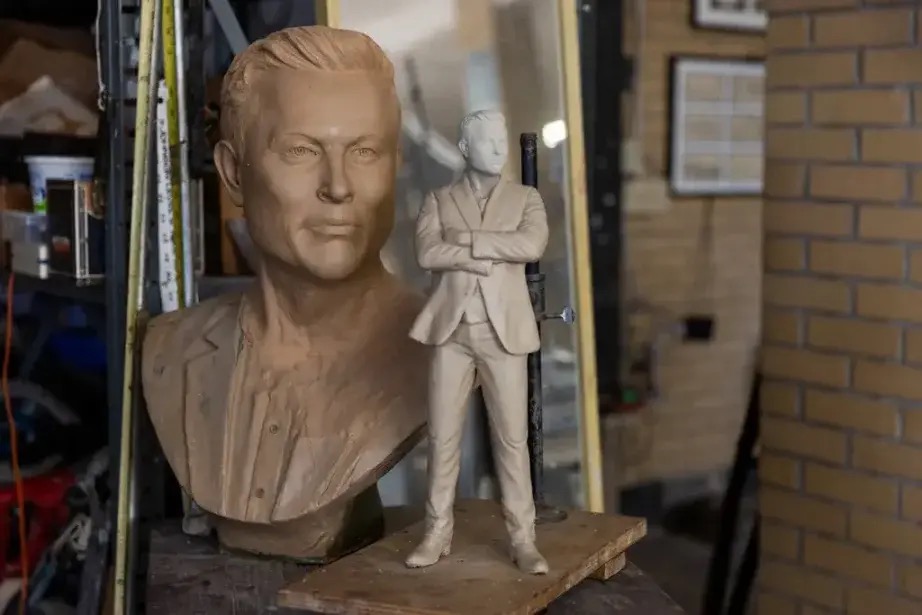
Shortly after the bullet grazed Trump's ear, Sansalone contacted the 73-year-old Cottrill, whose bronze statue of Edison is now displayed in the U.S. Capitol. Over the years, Cottrill has created statues of more than a dozen U.S. presidents, including 10-foot-tall memorial statues of George Washington and Thomas Jefferson.
Cottrill standing in a room filled with sculptures
This group of cryptocurrency investors wanted Trump's statue to be taller than his previous works and also requested some aesthetic modifications.
"My initial sculpture was very realistic," Cottrill said in an interview last month. "Those crypto guys asked me to trim some of the fat from his neck and slim down his figure a bit."
By the time of Trump's inauguration, Cottrill had completed the statue. The giant bronze figure, not yet gilded at the time, was the tallest of all his works. Last December, Trump reposted a Breitbart News article about the project on social media, which stated that Stockton was communicating with the presidential inaugural committee to plan an unveiling ceremony for the statue during the inauguration weekend.
The timing of this repost was perfect: the PATRIOT token had just gone on sale.
The official website read: "The people's crypto token, a statue that no one can erase."
But then, the project suffered two major setbacks. Freezing weather in Washington caused a series of logistical problems, forcing the statue unveiling plan to be shelved; and shortly before the inauguration, Trump launched his own Meme coin, TRUMP.
As cryptocurrency traders scrambled to buy the official token, Stockton and Pierce held a "Patriot Awards" event at the National Press Club in Washington, handing out miniature statue models.
"The atmosphere suddenly cooled because Trump's token price suddenly skyrocketed," Cottrill said.
By the end of January, PATRIOT's price had plummeted by over 90%.
"A Prime Location"
Despite this setback, the cryptocurrency investors continued their marketing push. In February last year, the infamous former congressman George Santos displayed a miniature Trump statue on Fox News, specifically mentioning the PATRIOT token.
A small gilded statue of Trump with a raised fist, surrounded by several darker versions of the same statue
Stockton reposted the video on platform X, proclaiming: "This kind of exposure is priceless!" In a brief phone interview, Santos said: "I was paid to advertise it, and I'm always upfront about that."
The investors were also courting another influential ally: Burns. The prominent pastor is a confidant of Trump and is sometimes referred to as the President's informal "spiritual advisor."
After Pierce introduced him to the project team, Burns began participating in the statue-related work. He quickly became a key figure in reviving the project, suggesting that the bronze statue be gilded with gold leaf.
"The President just asked me for photos of the statue after it's gilded," Burns wrote in a message to collaborators last November.
Trump's wish eventually came true. Sansalone told the team he had consulted a gold leaf supplier in New York that had previously provided decorations for Trump Tower. Cottrill also shared the latest finished photos of the statue.
"So shiny, so beautiful," Sansalone replied.
"Wow...... sending this to the President now," Burns wrote.
Clearly, Trump was impressed by the statue. Last month, Cottrill traveled to Florida to install the 7,000-pound base at Trump's Doral golf resort complex. Stockton boasted on social media that it was a "prime location." Burns said in a text message to collaborators in January that White House schedulers were currently "actively finalizing" a date for the President to attend the official unveiling ceremony of the statue.
Trump National Doral Golf Course in Florida
This should have been Cottrill's moment of glory, but he says he has had enough of the cryptocurrency investors behind it.
Cottrill stated that it wasn't until the fall of 2022024 that he discovered these cryptocurrency investors were using images of his work to market a digital currency, which he believes infringes on his intellectual property.
Eventually, he reached an agreement with the investors: they would pay a $150,000 copyright fee for the statue. But he claims he has not received the remaining payment, and with other outstanding fees, they still owe him approximately $90,000 in total.
Cryptocurrency investors demanded that Trump's statue be sufficiently tall and requested some appearance modifications
"In my view, they never actually purchased this intellectual property and are now using it illegally," he said. "Unless all debts are settled, this statue will never leave my foundry."
But the project's organizers argue that this project hasn't actually made much money.
Burns said he never requested or received any payment. Stockton, in an interview, stated that the PATRIOT token was merely a fundraising tool intended to "provide financial support for various matters related to the statue."
"I haven't seen anyone make big money from this," Stockton said.
Kimberly Benza, a spokesperson for the Trump Organization, said the company was unaware of the existence of this Meme coin until The New York Times inquired about it this week. She did not respond to questions about whether the statue unveiling ceremony would proceed as planned.
This farce has not stopped the project's promotion on social media. An X account associated with the token recently posted photos of the statue base in Doral and pinned a message detailing how to purchase the Meme coin.
"The dream is still alive," Sansalone said during a live stream with Burns on January 16th.
In addition to the giant statue, the team also hopes to present Trump with a gilded miniature version of the same statue. "We hope to have a piece displayed in the Oval Office," Sansalone said.