Ethereum traders, watch THIS closely after $26M whale shift because…

ambcryptoPublished on 2026-07-03Last updated on 2026-07-03

Abstract

Ethereum has been trading narrowly around $1,600 after dropping to $1,510. Currently at $1,622, its muted price action has led to mixed investor sentiment. A notable whale, Satofashi, moved 16,842 ETH (worth $26.87 million) to an exchange. This whale had accumulated 91,945 ETH at an average price of $1,749 during a period when ETH traded around $2,100. While the transfer could indicate repositioning rather than a full sale, it coincided with a broader trend of positive exchange netflows, meaning more ETH is entering exchanges. Despite this potential selling pressure, ETH's price showed resilience. Technical indicators like the MACD formed a bullish crossover, and the BvB indicator turned positive, suggesting bearish momentum is easing. This points to a potential recovery toward $1,777. However, the situation remains at a crossroads. Sustained exchange inflows from large holders could renew selling pressure, risking a retest of the $1,500 support level.

Since falling to $1,510, Ethereum has traded within a narrow range. Over the past week, the altcoin has hovered around $1,600.

At the time of writing, Ethereum [ETH] traded at $1,622, up 2.8% over the past 24 hours. The muted price action prompted some investors to reduce exposure, while others waited for a clearer trend.

Why did an Ethereum whale move $26 million?

Ethereum has barely moved over the past week, leaving whales that accumulated in May and June sitting on unrealized losses.

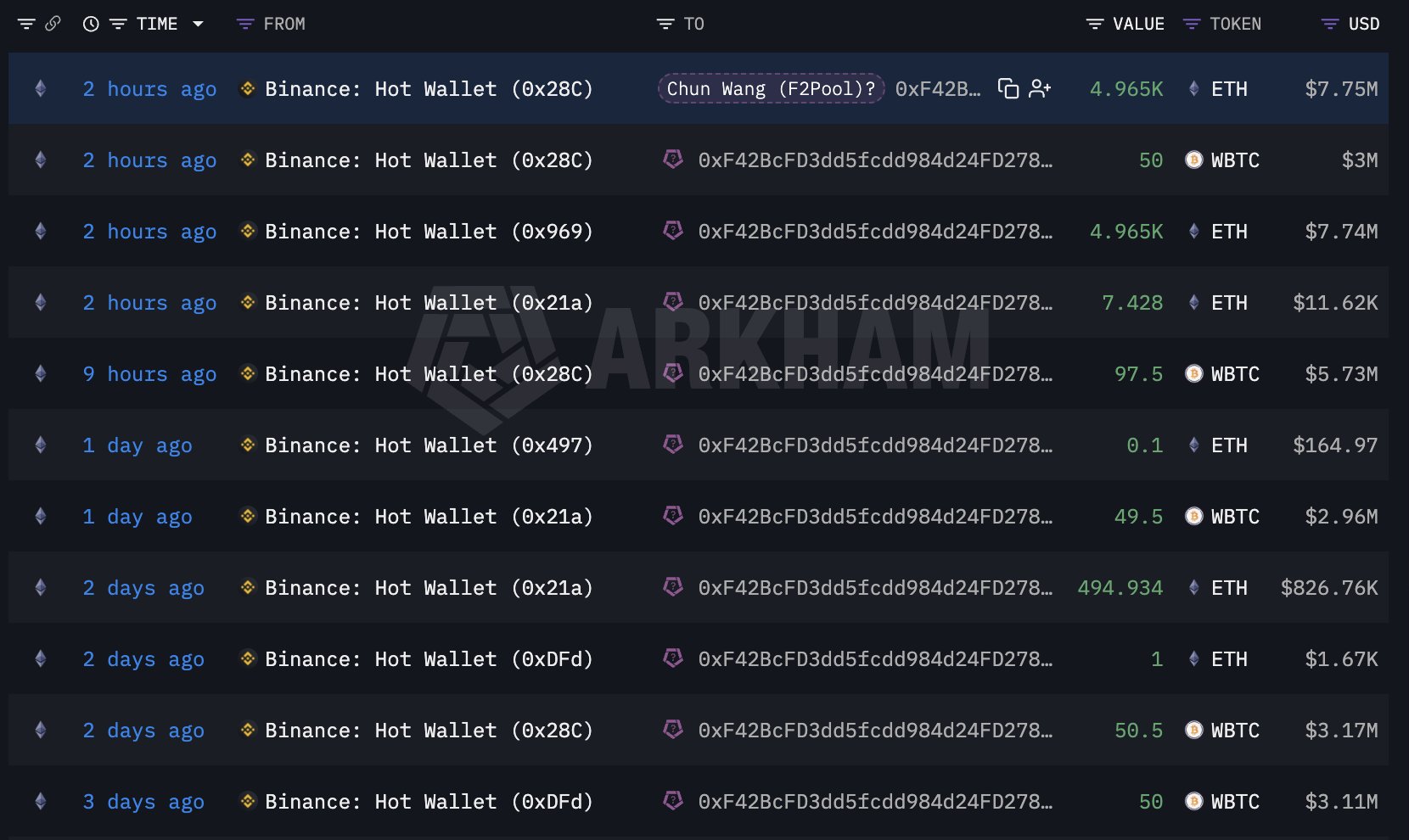
As market weakness persisted, some investors became more cautious. One example was Satofashi [Chun Wang], who accumulated 91,945 ETH worth $159.9 million during late May and June.

Source: Arkham

When Satofashi accumulated ETH, the asset traded around $2,100, with an average purchase price of $1,749.

According to Lookonchain, the whale later deposited 16,842 ETH worth $26.87 million.

A transfer to an exchange does not necessarily indicate an imminent sale. The funds could also be used for collateral or capital rotation.

If the holdings were sold, the whale would realize a loss of about $2.66 million. However, most of the wallet’s ETH remained untouched, suggesting repositioning rather than a full exit.

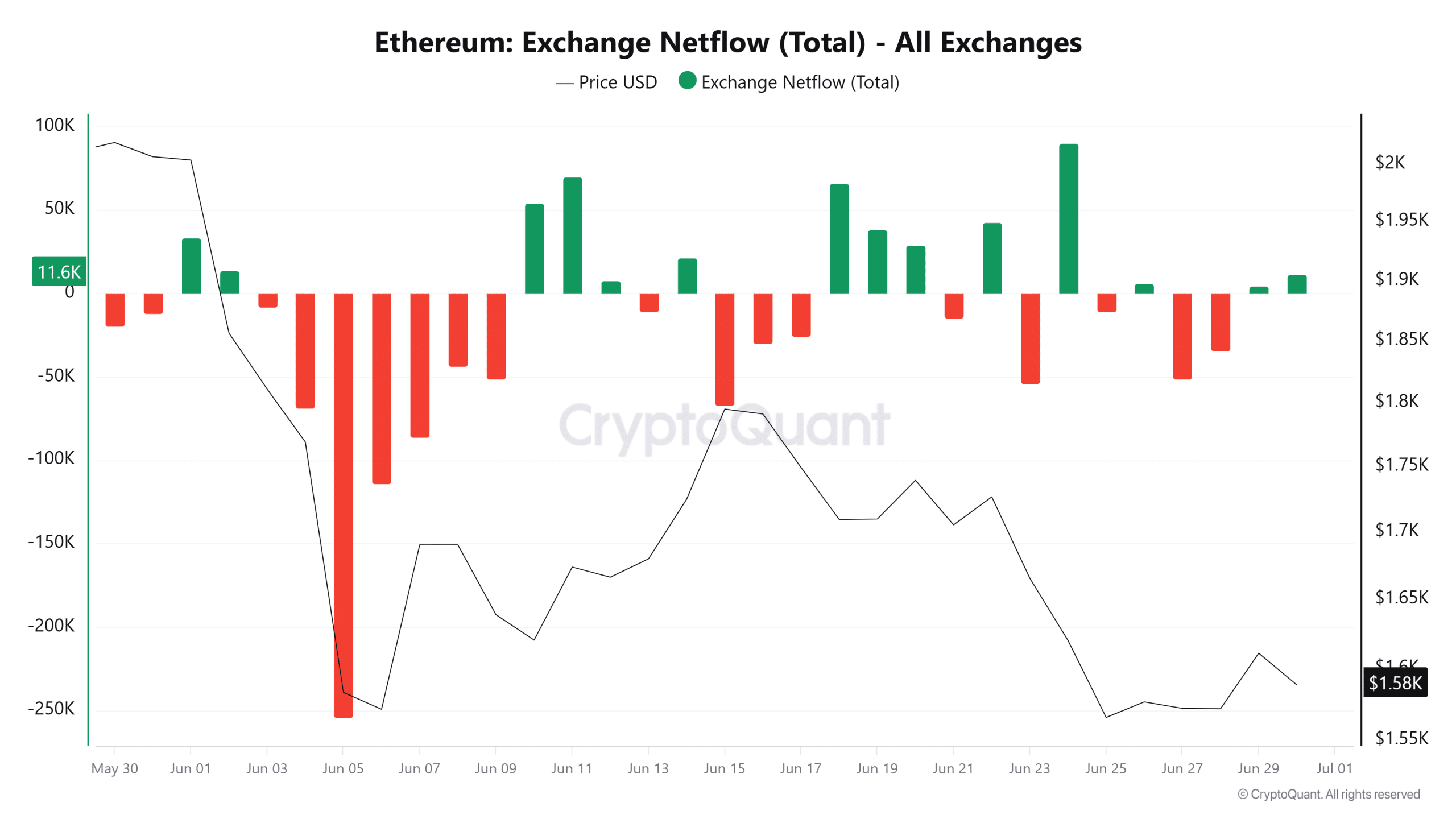
Source: CryptoQuant

That move coincided with broader exchange inflows.

According to CryptoQuant, Exchange Netflow remained positive over the past two days. At press time, Exchange Netflow stood at 14,000, indicating more ETH moved onto exchanges than left them.

Is ETH finding stability, though?

Despite persistent market weakness, Ethereum continued holding around the $1,600 level. Notably, the reported whale transfer had little immediate impact on price.

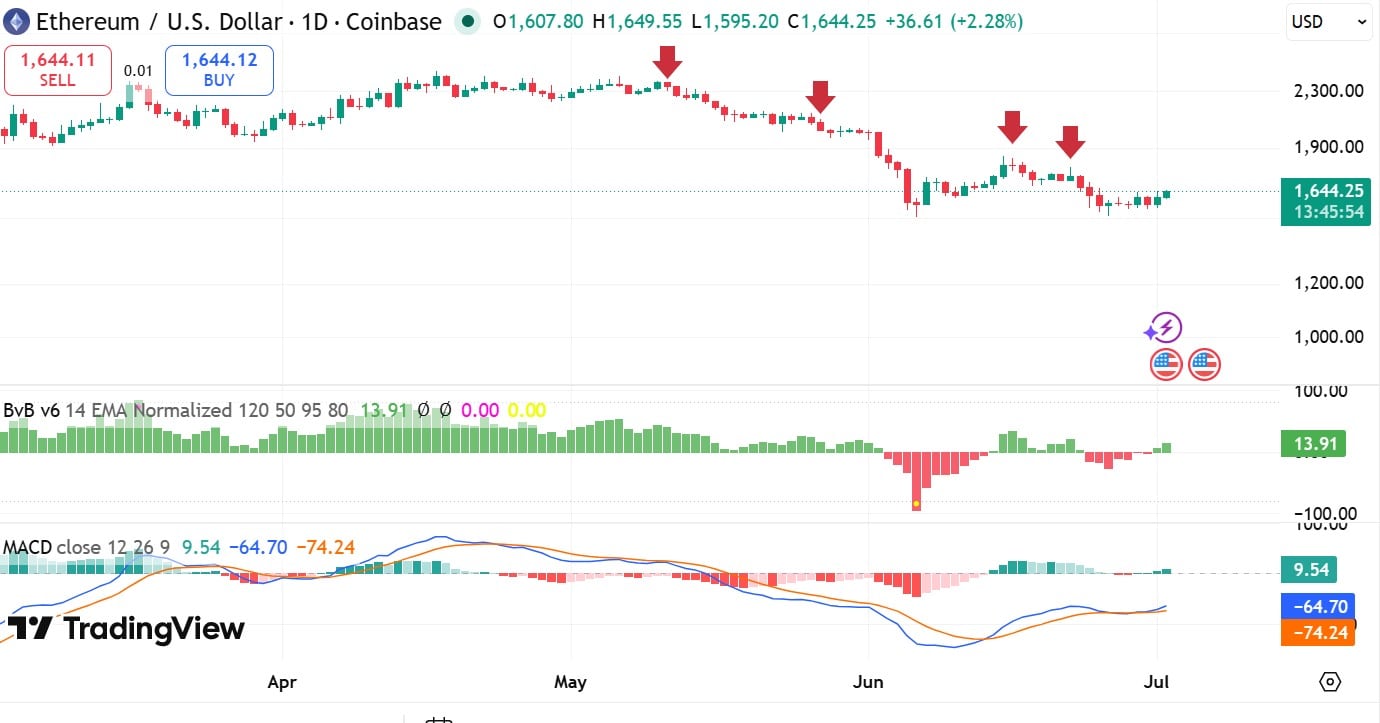
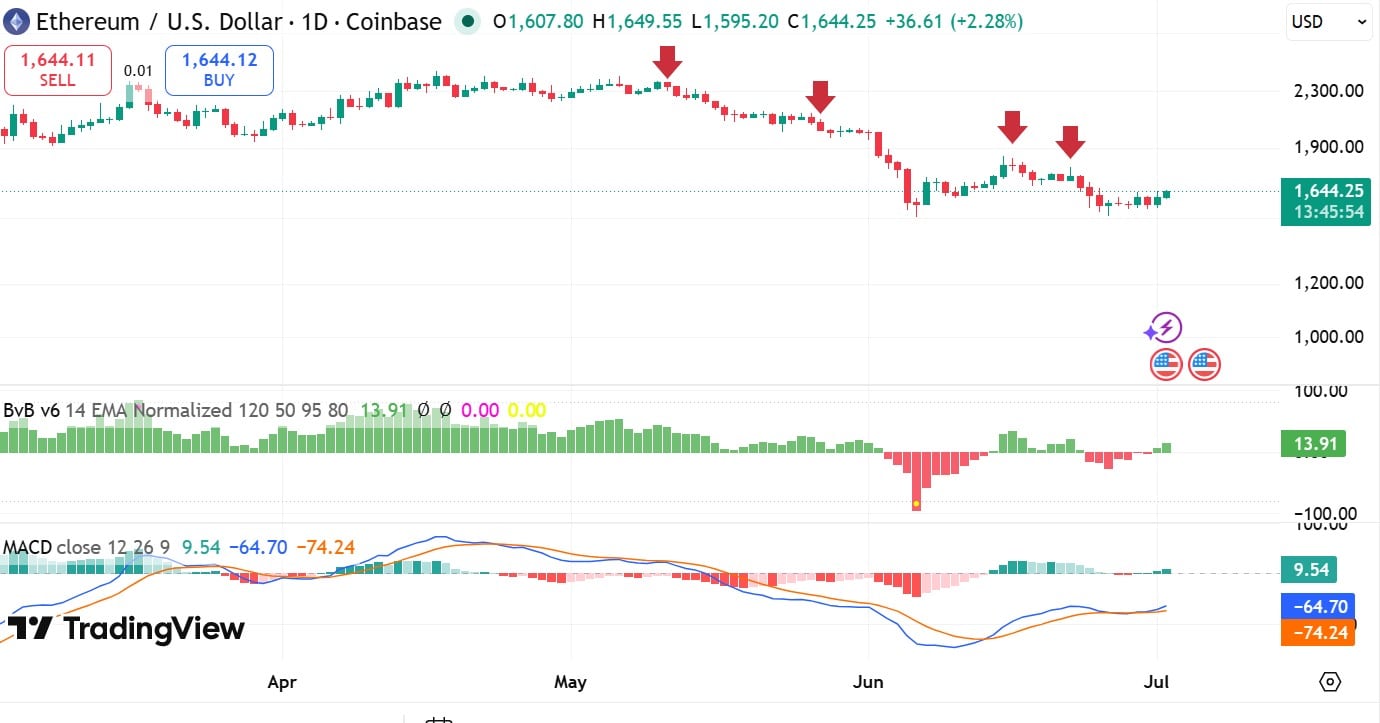
Meanwhile, the MACD remained below zero but formed a bullish crossover, rising to -64.

Source: TradingView

The improving MACD suggested bearish momentum continued easing. The BvB indicator also turned positive for two consecutive days after remaining negative for seven straight sessions.

Together, those indicators pointed to gradually improving momentum rather than a confirmed bullish reversal.

If that trend continues, Ethereum could extend its recovery toward $1,777.

Even so, sustained exchange inflows, particularly from large holders, could increase selling pressure and expose the $1,500 support again.


Final Summary

  • A $26.87 million whale transfer failed to trigger immediate weakness in Ethereum’s price.
  • Improving momentum indicators contrasted with rising exchange inflows, leaving ETH at a key decision point.

Trending Cryptos

Related Questions

QAccording to the article, what is the current trading price of Ethereum (ETH) and how has it changed over the past 24 hours?

AAt the time of writing, Ethereum (ETH) traded at $1,622, up 2.8% over the past 24 hours.

QWhich Ethereum whale moved a significant amount of ETH, and what are the speculated reasons for this transfer?

AThe whale known as Satofashi (Chun Wang) moved 16,842 ETH worth $26.87 million to an exchange. The article suggests this could be for collateral, capital rotation, or repositioning, rather than necessarily an imminent sale.

QWhat does a positive Exchange Netflow value, as mentioned in the article, typically indicate for Ethereum?

AA positive Exchange Netflow indicates that more ETH is being moved onto exchanges than is being withdrawn from them, which can signal potential selling pressure.

QWhat do the MACD and BvB indicators suggest about Ethereum's price momentum according to the analysis?

AThe MACD formed a bullish crossover (though remaining below zero) and the BvB indicator turned positive for two consecutive days. Together, these suggest bearish momentum is easing and there is gradually improving momentum, but not yet a confirmed bullish reversal.

QBased on the article's technical analysis, what are the potential next price targets for Ethereum if the current trend continues?

AIf the trend of improving momentum continues, Ethereum could extend its recovery toward $1,777. However, sustained exchange inflows could increase selling pressure and expose the $1,500 support level again.

Related Reads

Building USDC by Its Own Hands, Why Does Coinbase Turn to Support Competitor OUSD?

Coinbase, a key distributor of the dominant stablecoin USDC, has joined over 140 major companies—including Visa, Mastercard, and BlackRock—as a founding member of the Open USD (OUSD) alliance, a move that directly challenges the current stablecoin economic model. The new project aims to upend the established profit structure by offering zero minting and redemption fees and allocating the majority of reserve interest earnings to distribution partners, rather than the issuer. This shift highlights a growing power struggle in the $320+ billion stablecoin market, where platforms with massive user bases are demanding a larger share of the revenue generated from the underlying reserves. Circle, the issuer of USDC, saw its stock plummet 16% on the day of the OUSD announcement, reflecting investor concern over the potential strain on its crucial partnership with Coinbase. While Coinbase earned over $900 million from its USDC partnership in 2024, its support for a competing model gives it significant leverage as its revenue-sharing agreement with Circle nears expiration in August 2026. Circle CEO Jeremy Allaire defended the USDC model, emphasizing its decade-long development, deep liquidity, and extensive ecosystem integration, which he argues cannot be easily replicated by a large, potentially slow-moving consortium. He also questioned the sustainability of a zero-fee model and warned that diverting all reserve interest would leave issuers without funds for critical compliance and operational infrastructure. Analysts remain skeptical of OUSD's prospects, citing the "cold start" problem of building liquidity, potential governance challenges within a large alliance, and heightened regulatory scrutiny. The emergence of OUSD signals a broader industry bifurcation, where stablecoins are increasingly viewed as backend settlement tools. The core competition is shifting from technology to a direct negotiation over how profits from the network are distributed between issuers and the powerful distribution channels.

Foresight News57m ago

Building USDC by Its Own Hands, Why Does Coinbase Turn to Support Competitor OUSD?

Foresight News57m ago

Trading

Spot

Hot Articles

Discussions

Welcome to the HTX Community. Here, you can stay informed about the latest platform developments and gain access to professional market insights. Users' opinions on the price of ETH (ETH) are presented below.

活动图片