Elderly Borrow Money to Trade Stocks, Entire Nation Adds Leverage: 'Ant Army' Panics as South Korean Stock Market Plunges

marsbitPublished on 2026-06-08Last updated on 2026-06-08

Abstract

Titled "Panic Among 'Ant Army' as South Korean Stocks Plunge After Elders Borrow to Invest, Everyone Leverages Up," this article details a dramatic reversal in South Korea's red-hot stock market. After a sustained rally toward 9,000 points driven by AI semiconductor hype, the KOSPI index recently crashed, triggering circuit breakers. The sell-off was led by major chipmakers Samsung Electronics and SK Hynix, whose combined weight in the index is over 50%. The plunge exposed the extreme leverage and speculative behavior that fueled the boom. Individual investors, dubbed the "ant army," had borrowed heavily or used leverage ETFs to chase gains, with trading accounts outnumbering the population. A significant portion of this leveraged money came from older citizens, some of whom reportedly cashed out insurance policies to invest. ETF trading became dominated (over 90%) by high-risk leveraged and inverse products. The correction was triggered by a pullback in U.S. tech stocks, leading to a foreign capital exodus and a weakening Korean won, creating a vicious cycle. While President Lee Jae-myung attempted to reassure markets and NVIDIA's CEO signaled support during a visit, officials like Finance Minister Ju Yeong-geun expressed concern over the dangerous "herd mentality." The article highlights a pervasive, high-risk investment culture where everyone from office workers to retirees and even parents opening accounts for newborns sought quick profits, largely concentrated in a fe...

Author:Nancy,PANews

The South Korean stock market, which had been on a continuous upward trajectory and was approaching the 9,000-point mark, recently took a sharp turn downward. The successive corrections have left the heavily leveraged and debt-fueled "Ant Army" treading on thin ice.

Following a "Black Friday" last week, the South Korean stock market experienced another severe plunge this week. The KOSPI index opened with a steep dive, triggering a circuit breaker, and the two major market bellwethers, Samsung Electronics and SK Hynix, both hit their daily down limits. As the selling wave swept the market, panic quickly spread, prompting even Lee Jae-myung and Jensen Huang to step in for "emergency market rescue."

From Nationwide Euphoria to Collective Stampede, the 'Ant Army' Panics Collectively

On June 8, the South Korean stock market continued the sharp decline from last Friday.
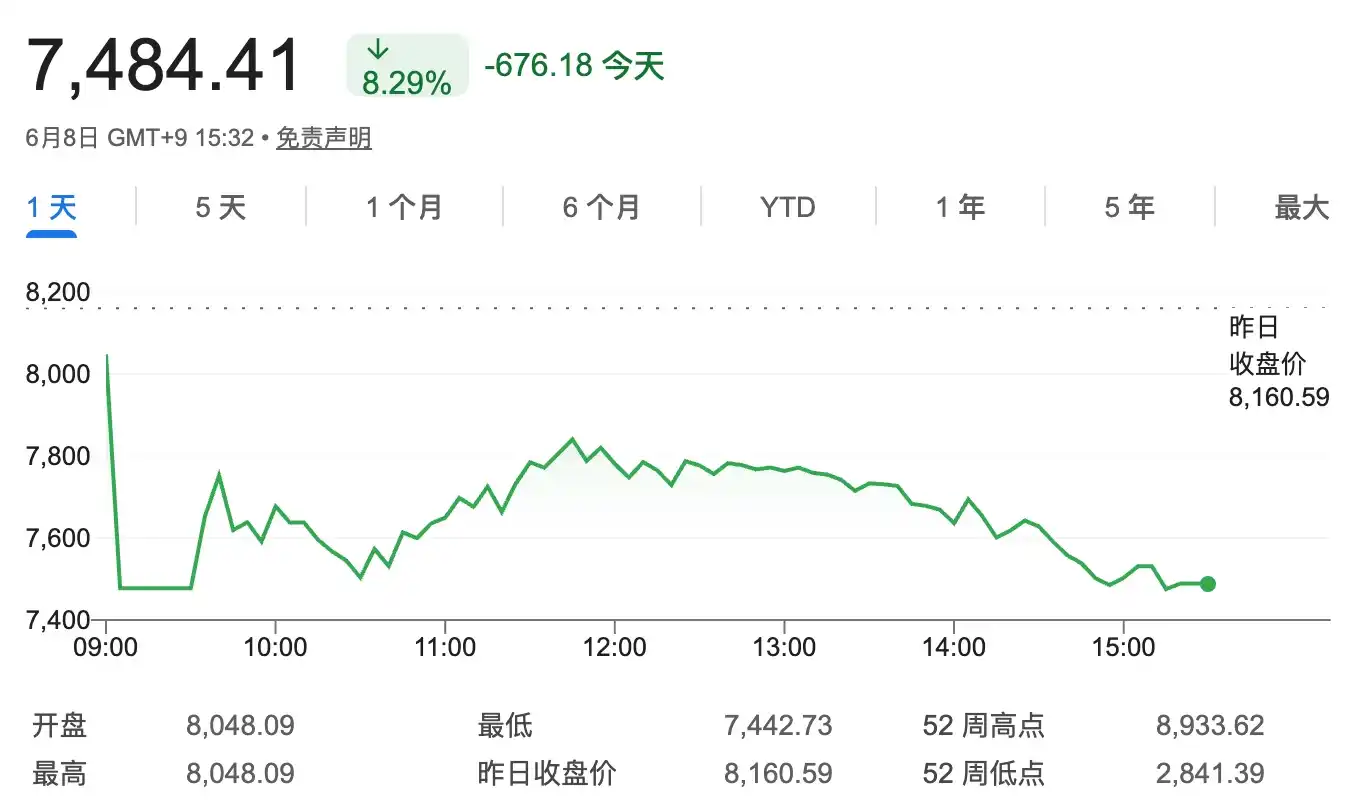
Shortly after the opening, the KOSPI index fell by over 8%, triggering the circuit breaker mechanism. The Korea Exchange (KRX) urgently suspended trading for 20 minutes. Facing the severe market volatility, the KRX held an emergency meeting that morning to assess market risks and study countermeasures to stabilize market operations.

Yet, just a week earlier, the South Korean stock market was one of the hottest in the world. Driven by the AI semiconductor boom, the KOSPI index had been repeatedly刷新历史 highs and was once challenging the 9,000-point mark. Massive funds flooded into the tech sector, with South Korea's "Ant Army" adding leverage and borrowing money to enter the market, hoping to ride this AI wealth train.

However, within just a few days, the market sentiment shifted drastically. The "Ant Army" that entered at high levels collectively panicked, openly stating they were afraid to open their accounts. In South Korea, retail investors are commonly called "ants," similar to American retail investors calling themselves "apes." Although individual power is limited, their sheer numbers allow them to "swarm" the market like an ant colony, influencing stock price movements. This group is mainly divided into two categories: "Donghak Ants" who buy domestic stocks and "Seohak Ants" who swarm into overseas markets like the US stock market.

The trigger for this round of暴跌 came from a collective correction in US tech stocks. As the South Korean stock market heavily relies on the semiconductor industry, the two chip giants Samsung Electronics and SK Hynix have almost become the core force supporting the entire bull market. In the KOSPI index, the combined weight of these two companies is as high as 54%, and their average daily trading volume accounted for about half of the index's total turnover in May. Nearly three-quarters of the KOSPI index's gains this year came from these two companies. On the day the KOSPI hit its all-time high last Tuesday, only 2.6% of the index's components reached new 52-week highs, while 31% of stocks fell to 52-week lows.

To some extent, the South Korean stock market experienced a bull run dominated by Samsung Electronics and SK Hynix, with SK Hynix employee uniforms even becoming "shedding singles battle robes." Therefore, when the correction in US tech stocks triggered a revaluation of the AI industry chain's valuation, Samsung Electronics and SK Hynix quickly became targets of selling, with their single-day跌幅 both approaching 10%, directly dragging down the entire South Korean stock market into a significant decline.

Simultaneously, foreign capital withdrawal and the depreciation of the Korean Won further intensified market pressure. The stronger-than-expected latest US non-farm payrolls data reinforced market expectations for interest rate hikes and boosted the short-term strength of the US dollar, leading international funds to begin withdrawing from emerging markets like South Korea. In just last week, foreign investors net sold over $10 billion worth of Korean stocks. The massive capital exodus not only hit the stock market but also impacted the foreign exchange market. The Korean Won rapidly weakened against the US dollar, falling to its lowest level since the 2009 global financial crisis. The asset depreciation risk brought by the currency depreciation further prompted overseas funds to leave, creating a dual attack on both stocks and the currency.

More importantly, after a prolonged period of rapid gains, the South Korean stock market itself had accumulated a large number of profit-taking positions. Coupled with the concentrated bets on the AI and semiconductor sectors by a large amount of margin financing and leveraged ETFs, when leading stocks fell, margin pressure and passive selling jointly triggered a stampede effect, further amplifying market volatility.

Facing the剧烈 market震荡, South Korean President Lee Jae-myung urgently stepped forward to voice support, emphasizing that the South Korean stock market is still undervalued, and stated that South Korea will advance the integration of AI across all industries and prepare large-scale investment projects related to the chip industry.

Adding a dramatic touch, the sharp correction in the South Korean stock market coincided with NVIDIA CEO Jensen Huang's visit to South Korea. During his visit, he announced a collaboration between NVIDIA and SK Hynix and revealed plans to meet with Samsung's leader. This move was specifically seen as a vote of confidence in South Korea's semiconductor industry.

Leveraged Stock Trading, 'Herd Effect' Raises Regulatory Concerns

Just as the cryptocurrency trading frenzy once swept South Korea, South Koreans are now bringing the same疯狂 to the stock market.

Public data shows that active stock trading accounts in South Korea have exceeded 102 million, while the total population is approximately 51.6 million. This means the average person has nearly two stock accounts. The investment enthusiasm has even appeared among minors. In Q1 this year, the number of new accounts opened by minors surged nearly 10 times year-over-year. Many parents open accounts for their children immediately after birth, buying ETFs as their life's first investment.

This investment狂热 has permeated the daily lives of South Koreans. Every day around 3:30 PM, close to the market close, restroom stalls in many office buildings and shopping malls in Seoul become "impossible to find." Many office workers hide in restrooms to check行情 and operate their accounts; some simply take leave to monitor the盘 full-time at home; tech-savvy individuals have even developed a看盘 website called "Excel Kospi," disguising the stock interface as office software, allowing employees to trade stocks "openly" under their boss's watchful eye.

Driving this全民炒股持续升温 is the惊人的赚钱效应.

According to Shinhan Investment Corp statistics, in Q1 2026, investors who sold Korean stocks and realized profits accounted for as high as 80%. These profitable investors earned an average of 8.48 million won (approximately $4,654). Among them, Samsung Electronics became the biggest cash machine, with average profits reaching 7.14 million won (approximately $4,654); SK Hynix followed closely, with average profits around 5.94 million won (approximately $3,871). In contrast, the remaining 20% of losing investors suffered average losses of about 4.96 million won (approximately $3,232).

The massive赚钱效应 further ignited market FOMO (Fear Of Missing Out) sentiment. More and more investors, fearing missing the bull market, rushed into the market, even willing to borrow money to trade stocks.
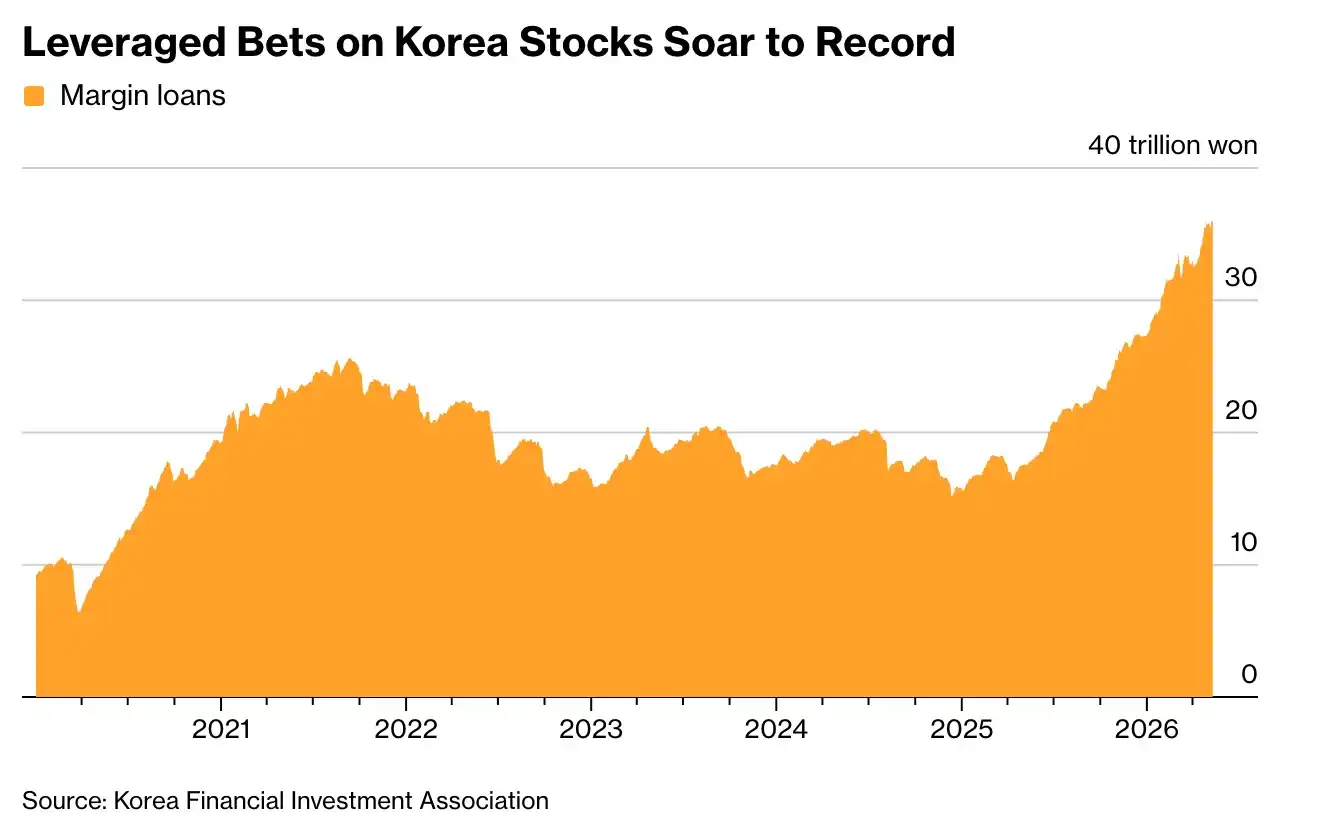
As of the end of May 2026, the margin loan balance at South Korean securities firms soared to a record 38 trillion won (approximately $247 billion), a significant increase from 27.3 trillion won at the end of 2025. Simultaneously, a large portion of new loan funds did not flow into real estate but was entering the stock market. As of the end of May, personal credit loan balances at South Korea's five major commercial banks reached 106.99 trillion won, of which overdraft account balances rose to 41.93 trillion won, the highest level since 2021. In contrast, housing mortgage loans showed almost no growth during the same period.

Moreover, South Korean散户 are increasingly using leveraged ETFs as everyday investment tools, massively employing leverage to bet on the market.

For many South Korean散户, leveraged ETFs are no longer high-risk investment instruments but essential weapons to amplify returns. Stimulated by the bull market atmosphere and赚钱效应, more and more investors believe that as long as they bet in the right direction, leverage means faster wealth growth.

According to data released by the Korea Exchange (KRX) in April this year, since the beginning of the year, the average daily trading volume of 1,093 ETF products in the South Korean market totaled 4.483 billion shares. However, the average daily trading volume of just 88 leveraged ETFs, inverse ETFs, and double inverse ETFs reached 4.046 billion shares, accounting for 90.49% of all ETF trading volume. In other words, the main trading force in the South Korean ETF market is almost entirely concentrated in high-risk leveraged products.

In South Korea, investors must complete a 1-hour online education course before trading leveraged ETFs; if trading single-stock leveraged ETFs, an additional 1-hour training is required. However, this risk firewall has not dampened investor enthusiasm. According to disclosures from the Korea Financial Investment Institute (KOFIA), the average monthly number of course completions was about 7,579 people three years ago, but has surged nearly 20 times to an average of 149,948 people per month this year. Among them, many investors simply open the course video and let it play in the background to meet the account opening requirements, without caring about the operational mechanisms of leveraged products and their potential risks.

In response to the暴涨 in market leverage demand and to attract funds back to the domestic market, South Korean regulators recently approved the listing of the first batch of single-stock leveraged ETFs. Eight asset management companies一口气 launched 16 ETFs linked to Samsung Electronics and SK Hynix with double leverage and inverse structures, hoping to lure the previously large flow of "Seohak Ants" (South Korean散户 investing in the US) back to the South Korean stock market, while boosting the performance of Korean stocks and stabilizing the Korean Won exchange rate. On the first day of product launch, due to excessively火爆 application numbers, the website of the Financial Investment Education Center of the Korea Financial Investment Association experienced temporary故障 due to a surge in访问量.

According to data from South Korean securities calculation company ETF Check, from June 1 to 5, the ETF with the largest net purchases by individual investors was the KODEX Samsung Electronics Leverage ETF, and the top four ETFs by individual net purchases were all single-stock leveraged products related to Samsung Electronics and SK Hynix. Meanwhile, data from the Korea Exchange shows that in the first five trading days after their launch on May 27, the trading volume of the four most actively traded single-stock leveraged ETFs accounted for 21% of the total trading volume of South Korean ETFs.

However, leverage can amplify returns but also magnify losses exponentially. Especially when more and more散户 use margin funds and leveraged ETFs to concentrate bets on a few popular tech stocks, it can easily trigger more剧烈 stampede effects. Precisely because of this, South Korea's Finance Minister, Choo Kyung-ho, recently stated he is concerned about the increase in leveraged stock investments and will take immediate measures when necessary to address the "herd effect" in financial markets.

Babies Open Accounts to Buy ETFs, Seniors Cash Out Insurance to Borrow Money for Stock Trading

In this stock market热潮, "silver funds" have become a significant force in the South Korean stock market.

According to a report by Korean media Chosun Biz, recently, the business网点 of major South Korean securities firms have been packed with people, and the vast majority of investors coming in person to咨询开户 and place orders are seniors aged 60 and above. Some even plan to use their bank overdraft limits to buy hot stocks like SK Hynix. A securities firm employee感慨, "I really don't know where clients are getting so much money from. From young children to the elderly, it feels like there's no one who isn't trading stocks anymore."
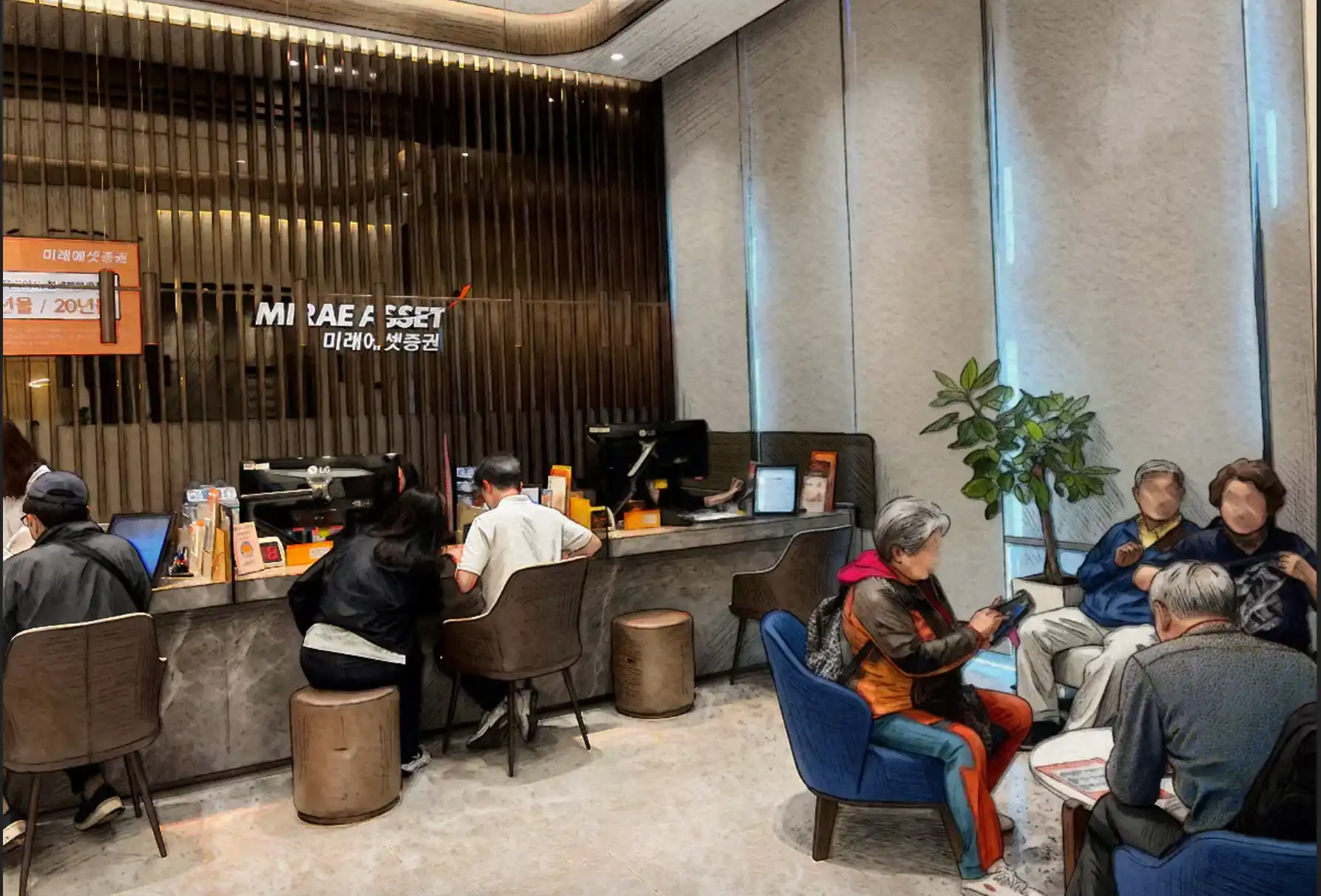
Looking at margin data, investors aged 50 and above account for 62.3% of the total margin amount at the top ten securities firms; the margin balance for the group aged 60 and above激增 from about 3.95 trillion to 8.02 trillion won within a year.

To raise funds, many seniors have even提前解约 insurance products, investing their原本用于养老 savings into the stock market. In Q1 2026, the surrender amount at South Korea's three major life insurance companies reached 4.9 trillion won, a year-over-year increase of 16.3%, with savings-type life insurance surrenders growing over 23.2%.

In fact, besides stock trading, more and more South Korean seniors have also begun炒币. As of the end of 2025, the number of investors aged 70 and above among South Korea's top five crypto asset exchanges increased from 30,000 in 2022 to 116,000 in 2025, nearly quadrupling in three years.

However, the large-scale entry of seniors into stock trading also raises concerns.

Many newly entered高龄投资者 have very limited understanding of the basic processes and risks of stock trading. Some don't even understand the fund settlement mechanism after selling stocks but have already begun频繁买卖股票; many are not acting based on their own research and investment judgment but hastily entering the market after hearing about profits made by friends and relatives through popular stocks like Samsung Electronics and SK Hynix.


Related Questions

QWhat is the main reason behind the sudden sharp downturn in the Korean stock market as described in the article?

AThe main reason is a collective correction in U.S. tech stocks, which triggered a revaluation of the AI industry chain. This led to a massive sell-off of South Korea's two major chip giants, Samsung Electronics and SK Hynix, which have an outsized influence on the KOSPI index. Foreign capital outflows and the depreciation of the Korean won further exacerbated the market pressure, leading to a sharp decline.

QWho are the 'Ant Army' referred to in the context of the South Korean stock market?

AThe 'Ant Army' is a term used to describe retail investors in South Korea. Similar to 'apes' in the U.S., they are individual investors whose collective actions can significantly impact stock prices. They are categorized into 'Donghak Ants,' who invest in domestic stocks, and 'Seohak Ants,' who invest in overseas markets like the U.S. stock market.

QWhat specific financial behaviors among South Korean investors are causing regulatory concern according to the article?

ARegulators are concerned about the massive increase in leveraged stock investments. This includes a surge in margin trading balances, the use of personal credit loans to invest in stocks instead of real estate, and the overwhelming dominance of high-risk leveraged and inverse ETFs in trading volume. These behaviors create a 'herd effect' and amplify market volatility, especially when concentrated in a few popular tech stocks.

QHow has the participation of elderly investors in the South Korean stock market changed, and what are the associated risks?

AElderly investors (aged 60 and above) have become a significant force, with their margin balances doubling in a year. Many are raising capital by cashing out savings-type insurance policies meant for retirement. The risks include a lack of basic trading knowledge and risk awareness, with many entering the market based on hearsay about profits rather than personal research, making them vulnerable to significant losses.

QWhat measures did South Korean authorities and corporate leaders take in response to the stock market crash?

AIn response, South Korean President Lee Jae-myurg issued a public statement emphasizing that Korean stocks were still undervalued and announced plans to promote AI integration across industries and prepare large-scale investments in the chip sector. Concurrently, during his visit to South Korea, NVIDIA CEO Jensen Huang announced a cooperation with SK Hynix and hinted at a meeting with Samsung's leadership, which was seen as a vote of confidence in the Korean semiconductor industry.

Related Reads

Is AI Creating a New Class of 'Information Poor'?

AI is generating a new kind of "information poverty." The core issue isn't that AI denies answers to the poor; it's that it provides abundant, cheap, and plausible-sounding answers to everyone. This availability shifts the true scarcity from obtaining answers to possessing the **judgment to evaluate them** and the access to turn them into real-world opportunities. New information poverty thus describes those who have AI tools and outputs, but lack the complementary skills, authorization, and contextual experience to critically assess and act on them. Research reveals a multi-layered divide: access to AI is stratified by income and platform design (e.g., premium vs. free, embedded tools). In workplaces, usage heavily favors higher-paid, more experienced, or formally trained employees, with AI often automating entry-level tasks that were traditional stepping stones. Crucially, the heaviest users are often mid-career professionals whose existing expertise allows them to effectively judge and leverage AI outputs, while novices risk over-relying on them without building judgment. While controlled experiments show AI can significantly boost low-skilled workers' performance, real-world adoption and benefit are constrained by unequal social and organizational structures. Historically, general-purpose technologies first reward those with existing complementary capital. AI, by affecting judgment-based work, may accelerate and deepen this initial inequality gap, even if it narrows over decades. The danger lies in the illusion of competence it creates, potentially stunting the very critical thinking needed in an era where judgment is paramount.

marsbit2m ago

Is AI Creating a New Class of 'Information Poor'?

marsbit2m ago

Jensen Huang 'Saves' South Korean Stock Market: Locks In SK Hynix Memory, Chip Shortage to Continue

On June 5th, South Korea's stock market experienced a sharp decline, with major chipmakers like Samsung and SK Hynix dropping nearly 10%. Amidst the turmoil, NVIDIA CEO Jensen Huang's visit to Seoul played a dramatic role in boosting market sentiment. Following a dinner meeting with SK Group Chairman Chey Tae-won and SK Hynix CEO Kwak Noh-Jung, Huang confirmed that NVIDIA's new Vera CPU will utilize SK Hynix DRAM. The companies announced a multi-year technical partnership to co-develop next-generation memory for NVIDIA's AI infrastructure, covering products from data centers to personal AI and robotics. This collaboration extends beyond memory supply. SK Hynix is integrating NVIDIA's AI and Omniverse platform into its own semiconductor design and manufacturing processes, including computational lithography and creating digital twins of its fabrication plants for autonomous operation. While strengthening ties with SK Hynix, NVIDIA is diversifying its supply chain for the upcoming HBM4 memory, with Samsung, SK Hynix, and Micron all certified as suppliers for its Vera Rubin platform. Despite this, Huang warned that the global chip shortage, driven by relentless demand from AI factory construction, is expected to persist for several years across the entire supply chain. His visit underscores NVIDIA's systematic effort to deepen integration with South Korea's broader tech industry.

marsbit54m ago

Jensen Huang 'Saves' South Korean Stock Market: Locks In SK Hynix Memory, Chip Shortage to Continue

marsbit54m ago

Nasdaq Plunges 4.2% in a Single Day: Does "Black Friday" Burst the U.S. Stock Market Bubble?

The Nasdaq plunged 4.18% on June 5, 2026, its worst single-day drop in over a year, as a much stronger-than-expected US jobs report triggered fears of economic overheating and delayed Federal Reserve interest rate cuts. The selloff, centered on high-valuation tech and AI stocks like Nvidia and Broadcom, spread across major indices. The article examines whether this signals a market top. The strong May non-farm payrolls data, nearly double expectations, pushed bond yields higher, directly hurting rate-sensitive tech stocks. This exposed vulnerabilities in the crowded AI trade, where valuations had soared on narratives of infinite growth, despite emerging signs of slowing order momentum and corporate AI monetization challenges. Prior to the drop, market indicators flashed warning signs: historically high valuations (e.g., Shiller CAPE ratio near 39.5), extreme bullish sentiment, and high levels of leverage. Technical charts showed key support levels being breached. Wall Street is divided on the outlook. Bears, citing risks of "stagflation" and AI bubble comparisons to the dot-com era, warn of a potential significant correction. Bulls view the drop as a healthy correction within a bull market, underpinned by a strong economy and expected corporate earnings growth of around 7% in 2026. The immediate future hinges on upcoming key events: the May CPI inflation data and the mid-June FOMC meeting. Their outcomes will critically shape market expectations for the Fed's rate path. The article concludes that conditions for a major market top are aligning, marking a fragile transition from narrative-driven gains to a phase demanding validation from macroeconomic data and corporate fundamentals. Caution is advised.

marsbit58m ago

Nasdaq Plunges 4.2% in a Single Day: Does "Black Friday" Burst the U.S. Stock Market Bubble?

marsbit58m ago

Nasdaq Plunges 4.2% in a Single Day, Did 'Black Friday' Pop the U.S. Stock Bubble?

The Nasdaq Composite plummeted 4.18% on June 5, its biggest single-day drop since April 2025, triggering widespread debate over whether the U.S. stock market has peaked. The sell-off was sparked by a stronger-than-expected U.S. non-farm payrolls report, which fueled fears of economic overheating and pushed back market expectations for Federal Reserve rate cuts, leading to a sharp rise in Treasury yields. The AI sector, the primary driver of the recent bull market, suffered severe losses, with the Philadelphia Semiconductor Index crashing over 10%. Stocks like Nvidia, Broadcom, and Micron led the decline. Concerns are mounting about the sustainability of AI capital expenditures and high valuations, with signs of order cuts for next-generation chips emerging. Analyses point to several warning signs: historically high market valuations (e.g., elevated Shiller CAPE ratio, Buffett Indicator), extreme bullish sentiment indicators, and significant insider selling. The sell-off also caused a key technical breakdown, with the S&P 500 breaking below its short-term moving average and testing its 200-day moving average. Wall Street is divided on the outlook. Bears warn this could be the start of a bubble deflation or a "stagflation" scenario, while bulls view it as a healthy, overdue correction within a bull market driven by solid corporate earnings growth. A more moderate view suggests the easy liquidity-driven rally is over, and markets are entering a phase of fundamental stock-picking with potential for consolidation. The immediate future hinges on key upcoming events: the May CPI report and the mid-June FOMC meeting. Their outcomes will be critical in determining whether this is a temporary pullback or the beginning of a more significant trend reversal. The consensus is that the era of one-directional market gains may be ending, requiring increased investor caution.

Odaily星球日报1h ago

Nasdaq Plunges 4.2% in a Single Day, Did 'Black Friday' Pop the U.S. Stock Bubble?

Odaily星球日报1h ago

The First Case on AI Agents: What Was Adjudicated?

"The First 'Agent' Ruling: What Was Decided?" On April 30, the Guangzhou Internet Court issued a ruling—China's first behavior preservation order in the intelligent agent (AI agent) field. The defendant, an open-source AI agent software, was ordered to stop downloads, cease actions that bypassed a platform's technical protection measures, and delete related tutorials and data. The core issue: the software used the operating system's "accessibility service" permissions to automate user interactions within other apps without those platforms' authorization. This mirrors a recent US case where Amazon sued Perplexity for similar reasons—bypassing Amazon's API to directly scrape and interact with its pages—and won a preliminary injunction. Both rulings establish a crucial legal boundary for the AI agent era: agents cannot operate unchecked. The article argues the fundamental legal principle emerging is one of **dual authorization**. An AI agent requires both **user consent** AND **platform consent** to operate legitimately within that platform's ecosystem. Bypassing platform rules through system-level permissions, even with user permission, undermines platform responsibilities for content moderation, data security, and user privacy, creating liability issues. The piece uses the evolution of "Doubao Phone" (an AI-integrated smartphone) as a case study. Its initial, aggressive version that bypassed platform controls faced roadblocks. Its upcoming 2.0 version is reportedly pivoting to negotiate API access and authorization deals with major platforms (like Alibaba's ecosystem), seen as a strategic adaptation to the new regulatory reality. A global trend is identified: the era of unregulated, "wild west" growth for AI agents is ending, replaced by a **compliance race**. This raises barriers to entry, as securing platform authorizations becomes a new cost. Open-source status is also not a legal shield if the code facilitates bypassing technical protections. In conclusion, these first rulings target not the largest, but the most **aggressive and representative** cases. By setting precedent with them, regulators are efficiently steering the entire industry towards a new, more regulated operating paradigm defined by dual authorization and platform cooperation.

marsbit1h ago

The First Case on AI Agents: What Was Adjudicated?

marsbit1h ago

Trading

Spot
Futures
活动图片




