【Introducción】Desde que Ben Mann lideró el equipo para construir la primera extensión de VS Code en 2021, pasando por las iteraciones frenéticas de Boris Cherny en 2024, hasta que Claude Code irrumpió en 2025 y cambió radicalmente la forma de operar en Silicon Valley, toda la historia parece una epopeya. Sin embargo, el padre de Claude Code dice: "Solo hemos completado el 1%".
¡Claude Code solo ha completado el 1%!
Boris Cherny, desarrollador principal de Anthropic, reveló el origen, altamente contraintuitivo, de Claude Code: Claude Code nació de un proyecto interno de alineación de seguridad (Alignment) de Anthropic.
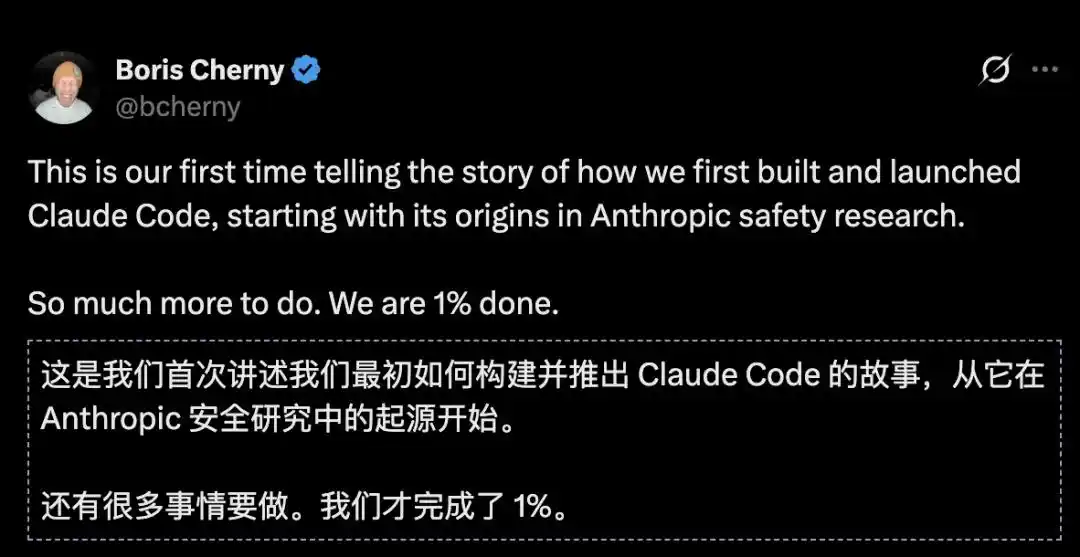
Y la parte más emocionante está en la segunda mitad:
Todavía hay mucho por hacer. Solo hemos completado el 1%.
Porque ese 1% de espacio significa que el 99% del futuro sigue completamente en blanco.
Al mismo tiempo, Claude reveló por primera vez la historia del origen de Claude Code:
La página oficial de Anthropic "The Making of Claude Code" se publicó simultáneamente.
Portal: https://www.anthropic.com/features/making-of-claude-code

Claude Code casi fue completamente olvidado
La historia comienza en 2021.
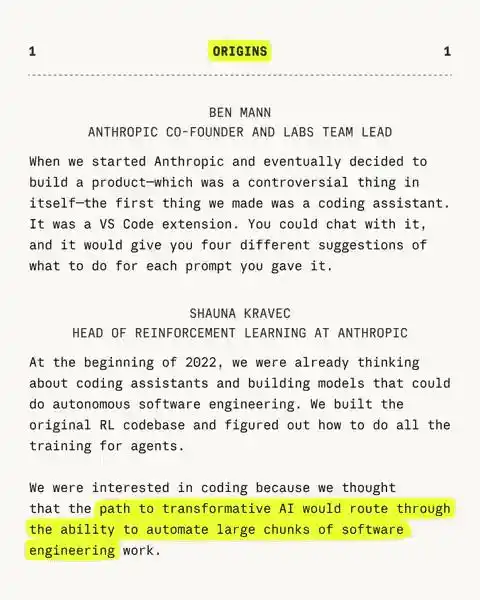
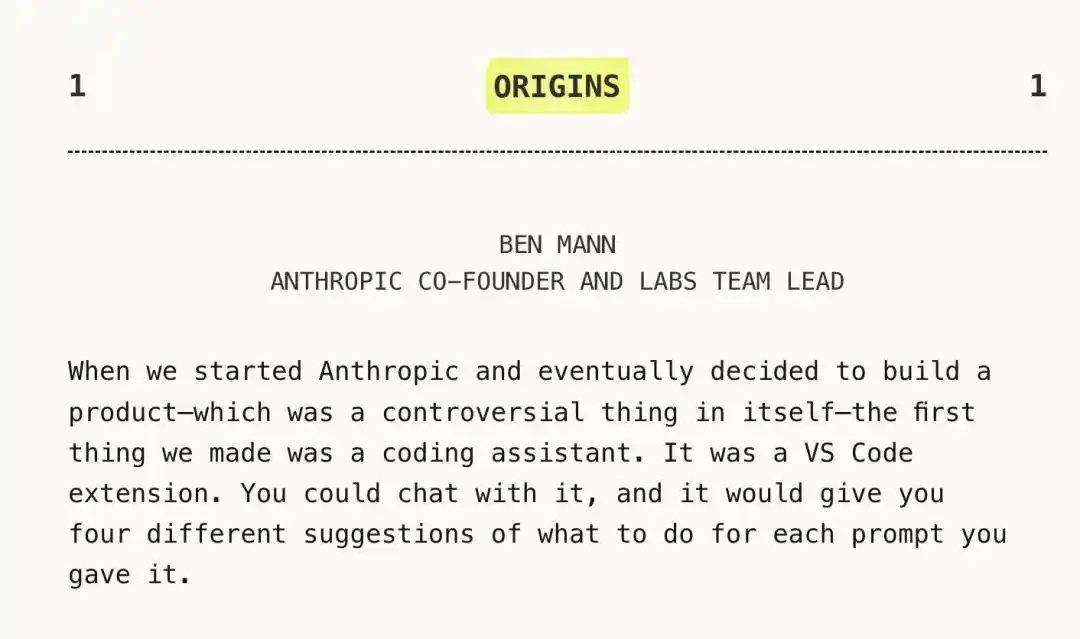
Ben Mann, cofundador de Anthropic y líder del equipo Labs, recuerda:
Cuando fundamos Anthropic y finalmente decidimos construir un producto —una decisión bastante controvertida en ese momento— lo primero que hicimos fue construir un asistente de programación.
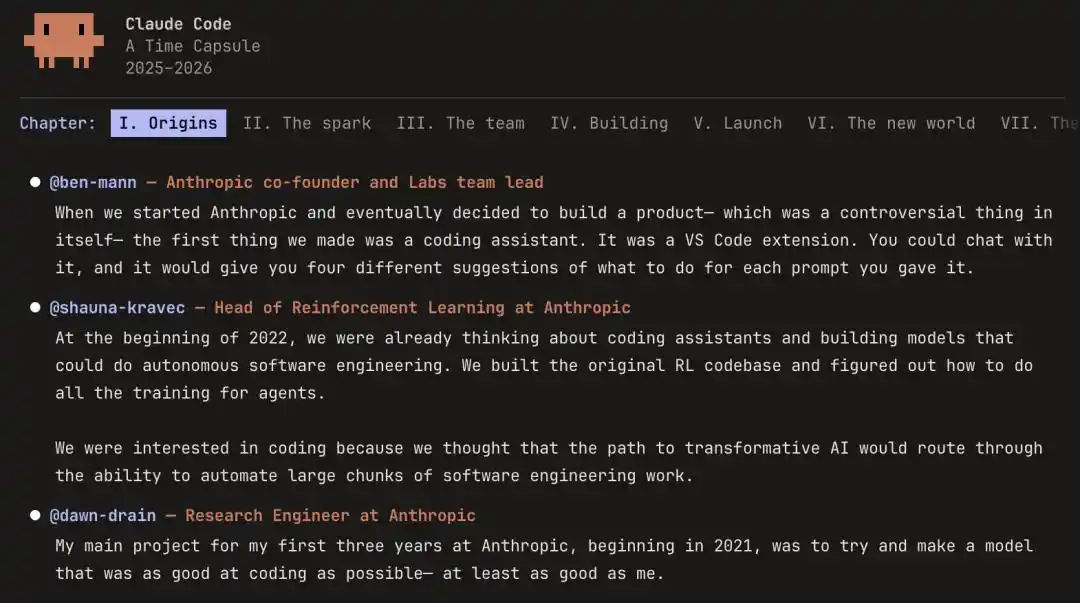
Dawn Drain, ingeniera de investigación, se unió recientemente a Anthropic. Su proyecto principal era: hacer que las capacidades de codificación del modelo al menos alcanzaran mi propio nivel.
En el mismo período, el equipo de aprendizaje por refuerzo de Shauna Kravec ya estaba pensando en algo más radical: la ingeniería de software autónoma. No querían construir un chatbot, sino que el modelo realmente "trabajara".
¿Por qué la programación? La respuesta de Shauna sigue siendo impactante:
Creemos que el camino hacia una IA transformadora debe pasar por la automatización del trabajo de ingeniería de software a gran escala.
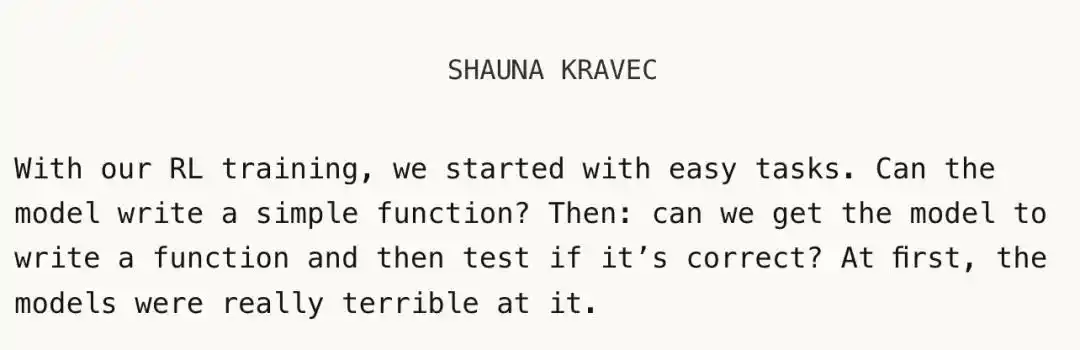
A principios de 2022, ya estaban entrenando modelos con RL para escribir funciones simples y luego probar su corrección.
El resultado: inicialmente, el modelo se desempeñaba muy mal.
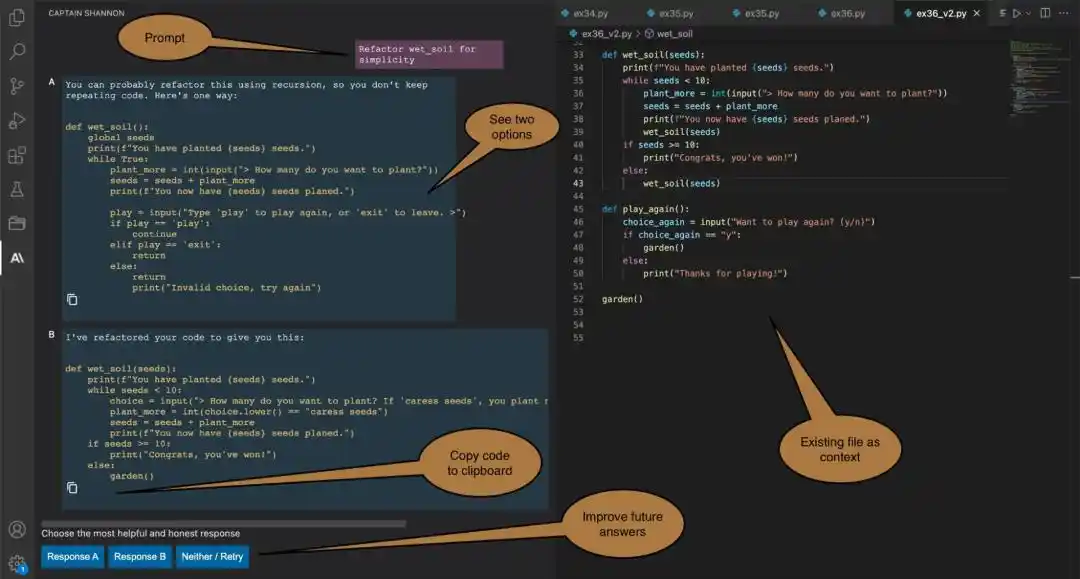
Mientras tanto, el equipo liderado por Ben Mann creó una extensión para VS Code: un asistente de programación temprano. Podía dar cuatro sugerencias diferentes. En la primavera de 2022, esta herramienta ya tenía alrededor de 100 usuarios externos.
Pero inmediatamente después, la realidad les dio un golpe contundente.
Surgió la pesadilla de la infraestructura.
Para lograr una codificación con agentes real, necesitas que el modelo ejecute código en un entorno seguro, lea y escriba archivos, maneje tiempos de espera, gestione fallos...
Estos problemas son casi idénticos a los que aún preocupan a todos hoy en día con los agentes.
Dawn y sus colegas tardaron mucho tiempo en lograr que el modelo tuviera un shell persistente en un contenedor, pudiera manejar entrada/salida en flujo y tratar elegantemente los tiempos de espera.
Luego, Ben Mann regresó de su licencia de paternidad y descubrió que básicamente "todos habían olvidado el asistente de programación".

Sin embargo, el lado de la investigación nunca se detuvo.
Siguieron perfeccionando las piezas centrales de la codificación con agentes: llamadas a funciones (function calling), búsqueda, herramientas bash... Lo que hoy parece obvio, en ese momento era una batalla cuesta arriba.
Anthropic "tan adelantada que era incómodo"
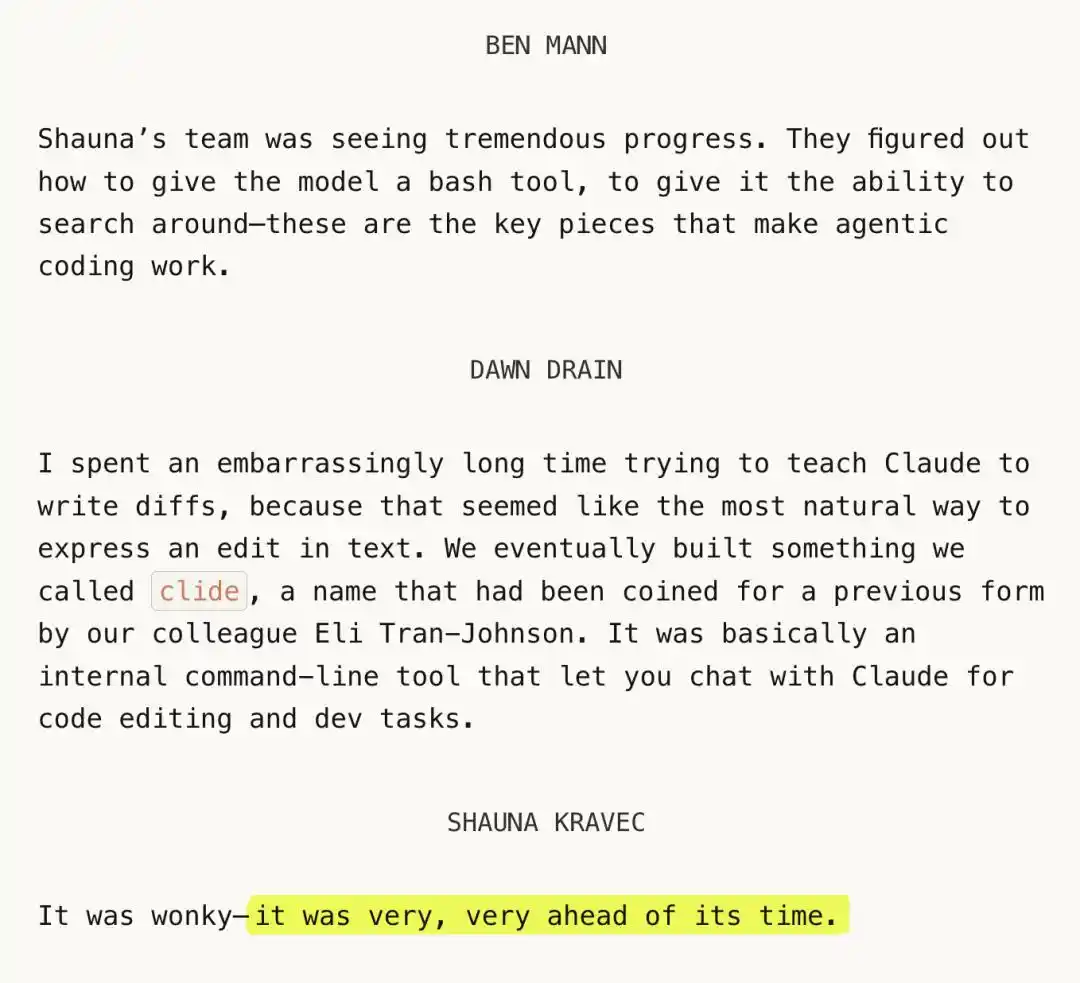
A finales de 2022 y en 2023, el equipo de Shauna logró un avance crucial: dotaron al modelo de herramientas bash, permitiéndole buscar libremente en bases de código.
Dawn Drain pasó "un tiempo embarazosamente largo" enseñándole a Claude a escribir diffs.
Finalmente crearon una herramienta interna de línea de comandos llamada clide.
Permitía chatear con Claude para editar código y completar tareas de desarrollo.
Ben Mann dijo: "Me encantó. Era realmente genial, pero podía ser mucho mejor".
El problema: era demasiado avanzada. Sid Bidasaria recordó más tarde: "Todo el mundo hablaba de clide, pero era torpe y lenta".
Adam Wolff, el primer ingeniero de Claude Code, le añadió capacidades de agente rudimentarias: podía inferir la intención del usuario a partir de cambios parciales.
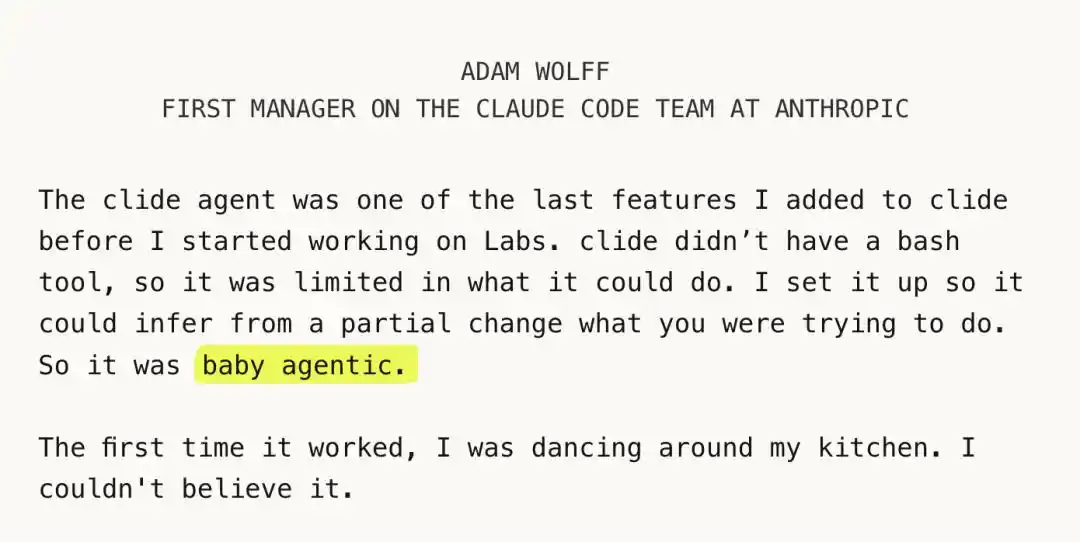
En su primer éxito, "bailó en la cocina".
Pero clide siempre fue un juguete del lado de la investigación.
Era demasiado frágil, lenta e inestable.
Hasta septiembre de 2024, cuando una nueva persona se unió al equipo Labs.
Claude Code despega
En septiembre de 2024, Boris Cherny se unió a Anthropic Labs.
Ben Mann le asignó la tarea de "codificación con agentes", con la instrucción: "No construyas para los modelos de hoy, construye para los modelos de dentro de seis meses".
No fue asignado directamente a un producto de codificación, sino que primero se familiarizó con la API de Anthropic y rápidamente, en dos días, construyó un prototipo minimalista de terminal (CLI).
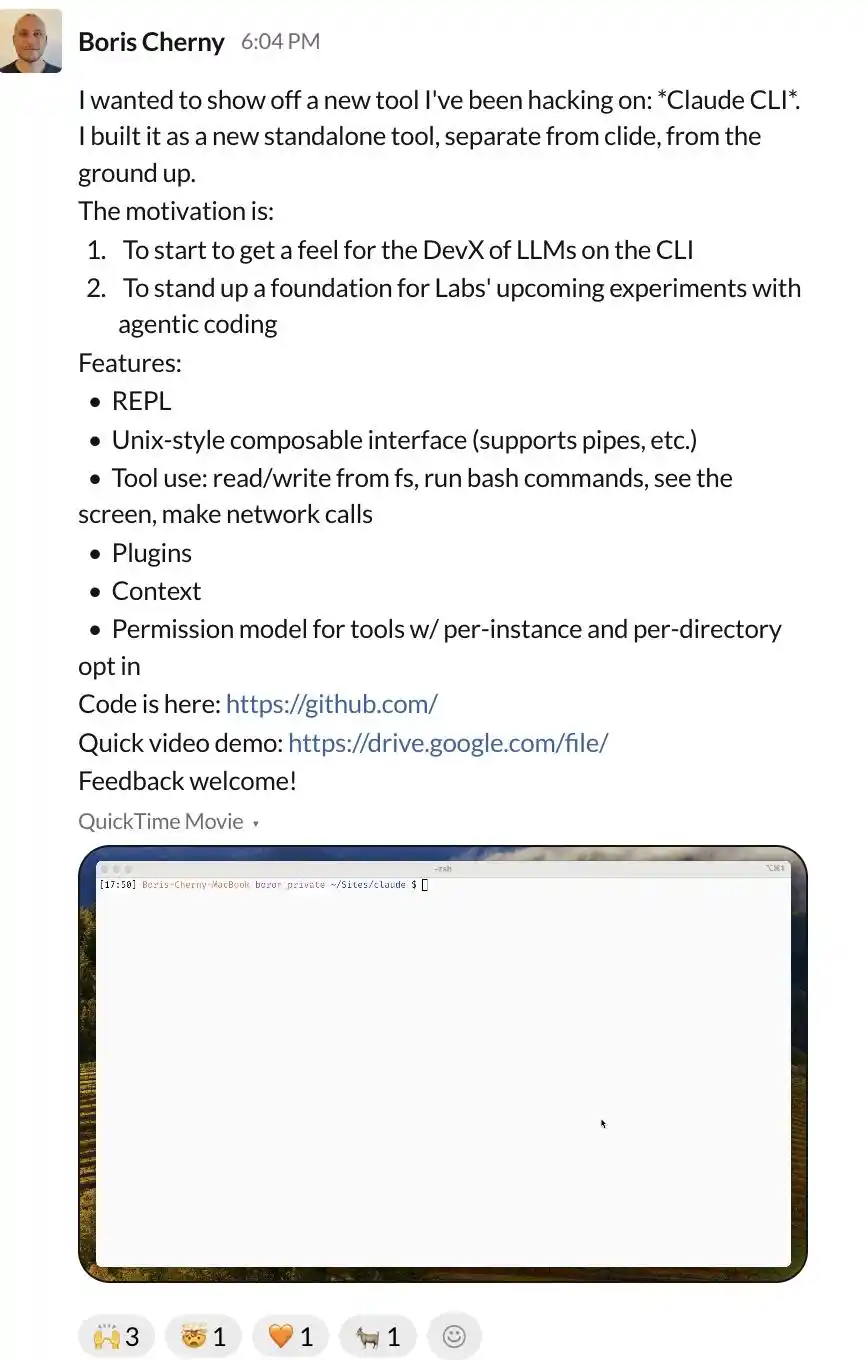
En el demo, podía capturar una pantalla de Apple Music y decirte qué canción estabas escuchando.
Lo publicó en Slack y solo recibió dos o tres 'me gusta'.
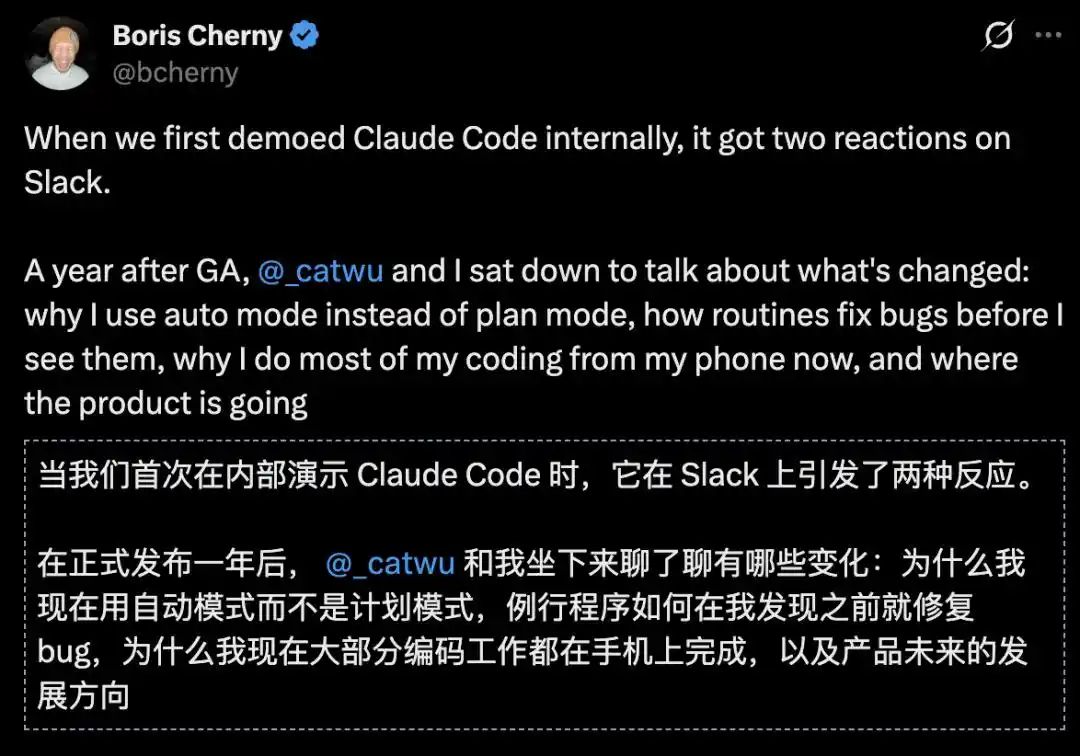
Nadie lo entendió. Ni él mismo lo entendía completamente.
Pero Boris no pudo detenerse. Sus amigos lo llamaban para salir, él rechazaba. Se encerró en casa los fines de semana, inmerso en esta cosa.
Un día, escribió una solicitud de extracción (pull request), Adam la rechazó y le sugirió probar con clide.
Boris copió y pegó el problema en clide, y escribió directamente la solicitud de extracción completa de cinco a diez líneas.
Boris recordó más tarde:
Nunca había visto algo así. Fue demasiado impactante. Se sentía como el futuro.
Ben Mann dijo que la expresión de Boris en ese momento era de "Holy shit".
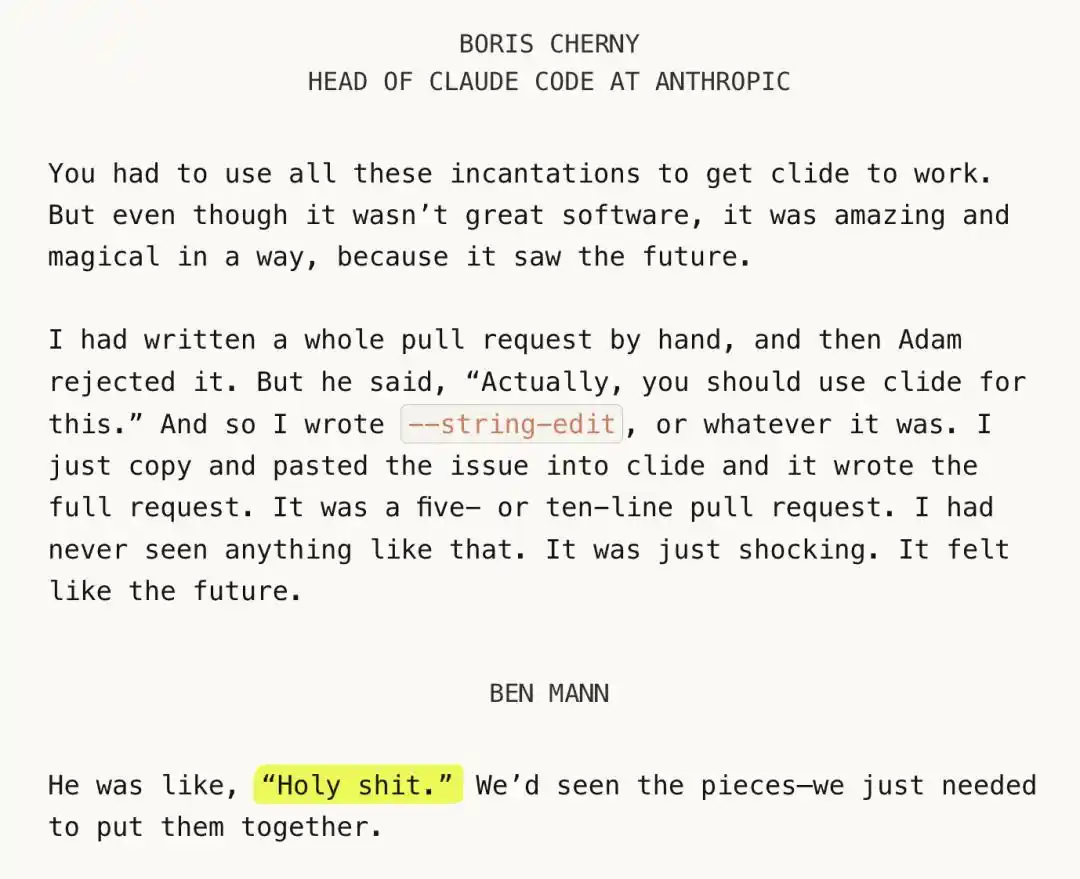
Ya tenían todas las piezas, solo faltaba ensamblarlas.
En diciembre, el equipo Labs finalmente dio luz verde al proyecto.
De repente, de un equipo mínimo compuesto solo por Boris, Sid Bidasaria y Ben, llegaron seis o siete personas más.
Comenzaron la última carrera de dos semanas.
En esas dos semanas, casi todas las funciones centrales se completaron: informes de errores (bug reporting), flujo de inicio de sesión, actualizaciones automáticas (auto-updates), excelentes métricas de uso...
Sin límites en las solicitudes de extracción, sin procesos de revisión, las correcciones podían desplegarse en cinco minutos.
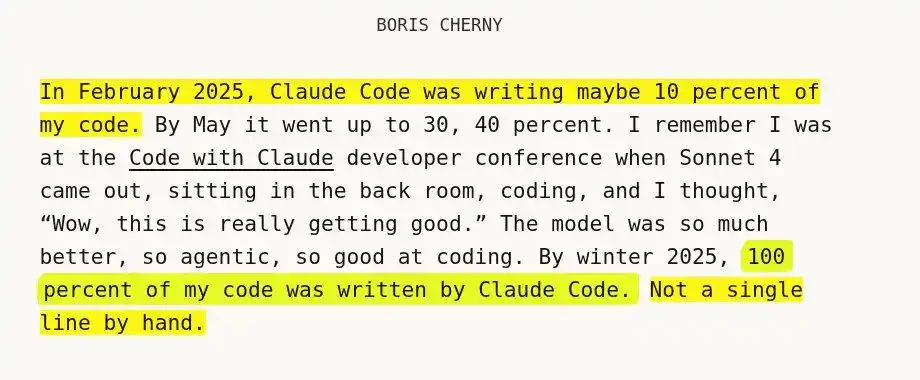
Del 10% al 100%, y el "1%" completado
En febrero de 2025, se lanzó públicamente Claude CLI, rebautizado oficialmente como Claude Code.
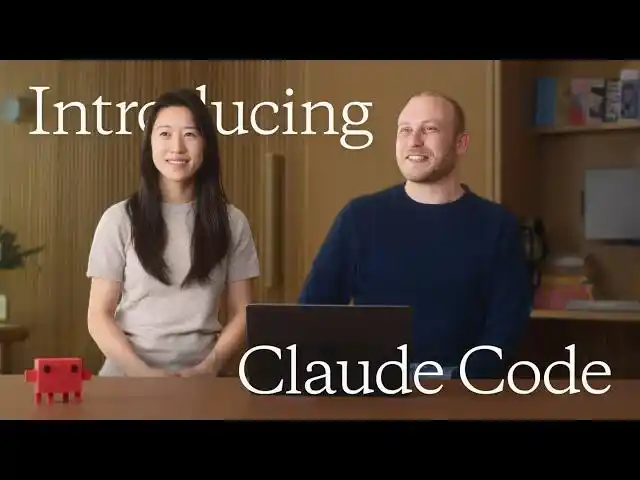
El logotipo de Claude Code con caracteres ASCII en mayúsculas se convirtió en un diseño icónico de la programación con IA.
La retroalimentación inicial no fue entusiasta. Muchos pensaron que "la idea es genial, pero tiene demasiados errores".
Pero los modelos mejoraban. Cuando se lanzó la serie de modelos Claude 4, todo cambió.
Boris Cherny estaba sentado en la última fila de la conferencia Code with Claude. Cuando se lanzó Sonnet 4, bajó la cabeza para programar y de repente se dio cuenta:
"Vaya, esto realmente se volvió más potente."
Esto cambió radicalmente la forma de operar en Silicon Valley: el responsable técnico de Ramp fue completamente conquistado en cinco minutos; el fundador de Bun lo utilizó para descifrar instantáneamente un complejo código de protocolo de red.
Para el invierno de 2025, había llegado un nuevo mundo irreversible.
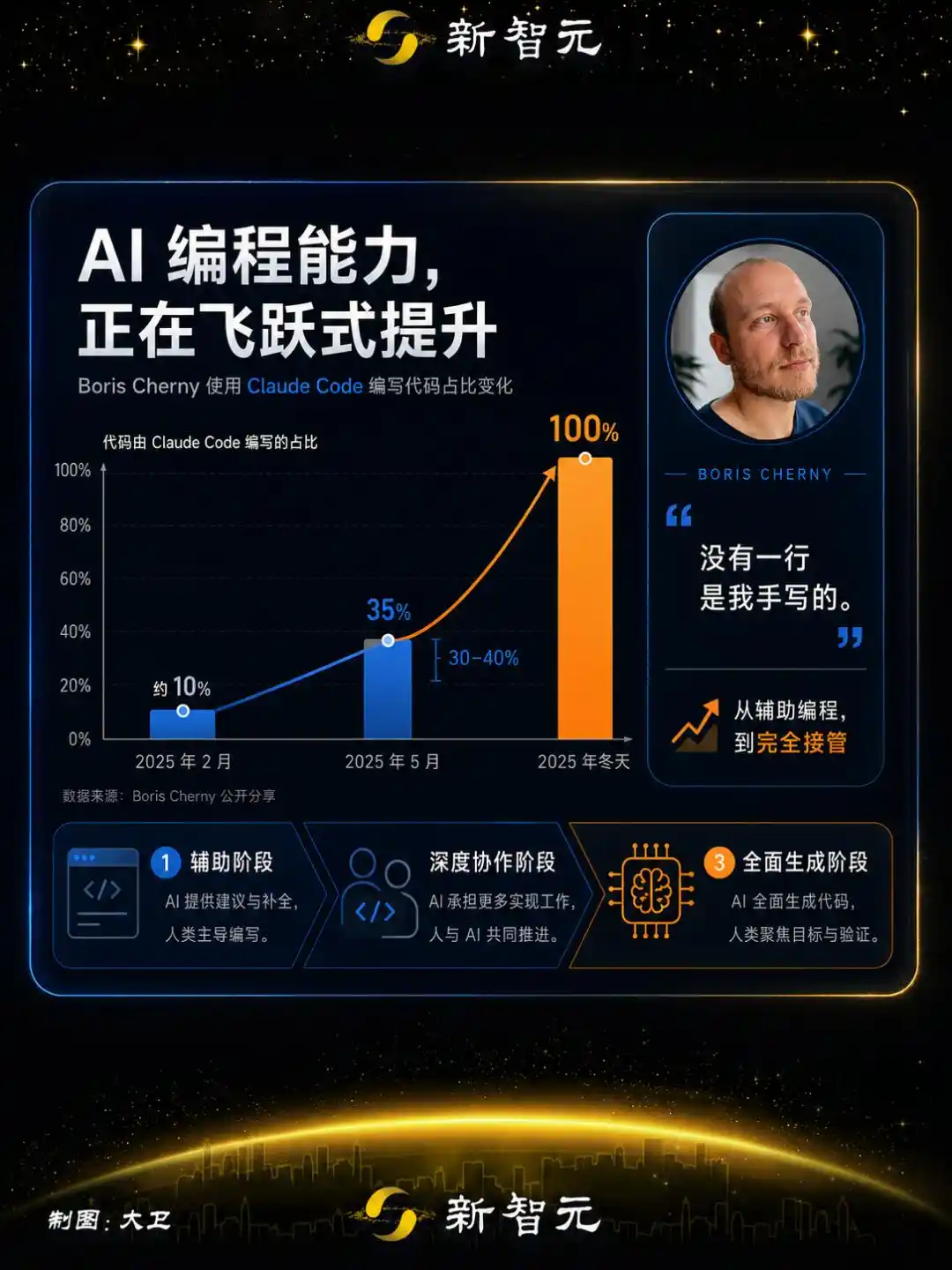
Boris Cherny, responsable de Claude Code, que antes se quemaba las pestañas programando, descubrió que ya no escribía ni una sola línea de código manualmente: el 100% del trabajo lo realizaba Claude Code silenciosamente en el terminal de fondo.
Incluso usó Claude Code todo un día para escribir código, realizó 88 confirmaciones (commits), mientras su esposa y su perro lo acompañaban cómodamente en el sofá, todo relajado y agradable.

Cat Wu dijo que lo que más le conmovió fue el cambio en las solicitudes de permisos:
Al principio, todos leían cuidadosamente cada solicitud de permiso. Ahora, una gran parte de los usuarios las acepta automáticamente (auto-accept).
Se está construyendo confianza.
Y Boris sigue diciendo esa frase: Solo hemos completado el 1%.
Porque las verdaderas capacidades de autonomía a largo plazo, memoria persistente, gestión de contextos complejos, planificación en mundos abiertos... estas habilidades aún están lejos de llegar.
El rol del ingeniero humano está migrando de "arquitecto de código" a "administrador de IA".
La programación ya no es un privilegio críptico y difícil para geeks, y esto es solo el comienzo del camino de los agentes de IA hacia el mundo real, para resolver los problemas últimos de la humanidad.
Referencias: https://www.anthropic.com/features/making-of-claude-code
Este artículo proviene del WeChat Public Account "新智元" (Nueva Era de la Inteligencia Artificial), autor: ASI启示录; editor: David