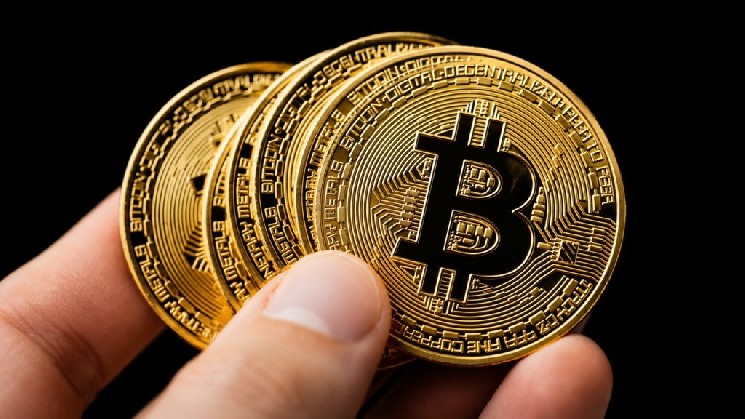
Chinese newspaper warns of Bitcoin extortion scam using its name

cointelegraphPublished on 2026-07-30Last updated on 2026-07-30

Abstract

Chinese newspaper China Business Journal has issued a warning about a Bitcoin extortion scam. Fraudsters are impersonating the publication, using a Proton Mail address to contact companies. They falsely claim to have uncovered damaging information through investigations and threaten to publish it unless paid in Bitcoin. The newspaper stated these emails are unauthorized and the scheme appears fraudulent. It is collecting evidence and reserves the right to pursue legal action against those responsible. China Business Journal is a state-affiliated publication under the Chinese Academy of Social Sciences.

China Business Journal, a state-affiliated newspaper, has warned that fraudsters have been impersonating the publication to extort companies by demanding Bitcoin in exchange for suppressing damaging reports.

In a statement issued Thursday, the newspaper said scammers used a Proton Mail address to contact businesses, falsely claiming they had uncovered negative information through undercover investigations and threatening to publish the material unless paid in Bitcoin.

The publication said the emails were unauthorized and that the scheme appeared to constitute fraud.

It also said it was collecting evidence and reserved the right to pursue civil and criminal action against those responsible.

Founded in 1985, China Business Journal is published by the Institute of Industrial Economics of the Chinese Academy of Social Sciences, a government-run academic institution. While market-oriented in its coverage, it operates under state supervision and is regarded as a state-affiliated business newspaper.

Related: South Korea report proposes stablecoin rules before crypto law

Related Questions

QWhat is the main warning issued by the China Business Journal in the article?

AThe China Business Journal warned about a Bitcoin extortion scam where fraudsters are impersonating the publication to extort companies, demanding Bitcoin in exchange for suppressing fabricated damaging reports.

QHow are the scammers contacting their targets according to the statement?

AThe scammers are contacting their targets using a Proton Mail email address, falsely claiming to have uncovered negative information through undercover investigations.

QWhat did the China Business Journal state about the emails and the scheme?

AThe China Business Journal stated that the emails were unauthorized and that the scheme appeared to constitute fraud.

QWhat actions did the publication say it was taking in response to the scam?

AThe publication said it was collecting evidence and reserved the right to pursue civil and criminal action against those responsible for the scam.

QWhat is the institutional background of the China Business Journal as described in the article?

AThe China Business Journal is published by the Institute of Industrial Economics of the Chinese Academy of Social Sciences, a government-run academic institution. It operates under state supervision and is regarded as a state-affiliated business newspaper.

Related Reads

Stock Trading Has Become 'Crypto Trading', Welcome Back to the Native Home

"Stock Trading Becomes 'Coin Trading': A Market's Bizarre Reversal" The global stock market, particularly in tech sectors, is undergoing a radical transformation, increasingly mirroring the volatile, narrative-driven mechanics of the cryptocurrency world. This shift was starkly illustrated by the dramatic crash of South Korea's KOSPI index in July 2026, where leveraged ETFs tied to stocks like SK Hynix triggered massive, rapid liquidations, devastating hundreds of thousands of retail investors, many of them young. This "crypto-fication" of equities began as disillusioned cryptocurrency traders migrated to stock markets, bringing with them their speculative playbook: chasing high-beta narratives like AI and semiconductor cycles, relying on social media for investment cues, and employing heavy leverage. Ironically, while these traders sought the perceived safety of stocks with fundamentals, their methods turned parts of the equity market—especially in Korea, the US, and Japan—into arenas of extreme speculation. Stocks like SK Hynix experienced price collapses ("halving") in just over a month, a pace even faster than Bitcoin's historical crashes. The core of this change is the primacy of narrative over traditional valuation. Complex company analysis is reduced to viral slogans about AI's infinite demand, driving concentrated inflows into thematic sectors. This is amplified by leverage, particularly through risky single-stock leveraged ETFs, which create vicious cycles of forced selling during downturns. Meanwhile, social media algorithms promote stories of overnight riches, drawing in inexperienced investors. In a paradoxical twist, Bitcoin, through institutional adoption and ETFs, is becoming relatively more stable, with its volatility now sometimes lower than major tech stocks. The market has reached an absurd crossover: stocks are acting like speculative crypto assets, while crypto strives for the legitimacy of traditional finance. The article concludes that this represents a "degeneration" of market rationality, where trading a story's heat has supplanted investing in future profits, leaving a trail of financial wreckage in its wake.

marsbit8m ago

Stock Trading Has Become 'Crypto Trading', Welcome Back to the Native Home

marsbit8m ago

Santander Bank Announces It Holds a $4.3 Million Position in U.S. Spot Bitcoin ETFs

Spanish banking giant Banco Santander disclosed in regulatory filings that it holds approximately $4.3 million in US spot Bitcoin ETFs. While this amount is small relative to the bank's over $1 trillion in assets under management, it signifies a growing trend of traditional financial institutions increasing Bitcoin exposure through regulated channels. Santander, scoring around 35% on a 2026 Bitcoin Adoption Index for banks, is categorized at a "medium level" of integration, similar to Société Générale but behind more crypto-focused firms. The bank's interest in cryptocurrencies is not new; CEO Ana Botín has discussed Bitcoin-related products since 2021. Santander has been developing crypto custody and digital asset services across Europe for years, with its digital arm, Openbank, beginning to offer crypto trading in Germany in September 2025, with plans to expand to Spain. This investment comes as institutional crypto adoption accelerates in Europe. Santander is actively involved in crypto custody initiatives across the continent and appears to be positioning itself to strengthen its role in the sector, especially as regulations like MiCA become clearer. The industry is watching whether the bank's medium integration level reflects caution or structural limitations, as banks with higher adoption may gain an edge in attracting crypto-interested wealthy clients.

cryptonews.ru14m ago

Santander Bank Announces It Holds a $4.3 Million Position in U.S. Spot Bitcoin ETFs

cryptonews.ru14m ago

Trading

Spot
活动图片