China's Version of 'Tech Burning Man' Debuts in Shanghai, muShanghai Creates a Global Geek 'Pop-up City'

marsbitPublished on 2026-05-11Last updated on 2026-05-11

Abstract

From May 10 to June 6, 2026, the inaugural muShanghai "Pop-up City" experiment, dubbed China's version of a "tech Burning Man," launched in Shanghai. Co-organized by the international open-source community The Mu and the Hongqiao Alibaba Center, this 28-day event aimed to build a global "parallel city" for geeks, attracting over 800 participants from more than 50 countries, including former OpenAI engineers and startup founders. The program featured four themed weeks: AI Week, Biotech Week, Robotics Week, and Culture Week, hosting nearly 100 sessions like ClawCon 2026. Activities ranged from discussions on AI safety and consumer apps to robot battles and cyberpunk culture, culminating in large outdoor "Innovator Marketplaces." A core principle was "Build in Public," encouraging open sharing of projects and progress. Hongqiao Alibaba Center served as the co-host and primary venue, positioning itself as a first-stop hub for international talent in China. The event marks a significant step for The Mu community, which has previously organized similar pop-up cities in Argentina and San Francisco, in bringing its model of immersive, collaborative innovation to China. It aims to be a key window for global科创 (scientific and technological innovation) exchange.

From May 10 to June 6, 2026, the "Pop-up City" experiment hosted by muShanghai kicked off in Shanghai. The experiment was initiated by the international open-source community The Mu and co-hosted by Hongqiao Alibaba Center. Whether you are a code-writing geek, a research-driven academic achiever, or an aspiring disruptor looking to make a big impact, you will find your place here. The organizers hope to co-build a "parallel city" belonging to global geeks with participants.

This 28-day experiment will gather developers, researchers, and entrepreneurs from over fifty countries worldwide to jointly explore new possibilities for human-technology collaboration in the AI era.
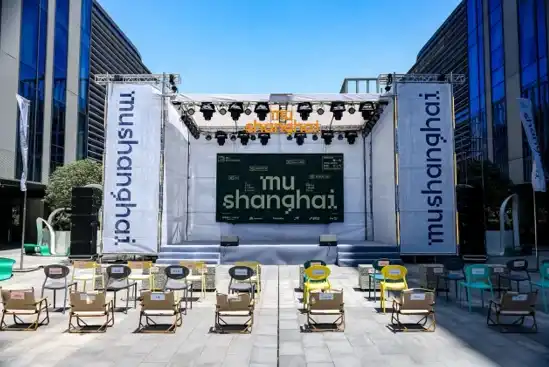
Global Tech Innovation Forces Resonate Together in Shanghai

"When my foreign friend first came to China, he said, 'China is different from what I imagined. You must host a The Mu event here, to let the world see the real China,'" recalled Sun, the initiator of muShanghai.

Since its launch, this experiment has attracted over 2000 applications globally, with more than 800 people passing the muShanghai review. They are evenly distributed across over fifty countries, including the United States, Argentina, Canada, Japan, France, South Africa, the United Kingdom, and China. The lineup of participants is impressive, ranging from former OpenAI engineers and founders of startups that have raised tens of millions in funding, to core contributors of OpenClaw like Vincent Koc and Dave Morin. Top technical talent from around the world will collide and collaborate across disciplines here.

"Domestic talents go global, and international talents come to China—letting the world see China ultimately means letting the world see you," Sun stated. "We've built the stage, now it's your turn to co-create."

Four Thematic Weeks Build an Immersive Innovation Ecosystem
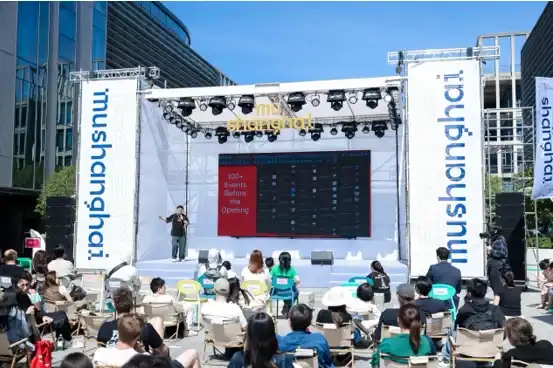
This 28-day "Tech Burning Man" will revolve around four thematic weeks, hosting nearly 100 events cumulatively. As a grand opening, ClawCon 2026 Shanghai will gather core global contributors of OpenClaw to deeply discuss AI development trends and open-source ecosystem building.

  • AI Week (May 11-15): Big Model Day will invite guests from kimi, Zhipu AI, Ant Bailing, StepFun, and others to share hardcore insights; the AI Safety session convenes global safety researchers and cryptographers; the Consumer App session invites teams behind multimodal large models like MiniMax and ZPilot, along with other Chinese AI consumer product teams, to deconstruct product iteration logic on-site.
  • Biotech Week (May 18-22): Topics progress layer by layer, from using technology to combat aging, to equipping labs with AI brains and robotic arms, to rewriting the underlying code of the material world. There's even a month-long longevity experiment led by a Yale PhD, where researchers will use themselves as subjects to explore the boundaries of life sciences.
  • Robotics Week (May 25-29): Robot combat competitions, cyber fashion shows, hardware supply chain pop-ups, and other events will take turns, offering a visually striking tech feast showcasing cutting-edge achievements in robotics.
  • Culture Week (June 1-6): Stepping beyond a purely technological perspective, it explores future social forms, cyberpunk culture, independent game creation, and other topics, allowing technology and humanities to collide and integrate here.

Notably, every Friday during the first three weeks, a large outdoor "Innovator's Market" will be held, and in the final week, there will be exhibitions related to technology and humanities. All participants can bring their own projects for on-site display, testing, and exchange, promoting rapid implementation of ideas and facilitating efficient collaboration. muShanghai will implement a Build in Public content mechanism throughout. We have designed a complete set of methods to encourage everyone to publicly share their projects, processes, problems, progress, and interim results, continuing iteration based on real feedback.

Hongqiao Alibaba Center Empowers "The First Stop for Starting a Business in China"
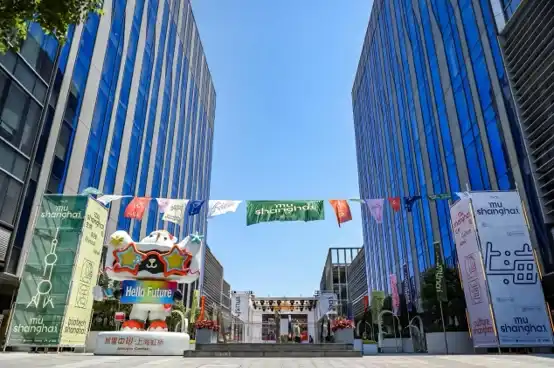
This one-month event is expected to reach over 100,000 people. As the co-organizer, Hongqiao Alibaba Center positions itself as an international innovation community and an ecological development hub. Relying on its five-dimensional one-stop capabilities in space, commerce, culture, ecosystem, and government services, it provides solid support for overseas talents to land and develop.

The "Tech Burning Man" initiator, The Mu, is the first international entrepreneur community to settle in Hongqiao Alibaba Center and is also one of the first international open-source partner communities of the HongCheng OPC community. The park director stated that HongCheng OPC is committed to providing one-stop services for global entrepreneurs coming to China. Collaborating with The Mu this time is a key layout for Hongqiao Alibaba Center in building an international tech innovation ecosystem.

This event is not only a frontier tech gathering but also an important window for China's tech innovation ecosystem to integrate with the world.

The Mu: An Open-Source Community That "Builds Cities from Scratch" Globally

Behind muShanghai is The Mu community, which has been successfully implemented in places like Argentina and San Francisco.

In Argentina, the Crecimiento project gathered 2,500 developers, incubated over 1,200 projects, with total funding exceeding $20 million. In San Francisco, The Mu helped transform the 16-story Frontier Tower into a tech innovation landmark, hosting OpenClaw's first offline developer gathering. It was also the sole startup community at the 2025 Osaka World Expo.

From preparation to project establishment, the muShanghai team overcame multiple challenges over seven months, including compliance filings for foreign events and rebuilding resource networks. On the opening day, attendees included Kong Fuan, Party Secretary and Executive Deputy Director of the Shanghai Hongqiao International Central Business District Administrative Committee; Lou Yongqi, President of Shanghai University of Engineering Science; Ke Xiaolin and Wang Ximei, Deputy District Heads of Minhang District, among others. The muShanghai core creative team and domestic and international co-creation partners introduced the thematic content and exciting activities for the upcoming four weeks.

AI may be changing the world, but it cannot replace the infinite possibilities that arise when we meet and collide.

About The Mu

The Mu is a global community organization that promotes open-source collaboration and innovation. It is committed to providing immersive co-creation spaces for developers, researchers, and entrepreneurs through the "Pop-up City" model, facilitating cross-cultural, interdisciplinary knowledge sharing and technological breakthroughs.

About Hongqiao Alibaba Center

Located in the core area of the Hongqiao International Open Hub, Hongqiao Alibaba Center is an important industrial office carrier for Alibaba Group in Shanghai. It is dedicated to creating a benchmark for space services targeting global tech talent, providing first-stop support for international developers, entrepreneurs, and companies coming to China. It offers not just office space, but an ecosystem-based development solution for international talent.


Related Questions

QWhat is muShanghai and what event is it organizing in Shanghai in 2026?

AmuShanghai is organizing a 28-day 'Pop-up City' experiment in Shanghai from May 10 to June 6, 2026. It aims to create a 'parallel city' for global geeks, co-hosted by the international open-source community The Mu and the Hongqiao Alibaba Center.

QWhat are the four theme weeks of the muShanghai 'Pop-up City' event and their main focuses?

AThe four theme weeks are: 1) AI Week (May 11-15): Focusing on large models, AI safety, and consumer applications. 2) Biotech Week (May 18-22): Exploring longevity, AI/robotics in labs, and foundational science. 3) Robotics Week (May 25-29): Featuring robot combat, cyber fashion shows, and hardware supply chain events. 4) Culture Week (June 1-6): Discussing future society, cyberpunk culture, and independent game creation.

QWho is The Mu community and what role does it play in the muShanghai event?

AThe Mu is an international open-source community that drives collaboration and innovation globally. It is the organizer behind the muShanghai 'Pop-up City' event. The community has previously run successful projects in Argentina and San Francisco and aims to provide an immersive co-creation space for developers, researchers, and entrepreneurs.

QWhat is the significance of the Hongqiao Alibaba Center's involvement as a co-host?

AAs a co-host, the Hongqiao Alibaba Center provides a strategic 'first stop in China' for overseas talent and entrepreneurs. It offers comprehensive support in space, business, culture, ecosystem, and government services, positioning itself as an international innovation hub and a key part of building a global tech and innovation ecosystem in Shanghai.

QWhat does 'Build in Public' refer to in the context of the muShanghai event?

A'Build in Public' is a core content mechanism for the muShanghai event. It refers to a designed set of practices that encourages participants to openly share their projects, processes, problems, progress, and interim results throughout the event. The goal is to foster iteration and improvement through real-time feedback and collaboration within the community.

Related Reads

380,000 Apps Exposed, 2,000+ Apps Leaked Secrets: AI Programming Turns 'Intranet' into Public Internet

Israeli cybersecurity firm RedAccess uncovered a severe data exposure trend linked to "vibe coding" or AI-powered software development tools. Their research found approximately 38,000 publicly accessible web applications built with platforms like Lovable, Base44, Netlify, and Replit. Of these, an estimated 2,000 apps exposed sensitive corporate and personal data, including medical records, financial information, internal strategic documents, and customer chat logs. In some cases, access even granted administrative privileges. The core issue stems from default privacy settings that make applications public by default, combined with a lack of built-in security controls (like authentication) in the AI-generated code. This allows employees without security expertise—"citizen developers"—to easily create and deploy applications that bypass standard corporate security reviews. The exposed apps, often indexed by search engines, are trivially discoverable. While some platform providers (Replit, Lovable, Wix/Base44) argue that security configuration is the user's responsibility and question the validity of some findings, security researchers confirm the widespread reality of such exposures. This pattern, also noted in prior studies, highlights a critical security gap as AI democratizes app creation, potentially leading to massive, unintentional data leaks.

marsbit38m ago

380,000 Apps Exposed, 2,000+ Apps Leaked Secrets: AI Programming Turns 'Intranet' into Public Internet

marsbit38m ago

Attracting Global Capital, Asia's New 'Super Cycle' Is Unfolding

Investors are turning to Asia as the next frontier for global equity growth, with a new "super cycle" unfolding across the region. Driven by the AI revolution, Asian markets, particularly South Korea, have seen significant rallies. According to Morgan Stanley analysis, the underlying drivers of Asia's industrial cycle are shifting from traditional sectors like real estate and manufacturing to massive investments in AI infrastructure, energy security and transition, and supply chain resilience. Fixed asset investment in Asia is projected to grow from around $11 trillion in 2025 to $16 trillion by 2030, with a 7% annual growth rate from 2026-2030. The AI wave is a primary catalyst, driving immense capital expenditure for chips, servers, data centers, and power systems. Asia is central to this hardware supply chain. In China, AI investment is focused on building a full-system domestic capability, with the local AI chip market potentially reaching $86 billion by 2030. Beyond AI, China's export story is expanding from EVs and batteries to robotics. The country already captures about half of new global industrial robot demand and over 90% of humanoid robot shipments. This growth phase mirrors the early stages of China's EV export boom. Simultaneously, energy security investments, spurred by AI's massive power needs, are rising, with China benefiting from its leadership in solar, batteries, and EVs. Regional defense spending is also increasing structurally, supporting demand for advanced manufacturing. The main beneficiaries are China, South Korea, and Japan, positioned in core supply chain areas. However, risks remain, including potential overcapacity, profit margin pressures from competition, persistent technological restrictions, geopolitical friction, and workforce displacement due to AI-driven automation. Market volatility is also expected to increase as investor expectations diverge on the realization of these capital investment and export themes.

marsbit38m ago

Attracting Global Capital, Asia's New 'Super Cycle' Is Unfolding

marsbit38m ago

Funding Weekly Report | 14 Public Funding Events, Kalshi Completes $10B New Funding Round at $220B Valuation Led by Coatue Management

Weekly Funding Roundup: 14 Deals and $10.49B+ in Total Funding, Led by Kalshi's $1B Round Last week (5.4-5.10) saw 14 notable funding events in the global blockchain ecosystem, raising over $10.49 billion in total. Key highlights include Kalshi, a prediction market platform, securing a $1 billion round led by Coatue Management, reaching a $22 billion valuation. The platform now boasts ~2 million MAUs and $178B in annualized trading volume. In DeFi, regulated on-chain reinsurer OnRe raised $5 million in Series A funding, and Bitcoin-backed credit protocol Saturn Credit completed a $2 million seed round. For Infrastructure & Tools, OpenTrade raised $17 million to expand its stablecoin yield infrastructure, and RWA platform Balcony secured $12.7 million to deploy its property settlement service in the US. Centralized Finance saw one deal: AI-driven trading platform Stockcoin.ai completed a seed round led by Amber Group. In the prediction market sector alongside Kalshi, AI-powered platform Elastics raised $2 million. Other notable deals include SC Ventures' strategic investment in crypto market maker GSR and Centrifuge securing a "seven-figure" investment from Coinbase to become a core RWA partner for Base. On the investor side, Haun Ventures raised a new $1 billion fund targeting crypto and AI, and Multi Investment raised ~$616 million to focus on blockchain and Web3 investments.

marsbit1h ago

Funding Weekly Report | 14 Public Funding Events, Kalshi Completes $10B New Funding Round at $220B Valuation Led by Coatue Management

marsbit1h ago

Trading

Spot
Futures
活动图片