Indepth Research

Provide in-depth research reports and independent analysis, leveraging data, technology, and economic insights to deliver a comprehensive examination of the blockchain ecosystem, project potential, and market trends.

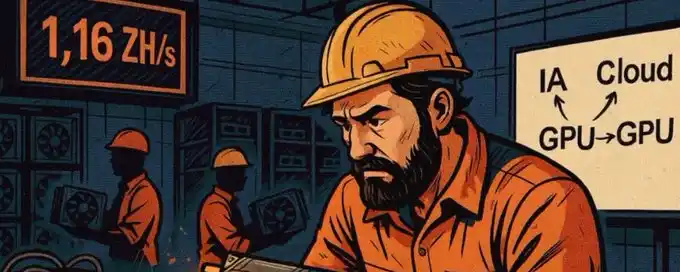
Computing Power Subprime Crisis: The AI Infrastructure Debt Wave, Miner Leverage, and the Vanishing 'Liquidation Liquidity'

AI Infrastructure Debt Crisis: A Looming "Compute Subprime" Scenario Beneath the surface of booming AI investment and data center expansion, a severe financial mismatch is brewing. Credit investors are growing alarmed as the industry uses long-term, real-estate-like debt models to finance rapidly depreciating tech assets with an effective shelf life of just 18 months. The core issue is a fundamental asset-liability mismatch. AI compute is inherently deflationary; inference costs are falling 20-40% annually due to technological advances, eroding the future cash flows used to service debt taken out at peak 2024 prices. This risk is amplified by a shift in financing. High-risk, venture-grade tech assets are being packaged into low-risk, utility-grade project finance and asset-backed loans (ABL), transforming potential equity losses into systemic defaults. Crypto miners, often portrayed as successfully "pivoting" to AI, are particularly vulnerable. Many have not deleveraged but have instead taken on double leverage—using volatile crypto holdings as collateral to borrow more dollars to buy GPUs. This creates a dangerous correlation risk where a crypto crash and a drop in AI rental prices could occur simultaneously. The final, critical flaw is the illusion of collateral. Unlike real estate, a defaulting borrower's GPUs are nearly impossible to liquidate. They are physically dependent on specialized infrastructure, face rapid obsolescence, and lack a deep secondary market, meaning the repo market needed for a orderly清算 (liquidation) does not exist. This is not a critique of AI's potential but a warning of a profound credit mispricing, where deflationary tech assets are financed with rigid infrastructure debt, creating a hidden chain of potential defaults.

marsbit12/18 11:04

Computing Power Subprime Crisis: The AI Infrastructure Debt Wave, Miner Leverage, and the Vanishing 'Liquidation Liquidity'

marsbit12/18 11:04

HTX Research's Latest Report Deciphers Pre-Market Trading Ecosystem: How a Hundred-Billion-Dollar Market Reshapes the Starting Line of Web3 Assets

HTX Research, the dedicated research arm of HTX, has released a new report titled "Pre-Market Trading Ecosystem: Mechanism Evolution, Market Structure, and Future Trends Behind a Ten-Billion Scale." The study systematically examines the formation, asset structures, and major models of the pre-market trading ecosystem in crypto, as well as its profound impact on project issuance and exchange systems. The report highlights the emergence of a "1.5-level market" that bridges primary and secondary markets, driven by tightened funding conditions and extended token generation event (TGE) timelines. This pre-market allows early contributions and future expectations to be transformed into tradable instruments. Three core asset structures form this ecosystem: pre-market OTC, spot, and perpetual contracts tied to future token value; tradable points systems linked to airdrop incentives; and NFT-based rights such as whitelist spots and early access passes. Together, these create a multi-layered pre-trading system. HTX has actively explored this space, launching pre-market perpetual contracts for assets like WLFI before their official listings. While pre-market has reached a multi-billion dollar scale with strong growth potential, it also faces challenges including thin liquidity, information asymmetry, and a lack of standardized regulations. Ultimately, pre-market trading is evolving from a grey-area activity into a structured, institutionalized market layer that is reshaping project launches, exchange strategies, and early user participation in crypto.

marsbit12/18 08:57
HTX Research's Latest Report Deciphers Pre-Market Trading Ecosystem: How a Hundred-Billion-Dollar Market Reshapes the Starting Line of Web3 Assets

marsbit12/18 08:57

2025 Year-End Final Exam: Crypto Asset Allocation Guide After the FOMC Decision

Crypto markets face a critical juncture in late 2025. Bitcoin hovers near $90,000, with the Fear & Greed Index at 25 (Extreme Fear) and short-term holder capitulation at historic highs. The December FOMC meeting delivered an expected 25bps rate cut but adopted a hawkish tone, projecting only one more cut in 2026, causing a brief BTC sell-off. However, the Fed also initiated a $40B/month Reserve Management Purchases (RMP) plan, a form of "stealth QE" injecting liquidity. Key themes emerge: - **Macro Impact**: Hawkish guidance creates short-term pressure, but ending QT and launching RMP set the stage for a 2026 liquidity surge, historically bullish for crypto. - **Institutional Shift**: 2025 marked a pivot to institutional dominance. While BTC remains core, portfolios are diversifying into ETH, Solana, stablecoins, and tokenized real-world assets (RWA). Pension and sovereign wealth funds are increasing exposure. - **Historical Pattern & On-Chain Data**: A potential "Santa Low-Chinese New Year Rally" pattern is anticipated due to seasonal liquidity shifts. On-chain metrics signal a likely bottom: massive STH capitulation, declining exchange reserves, and valuation indicators (MVRV Z-Score, Puell Multiple) in historic buy zones. The confluence of extreme fear, strong underlying accumulation signals, and impending macro liquidity shifts presents a strategic entry point for long-term investors, framing the current pullback as a mid-cycle correction within a broader upward trend.

marsbit12/18 07:13

2025 Year-End Final Exam: Crypto Asset Allocation Guide After the FOMC Decision

marsbit12/18 07:13

活动图片