Indepth Research

Provide in-depth research reports and independent analysis, leveraging data, technology, and economic insights to deliver a comprehensive examination of the blockchain ecosystem, project potential, and market trends.


Will Warsh Compromise with Trump? A Look at the 70-Year Power Struggle Between the President and the Fed

Will the Fed's new chair, Kevin Warsh, yield to pressure from President Trump? A White House-administered oath ceremony for Warsh breaks recent precedent, spotlighting a seven-decade power struggle between the presidency and the Federal Reserve. Historically, each Fed chair has balanced political pressure with policy independence. Warsh's situation, however, is uniquely complex, inheriting a divided Federal Open Market Committee (FOMC) with some members opposing even hints of rate cuts, while Trump expects easing. The report from Caitong Securities reviews this history: from William Martin establishing independence, to Arthur Burns compromising under Nixon, Paul Volcker building institutional credibility, Alan Greenspan navigating political waters, and Jerome Powell facing severe pressure from Trump, ultimately hardening the Fed's defensive stance. Warsh, a former Fed governor known for questioning quantitative easing, is not a traditional dove. His recent statements emphasize a nuanced view of Fed independence, skepticism of forward guidance, serious concern over inflation (contradicting Trump's "fake inflation" claims), and the potential for AI-driven productivity gains to allow rate cuts. The analysis concludes Warsh's policy will likely feature a clear direction but cautious pace. Rate cuts are probable but constrained by persistent inflation above target; if Trump pressures heavily, Warsh may delay cuts to defend Fed independence. Balance sheet reduction is seen as necessary but will be gradual to avoid premature conflict. Ultimately, Warsh's path will depend more on macroeconomic trends—inflation, growth, oil prices—than on his personal stance or the immediate political relationship.

marsbit05/22 01:57

Will Warsh Compromise with Trump? A Look at the 70-Year Power Struggle Between the President and the Fed

marsbit05/22 01:57

Musk's 'One-Man Dynasty' Set to Ring the Bell on June 12th

SpaceX Files for IPO, Targets Up to $2 Trillion Valuation SpaceX has officially filed for an initial public offering (IPO) with the U.S. SEC, planning to list on Nasdaq under the ticker "SPCX" on June 12. The company aims to raise $70-$80 billion, targeting a historic valuation between $1.75 and $2 trillion. Despite going public, founder Elon Musk will retain approximately 85% of the voting power through a dual-class share structure, maintaining absolute control. The S-1 filing reveals a company with sharply contrasting financial segments. In 2025, SpaceX reported $18.67 billion in revenue but a net loss of $4.94 billion. The loss was primarily driven by its AI unit, xAI, which burned $6.4 billion. In contrast, the Starlink satellite internet business was highly profitable, generating $11.4 billion in revenue and $4.4 billion in operating profit with an impressive 63% EBITDA margin. Starlink's user base grew to 10.3 million by Q1 2026, though average revenue per user has been declining. A key driver of the sky-high valuation is the recent $1.25 trillion merger with xAI, which added an AI narrative to the core aerospace business. SpaceX plans futuristic ventures like orbital AI data centers and space mining, though these are not yet revenue-generating. The company's capital expenditures are massive, exceeding $20.7 billion in 2025, with AI spending surpassing that of space operations. The IPO, led by Goldman Sachs, has drawn both enthusiasm and skepticism from Wall Street. While some hail it as a generational investment opportunity, others question the steep valuation multiples and the sustainability of funding xAI's significant losses with Starlink's profits. The listing represents a major test of market faith in Musk's long-term vision and his unique model of centralized control.

marsbit05/22 01:56

Musk's 'One-Man Dynasty' Set to Ring the Bell on June 12th

marsbit05/22 01:56

IOSG Founder: Please Tell Vitalik the Truth, May the OGs Who Enjoyed the Industry's Dividends Illuminate the Young

**Summary: An Urgent Call for Leadership and Renewal in Web3** In a candid and urgent article, the founder of IOSG Ventures voices deep concerns about the current state and future of the Web3 ecosystem, framing it as a critical turning point. The author's recent experience at a global tech conference highlighted a concerning trend: many former crypto professionals are now rebranding as founders in AI, biotech, and robotics, representing a "great self-rescue" but also a potential exodus. Key problems identified include a broken feedback loop within the ecosystem, a mass departure of developers to AI, and a severe lack of positive societal recognition for Web3, making it difficult for practitioners to take pride in their work. The author expresses worry that Ethereum, despite its foundational role, missed crucial windows for building mainstream applications by over-focusing on technical narratives like ZK and L2 during the last bull market. A significant concern is that **Vitalik Buterin might be living in an information bubble**, shielded from the community's real struggles by those with vested interests, hindering necessary reforms. The piece draws a stark contrast between U.S. and Chinese "OGs" (industry veterans). While many American OGs continue to reinvest their wealth and efforts into building the ecosystem, the author observes that a significant portion of Chinese OGs have cashed out or pivoted to other sectors like AI, leaving the Asian Web3 ecosystem with a severe funding crisis and weakened "blood-making" capacity. The central appeal is a call to action. The author urges **OGs who have benefited from the industry's growth to "light the way" for the next generation** through mentorship, grants, and direct support—not just large investments, but practical help like referrals, mailing list access, or small grants. Buterin is asked to re-engage with the grassroots, break out of his information bubble, and lead the community through this challenging bear market, which is described as the best time to build the next foundational product. For current builders and founders, the advice is to find their "why," build alliances for mutual support, continue learning (including about AI), and maintain personal well-being without letting token prices define self-worth. The author concludes that the industry's survival depends not on any single leader, but on every remaining believer becoming a "lighthouse" to guide others, ensuring the ecosystem has a future worth building for.

链捕手05/22 00:24

IOSG Founder: Please Tell Vitalik the Truth, May the OGs Who Enjoyed the Industry's Dividends Illuminate the Young

链捕手05/22 00:24

Viewpoint: After Surviving the Death Cycle, Why Has Privacy Pioneer Zcash Returned to the Mainstream Spotlight?

Zcash, the pioneering privacy-focused cryptocurrency built with zero-knowledge proof (ZK) technology, is re-emerging as a major narrative. Having survived a "death cycle" and proven its resilient community, Zcash is now positioned at a unique convergence of factors driving renewed institutional and retail interest. Key catalysts include the increasing institutionalization of crypto (e.g., BlackRock's ETF), which creates a "Trojan horse" for privacy adoption through Zcash's transparent mode. The rise of AI-powered on-chain surveillance makes financial privacy a critical necessity, not just for niche users but for mainstream wealth preservation against overreach. ZK technology has finally matured to enable practical, user-friendly private transactions, a core advantage over older "obfuscation" methods like Monero's ring signatures. Zcash’s narrative as "private Bitcoin"—a fork with the same 2100M cap and PoW—is simple and powerful. It competes in the store-of-value arena, offering cryptographic privacy as a fundamental human right. Its development roadmap is robust, featuring a soon-to-be-complete quantum resistance upgrade for its shielded pool, faster block times, and improved wallet support (e.g., from Ledger). With backing from major funds and a growing developer ecosystem, Zcash is seen as leading the crucial reintegration of privacy into the crypto landscape, fulfilling the original cypherpunk vision.

marsbit05/21 10:28

Viewpoint: After Surviving the Death Cycle, Why Has Privacy Pioneer Zcash Returned to the Mainstream Spotlight?

marsbit05/21 10:28

New Paradigms and Investment Logic in the Era of AI+Web3

In the era of AI+Web3, a venture capital firm shares insights from reviewing numerous projects. The AI industry is seen as still early-stage, structured in a "seven-layer matrix" from power infrastructure to AI agents. Investment timing is crucial, especially in cyclical sectors like AI data centers. The integration of AI and Crypto is deemed essential for two reasons: 1) AI agents require "financial sovereignty" for micro, high-frequency, machine-to-machine transactions, and 2) blockchain provides trust and auditability to address AI "hallucinations" and ensure transparency. The core investment principle is "honesty." Teams must be genuine, not hastily assembled, and products must be substantiated by real metrics, not just flashy demos. Projects built on honesty are valued for long-term success over short-term hype. Looking ahead, the most underestimated opportunity for 2026 is the deep fusion of AI, blockchain, and entertainment. While most investment focuses on B2B infrastructure like payments and decentralized computing (DePIN), the future lies in consumer applications. As AI automates most human labor, society will shift towards leisure, creating massive demand for high-quality entertainment. AI can power immersive experiences (e.g., NPCs with autonomous consciousness in games), while blockchain secures digital ownership and economic systems. This convergence could unlock tremendous value in user time and capital within virtual worlds. *Disclaimer: The content represents the author's views for discussion only and does not constitute investment advice.*

marsbit05/21 08:56

New Paradigms and Investment Logic in the Era of AI+Web3

marsbit05/21 08:56

Deconstructing Anthropic: The Best AI Company Might Also Be an 'Organizational Invention'

Anthropic has emerged as one of the most compelling and fastest-growing AI companies. Its core strengths lie in strategic focus and unique organizational culture. Strategically, Anthropic concentrated early on coding as the critical path to AGI and commercial success, a focus driven by resource constraints and validated by market results. This contrasts with OpenAI's more expansive, multi-pronged approach. Co-founder Dario Amodei's technical conviction and low FOMO personality fostered this decisive focus. Organizationally, Anthropic has cultivated a distinctive culture characterized by: 1. **Deep Mission-Orientation:** A genuine, almost religious commitment to AI safety as the primary goal, even above corporate success. 2. **High Trust, Low Ego:** An environment where brilliant researchers collaborate effectively without internal politics or status battles. 3. **Strong Humanistic Values:** A bookish, idealistic ethos reflected in its hiring and model naming. This culture is maintained through rigorous cultural screening in hiring, extreme transparency and context-sharing from leadership (like Dario's frequent all-hands), a unique seven-cofounder equal-equity structure that disperses cultural influence, and a "one team" philosophy that minimizes silos. The culture stems partly from business necessity—excelling at the "dirty work" of data engineering for coding/agentic AI—and partly from Dario's negative experiences with political infighting at previous companies, motivating him to build Anthropic as an antithesis. While OpenAI remains a formidable competitor with greater resources and exploratory zeal, Anthropic demonstrates that success in the AI era can also come from focused bets, cohesive culture, and a steadfast mission, offering a distinct model of organizational invention.

marsbit05/21 04:04

Deconstructing Anthropic: The Best AI Company Might Also Be an 'Organizational Invention'

marsbit05/21 04:04

147 Trillion vs 70 Billion: The Rise of On-Chain 'Risk Managers' and the Potential Dawn of a New Era in DeFi Asset Management

"147 Trillion vs 70 Billion: The Rise of On-Chain 'Risk Managers' and the Potential Dawn of a New Era in DeFi Asset Management" Key Points: The role of professional asset managers is emerging in DeFi, ending the era where protocols and governance dictated everything. While early DeFi protocols like Aave and Compound bundled risk management within their code, innovations like Morpho have separated infrastructure from risk judgment. This allows specialized "Risk Managers" to operate independent lending vaults, acting as on-chain asset managers. The market, though early with ~$7B in assets under management (AUM), is rapidly consolidating around top performers like SteakhouseFi (RWA focus), SentoraHQ (AI-driven models), and Gauntlet (crisis management). This modular structure mirrors TradFi's division of labor: distributors (e.g., exchanges) source capital, Risk Managers design strategies and set standards, and underlying protocols handle custody and execution. For traditional asset managers, this familiar structure presents clear entry paths: 1) **Distribution**: Partnering with Risk Managers as a backend service. 2) **Supply**: Bringing real-world assets (RWA) on-chain as collateral. 3) **Operation**: Becoming a Risk Manager themselves (e.g., Bitwise). The core competency required is shifting from coding to traditional risk underwriting and financial expertise—areas where established institutions hold a natural advantage. While the current DeFi market (~$80B) is minuscule compared to global asset management (~$147T), it represents a significant growth runway. The teams that build the trusted standards and rails for risk-managed capital now are poised to define the market's future as institutional capital seeks secure on-ramps.

marsbit05/21 01:24

147 Trillion vs 70 Billion: The Rise of On-Chain 'Risk Managers' and the Potential Dawn of a New Era in DeFi Asset Management

marsbit05/21 01:24

The AI Stock Genius Who Made 60x Bets $7.7 Billion on Nvidia Topping Out

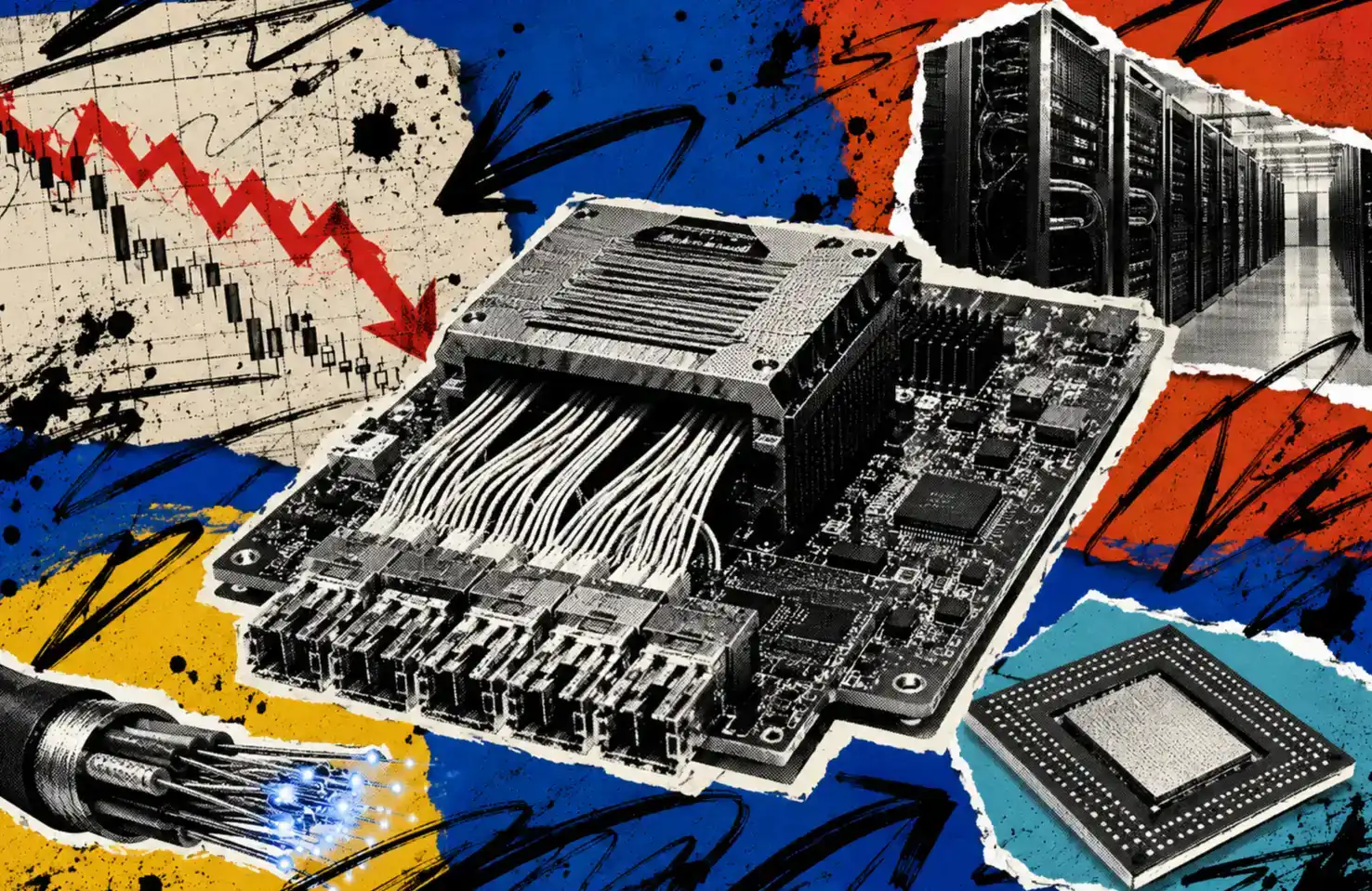
An AI-focused hedge fund named Situational Awareness LP, known for its 60x returns, has taken a significant bearish stance on semiconductor stocks in Q1 2026. Its 13F filing reveals a massive 148% quarterly increase in nominal exposure to $13.677 billion, with over 60% of the new exposure directed towards put options on major chip players. Key bearish bets include $2.04 billion in puts on the VanEck Semiconductor ETF (SMH) and $1.56 billion on NVIDIA, alongside positions against Broadcom, Oracle, AMD, and others. The fund simultaneously increased its long equity holdings in AI infrastructure and compute providers like CoreWeave and Bitcoin mining companies repurposing for compute. The core thesis behind this positioning is a shift in the primary constraint for AI expansion. The fund argues that while GPU supply was the critical bottleneck in previous years, the new limiting factors for large-scale AI cluster deployment are physical infrastructure: electrical grid access (with multi-year backlogs in the US), power availability, land, and data center construction timelines. The fund is not betting against AI's success but rather hedging against potential valuation corrections in semiconductor stocks whose prices may have run ahead, while directly investing in the downstream physical bottlenecks—power and data center capacity—it believes will capture value next. This move translates a previously theoretical narrative about infrastructure constraints into a concrete, high-conviction portfolio structure.

链捕手05/20 14:50

The AI Stock Genius Who Made 60x Bets $7.7 Billion on Nvidia Topping Out

链捕手05/20 14:50

Deep Dissection of the Anthropic Account Banning Storm: The Behind-the-Scenes of the Safety Religion, AI Civil War, and Claude's Dilemma Under US-China Decoupling

"Deconstructing Anthropic's Account Banning Storm: Safety Dogma, AI Civil War, and the Claude Dilemma Under US-China Decoupling" analyzes the aggressive user account suspension policies of Anthropic, particularly for its product Claude Code. The article attributes this to a multi-layered convergence of factors. The root cause is traced to founder Dario Amodei's personal "safety religion." Shaped by his father's illness and his exit from OpenAI over safety disagreements with Sam Altman, Amodei embedded this "zero-tolerance" philosophy into Anthropic's DNA. This manifests in technologies like Constitutional AI and a "preventive enforcement" approach to risk, prioritizing safety over user experience or growth. This stance defines Anthropic's position in the US "AI Civil War," pitting "safety-first" proponents like Amodei against "accelerationists" like Altman who prioritize rapid development and commercialization. Anthropic's strict model aligns with its business strategy targeting high-value, low-risk enterprise clients who pay a premium for security, unlike OpenAI's mass-market approach. Capital from Amazon and Google supports Anthropic but also creates a delicate balance, as these investors need its safety reputation without allowing overly restrictive policies to cripple its commercial viability. The conflict escalated when Anthropic refused a US Department of Defense contract requiring the removal of safety guardrails, leading to its placement on a "supply chain risk" blacklist—a key example of the public battle between the two AI factions. For Chinese users, the stringent bans are further compounded by US-China tech decoupling. Anthropic's policies act as a tool for compliance with US export controls, making Chinese users—who often circumvent regional blocks via VPNs or virtual cards—primary targets for "preventive" account terminations to avoid regulatory penalties. The article concludes that Anthropic's harsh account control measures are unlikely to loosen in the near future, being integral to its founding philosophy, business model, and geopolitical compliance needs, positioning it as a unique, security-obsessed player in the tripartite global AI competition involving US safety and acceleration factions and rising Chinese AI power.

marsbit05/20 14:34

Deep Dissection of the Anthropic Account Banning Storm: The Behind-the-Scenes of the Safety Religion, AI Civil War, and Claude's Dilemma Under US-China Decoupling

marsbit05/20 14:34

活动图片