Blockchain Platform WEMIX Hacked for $6.25 Million

cryptonews.ruPublished on 2026-07-27Last updated on 2026-07-27

Abstract

Hackers exploited administrator privileges of a smart contract on the WEMIX blockchain platform, minting approximately 5.23 million unbacked $WEMIX tokens worth about $5.22 million. These tokens were swapped on a decentralized exchange for 30,736 $WEMIX and 724,198.27 $USDC.e, a version of USDC native to the WEMIX3.0 network. The attackers then bridged the $USDC.e to Ethereum and BNB Smart Chain, converting the funds to ETH and USDT and distributing them across multiple wallets, with some reportedly sent to centralized exchanges. Total losses are estimated at $6.25 million. In response, WEMIX halted nearly all services, suspended cross-chain bridges, and froze trading in affected liquidity pools. The platform is seeking to have the withdrawn assets frozen on exchanges. The incident caused the WEMIX stablecoin to depeg, plummeting 98% to $0.01. This follows a previous hack in February 2023, where attackers stole $8.65 million worth of $WEMIX from the Play Bridge.

Hackers used administrator privileges of a smart contract and minted approximately 5,225,525 unbacked $WEMIX tokens worth about $5.22 million. The freshly issued tokens were then passed through a decentralized exchange and swapped for 30,736 $WEMIX and 724,198.27 $USDC.e — this is a version of the stablecoin $USDC circulating on the mainnet of the WEMIX3.0 project.

Then the attackers withdrew the $USDC.e to the Ethereum network and the BNB Smart Chain. There, the funds were converted into ETH and USDT and distributed across numerous wallets. Representatives of $WEMIX reported that some of these assets were later sent to centralized exchanges. The total damage from the hack is estimated at $6.25 million.

$WEMIX has disabled almost all of its services, suspended the operation of all bridges connecting the WEMIX3.0 mainnet to external blockchains. In addition, trading in the affected liquidity pools has been frozen, including for the pairs $WEMIX$USDC.e, $WEMIX$WEMIX, CROW–$WEMIX, TIPO–$WEMIX$ and PLAY–$WEMIX$. On the $WEMIX PLAY platform, trading and staking on the $NFT marketplace have been disabled.
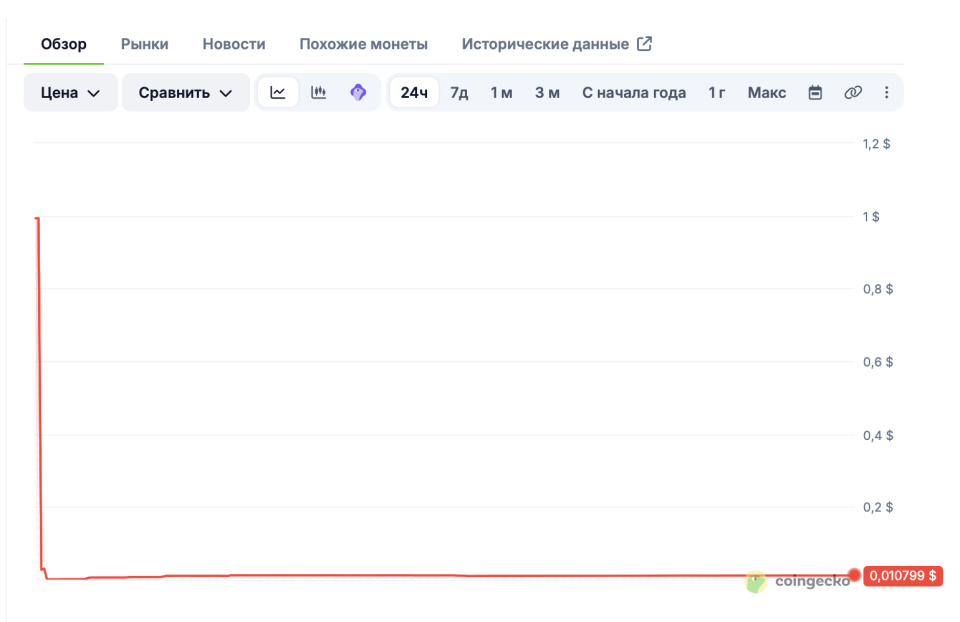
The platform is now trying to get exchanges to freeze the withdrawn assets. The WEMIX stablecoin lost its peg to the dollar, falling by 98% to $0.01.

In February of last year, attackers withdrew approximately $8.65 million worth of $WEMIX from the Play Bridge vault — at that time, the token's value was about $6.15 million. The incident was related to the compromise of authentication keys used for monitoring the $NFT platform Nile. According to the investigation, the hackers spent nearly two months in the system before withdrawing the funds.

end-content
Related Questions

QHow did the hackers exploit the WEMIX platform to steal funds?

AThe hackers exploited administrator privileges of a smart contract to mint approximately 5,225,525 unbacked $WEMIX tokens, worth about $5.22 million. They then swapped these tokens on a decentralized exchange for other assets.

QWhat actions did the WEMIX platform take immediately after discovering the hack?

AWEMIX disabled nearly all its services, suspended all bridges connecting its mainnet to external blockchains, and froze trading in affected liquidity pools, including several key trading pairs. It also disabled trading and staking on its NFT marketplace.

QWhat was the total estimated financial damage from the WEMIX platform hack?

AThe total estimated damage from the hack is $6.25 million.

QWhat happened to the WEMIX stablecoin's price following the security incident?

AFollowing the hack, the WEMIX stablecoin lost its peg to the US dollar, plummeting by 98% to a value of $0.01.

QHas WEMIX experienced a similar security breach in the past?

AYes, in February of the previous year, attackers withdrew approximately $8.65 million worth of $WEMIX (valued at about $6.15 million at the time) from the Play Bridge vault. That incident was linked to compromised authentication keys.

Related Reads

Bitcoin Policy Institute Calls on AI Developers to Provide Crypto Infrastructure Defenders with Access to Advanced Models

The Bitcoin Policy Institute (BPI) has issued an open letter urging leading AI developers to grant trusted access to advanced AI models for defenders of critical crypto infrastructure. Analysts warn that sophisticated AI systems, capable of analyzing large codebases and finding vulnerabilities, could be leveraged by malicious actors before open-source defenders can use them, posing a significant risk to the trillion-dollar digital asset ecosystem. Vulnerable points include wallets, signing devices, cryptographic libraries, node software, exchanges, and payment networks. BPI highlights that developers of key open-source projects like Bitcoin Core currently lack access to the specialized cybersecurity programs and most powerful AI models available to leading AI labs and their partners. This creates a dangerous asymmetry. The institute calls on AI labs to establish or expand permanent trusted access programs, providing qualified developers and researchers with early, supervised access to cutting-edge models, sufficient computing resources for security audits, secure environments for analyzing sensitive code, and direct channels for vulnerability disclosure and coordinated fixes. The goal is to enable defenders to identify and patch security flaws before attackers can exploit them. BPI also urges the crypto industry to assist AI labs in identifying reliable participants for such access programs and coordinating response efforts.

cryptonews.ru7m ago

Bitcoin Policy Institute Calls on AI Developers to Provide Crypto Infrastructure Defenders with Access to Advanced Models

cryptonews.ru7m ago

Ethena's USDe Captures 43% of Stablecoin Supply on Robinhood Chain for Capital Placement

USDe from Ethena has rapidly become the primary source of dollar liquidity on the Robinhood Chain, surging from about $17 million a month ago to roughly $253 million, accounting for nearly 43% of the network's total stablecoin volume. This synthetic dollar, which maintains its value through crypto assets and offsetting derivatives positions, indicates that incoming capital is seeking more than just a trading venue. It reflects a broader shift where crypto investors are using stablecoins for DeFi, collateral, and yield strategies. Robinhood Chain, an Ethereum L2, is seeing its dollar base shift towards yield-bearing assets. Unlike traditional stablecoins like Paxos's USDG, USDe is a synthetic dollar that does not inherently pay yield; users must stake it to earn rewards via sUSDe within Ethena's delta-neutral framework. Analysts view the rapid inflow as capital being deposited within the network, not just transiting through it, potentially boosting lending and trading activities even without user growth. While transaction activity has spiked—averaging about 11.6 million daily transactions, up 30% weekly—daily active accounts have grown only modestly and remain below July peaks. Currently, memecoins like $CASHCAT dominate over 99% of trading volume, driving speculation rather than the platform's long-term focus on tokenized securities. The key challenge for Robinhood will be converting this initial speculative activity into sustainable, long-term financial transactions aligned with its tokenization strategy.

cryptonews.ru10m ago

Ethena's USDe Captures 43% of Stablecoin Supply on Robinhood Chain for Capital Placement

cryptonews.ru10m ago

Trading

Spot
活动图片