Bitcoin's relentless upward momentum showed no signs of abating on Thursday afternoon, as the leading cryptocurrency rode a wave of pro-crypto sentiment stemming from a White House meeting. Market data shows that, after encountering resistance at the $72,000 level earlier in the day, Bitcoin easily breached that mark around 6:20 AM Eastern Standard Time (EST), climbing to $72,330.
Although Bitcoin briefly dipped below $72,000 for about five hours, sustained buying pressure kept it hovering near that threshold. Around 11:00, a second wave of buying pushed the cryptocurrency to a session high of $72,850. This surge increased Bitcoin's daily gain to 5.6% and boosted its market capitalization from $1.44 trillion to $1.45 trillion.
Since Monday, August 17, when it traded around $63,500, Bitcoin has added roughly $9,000 in value—a 14% increase in just four days. This rally has trimmed year-to-date losses to 17.4%, slightly improving the chances that 2026 will end in the black.
Meanwhile, for a second consecutive day, Bitcoin's rise triggered the liquidation of leveraged short positions, although the overall liquidation volume was significantly lower than in the previous 24 hours. According to Coinglass, Bitcoin's price action led to the liquidation of $650 million in short positions compared to $41 million in long positions. Across the crypto market, approximately $1.59 billion in short positions were liquidated versus $219 million in long positions.
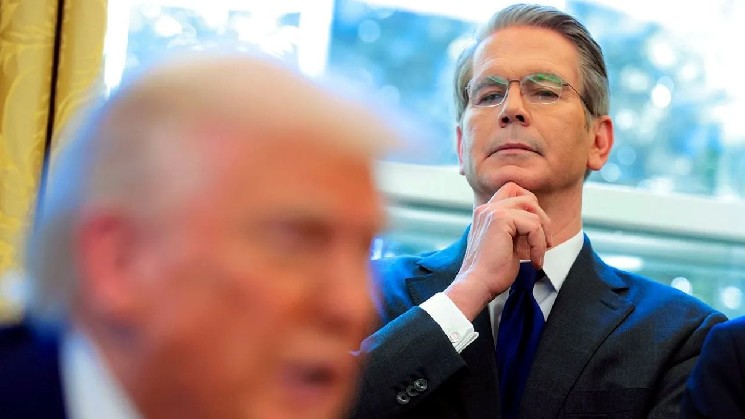
A dual catalyst—a key policy statement from the U.S. Treasury Department coupled with a White House summit where Trump administration officials doubled down on crypto policy—ignited a market-wide rally for both Bitcoin and altcoins. This sharp spike ended several weeks of aimless consolidation, silencing analysts who had repeatedly pointed to the complete lack of macroeconomic catalysts as the sole factor pinning Bitcoin at the $65,000 level.
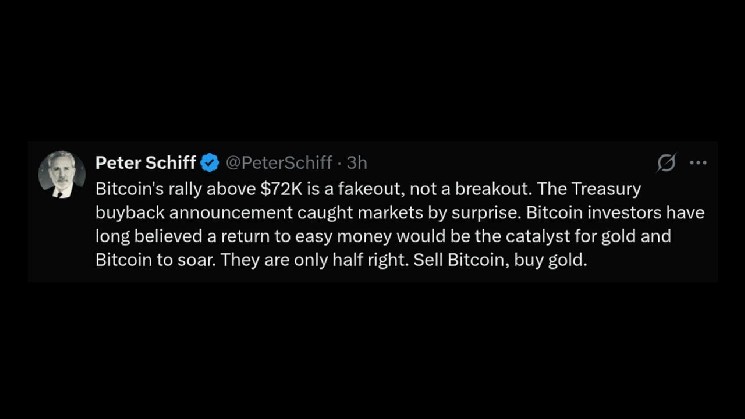
Market strategists point to rising liquidity expectations as the primary driver of Bitcoin's sustained momentum. Remarks from U.S. Treasury Secretary Scott Bessent, hinting at debt management measures potentially exceeding the scale of a $4 billion bond buyback program announced on August 19, fueled bullish sentiment.
This bond buyback initiative initially pushed the yield on 10-year Treasury notes down to 4.63%, but when yields climbed back above 4.71% within 24 hours, market watchers interpreted Bessent's subsequent comments as a signal that the Treasury might resort to even larger bond purchases. Such a macroeconomic backdrop is believed to accelerate capital flows into fixed-supply assets like Bitcoin.
end-content