Bitcoin: How a $1.3B liquidity gap could stall BTC’s next move

ambcryptoPublished on 2026-03-20Last updated on 2026-03-20

Abstract

Bitcoin has shown a 12% gain since late February, contrasting with a decline in the S&P 500, reigniting discussions about its role as a digital safe haven. However, despite a recent increase in stablecoin exchange inflows, the 30-day moving average remains $1.3 billion below the annual average, indicating insufficient demand to fuel a sustained rally. Broader macroeconomic concerns, including inflation risks and rising U.S. Treasury yields, are making investors cautious about risk assets like Bitcoin. While a short-term rise toward $83k–$89k is possible, analysts caution that this should be viewed as a retracement within a longer-term bearish trend rather than the start of a true recovery.

Bitcoin [BTC] has been trending higher over the past two weeks. Though it was trading within a longer-term downtrend, it had made a bullish market structure shift on the 4-hour timeframe on the 25th of February. This structural shift saw Bitcoin continue its steady rally.

Since making the local low of $63k on the 28th of February, Bitcoin has gained 12% in three weeks. During this time, the S&P 500 has shed roughly 3.5%. This show of relative strength has given rise to arguments that BTC was acting as a hedge against macroeconomic uncertainty- the old digital gold argument.

The “safe haven” discourse has drawn retail FOMO, reported AMBCrypto. It remains to be seen if retail is right and the current rally has room to grow, or if market participants should adopt a more pessimistic outlook.

Recovery in stablecoin liquidity might not translate into demand
Source: Axel Adler Insights

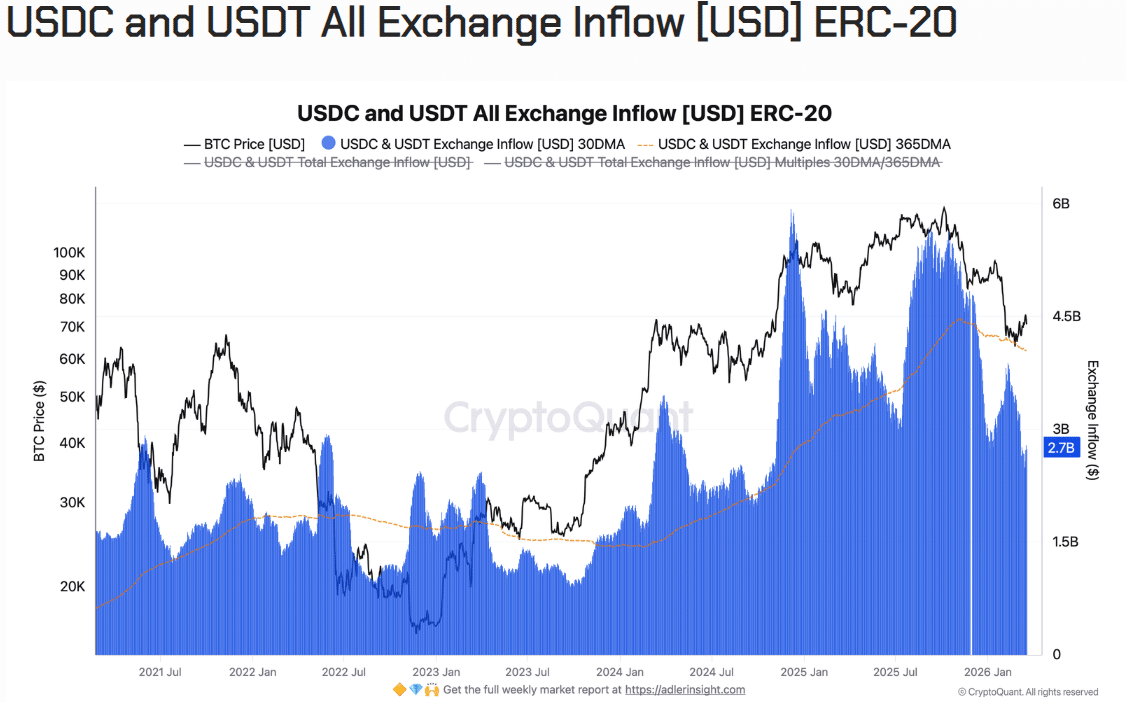
A crypto analyst noted that the 30-day Moving Average (DMA) of the exchange inflow of USDT and USDC has improved in February-March 2026. The 30DMA rose to $3.84 billion on the 10th of February, but had fallen by nearly 30% to $2.74 billion by the 19th of March.

Comparing the 30DMA to the 365DMA showed that the current stablecoin inflow to exchanges was noticeably below the annual norm. According to the analyst, the return of the 30DMA of stablecoin inflows above the yearly average generally indicates a return toward a Bitcoin recovery phase.

As things stand, there was a $1.3 billion gap between the moving averages.

Analyst Darkfost argued the case that inflation risks and geopolitical concerns made it an unfavorable scenario for risk assets such as Bitcoin. The rising U.S. Treasury yields made them attractive as a low-risk return.

In these conditions, BTC is a riskier bet with potentially less capital flow into it. This meant it could take a while longer to escape the crypto bear market, despite recent gains.
Source: BTC/USDT on TradingView

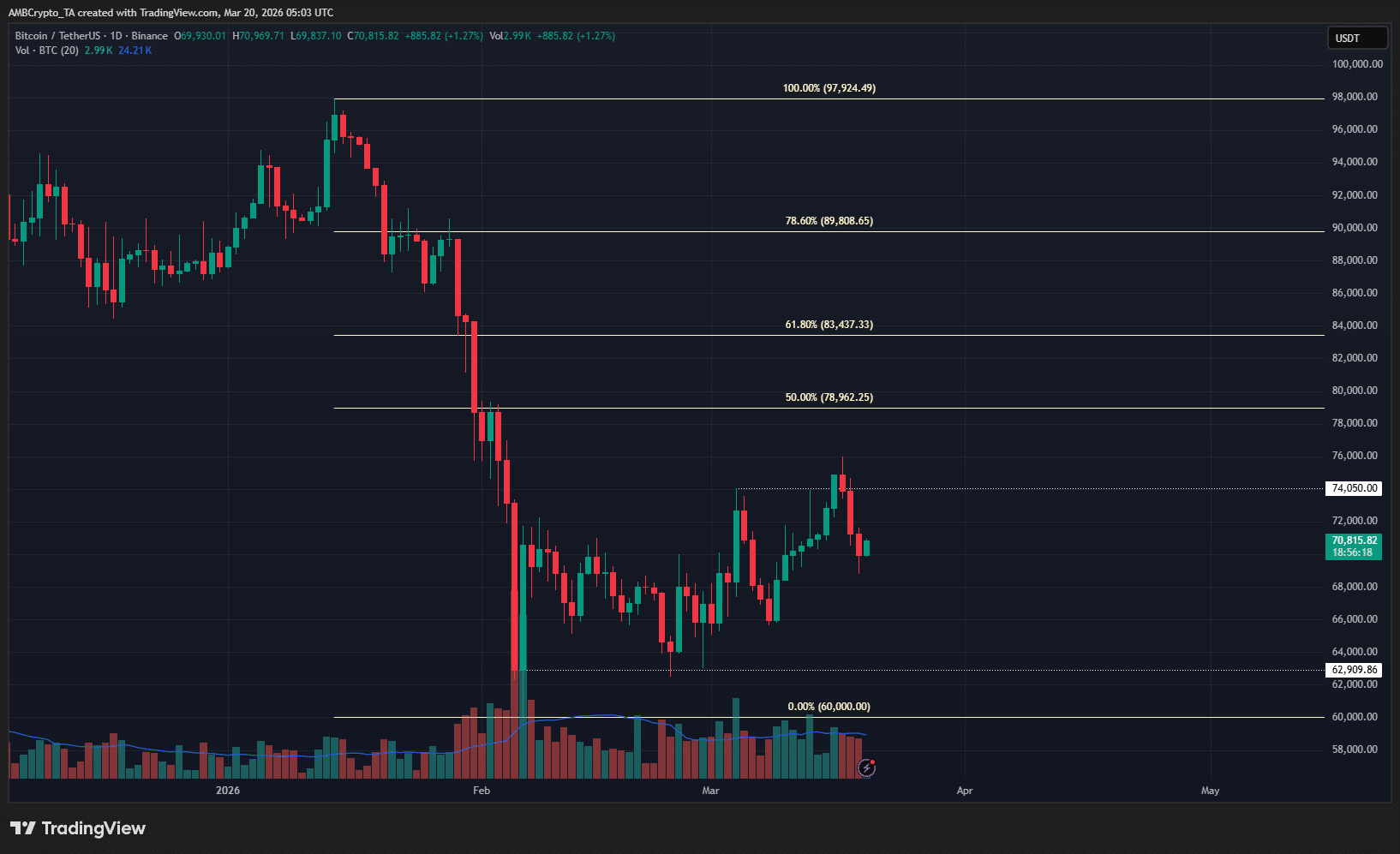
The long-term BTC swing structure remains bearish. In the coming weeks, a rally to $83k-$89k is possible. Traders and investors should be prepared to think of this move as a retracement within a broader bearish trend, rather than the beginning of a recovery.


Final Summary

  • Bitcoin saw a recovery in stablecoin liquidity, but this has not translated into aggressive demand for the leading crypto.
  • The broader market fears, such as inflation risks, mean that the path to recovery will not be straightforward for BTC.


Related Questions

QWhat is the $1.3 billion liquidity gap mentioned in the article and why is it significant for Bitcoin's price movement?

AThe $1.3 billion gap refers to the difference between the 30-day moving average (30DMA) of stablecoin (USDT and USDC) inflows to exchanges and the 365-day moving average (365DMA). It is significant because the 30DMA being below the yearly average indicates a lack of sufficient liquidity entering the market, which historically is needed to fuel a sustained Bitcoin recovery. This gap suggests that the recent price gains may not be supported by strong underlying demand.

QAccording to the analyst Darkfost, why is the current macroeconomic environment unfavorable for risk assets like Bitcoin?

AAnalyst Darkfost argued that inflation risks and geopolitical concerns create an unfavorable scenario for risk assets. In such conditions, rising U.S. Treasury yields become more attractive to investors as they offer a low-risk return. This makes Bitcoin, a perceived riskier asset, less appealing and could result in reduced capital flow into it.

QWhat does the article suggest about Bitcoin's role as a 'safe haven' or 'digital gold' based on its recent performance?

AThe article notes that Bitcoin's recent show of relative strength, gaining 12% while the S&P 500 shed 3.5%, has revived arguments that BTC can act as a hedge against macroeconomic uncertainty—the 'digital gold' narrative. However, the overall analysis in the article presents a more cautious outlook, suggesting that broader market fears mean its path to recovery is not straightforward.

QWhat is the outlook for Bitcoin's price trend in the coming weeks according to the technical analysis presented?

AThe long-term swing structure for Bitcoin remains bearish. While a rally to the $83,000-$89,000 range is possible in the coming weeks, the article advises traders and investors to view this potential move as a retracement within a broader bearish trend rather than the beginning of a new recovery or bull market.

QHow did the exchange inflow of major stablecoins (USDT and USDC) change between February and March 2026?

AThe 30-day Moving Average (30DMA) of the exchange inflow for USDT and USDC improved in February, rising to $3.84 billion by February 10th. However, it then fell by nearly 30%, dropping to $2.74 billion by March 19th, indicating a significant decrease in stablecoin liquidity moving onto exchanges.

Related Reads

Trading

Spot
Futures

Hot Articles

Discussions

Welcome to the HTX Community. Here, you can stay informed about the latest platform developments and gain access to professional market insights. Users' opinions on the price of S (S) are presented below.

活动图片