Before You Jump on Any ICO Bandwagon, Read This First

深潮Published on 2025-12-16Last updated on 2025-12-16

Abstract

Before participating in any ICO, it's crucial to understand that most projects fail, and only a few achieve success. The recent hype around ICOs, driven by projects like MegaETH and Plasma, often leads to impulsive investments without proper due diligence. Here are key points to consider: 1. **Product Fundamentals**: Evaluate if the product solves a real problem and has genuine innovation. Avoid projects based on future promises or testnet data without a working product. 2. **Team Experience**: The team's track record matters. Experienced teams can adapt to market changes, while weak teams may disappear when hype fades. 3. **Investors and Valuation**: Check if reputable VCs are involved and assess the valuation. Avoid projects where insiders have low valuations, leaving retail investors at risk. 4. **Authentic Data**: Look beyond surface metrics like TVL or user numbers. Ensure data is genuine and not inflated by incentives or fake activity. 5. **Marketing and Narrative**: Strong projects control their narrative and attract organic attention. Poor projects rely on buzzwords without substance. 6. **Tokenomics**: Understand token unlock schedules, vesting, and fully diluted valuation (FDV). Avoid structures that favor insiders and shift risk to retail. 7. **Market Conditions**: Market cycles significantly impact valuation and returns. The same project may perform differently in a bull vs. bear market. ICO investments are not free money. Avoid FOMO-driven decisions and p...

Written by: Ola Ξlixir

Compiled by: AididiaoJP, Foresight News

ICOs are the hottest topic on crypto Twitter right now, and everyone is talking about them.

Everyone thinks they've found the next MegaETH or Plasma.

But most people are overlooking one key point:

Only a small fraction of these ICOs will actually make money; that's how the crypto market has always been.

One project pioneers a model, and it succeeds.

Then ten teams copy it, thinking they can replicate that success, but it's hard to duplicate, and eight or nine out of ten will fail.

Right now, every team wants to do an ICO, just because MegaETH and Plasma are hot.

They figure, instead of giving you an airdrop, why not have you pay to "get in."

However, those two projects succeeded because they were well-planned before execution.

So, before you invest in any ICO, consider the following points.

1. The Product is Fundamental

Ignore the flashy PowerPoints and the hype posts from KOLs.

Just ask a simple question:

Does this product actually solve a real problem today? Does it have genuine innovation? Why do they need to issue a token?

If the product only exists in a "future story" or requires a bunch of assumptions to work, that's dangerous.

Good ICOs usually have something actually running, not just empty promises or testnet data.

If they can't explain what the product does in one sentence, that's your first red flag.

2. The Team Matters

The quality of a project depends on the strength of the team behind it.

Look at the team's track record:

Have they built products before, in crypto or elsewhere?

Experience is a plus; it shows they've been down this road.

An anonymous team isn't necessarily a bad thing,

but they must deliver exceptional results to earn trust.

When the market shifts, strong teams adapt;

weak teams vanish as soon as the hype dies down. This is an "attention economy."

3. Investors and Valuation

Who invested in this project? Top-tier VCs or third-rate funds?
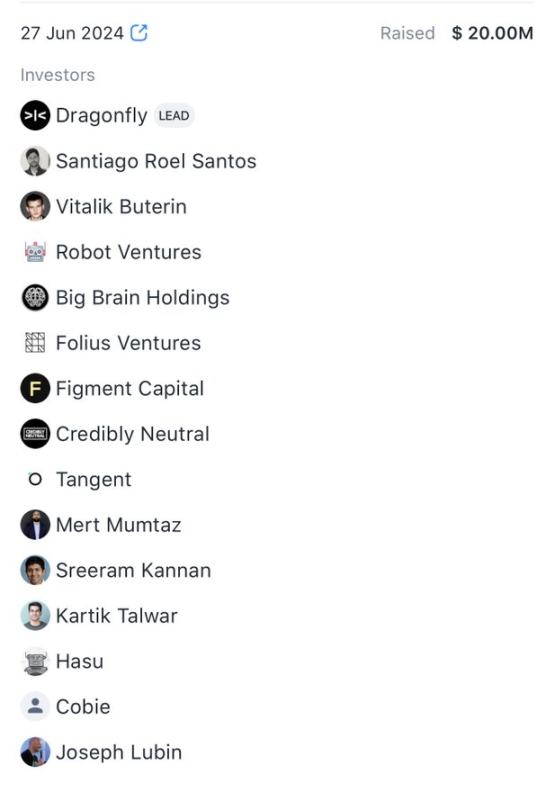
How much did they raise? What's the valuation? This is more important than many think.

If insiders and early investors got in at extremely low valuations, you're likely their "exit liquidity."

A good ICO's valuation makes sense even without hype;

a bad ICO relies on buzz and vanity metrics to justify its price.

4. Look at Real Data, Not Surface Numbers

Do they have real revenue? What are the active user numbers and Total Value Locked (TVL)?

Most importantly, the quality of this data—any data can be faked.

Testnet data is meaningless if it's easy to manipulate.

A dashboard full of fake activity won't magically turn into real usage—Monad is a prime example.

See if user demand is organic: are people willing to use the product without incentives,

or are they just there for a potential airdrop?

5. Marketing and Narrative Power

Marketing is more important than many realize.

MegaETH's marketing was executed masterfully.

The team controlled everything, perfectly steering the narrative.

Everyone was actively discussing MegaETH.

In the Web3 world, attention is everything.

If an ICO gets no attention before launch, don't expect miracles afterward—again, think Monad.

Good projects know how to tell their story clearly from the start.

Bad projects hide behind buzzwords: "We're building Web3's next ChatGPT + Nvidia + prediction market..." Nice story.

6. Offering Terms and Valuation

Read the terms carefully:

  • Token unlock rules

  • Vesting schedule

  • Circulating supply

  • Fully Diluted Valuation (FDV) at listing

Understanding the full tokenomics is crucial. If you can't, use AI tools to help analyze it.

If the ICO structure heavily favors insiders and dumps all the risk on retail, stay away.

A fair launch doesn't mean cheap; it means the interests of the project and participants are aligned.

7. Market Conditions are Key

This is the most easily overlooked point.

In a real bull market, a decent project can hit a $500M to $1B FDV on narrative alone.

Right now, even the hottest projects often cap out at $100M to $300M valuations.

This directly impacts your risk-reward calculation.

The same project can have wildly different outcomes in different markets.

Timing isn't everything, but it's never irrelevant.

Final Thoughts

ICOs are not free money; they never were.

The current trend will create some winners and leave a long list of lessons.

Don't buy just because everyone else is, or because a KOL you like is shilling it.

Don't assume every promoted project will be the next MegaETH.

The worst projects will just exploit your FOMO and hype-chasing mentality, with zero substance.

Related Questions

QWhat is the main reason many ICOs fail to replicate the success of projects like MegaETH or Plasma?

AMost ICOs fail because they are merely copying a successful model without proper planning, execution, or innovation, unlike the original projects which were well-planned from the start.

QAccording to the article, what should be the primary focus when evaluating an ICO?

AThe primary focus should be on the product itself—whether it solves a real problem, has actual innovation, and has a working product rather than just promises or testnet data.

QWhy is the team behind an ICO important, as mentioned in the article?

AThe team's experience and track record are crucial because a strong team can adapt to market changes, while a weak one may disappear when hype fades. Anonymous teams need to deliver exceptional results to gain trust.

QWhat does the article suggest about ICO valuations and investor alignment?

AThe article warns that if insiders and early investors get in at very low valuations, retail investors might become 'exit liquidity.' A good ICO should have a logical valuation and fair terms that align interests between the project and participants.

QHow does market timing affect the outcome of an ICO, based on the article?

AMarket timing is critical—the same project can have vastly different results in a bull market versus the current environment. Valuations and risk-reward ratios are heavily influenced by the overall market conditions.

Related Reads

Huawei Cloud Rejects Token Price War, Zhou Yuefeng Seeks a New Winning Formula for AI Cloud

At the 2026 Huawei Cloud INSPIRE Creator Conference, CEO Zhou Yuefeng outlined Huawei Cloud's distinct strategy in the competitive AI cloud market. Instead of engaging in price wars based on token volume or Maas revenue—a common focus for rivals like Alibaba Cloud and ByteDance's Volcano Engine—Huawei Cloud is shifting the competition towards real-world productivity gains. Zhou highlighted three core differentiators: a fully domestic computing stack (Ascend, Kunpeng), a focus on government and enterprise clients rather than consumer internet, and a deep commitment to open-source ecosystems. To this end, Huawei Cloud launched a suite of new products under the "Agentic Infra" paradigm, including the AICS Lingqu computing cluster, AMS memory storage, and the ModelArts Next platform. These aim to solve enterprise challenges in deploying AI agents, such as latency, memory, scheduling, and security. The strategy further involves creating specialized industry zones ("AI Dream Factories") for sectors like healthcare and embodied intelligence. For example, a smart medical zone developed with Shanghai Ruijin Hospital aims to democratize expert-level diagnostic capabilities. In essence, Huawei Cloud is positioning itself not as a commodity token provider, but as the foundational infrastructure for industrial AI, leveraging its domestic supply chain and hybrid cloud solutions to serve sectors where productivity, not just scale, is the ultimate measure of value.

marsbit5m ago

Huawei Cloud Rejects Token Price War, Zhou Yuefeng Seeks a New Winning Formula for AI Cloud

marsbit5m ago

70% of the Public Opposes AI, Americans Hope the U.S. Loses the AI War

70% of Americans believe AI development is moving too fast, with growing public resistance evolving from online criticism to real-world protests and violence. This widespread anti-AI sentiment stems from fears of job losses, rising utility costs, environmental damage, threats to democracy, and financial instability. Key incidents illustrate the backlash: Google's former CEO Eric Schmidt was loudly booed at a graduation for promoting AI; AI company ads are vandalized; protests and even violent attacks target AI firms and data centers. Polls show deep public pessimism and strong local opposition to data center construction, often surpassing resistance to nuclear power plants. The core grievances are economic and practical: AI is seen as automating jobs, concentrating wealth, and increasing household electricity and water bills due to massive data center resource demands. Environmentalists also oppose AI's high energy use and carbon emissions. This opposition has turned AI into a major political issue in the US. While the Trump administration prioritizes AI innovation for global competition, bipartisan pushback is growing. Democrats and factions within the MAGA movement are forming temporary alliances to support stricter regulations and local bans on new data centers, pressuring the administration to choose between its tech industry backers and its voter base. The situation highlights a profound national divide over AI's future.

marsbit38m ago

70% of the Public Opposes AI, Americans Hope the U.S. Loses the AI War

marsbit38m ago

Agents Take Over Traffic Distribution Power: What Are Tencent, ByteDance, and Alibaba Competing For?

In the race to dominate the AI era's entry point, China's tech giants—Tencent, ByteDance, and Alibaba—are aggressively deploying AI Agents to control the future of traffic distribution. Alibaba is pursuing a dual-track "closed loop + openness" strategy. Its Qianwen app is evolving into a super-Agent integrated across its ecosystem (Taobao, Alipay, etc.) to handle complex tasks like travel planning. Concurrently, it is opening its platform to external brands (Luckin Coffee, KFC) and has launched a B2B Agent platform, "Wukong," targeting enterprise automation. Its other flagship, Quark, aims to be an "AI super search box" for information and tasks. ByteDance is executing an omnipresent "sprawl strategy." Its Doubao app boasts over 300 million monthly active users and is evolving into a default AI entry point for daily life, with plans for paid versions and e-commerce integration. Its core weapon is the Kouzi platform, a visual "AI assembly factory" for developers to build custom Agents. ByteDance is also pushing hardware integration, collaborating on AI phones and developing smart glasses to embed Doubao everywhere. Tencent is playing its long-held "ultimate card" by quietly embedding an AI Agent directly into WeChat. This Agent, accessible via a swipe, can understand user commands and automatically execute tasks by calling upon WeChat's millions of mini-programs (e.g., finding and ordering coffee). This leverages WeChat's unparalleled 1.4-billion-user ecosystem to position the app as an AI-powered "service operating system," a move that could dramatically reshape the competitive landscape. The core battleground is shifting from competing for "user screen time" to competing to be the "default execution layer" for user intent. The business model is evolving from an "attention economy" to an "intent economy," where the Agent that can most efficiently fulfill a user's need gains control over service access and token flow. This represents a fundamental change in how users connect with digital services, making the fight for the Agent入口 (entry point) a pivotal moment for redefining industry leadership in the AI age.

marsbit2h ago

Agents Take Over Traffic Distribution Power: What Are Tencent, ByteDance, and Alibaba Competing For?

marsbit2h ago

Trading

Spot
Futures
活动图片


