Analyzing why crypto is trending again DESPITE markets being in ‘extreme fear’

ambcryptoPublished on 2026-03-05Last updated on 2026-03-05

Abstract

Despite markets being in a state of 'extreme fear' with a Fear & Greed Index reading as low as 10, crypto assets like Bitcoin (BTC), Aave (AAVE), and Uniswap (UNI) saw increased social media attention amid rising geopolitical tensions in early March 2026. Bitcoin dominated discussions with mixed sentiment—positive due to price gains and ETF inflows, but also negative because of rising scams. Aave reached $1 trillion in cumulative lending volume, though governance concerns dampened sentiment. Uniswap secured a legal victory but faced user concerns over wallet issues. Data showed active social engagement but volatile and often neutral-weighted sentiment across these assets, indicating that rising online activity doesn't necessarily reflect positive market expectations.

Rising geopolitical tensions usually push investors towards traditionally safe assets like gold. However, in the first week of March 2026, even as geopolitical tensions intensified, the crypto market reacted somewhat differently than expected.

In the wake of the war between Iran and United States, Israel, global crypto markets recovered a little. In fact, escalating tensions in the Middle East were followed by social data highlighting a hike in attention around Bitcoin [BTC], Aave [AAVE], Uniswap [UNI], and more.

However, despite the surge in online discussions, the Fear & Greed Index is still flashing fear. While at press time it had a reading of 22, it fell to a low of 10 just yesterday.

Bitcoin, Aave, and Uniswap gain traction – Why?

According to Santiment, while Bitcoin (BTC) is continuing to dominate social media discussions in the crypto market, the sentiment around it is divided.

On one hand, on X, many users are focusing on positive developments such as 4–7% daily gains and steady inflows into Bitcoin ETFs. These have helped push BTC into the $70,000-range.

However, at the same time, discussions on Telegram and Reddit have increasingly shifted towards Bitcoin-related scams.

Many channels are flooded by scams offering “Flash BTC” or discounted USDT, which is technically impossible on the Bitcoin network.

As a result, even though social interest is rising, overall sentiment remains mixed.

Next in line is Aave, which recently surpassed $1 trillion in cumulative lending volume. Alas, community sentiment remains muted due to governance concerns following the exit of the Aave Chan Initiative (ACI) and earlier departure of BGD Labs.

Meanwhile, Uniswap secured a legal victory after a U.S court ruled that Uniswap Labs cannot be held responsible for third-party scam tokens.

However, despite the good news for Uniswap, concerns among users persist as many report wallet connection issues and other concerns about dusting attacks.

What this means is that the rise in social sentiment may not be fueled by entirely positive expectations.

Is the data supporting the sentiment?

At the time of writing, Santiment revealed a mixed trend between Bitcoin’s social engagement and market sentiment in recent months.

While the number of active social users discussing BTC steadily increased, weighted sentiment has remained volatile and mostly near neutral.

A sharp drop in early February 2026 reflected a surge in negative discussions, likely tied to market stress, but sentiment quickly recovered – A sign that the pessimism was short-lived.

Meanwhile, the weighted sentiment for Aave and Uniswap from August 2025 to mid-February 2026 highlighted something interesting. Both tokens showed frequent swings between positive and negative sentiment, reflecting how DeFi discussions react quickly to market events and news.

While AAVE’s sentiment mostly stayed near neutral with brief spikes of optimism, UNI experienced stronger positive phases but also sharper drops during periods of market stress.

Meanwhile, the surge in Google searches for “Bitcoin going to zero” in February 2026 underlined the intense fear present in the market. While extreme fear can signal potential long-term opportunities, the recovery this time may be slower.

Thus, with so many developments unfolding, it remains to be seen what happens next.


Final Summary

  • A hike in discussions is symbolic of attention, but “extreme fear” suggested that investors remain hesitant.
  • Rising social activity often attracts fraudulent schemes that distort online sentiment.

Related Questions

QWhy did the crypto market react differently than expected despite rising geopolitical tensions in March 2026?

AEven though geopolitical tensions typically drive investors toward safe-haven assets like gold, the crypto market saw a recovery and increased attention around assets like Bitcoin, Aave, and Uniswap, possibly due to factors like positive ETF inflows and specific token developments.

QWhat was the reading of the Fear & Greed Index at the time of writing, and what does it indicate?

AThe Fear & Greed Index had a reading of 22 at press time, indicating 'fear,' and it had dropped to as low as 10 just the day before, reflecting extreme market fear and investor hesitancy.

QWhat are some reasons behind the divided sentiment around Bitcoin on social media?

ASentiment was divided because platforms like X highlighted positive developments such as daily gains and ETF inflows, while Telegram and Reddit saw increased discussions about Bitcoin-related scams, like offers for 'Flash BTC' or discounted USDT.

QWhat recent achievements or challenges did Aave and Uniswap face that affected community sentiment?

AAave surpassed $1 trillion in cumulative lending volume, but sentiment was muted due to governance concerns after the exit of the Aave Chan Initiative and BGD Labs. Uniswap secured a legal victory against responsibility for scam tokens, but users still had concerns about wallet connection issues and dusting attacks.

QHow did the weighted sentiment for Bitcoin, Aave, and Uniswap behave according to Santiment's data?

ABitcoin's social engagement increased, but weighted sentiment remained volatile and mostly neutral, with a sharp negative drop in early February that quickly recovered. Aave and Uniswap showed frequent swings between positive and negative sentiment, with Aave near neutral and Uniswap having stronger positive phases but sharper drops during stress.

Related Reads

Bernstein Analysis: Can the $142 Billion Long-Term Order Hold Up the Memory Cycle?

Bernstein revisits long-term agreements (LTAs) in the memory industry, highlighting new contracts with purchase commitments, minimum prices, and financial guarantees signed by Micron and SanDisk. These aim to provide an earnings floor for the coming years. Micron has 16 strategic customer agreements, with 14 representing approximately $100 billion in minimum revenue and about $22 billion in cash deposits/commitments. SanDisk has contracts for around $42 billion in minimum revenue and over $11 billion in guarantees. Combined, these ~$33 billion in guarantees make it more costly for major clients to walk away. However, Bernstein models that the potential revenue needing protection over 3-5 years is around $5.2 trillion. The existing guarantees thus cover only about 0.6% of that scale. While LTAs provide a cushion, they cannot fully shield profits in a severe downturn, as clients may still find it cheaper to breach contracts if spot prices fall deeply below floor prices. LTAs are most suitable for large, credit-worthy customers like U.S. cloud service providers with stable, high-volume AI infrastructure needs. Consumer segments (phones, PCs) and some Chinese clients are less likely to adopt them, leaving an estimated 30-50% of the DRAM/NAND market exposed to spot price volatility. AI demand (e.g., HBM for training, storage for inference) supports higher valuations and makes LTAs more attractive for locking in high-demand customers. Yet, Bernstein stresses that LTAs soften, but do not eliminate, the memory cycle. Their true test will come in the next downturn, revealing whether clients honor contracts and whether guarantees provide sufficient pain to maintain supplier discipline.

marsbit19m ago

Bernstein Analysis: Can the $142 Billion Long-Term Order Hold Up the Memory Cycle?

marsbit19m ago

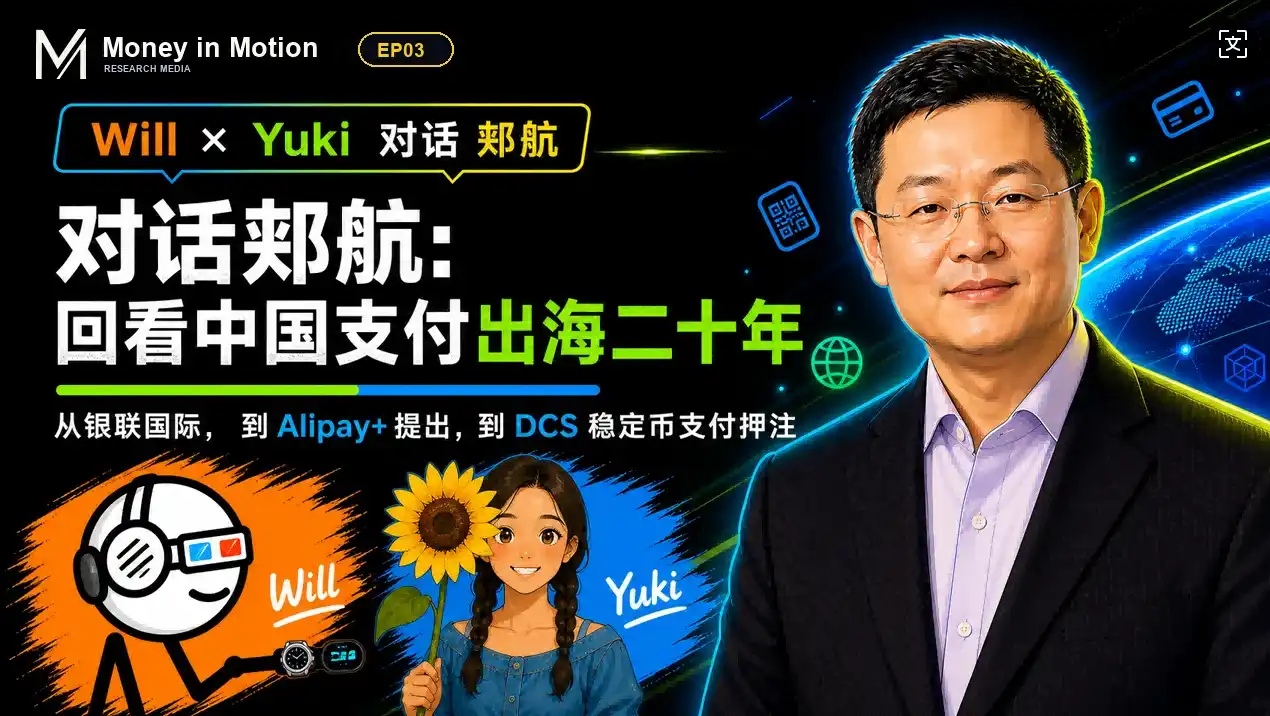
Dialogue with Jia Hang | Looking Back at Two Decades of Chinese Payment Going Global

**Summary: A Conversation with Jia Hang on Two Decades of China's Payment Globalization** Jia Hang, a veteran with over twenty years in payments, reflects on China's attempts to build a global payment network through three key phases: UnionPay (card networks), Alipay+ (digital wallets), and now, stablecoins. His journey began at UnionPay International, aiming to establish China's card network abroad. While successful in following Chinese tourists ("where Chinese go, UnionPay goes"), it struggled to achieve true global scale. The core lesson: card networks like Visa/Mastercard's unassailable advantage isn't just technical standards, but their deeply entrenched **governance and profit-sharing models** that create powerful network effects. Competing as the "same species" is nearly impossible. At Ant Group, he led Alipay+, a strategy to bypass card networks by interconnecting local e-wallets worldwide. While innovative, it faced a similar ceiling. Mobile QR payments and card swipes were essentially **the same species competing for the same pie**, lacking a disruptive value proposition for users or a sustainable new incentive model to replace the card networks' established flywheel. Today, at Singapore's DCS, Jia focuses on stablecoin-based payments. He argues stablecoins represent a fundamental shift. They are not competing with Visa for consumer payments but challenging the **traditional banking and account system for value movement**. Products like "U Cards" (stablecoin-linked payment cards) are transitional, leveraging existing card networks for acceptance while building new rails. The real potential lies in stablecoins enabling seamless, low-cost global value transfer, potentially reorganizing the financial infrastructure around **accounts rather than cards**. Jia believes stablecoin adoption for local retail payments, cross-border transactions, and as high-yield savings vehicles is becoming irreversible. This could gradually reduce reliance on traditional fiat channels, especially in regions with weak currencies or capital controls. The quest for the "next global payment network" continues, now centered on whether stablecoins can successfully bridge Web2 and Web3, establish new governance, and create compelling user value beyond mere cost reduction.

marsbit42m ago

Dialogue with Jia Hang | Looking Back at Two Decades of Chinese Payment Going Global

marsbit42m ago

Circle's Stock Price Plunges 76%, Hong Kong Dollar Stablecoin Set to Launch Within Two Weeks

Circle's stock price has plunged approximately 76% from its 2023 peak, reflecting a major market revaluation. Despite this, Circle President Heath Tarbert emphasized the company's focus on long-term execution and its dominant position with USDC's $73 billion circulation across 34 blockchains. The competitive landscape is intensifying. A new consortium-backed stablecoin, Open USD, is attempting to challenge incumbents by sharing reserve yields with partners. More significantly, Visa's new stablecoin platform, initially supporting Open USD while also being compatible with USDC, could erode Circle's network effects. In response, Circle is expanding into real-world payments through partnerships like the one with Japan's JCB. Separately, Tether (USDT) faces a two-year compliance window under new U.S. regulations, requiring it to adjust its reserve composition away from assets like Bitcoin and loans towards cash and U.S. Treasuries. Meanwhile, in Hong Kong, Standard Chartered-backed fintech firm Dian Dian is poised to launch a licensed HKD-pegged stablecoin (HKDAP), moving the industry into a phase where the real test is integrating licensed stablecoins into actual payment flows and corporate treasury systems. The sharp decline in Circle's stock underscores a broader shift: the stablecoin market is moving from a winner-takes-all dynamic to a multi-player competitive arena where execution, compliance, and real-world utility are becoming paramount.

marsbit43m ago

Circle's Stock Price Plunges 76%, Hong Kong Dollar Stablecoin Set to Launch Within Two Weeks

marsbit43m ago

Trading

Spot
活动图片