After the Crypto Craze, What Is Changpeng Zhao Thinking?

marsbitPublished on 2026-01-27Last updated on 2026-01-27

Abstract

In the post-crypto boom era, Binance founder Changpeng Zhao (CZ) is shifting focus from short-term price speculation to long-term structural cycles, regulation, and government engagement. Speaking at Davos 2026, CZ avoided making specific price predictions but suggested Bitcoin could reach new highs in 2026 due to increasingly favorable regulatory environments, particularly in the U.S. and other countries. He revealed he is now acting as an unofficial coordinator between governments and the crypto industry, engaging with over a dozen countries on topics like regulatory frameworks, asset tokenization, and stablecoin design. CZ explicitly denied having any personal or business ties with Donald Trump, emphasizing that policy benefits are industry-wide, not personal. A key insight from his talk was the ongoing friction between traditional banking and crypto, with stablecoins serving as a temporary bridge. CZ’s evolution from a disruptive exchange CEO to a policy dialogue participant signals a broader industry shift from "price narrative" to "institution narrative." The new cycle is expected to be slower, longer, and more structured, driven by regulatory clarity and institutional maturity rather than mere market speculation.

Author: 137Labs

As the crypto market gradually cools and the narrative shifts toward long-term structures, the recent statements by Binance founder Changpeng Zhao provide a noteworthy perspective. This article does not focus on short-term price predictions but instead analyzes how he has shifted the discussion toward more macro variables such as cycles, governments, regulation, and time, based on his recent remarks at Davos. Through this shift, the article attempts to answer a more critical question: After the crypto craze, what stage has the industry truly entered?

At Davos, Changpeng Zhao (CZ) appeared more cautious than ever before.

The founder and former CEO of Binance no longer leads the world's largest cryptocurrency exchange. Yet, at the 2026 World Economic Forum, he remained a figure of interest for the media and policy circles.

The reason lies not in any radical price predictions he offered—quite the opposite, he almost deliberately avoided short-term judgments.
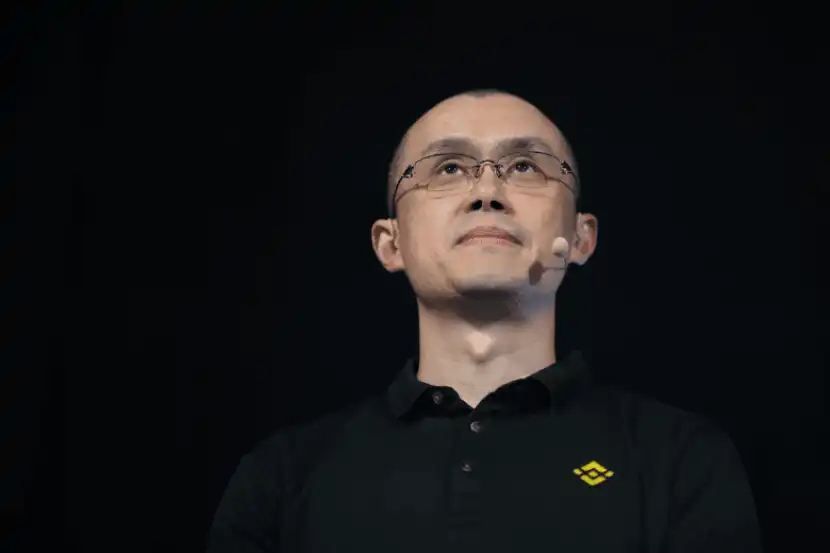
I. He No Longer Predicts Prices, But Talks About "Time"

In an interview with CNBC, when asked about Bitcoin's price, Changpeng Zhao's response was surprisingly conservative:

Short-term prices are almost impossible to predict.

But immediately after, he offered a more macro judgment—

The cryptocurrency market may be entering a structural cycle that lasts for years.

In his description, this is not a traditional bull-bear switch but more of a change in cycle patterns.

He mentioned that Bitcoin historically fluctuated in four-year cycles, but this pattern is now being influenced by changes in the policy environment.

II. Why Might This Cycle Be Different?

The core reason Zhao gave was not technological upgrades or the halving narrative, but politics and regulatory environment.

He pointed out:

· The U.S. attitude toward cryptocurrency is becoming more friendly

· Other countries are quickly following suit with similar policies

· Crypto assets are gradually being incorporated into a "regulatable, discussable" category

In this context, he believes:

Bitcoin could reach a new all-time high in 2026.

However, it's important to note that this is not a statement of bullishness but more of a judgment on a policy-driven cycle.

III. "I Am in Dialogue with About a Dozen Governments"

More noteworthy than his price predictions is Zhao's main focus now.

He revealed in the interview that he is in communication with about a dozen governments, discussing key topics including:

· Cryptocurrency regulatory frameworks

· Asset tokenization

· The design and issuance of stablecoins

This stands in stark contrast to his earlier image of "innovate first, regulate later."

Today, he更像是一名:

Unofficial coordinator navigating between governments and the crypto industry.

IV. Regarding Trump, He Chose a "Clarification with Distance"

As U.S. politics increasingly influences the crypto industry, speculation about the relationship between Changpeng Zhao and Donald Trump has frequently surfaced.

To this, he gave a very clear response:

· He has never met Trump in person

· There is no close personal or business relationship

· The so-called "relationship" stems more from overlapping policy environments

In his explanation, the logic is very clear:

Policy benefits are at the industry level, not the result of personal relationships.

V. An Easily Overlooked Detail:

Why "Bypass the Banks"?

When discussing a Binance-related investment completed using a $1 stablecoin, Zhao added a thought-provoking detail:

The only requirement for using cryptocurrency was to avoid dealing with the banking system.

This statement highlights a practical issue:

Even as regulation becomes clearer, structural friction still exists between the traditional financial system and the crypto industry.

And stablecoins are becoming a temporary solution to bridge the two.

VI. Why Are Governments Becoming the Decisive Variable in the New Cycle?

In the early crypto narrative, governments were often seen as external disruptions, with cycles driven primarily by technological breakthroughs and market sentiment.

But today, that logic is fading.

As crypto assets are incorporated into formal regulatory frameworks, the market's focus shifts from "can it be done" to "how to do it, and under what system." When rules begin to be systematically designed, cycles are no longer solely determined by risk appetite but start to be influenced by the pace of institutional progress.

Regulatory clarity, compliance paths, and the confirmation of legal status do not immediately drive up prices, but they reshape long-term expectations, attracting institutional capital and national-level projects.

In this context, the new cycle is likely to be slower, longer, and more restrained.

Extreme bubbles decrease, while infrastructure and institutions gradually take shape.

If the early crypto cycles relied on imagination, the next phase seems more driven by policy patience and institutional maturity.

Conclusion:

CZ's Transformation Might Be More Important Than His Predictions

If one only extracts a few sentences, Zhao's remarks can easily be interpreted as price predictions.

But what is truly worth noting is his change.

From exchange CEO to industry advisor;

From resisting regulation to participating in institutional discussions;

From talking about coin prices to talking about time.

This perhaps signifies one thing:

The crypto industry is moving from "price narrative" to "institutional narrative."

And this time, the rhythm of the cycle may no longer be determined solely by the market.

This article represents the author's personal views only and does not constitute any investment, legal, or financial advice. The views are based on public information and are for discussion and reference only.


Related Questions

QWhat is the main shift in Zhao Changpeng's (CZ) focus according to the article?

ACZ has shifted his focus from short-term price predictions and a 'build first, regulate later' approach to engaging in macro-level discussions about cycles, government relations, and regulatory frameworks. He is now acting more as an unofficial coordinator between governments and the crypto industry.

QWhat reason does CZ give for why the current crypto market cycle might be different from previous ones?

ACZ states that the core reason is not technological upgrades or the 'halving' narrative, but the changing political and regulatory environment, particularly more friendly attitudes from the U.S. and other countries, which is integrating crypto into a 'governable and discussable' category.

QWhat detail does CZ provide about his relationship with former U.S. President Donald Trump?

ACZ explicitly clarifies that he has never met Donald Trump in person and that there is no close personal or business relationship. He attributes any perceived connection to an overlap in policy environments, not personal rapport.

QAccording to the article, what role is stablecoin playing in the current crypto landscape?

AStablecoins are serving as a temporary solution to bridge the structural friction that still exists between the traditional banking system and the crypto industry, allowing transactions to be settled without directly dealing with banks.

QWhat does the article suggest is the new primary driver of the crypto market's long-term cycle?

AThe article suggests that government policy, regulatory clarity, and institutional maturity are becoming the key long-term drivers, shifting the cycle from being driven by market speculation and imagination to being shaped by policy patience and the pace of regulatory development.

Related Reads

Breaking: Google Earth Urgently Pulls Back Nano Banana 2 Image Generation Feature!

Google Earth's newly launched "Create image" feature, powered by the Nano Banana 2 AI image generation model, was abruptly withdrawn shortly after its release due to being "played" by users. The feature allowed users to generate and overlay AI-created visuals directly onto real-world satellite and 3D maps in Google Earth. The tool enabled creative applications like historical recreations (e.g., visualizing ancient Pompeii), generating informational graphics for landmarks, and envisioning architectural projects or futuristic cityscapes on real terrain. It operated under "geospatial grounding," meaning the AI respected the underlying geography, topography, and perspective of the chosen map view. The model also integrated with Gemini to retrieve relevant factual information. However, upon release, users quickly tested its limits. A prominent example involved reimagining Philadelphia's historic Independence Hall as a post-apocalyptic ruin overrun by "happy" zombies, evil clowns, and giant alien mechs. This highlighted both the feature's playful potential and its risks regarding the generation of inappropriate or misleading content on realistic maps, leading to its swift temporary removal. Google stated it would re-release the feature after implementing "enhanced guardrails." Analysts note this move strategically leverages Google's vast proprietary geospatial data, positioning its AI not just for artistic generation but for spatially accurate world visualization—a unique advantage in the competitive AI image generation landscape.

marsbit11m ago

Breaking: Google Earth Urgently Pulls Back Nano Banana 2 Image Generation Feature!

marsbit11m ago

Altman Admits: Overestimated AI Snatching Jobs! Huang Renxun: The Unemployment Narrative Is Completely Backwards

Sam Altman has revised his earlier predictions about AI rapidly replacing jobs, admitting he overestimated the speed at which AI would eliminate entry-level white-collar roles. Speaking on the "Invest Like the Best" podcast, he stated that people do not truly want an AI CEO, as accountability and human connection remain critical. He found that individuals prefer interacting with people who can be held responsible for decisions. Similarly, NVIDIA's Jensen Huang argued that the narrative of AI destroying jobs is misguided. He distinguishes between tasks and jobs, noting that while AI can automate specific tasks, entire jobs—encompassing communication, judgment, coordination, and accountability—are not eliminated. He cited examples like radiologists and software engineers, where demand for these roles has increased as AI handles repetitive tasks, allowing for business expansion and the creation of more positions. Data from a University of Maryland and LinkUp study supports this, showing that U.S. job postings for new graduates have actually risen, countering the fear of vanishing entry-level roles. However, a significant shift is occurring: the traditional entry-level tasks that help newcomers gain experience are being automated, making initial career access more challenging. The key insight is that as AI takes over standardized tasks, the enduring value of human work shifts toward areas of responsibility, trust-building, and final decision-making—aspects that AI cannot replicate. The real "moat" for professionals lies in these irreplaceable human elements.

marsbit17m ago

Altman Admits: Overestimated AI Snatching Jobs! Huang Renxun: The Unemployment Narrative Is Completely Backwards

marsbit17m ago

Weekly Editor's Picks (0725-0731)

Weekly Editor's Picks (0725-0731) provides a curated selection of deep analysis, filtering out market noise. Key themes from this week include: **Macro & Policy:** The Federal Reserve's upcoming meeting is marked by high uncertainty, balancing cooling inflation data against persistent price pressures. Meanwhile, the U.S. crypto regulatory Clarity Act faces critical political hurdles, with its 2026 passage probability seen as low. **Investing & Crypto:** Analysis suggests long-term crypto success depends on conviction through volatile cycles, focusing on assets like Bitcoin and core smart contract platforms. A trend noted is the increasing similarity between global equity markets (especially tech) and crypto, driven by narrative and leverage. Several major crypto protocols show strong revenue growth, but this isn't always translating to token price appreciation due to sell pressure and structural factors. **AI & Semiconductors:** Nvidia's rising credit default swap rates signal market concern over AI infrastructure financing risks. The storage sector experienced volatility as markets began pricing in potential 2027 oversupply. Despite a record profitable quarter, SK Hynix's results were deemed "below expectations," reflecting heightened investor demands for future growth visibility. **Markets & DeFi:** TradeXYZ demonstrated remarkable accuracy in pre-market pricing for a major A股 listing. The token ONDO saw gains, linked to its growing role in the on-chain tokenized stock ecosystem. **Ethereum:** Post-Pectra upgrade, a major structural shift is underway as Lido begins migrating millions of ETH to new validator architectures designed for capital efficiency. **Also Highlighted:** Butian's bullish stock market move; OpenAI's Altman promising major advances; Samsung and SK Hynix securing large AI chip deals; Apple reaching a $5T market cap; and ongoing discussions around exchange security following Poolin's bankruptcy case.

marsbit51m ago

Weekly Editor's Picks (0725-0731)

marsbit51m ago

Low Investment Isn't Apple's Immunity Pass

While Meta and Google face investor scrutiny over ballooning AI capital expenditures, Apple's minimal AI investment has paradoxically become a strength. Its market cap recently reclaimed the global top spot, surpassing $5 trillion. The irony is deep: Apple's own AI efforts have lagged, with "Apple Intelligence" delayed and core talent lost, forcing reliance on partners like Google Gemini and Alibaba's Qianwen. Its Q3 FY2026 (Q2 CY) earnings initially seemed stellar. Revenue hit $109.4B (up 16% YoY), with iPhone and Mac sales, growing 22% and 29% respectively, driving most of the growth. However, the stock fell over 8% post-earnings. The primary concern was a weaker Q4 revenue growth forecast of 9-11%, below expectations, due to looming supply chain constraints. Apple is feeling the indirect cost of the AI boom. Soaring memory and chip prices, fueled by massive data center investments from Microsoft, Amazon, and others, are forcing Apple to raise Mac and iPad prices significantly. The upcoming iPhone launch is also expected to see substantial price hikes. Despite avoiding heavy AI infrastructure spending—its capital expenditures are actually down 28%—Apple cannot escape the industry-wide supply and cost pressures. While Apple's operating cash flow remains robust, its substantial R&D spending (up 32% YoY) has yet to yield major AI breakthroughs. As Tim Cook prepares to step down as CEO, Apple faces a challenging transition: balancing its premium hardware success against the strategic and cost pressures of the AI era it has so far cautiously navigated.

marsbit1h ago

Low Investment Isn't Apple's Immunity Pass

marsbit1h ago

Trading

Spot
活动图片