Aave's Internal Conflict Escalates, Morpho Quietly Doubles: Is the Lending Throne About to Change Hands?

marsbitPublished on 2026-03-01Last updated on 2026-03-01

Abstract

The article discusses the escalating internal conflicts within Aave and the rising prominence of Morpho in the decentralized lending space. Aave, the current market leader, is facing significant governance disputes, including a controversial $51 million funding proposal and accusations of financial mismanagement, leading to internal friction and potential delays in decision-making. In contrast, Morpho has transitioned to Morpho Blue, a modular, permissionless lending protocol that allows isolated markets with risk parameters set by independent curators rather than global DAO votes. This design reduces governance friction and enables faster adjustments. Morpho has demonstrated strong growth, with TVL surpassing $9.5 billion, active loans exceeding $3.5 billion, and quarterly revenue around $50 million. User growth has also been robust, expanding from 30,000 to 400,000 active addresses. A significant catalyst for Morpho is the involvement of Apollo Global Management, which plans to acquire 90 million MORPHO tokens (9% of supply) over 48 months, valued at approximately $162 million. This partnership may signal Apollo’s strategic move to leverage Morpho’s infrastructure for enhancing yields on its tokenized real-world assets (RWA), addressing liquidity challenges in the RWA market. While Aave’s governance issues may hinder its progress, Morpho’s innovative structure and institutional backing position it as a potential challenger for the lending throne. However, risks remain, i...

Original | Odaily Planet Daily (@OdailyChina)

Author | DingDong (@XiaMiPP)
Altcoins are dead—this is a consensus that crypto users have been reluctant to admit but have had to face over the past year. Even former blue-chip tokens have fallen into prolonged sideways movement or gradual decline amid the continuous market weakness, showing little sign of recovery.

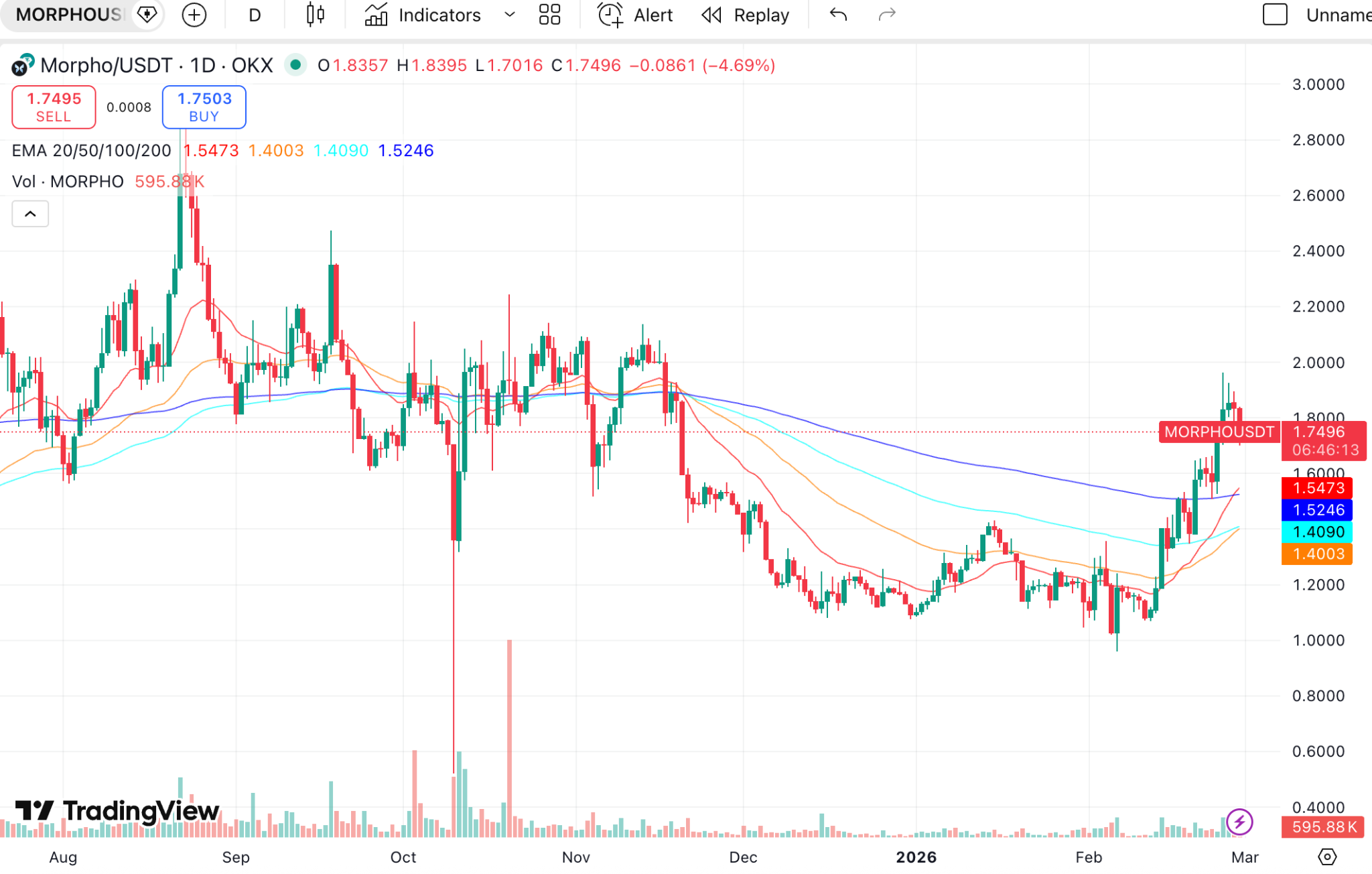
However, amidst this overall slump, the MORPHO token has rebounded from a low of $0.96 in early February to the range of $1.8-$1.9, doubling against the trend. From the daily chart perspective, this rebound has largely formed a rounded bottom pattern, potentially signaling a bottom reversal. Is this surge merely driven by short-term market sentiment, or is it the start of a trend fueled by the resonance of fundamental and structural variables?
When the Old Dynasty Begins to Consume Itself

Morpho is a lending protocol launched in 2021. Initially, its mechanism was similar to lending protocols like Aave and Compound. However, in 2023, Morpho began rolling out Morpho Blue (the current main version), completely transforming into an independent, permissionless lending base layer, steadily ranking among the top lending ecosystems on Ethereum.

Nevertheless, in the lending sector, Aave remains the largest in scale and the strongest in brand—an undeniable fact. But recently, Aave has once again plunged into serious governance controversy due to a $51 million "Aave Will Win" funding framework proposed by its founder, Stani.

This fund was originally planned to support new product development, and the proposal explicitly stated that future related brand revenue would be 100% returned to the DAO treasury—a move that seemed like an ideal operation of "surrendering control and benefiting the community" but unexpectedly ignited long-simmering internal conflicts within the DAO.

The reason is that DAO governance representative and ACI founder Marc Zeller publicly released an "audit" report on February 25, accusing Labs of low fund utilization, having taken approximately $86 million from the DAO over the past few years without transparent disclosure. Meanwhile, core DAO developer BGD Labs announced it would exit in April 2026 due to governance friction. The founder's high voting power once again dominated the controversial proposal, further pushing the entire DAO into an open tug-of-war over power and fund distribution. As early as December last year, cracks had already appeared within the Aave community. For details, refer to Will AAVE Still Be Worth Buying After the Second-Biggest Holder Dumped Their Bag Amid Deep Divisions?

Now, while Aave is slowing down due to governance friction, the "simplicity" of Morpho's governance model is beginning to attract attention. Aave can be considered the first-generation lending governance paradigm of "DAO-led, global parameter adjustment," where all risk parameters (such as collateral factors, liquidation thresholds) are determined by global DAO voting. While this design ensures overall robustness, it easily falls into a governance bottleneck—any minor parameter adjustment requires broad community consensus, and any disagreement can lead to delays, especially during contentious periods, potentially paralyzing decision-making.

In contrast, Morpho follows a second-generation path of modularity and market-driven mechanisms: the protocol itself is highly permissionless, allowing anyone to create isolated markets at any time. The risk parameters for each market (such as LTV, interest rate curves, liquidation incentives) are set by independent professional risk managers (curators), rather than relying on全网 DAO voting. This means risks are strictly localized within individual markets, with responsibility分散到 specific curators, significantly speeding up decision-making. Curators can quickly iterate parameters based on actual market conditions without waiting for global consensus. The advantage of this design is that it greatly reduces governance friction and decision-making delays.

When the old dynasty begins to consume itself internally, it might be the opportunity for new forces to overtake on the curve.

Data Verification: Does It Deserve This Window of Opportunity?

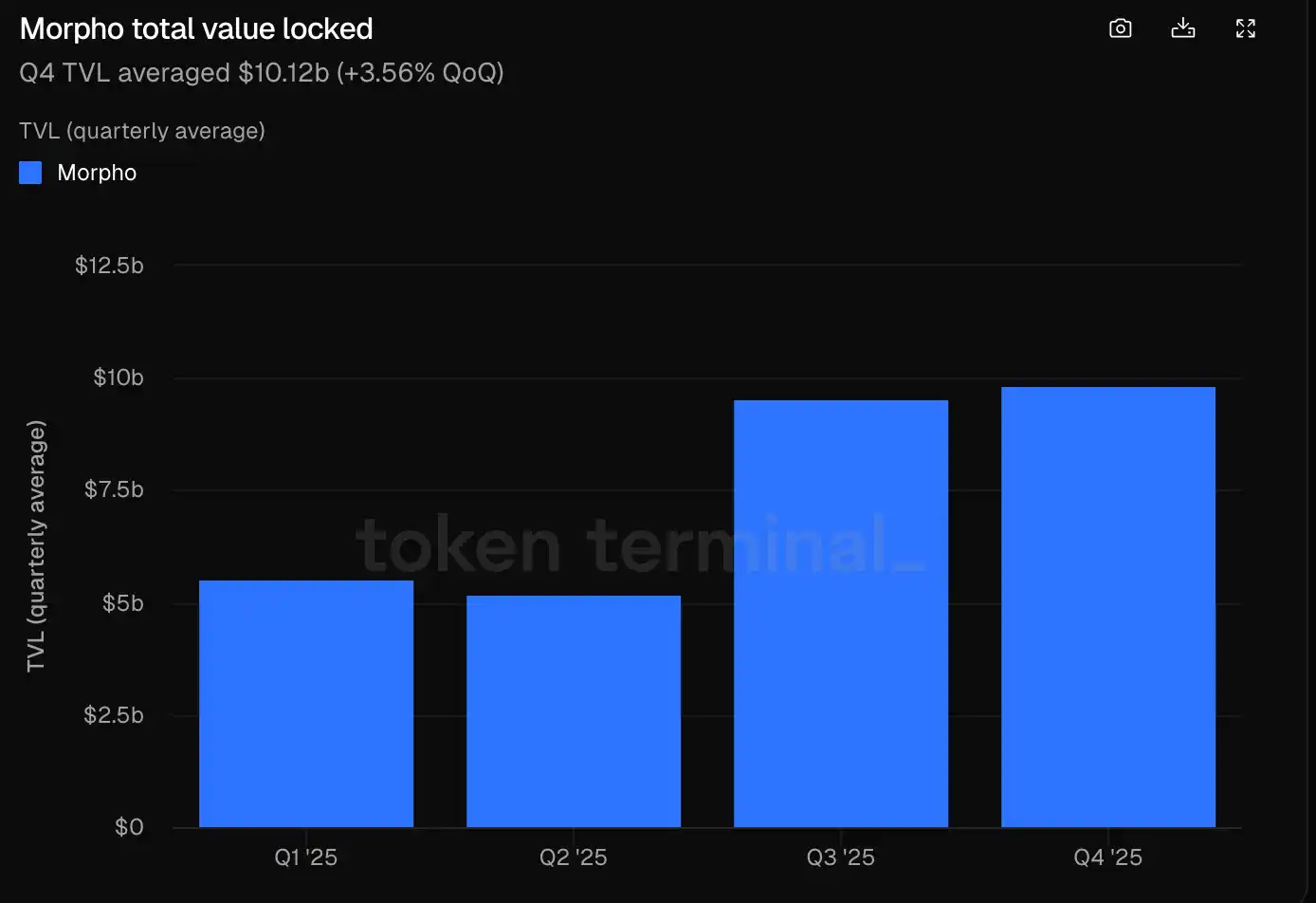
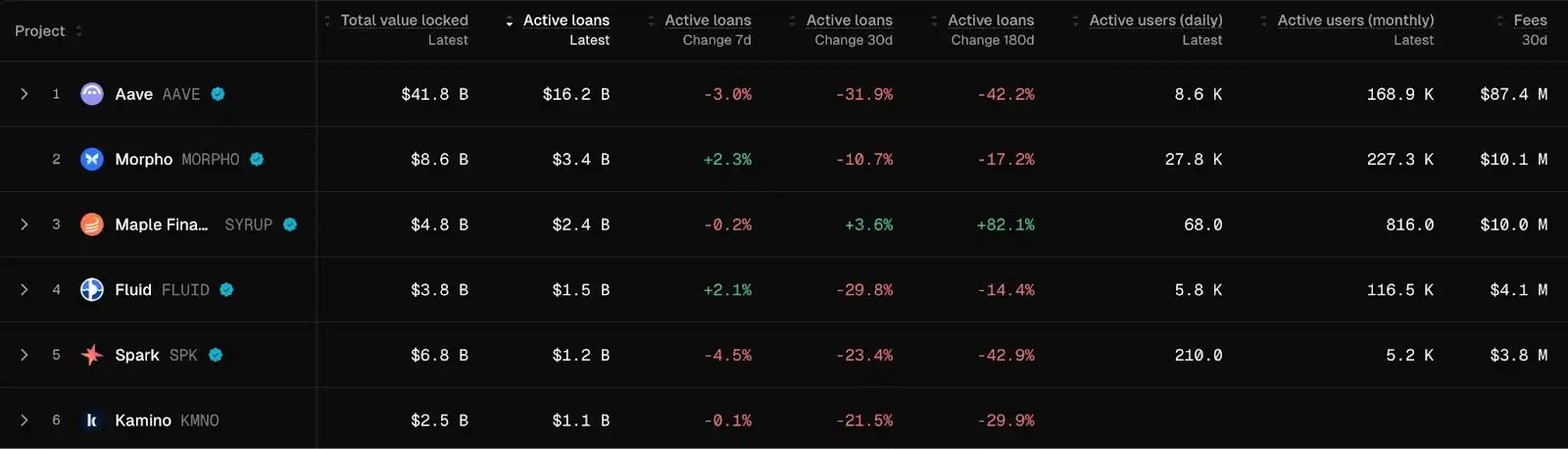
Let's look at Morpho's fundamentals to see if it has the potential to challenge Aave's lending throne. According to Tokenterminal data, in Q3 and Q4 of 2025, Morpho protocol's TVL remained above $9.5 billion, an increase of about 80% compared to the first half of the year;
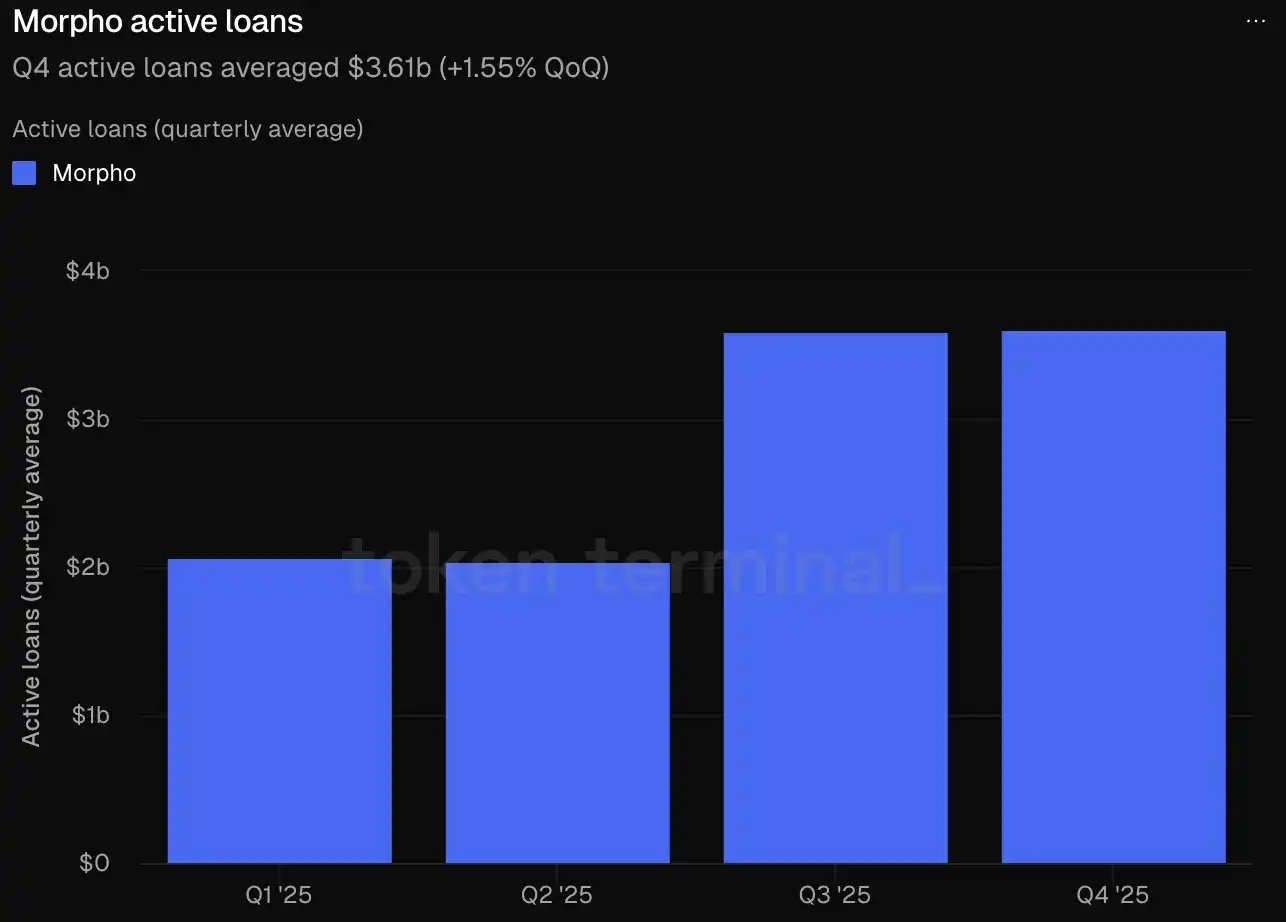
The active loan size within the protocol also stayed above $3.5 billion in both Q3 and Q4, a year-on-year increase of about 80%.
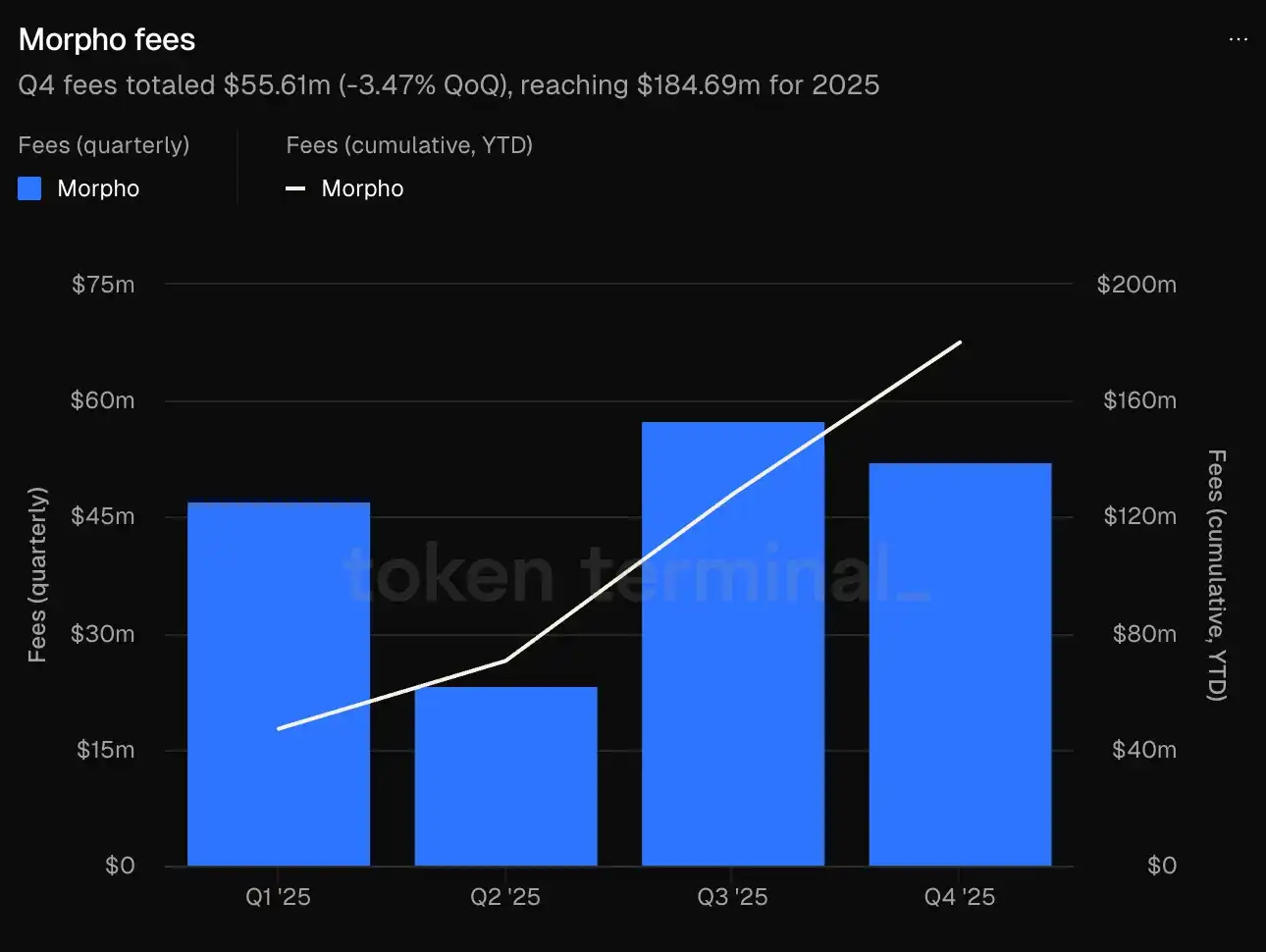
Regarding one of the core metrics for DeFi protocols—protocol revenue—aside from a relatively weak performance in Q2, it remained stable at around $50 million in other quarters.
User growth is even more直观, with its quarterly active addresses rapidly expanding from about 30,000 in Q1 to the 400,000 level, showing strong organic growth momentum.
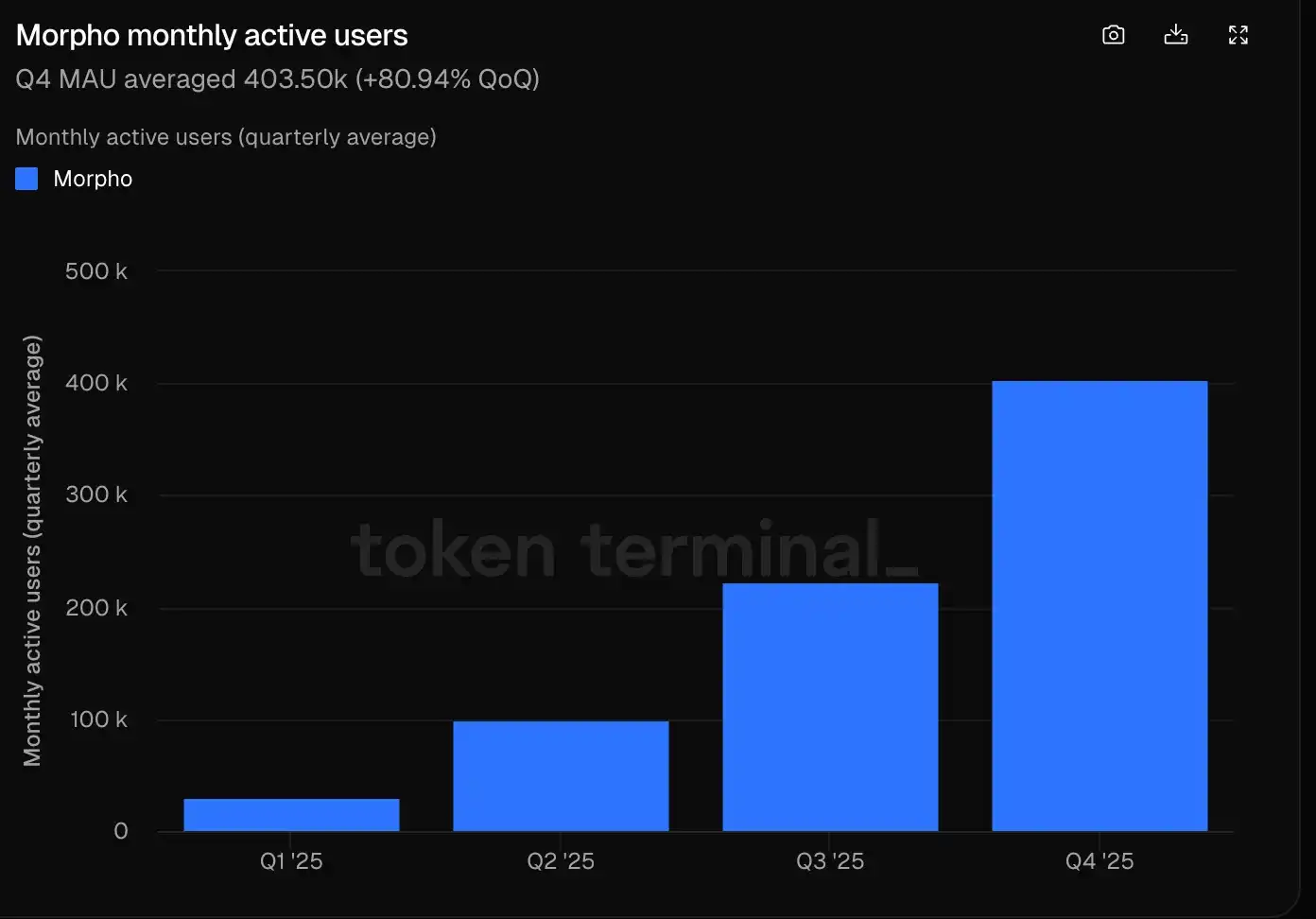
Although Morpho's current TVL and active loan size still lag behind Aave's, its user growth rate has made it one of the most aggressive "dark horses" in the lending赛道. Especially against the backdrop of the entire DeFi sector generally facing pressure and experiencing阵痛 in 2025, Morpho's performance can be considered achieving counter-trend high growth,足以证明 its product model has withstood the market test. Protocols that can continuously attract capital and users during a bear market often possess stronger爆发力 in the next cycle.
Institutional Variable: When Traditional Capital Starts Betting

Good fundamental data performance only proves that the protocol has a solid foundation, but the bigger catalyst that truly changes the market cap curve is the entry of traditional financial giants.

On February 13, Wall Street asset management giant Apollo Global Management signed a重磅 cooperation agreement with the Morpho Association, the non-profit organization behind Morpho. Specifically, Apollo plans to gradually acquire up to 90 million MORPHO tokens over the next 48 months, equivalent to approximately 9% of Morpho's total supply. At the current price of $1.8, this is worth about $162 million.

From a purely trading perspective, this will bring sustained buying demand for MORPHO. But if you know Apollo, you'll understand that this is more like its strategic penetration into DeFi.

Apollo manages assets接近 $940 billion, and its private credit business is known for pursuing high yields. The on-chain world can provide opportunities for leverage amplification and global instant liquidity. It began dipping its toes into the crypto industry in 2024, with RWA as its main battlefield, partnering with Securitize to tokenize its diversified credit strategy into ACRED, which has now reached a scale of $130 million.
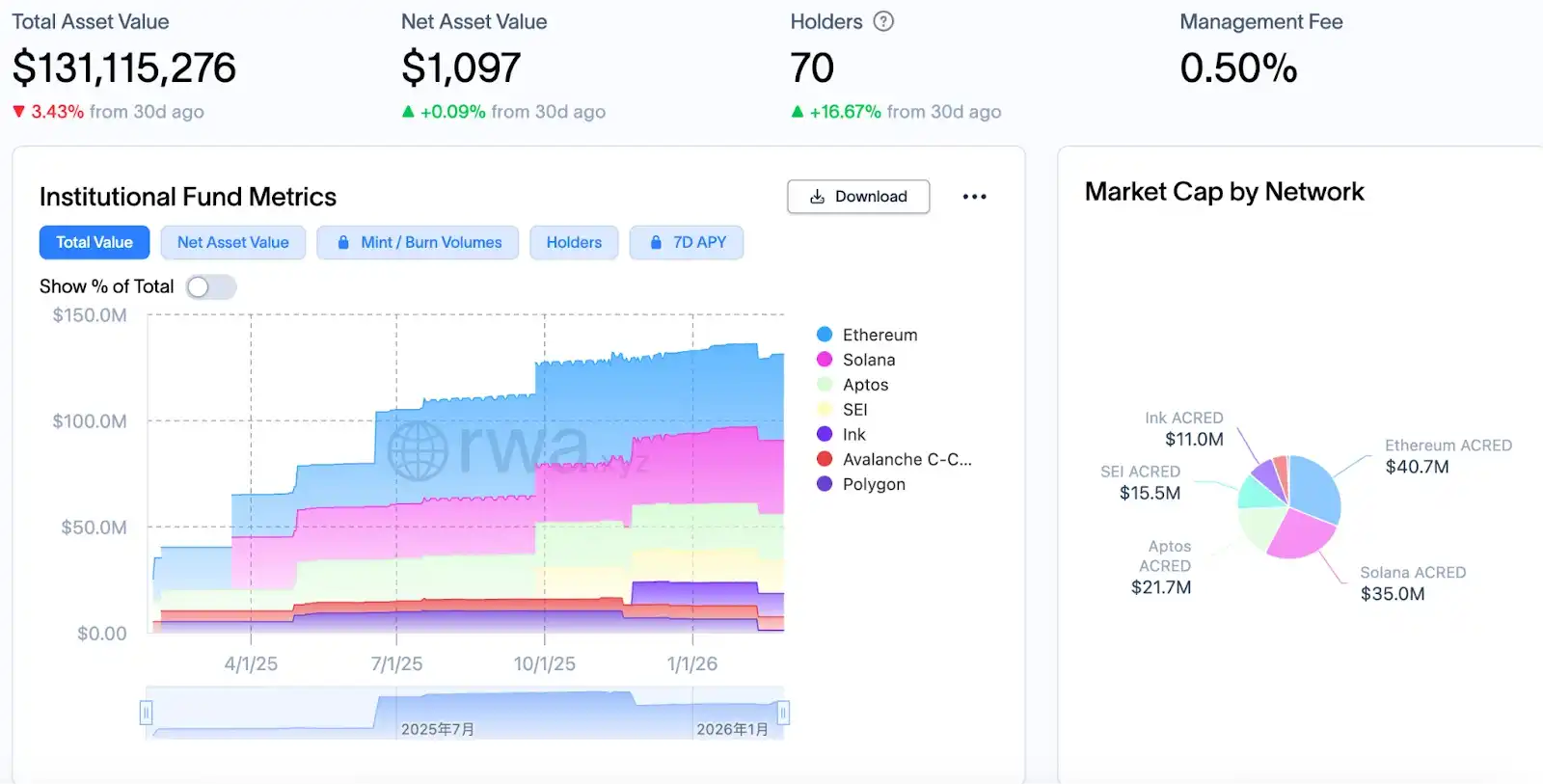
However, the core challenge after bringing RWA on-chain has never been issuance, but liquidity release. Assets can be tokenized, but without efficient lending markets and leverage environments, their yield potential is difficult to unleash. Looking at Apollo's布局, it's not unreasonable to speculate that it likely intends to use Morpho's lending markets to amplify the yield of its credit products. Because Morpho's modular lending structure provides a天然适配场景 for RWA—isolated markets, independent risk parameters, customizable leverage environments. These mechanisms are far more attractive to institutions than parameter games under unified governance.

This conjecture is not without basis, because although Morpho is highly permissionless, key parameter options still need to be expanded through Morpho DAO governance. If Apollo holds a significant amount of MORPHO tokens, it will gain corresponding voting power and could promote the addition of RWA-friendly parameters. If Apollo's intentions materialize as推测, Morpho's modular design could attract accelerated inflows of more institutional capital, making it key infrastructure for the on-chain amplification of institutional credit products. This institutional-level endorsement would not only strengthen Morpho's competitive advantage but also narrow the gap with Aave—especially while Aave is deeply mired in internal governance issues.

Conclusion

Aave's governance crisis may continue to drag down its market cap and liquidity in the short term, while Morpho, leveraging its product structural advantages and institutional catalysts, is quietly rewriting the competitive landscape of the lending赛道. However, whether Morpho can truly shake Aave's throne still depends on observing its continued TVL追赶 and the follow-up of more TradFi players. But至少 for now, the power transition for the "second-generation lending leader" has already begun.

Risk提示: MORPHO tokens will undergo a large unlock in March, belonging to the Morpho DAO, Morpho Association treasury, and core contributors. Short-term liquidity impact requires attention.

Related Questions

QWhat is the main reason for the recent governance controversy within Aave?

AThe controversy stems from founder Stani's proposal for a $51 million 'Aave Will Win' funding framework, which, despite intending to support new product development and return 100% of future brand revenue to the DAO treasury, ignited internal conflicts. This was exacerbated by an audit report from ACI founder Marc Zeller accusing Labs of low fund utilization and lack of transparency, alongside governance friction leading to core developer BGD Labs announcing their departure.

QHow does Morpho's governance model differ from Aave's, and what advantage does it offer?

AMorpho employs a modular, market-driven governance model where independent risk managers (curators) set parameters for isolated markets, reducing reliance on global DAO votes. This allows for faster decision-making, minimized governance friction, and localized risk, unlike Aave's DAO-led model which requires broad consensus for any parameter adjustments, often leading to delays and paralysis during disputes.

QWhat significant partnership did Morpho recently secure, and what are its potential impacts?

AMorpho partnered with Apollo Global Management, which plans to acquire up to 90 million MORPHO tokens (about 9% of total supply) over 48 months, valued at approximately $162 million at current prices. This partnership is strategic, potentially enabling Apollo to leverage Morpho's lending markets to amplify yields for its tokenized credit products (RWA), attracting more institutional capital and enhancing Morpho's competitive position.

QWhat key metrics demonstrate Morpho's growth and resilience in the DeFi lending sector?

AMorpho's TVL remained above $9.5 billion in Q3 and Q4 2025, an 80% increase from the first half of the year. Active loans exceeded $3.5 billion in those quarters, also up 80% year-over-year. Protocol revenue stabilized around $50 million per quarter, and active addresses grew from about 30,000 in Q1 to 400,000, indicating strong organic growth despite overall DeFi pressures.

QWhat risk should investors be aware of regarding MORPHO token in the near term?

AInvestors should note that MORPHO token will undergo significant unlocking in March, with releases to the Morpho DAO, Morpho Association reserves, and core contributors, which could cause short-term liquidity shocks and price volatility.

Related Reads

Who Decides the Rules of Bitcoin? BIP-110 Ignites Governance Debate

Bitcoin's governance is once again at the center of a heated debate, this time ignited by BIP-110, the "Reduced Data Temporary Softfork." This proposal aims to curb non-monetary data (like inscriptions and Runes) by introducing seven new consensus-layer restrictions over a year, such as limiting new output scripts to 34 bytes and restoring the OP_RETURN cap to 83 bytes. The controversy stems from BIP-110's fundamental shift: it moves the battle against "spam" from node relay and miner policies to the consensus layer, rendering currently valid transactions invalid. Supporters, arguing that default policy governance has failed (highlighted by Bitcoin Core v30's relaxation of OP_RETURN limits), see this as necessary to protect node resources and Bitcoin's monetary focus. Opponents, led by figures like Michael Saylor and Adam Back, warn it dangerously centralizes governance. Saylor listed 110 reasons against it, criticizing its low 55% miner activation threshold and potential for chain splits. Back emphasized Bitcoin's "permissionless" ethos, arguing no single group should impose value judgments via consensus rules. Further complicating matters, technical critiques suggest BIP-110 may be technically circumventable, and a "BlockSlop" vulnerability in its upgrade path poses a consensus risk. The debate has drawn in diverse stakeholders: miners (with pools like Ocean signaling support and Foundry polling clients), node operators (like Bitcoin Knots), and new players like corporate treasury holder MicroStrategy (Saylor), whose market influence adds a novel dimension. Ultimately, BIP-110 acts as a governance stress test, exposing the unresolved question: who decides Bitcoin's rules? It pits the authority of miners, node operators, developers, and capital holders against each other, with each side claiming to defend Bitcoin's core principles of neutrality and security.

marsbit4m ago

Who Decides the Rules of Bitcoin? BIP-110 Ignites Governance Debate

marsbit4m ago

Who Decides Bitcoin's Rules? BIP-110 Ignites Governance Debate

Title: Who Decides Bitcoin's Rules? BIP-110 Ignites Governance Debate A new technical proposal, BIP-110 (Reduced Data Temporary Softfork), has sparked a fundamental governance debate within the Bitcoin community. It aims to impose new consensus rules for one year to limit non-financial data (like inscriptions and Runes) on-chain, moving beyond simple node and miner policy filters to invalidate currently valid transactions. Supporters argue that default policies have failed due to workarounds, necessitating consensus-layer changes to protect Bitcoin's core monetary function from data spam. Critics, including Michael Saylor and Adam Back, contend this dangerously centralizes judgment, undermines permissionlessness, and sets a risky governance precedent. They advocate for market-based solutions like fees or Layer 2s instead. The debate exposes deeper tensions: miners are divided on activation; node operators assert their sovereignty; Bitcoin Core developers influence defaults without direct accountability; and large corporate holders like MicroStrategy now wield narrative influence. Technically, BIP-110 may not fully block data and carries a disclosed consensus bug risk. Ultimately, BIP-110 acts as a stress test, forcing the community to confront the unresolved question: who legitimately decides what Bitcoin is and how it evolves, amidst competing claims from miners, nodes, developers, and capital holders.

链捕手16m ago

Who Decides Bitcoin's Rules? BIP-110 Ignites Governance Debate

链捕手16m ago

Zcash's New Node Zakura Goes Live: Privacy Payments Can Reach 50,000 TPS, Aiming to Rival Visa and Mastercard

Zcash, a privacy-focused cryptocurrency, has launched a new full node software called Zakura version 1.0.0. Developed by Zcash co-founder Sean Bowe and Dev Ojha, with private ZEC donations, its goal is to enable Zcash to process over 50,000 transactions per second (TPS)—matching the scale of Visa and Mastercard—while maintaining full transaction privacy and verifiability. This addresses a key bottleneck, as Zcash currently handles only about 1 private transaction per second. Zakura is a fork of the Zcash Foundation's Zebra node. It features chain pruning and snapshots, reducing disk usage and allowing new nodes to sync in under two minutes. It also offers compatibility with the legacy `zcashd` client interface. The scalability challenge stems from the large data size of privacy proofs. Bowe's Tachyon project aims to use recursive proofs to reduce consensus-layer data needs from ~500 MB/s to ~100 MB/s. For wallet scalability, Valar Group is researching Private Information Retrieval (PIR) tech to allow wallets to fetch their data privately. Zakura supports fast block propagation and the upcoming "Ironwood" network upgrade (NU6.3), scheduled for activation around July 28th. Ironwood was created to contain a critical inflation bug discovered in the Orchard shielded pool in May 2024. The fix uses "turnstiles" to trap any counterfeit ZEC created during the vulnerability period within the shielded pool, preventing it from entering circulation and restoring supply integrity.

marsbit31m ago

Zcash's New Node Zakura Goes Live: Privacy Payments Can Reach 50,000 TPS, Aiming to Rival Visa and Mastercard

marsbit31m ago

Replicating the "DeepSeek Moment"? Wall Street Unanimously Says: Kimi K3 Instead Strengthens Computing Power Demand

Title: Wall Street Sees Kimi K3 as a Catalyst for Compute Demand, Not a "DeepSeek Moment 2.0" Summary: Following the release of Moonshot AI's powerful open-source model Kimi K3, initial market reaction mirrored the "DeepSeek moment" that sparked a sell-off in compute stocks earlier in 2025, fearing reduced demand for AI infrastructure. However, major Wall Street banks including UBS, Nomura, BofA, and Citi argue the opposite: K3 will accelerate, not weaken, demand for compute, memory, storage, and networking. Their analysis centers on K3's specifications—2.8 trillion parameters, 1M token context, and MoE architecture—which represent a "scale" story rather than a pure "efficiency" one like DeepSeek R1. These features increase pressure on inference, memory (especially KV cache), and storage. Analysts invoke Jevons Paradox: as high-quality models become more affordable (K3 is cheaper than top closed models but not the cheapest), usage and token volumes expand, ultimately increasing total compute consumption. The reports highlight that competition will force leading US AI labs (OpenAI, Anthropic, Google) to invest more in training and iteration to maintain their edge. Furthermore, the rise of capable open-source models like K3 is expanding the global AI developer ecosystem, with Chinese models now accounting for over 45% of developer traffic. Key beneficiaries identified across the AI infrastructure chain include memory/storage players (e.g., Micron, Samsung), compute leaders (Nvidia, TSMC), networking suppliers (due to "super-node" cluster needs for deploying K3), and cloud platforms (e.g., Alibaba) that host diverse model ecosystems. The consensus is that stronger open-source models are an entry point for the next wave of infrastructure demand diffusion, provided workload growth outpaces efficiency gains.

链捕手34m ago

Replicating the "DeepSeek Moment"? Wall Street Unanimously Says: Kimi K3 Instead Strengthens Computing Power Demand

链捕手34m ago

Trading

Spot
活动图片