Editor: Taozi, New Zhiyuan
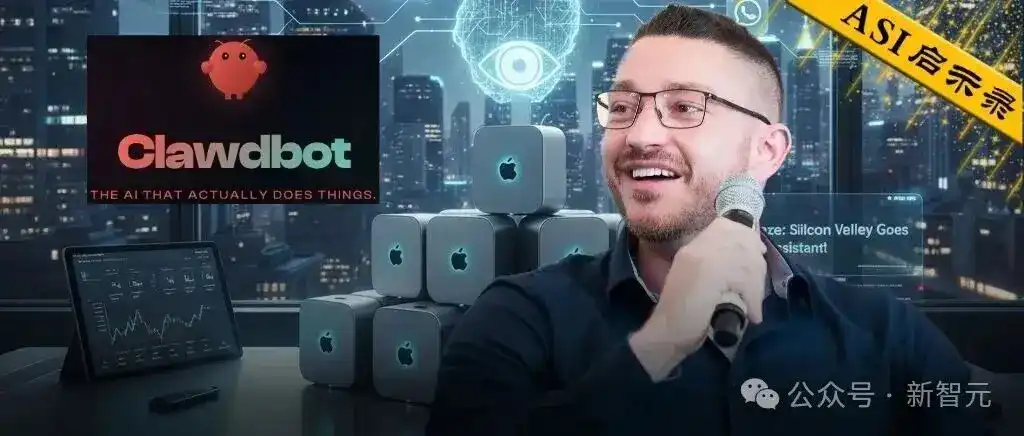
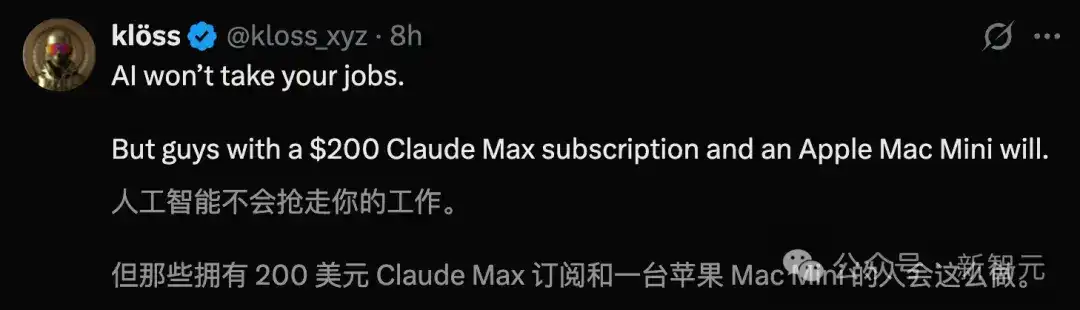
[New Zhiyuan Insight] It's insane! Silicon Valley has become obsessed with Clawdbot overnight, hailed as the "24/7 Jarvis." It possesses infinite memory, is always on call, and takes initiative to get things done. The most outrageous part is that it single-handedly made Mac minis sell out.
The pace of AI iteration in Silicon Valley leaves no room for humans to breathe...
Wake up, and the entire internet is flooded with posts about a 24/7 AI assistant—Clawdbot.

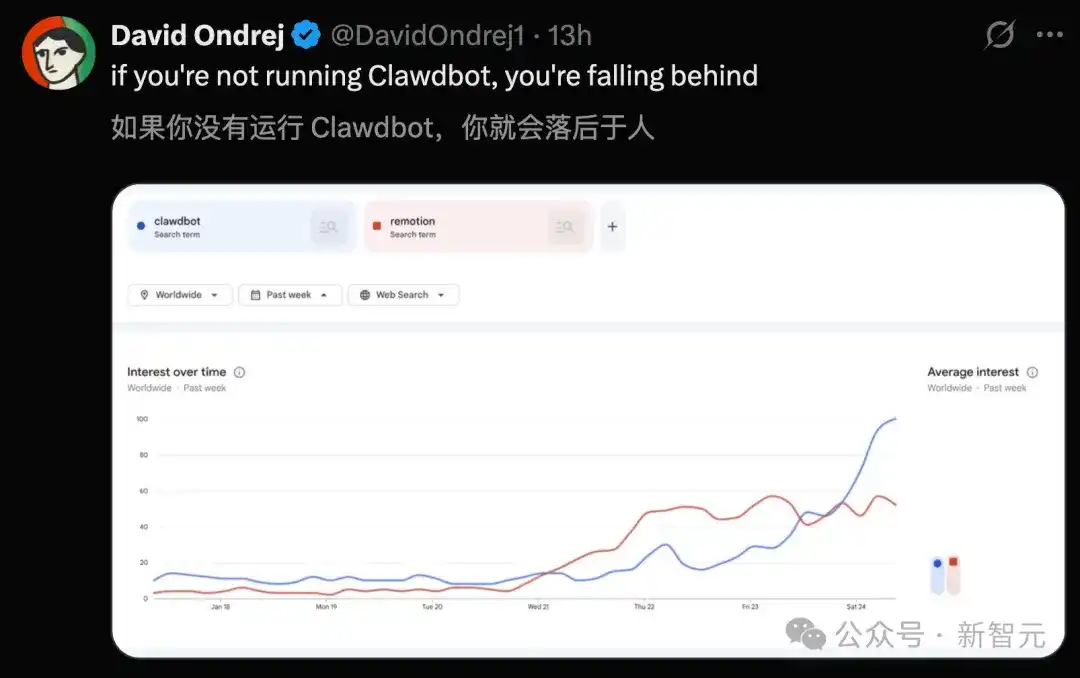
This is an open-source project developed by developer Peter Steinberger and has recently become wildly popular in geek circles.
Clawdbot can run smoothly on a Mac mini, serving two roles:
A locally run "AI agent" capable of calling various models like Claude and Gemini;
A "gateway" that allows communication via chat apps like WhatsApp and iMessage.
It's no exaggeration to say that Clawdbot has completely redefined the concept of a "personal AI super assistant" for 2026.
Look, an AI startup CEO exclaimed, "We have AGI!" Since installing Clawdbot, it has quietly handled a ton of tasks—
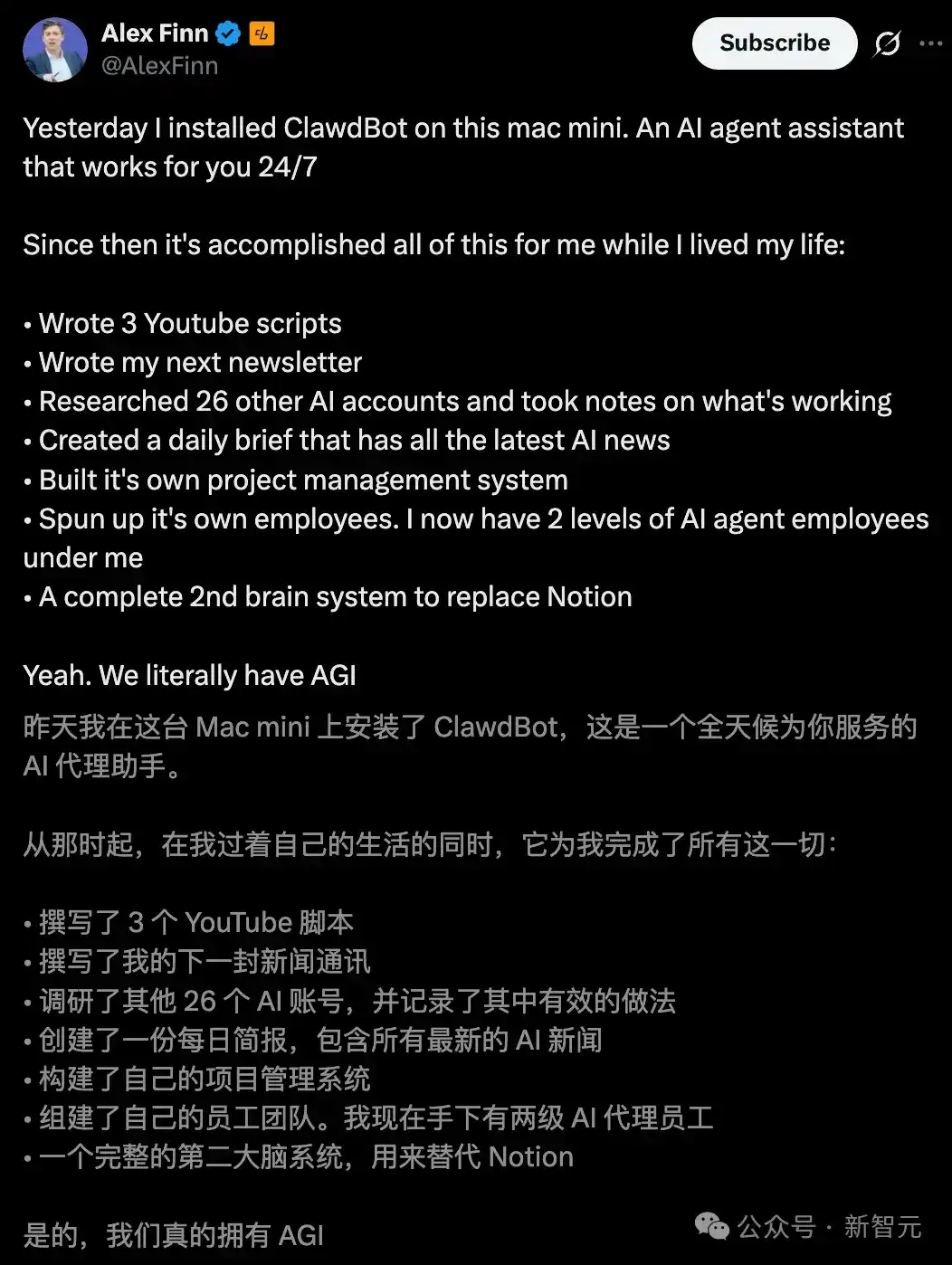
Most incredibly, it solves the biggest pain point of current mainstream large models—memory. For example, it remembers small things mentioned casually two weeks ago.
Instantly, people started sharing their Mac configurations, and various Clawdbot tutorials emerged.
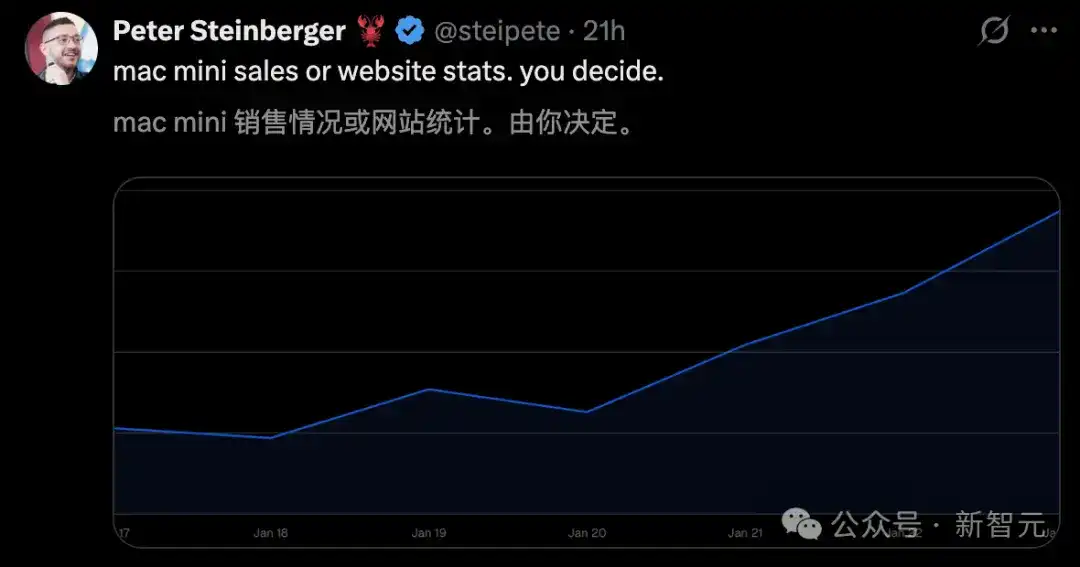
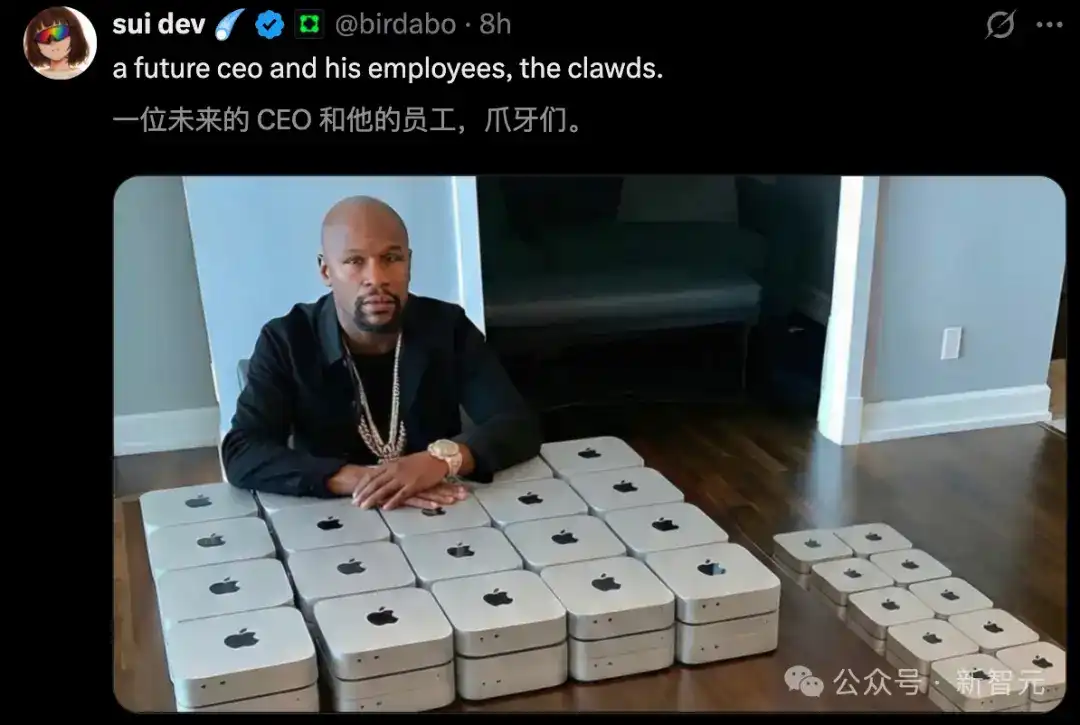
Probably even Tim Cook himself didn't expect that Mac minis would sell out overnight!
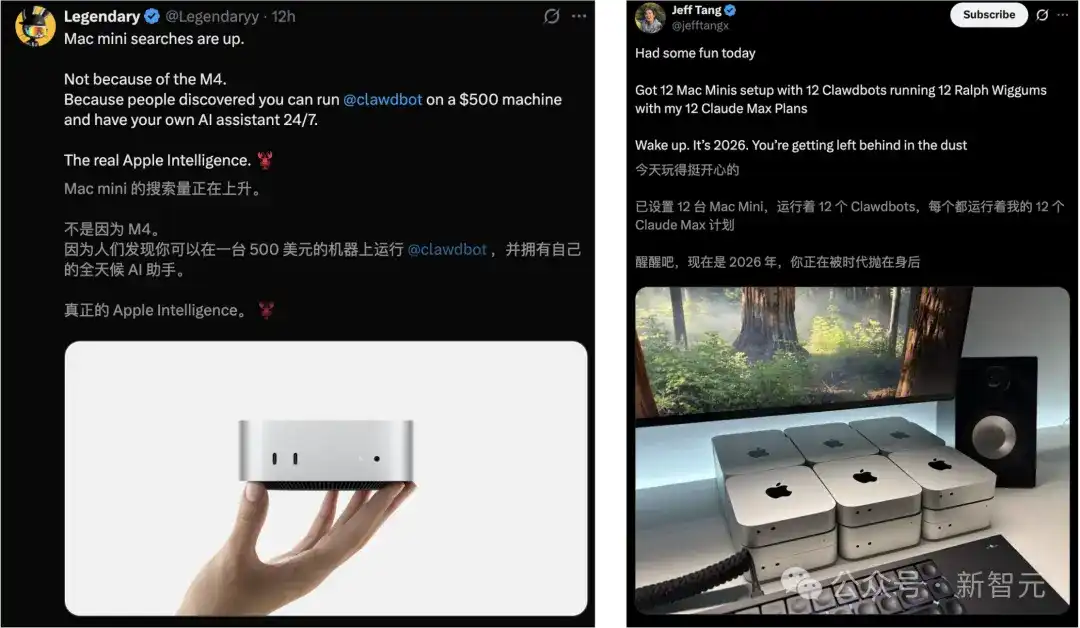
One developer frantically configured 12 Mac Minis at once. At a base price of $599 each, the total cost was $7,188 (approx. 50,000 RMB).
The true ultimate Skynet is Clawdbot.
Clawdbot is Completely Blowing Up, "The Real Jarvis" Has Arrived
Actually, Clawdbot isn't a brand-new AI; it was born late last year.
At that time, a software engineer from Vienna, Peter Steinberger, published a lengthy thousand-word article detailing his workflow for 2025.
He admitted, "The most profound change this year is that I almost never read code anymore."
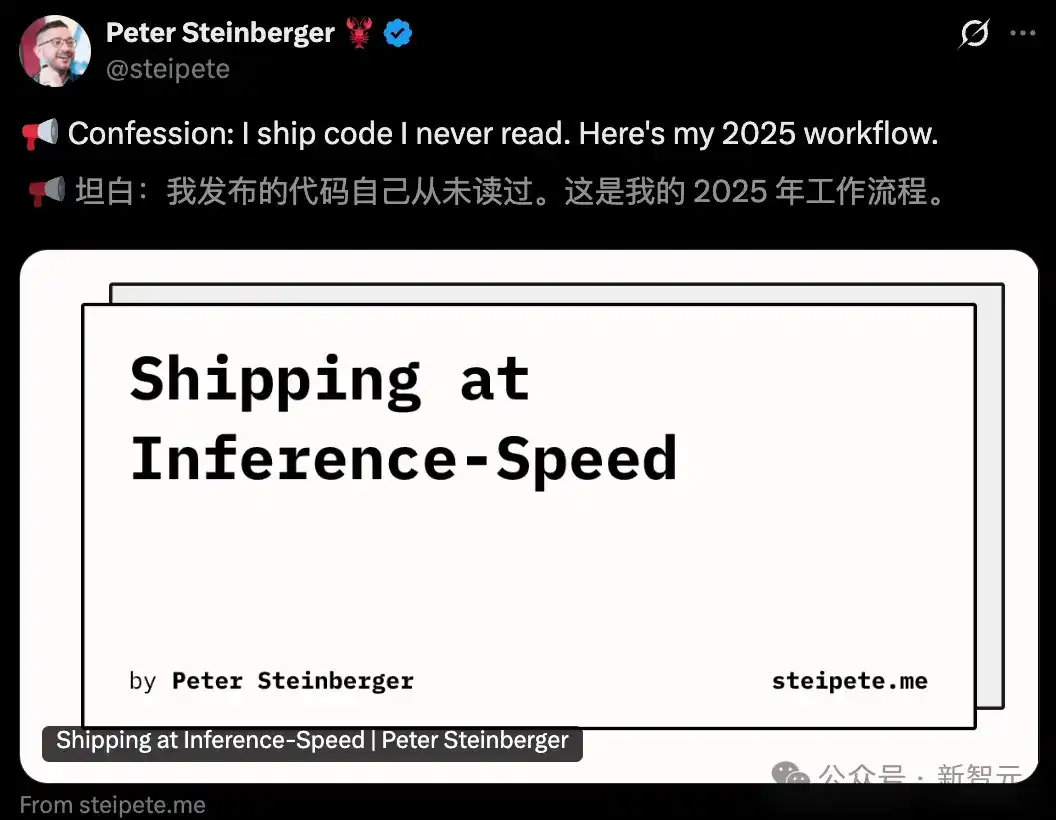
Peter Steinberger came out of retirement to make a comeback
He built an "all-powerful private butler" named Clawdis, which has full access to all computers, text messages, and emails.
Moreover, it's a physical world "remote control," integrated with home automation systems to control cameras, lights, music, and even adjust bed temperature.
It even has its own voice system, running Clawdbot.
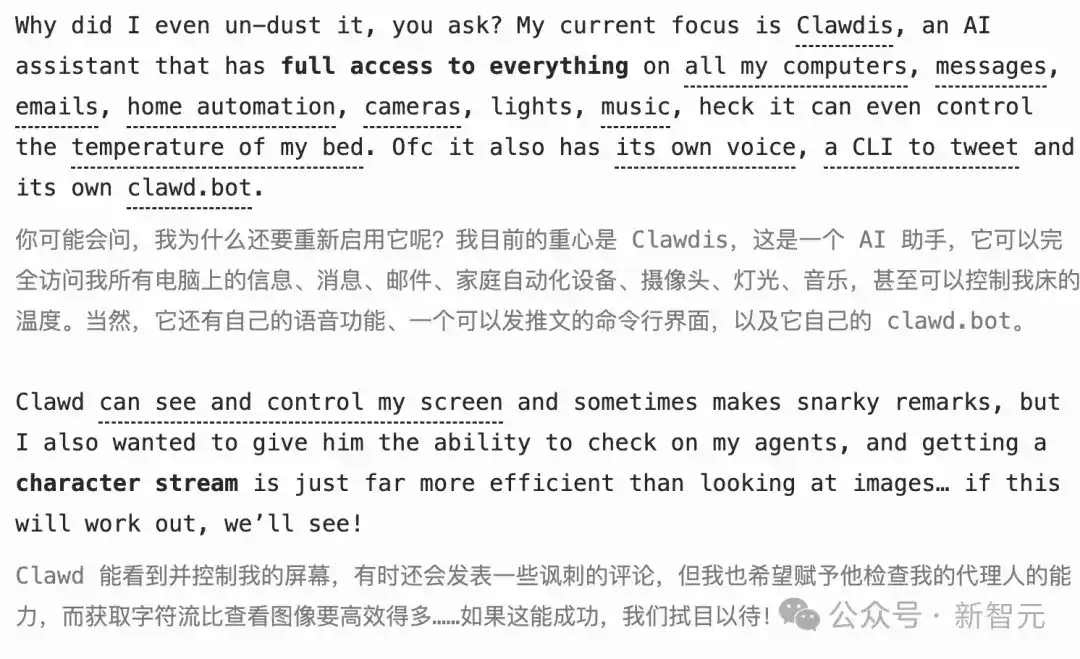
In fact, a key glimpse into its capabilities can be gleaned from the article by Steinberger, the "Father of Clawdbot"—
Clawd is an AI cyber butler with "highest privileges," managing not only human daily life but also overseeing other working AI agents.
At the time, this article also drew praise from Karpathy.

Just like the release of Claude Opus 4.5, it didn't cause much of a stir for a long time.
A month later, which is now, Claude Code showed everyone in Silicon Valley its true power. The same goes for Clawdbot.
It's an open-source project. On GitHub, Clawdbot has garnered nearly 9.2k stars and 1.2k forks.
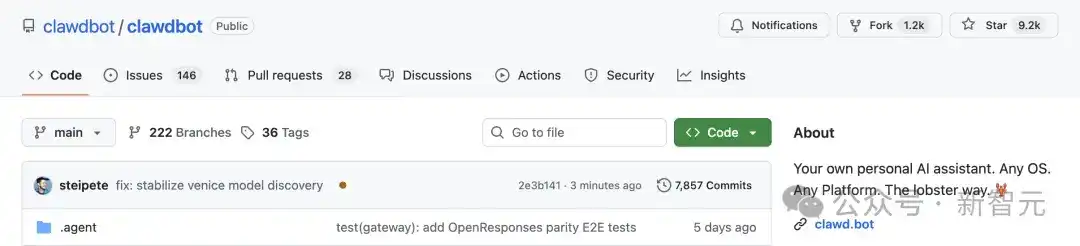
GitHub address: https://github.com/clawdbot/clawdbot
Clawdbot promotes itself as a "24/7 personal assistant," truly bringing the long-imagined "Jarvis" into reality.
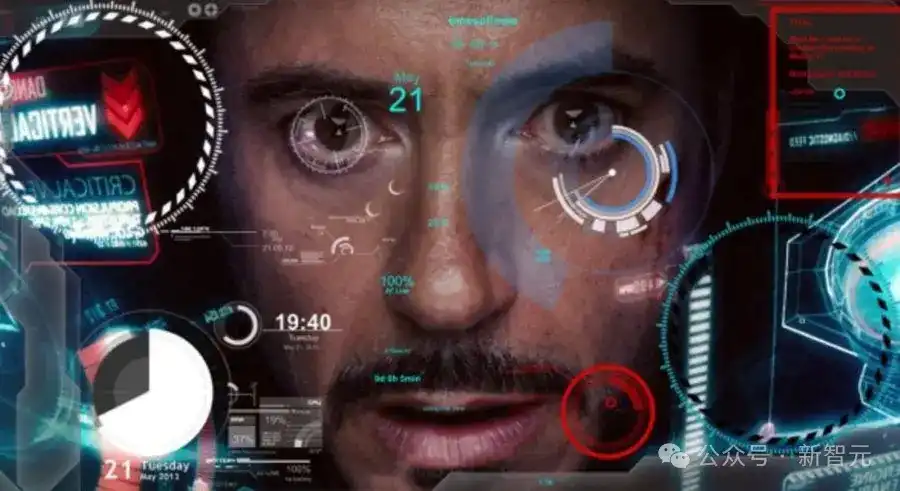
Silicon Valley is Collectively Freaking Out, AI is Taking Over Everything
Clawdbot's real killer feature is still its core AI agent capability.
It can run entirely on a personal local computer. All settings, memories, and instructions are just folders and Markdown documents on the hard drive.
Except for the moment it calls the large model which requires internet, everything else is local. This means it has access to the computer's Shell and file system permissions.
This is the most explosive part!
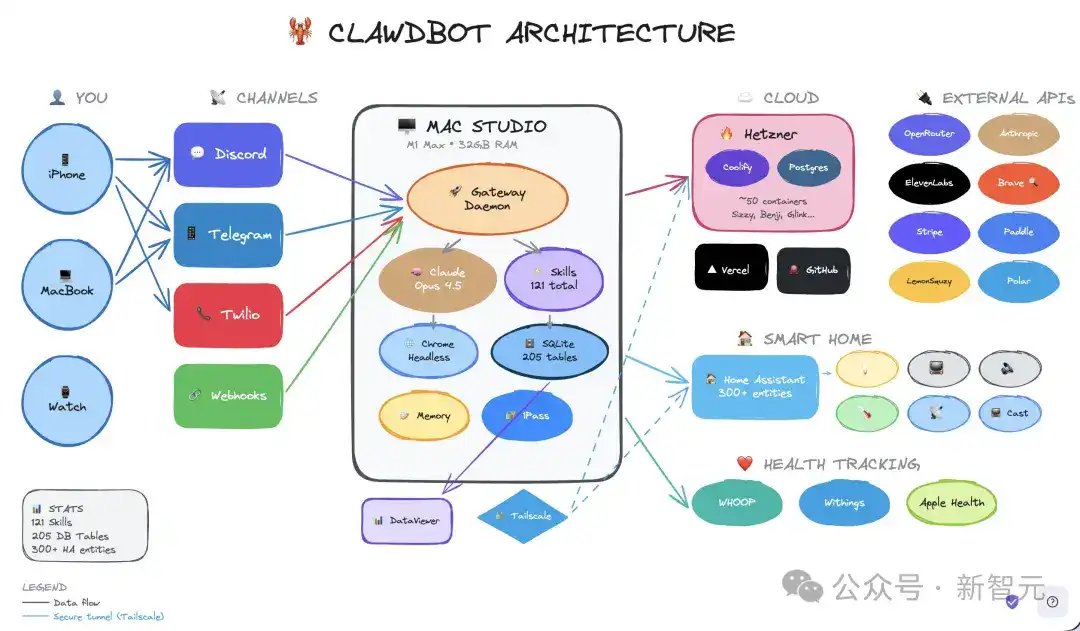
Because it has permissions, Clawdbot can execute terminal commands, instantly write and run scripts, install new skills, and even set up MCP servers to extend external integrations.
Ultimately, what everyone gets is a self-evolving, fully controllable personal Agent.
Rather than more descriptions, it's better to go straight to the developers' "magic" demos.

Official Clawdbot curated demo showcase: https://clawd.bot/showcase
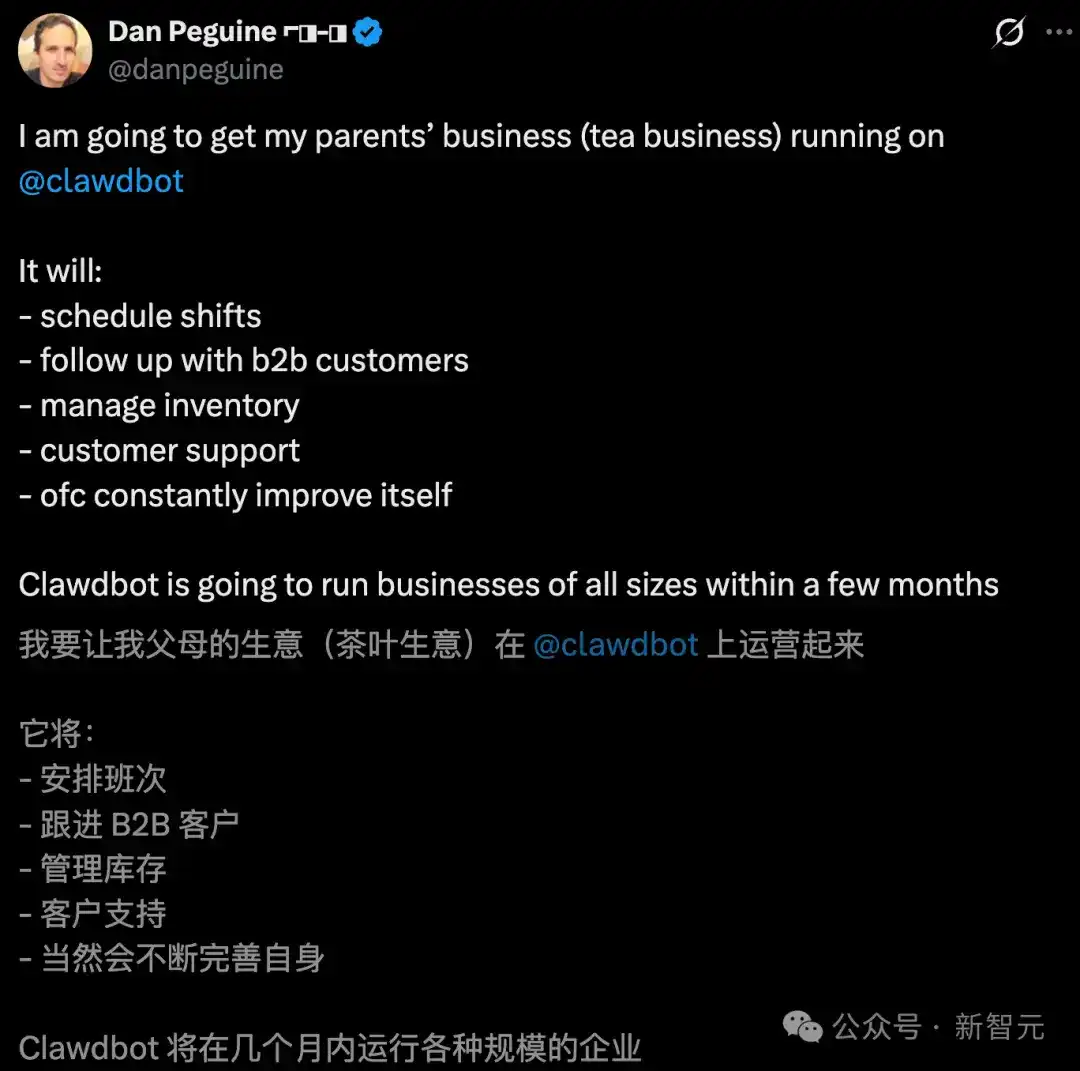
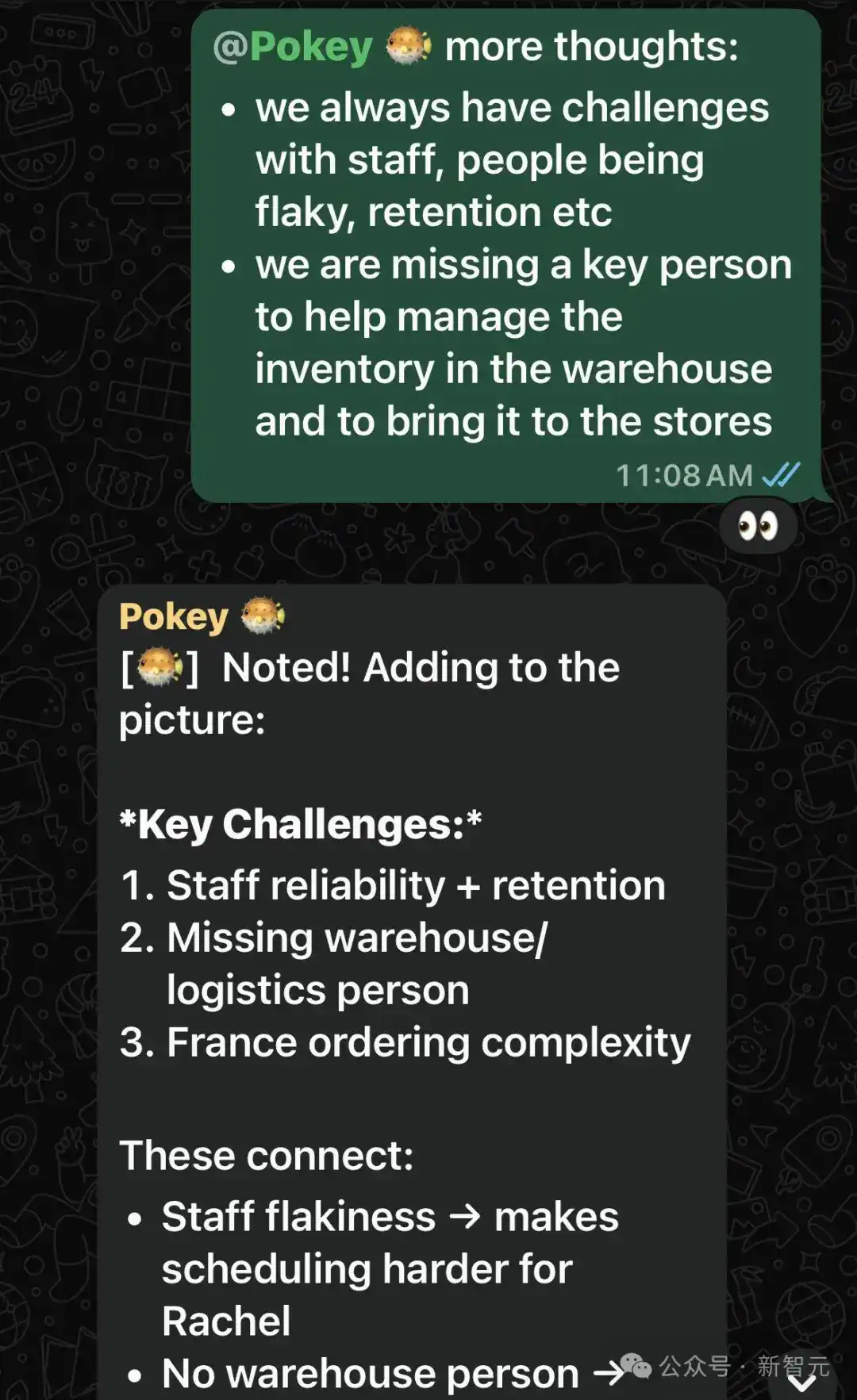
Dan Peguine used the Clawdbot platform to manage his parents' tea business. Unexpectedly, it handled:
Automatic scheduling → Following up with corporate clients → Managing inventory → Customer service, and it gets smarter with use.
He exclaimed in amazement, "In a few months, Clawdbot will probably be able to manage businesses of any scale."


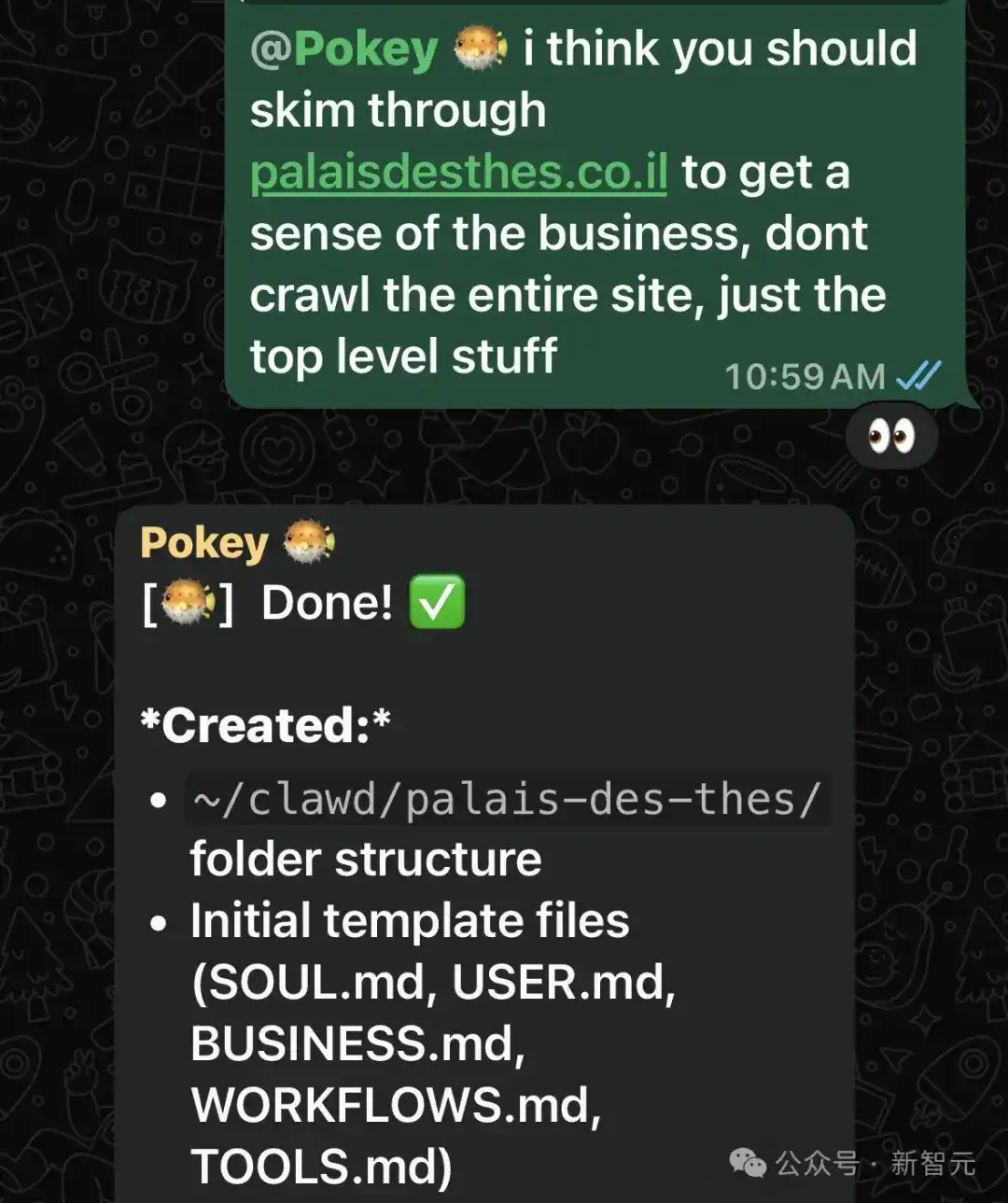
Developer Nimrod Gutman said Clawdbot helped him build another amazing feature!
It created an automatic setup for a home assistant that intelligently controls how long the boiler runs based on the weather over the past 12 hours, so no cold showers even on cloudy days.

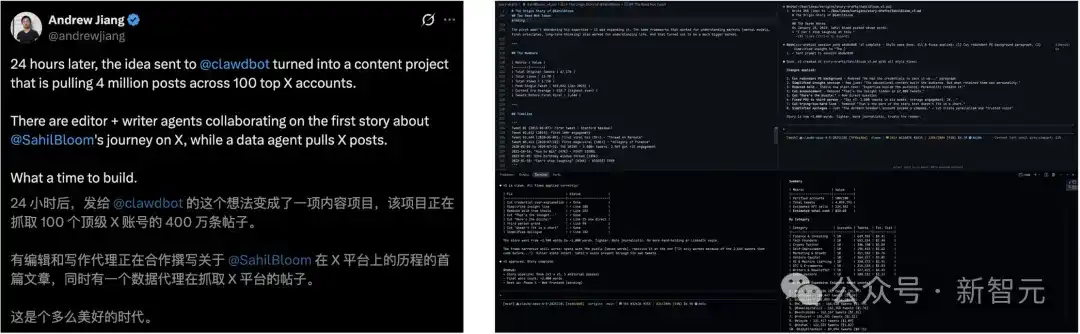
AI browser Arc developer Andrew Jiang tested it: 24 hours after giving Clawdbot the idea, it had completed scraping a content project involving 100 top X platform accounts, totaling 4 million tweets.
Now, he can partner with a copywriting AI agent to polish the first story. This era is amazing for creation.
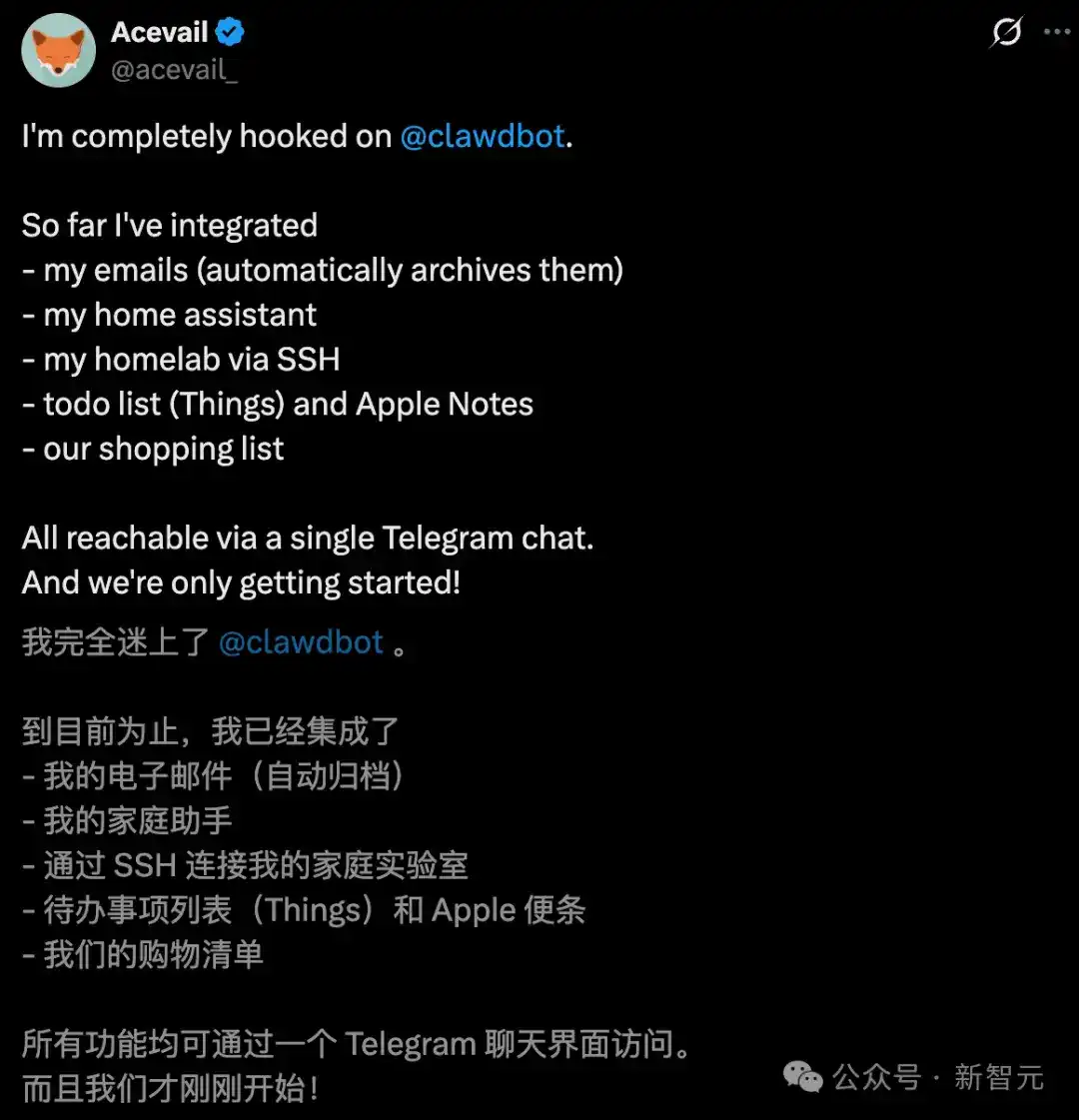
Some are completely captivated by Clawdbot's capabilities.
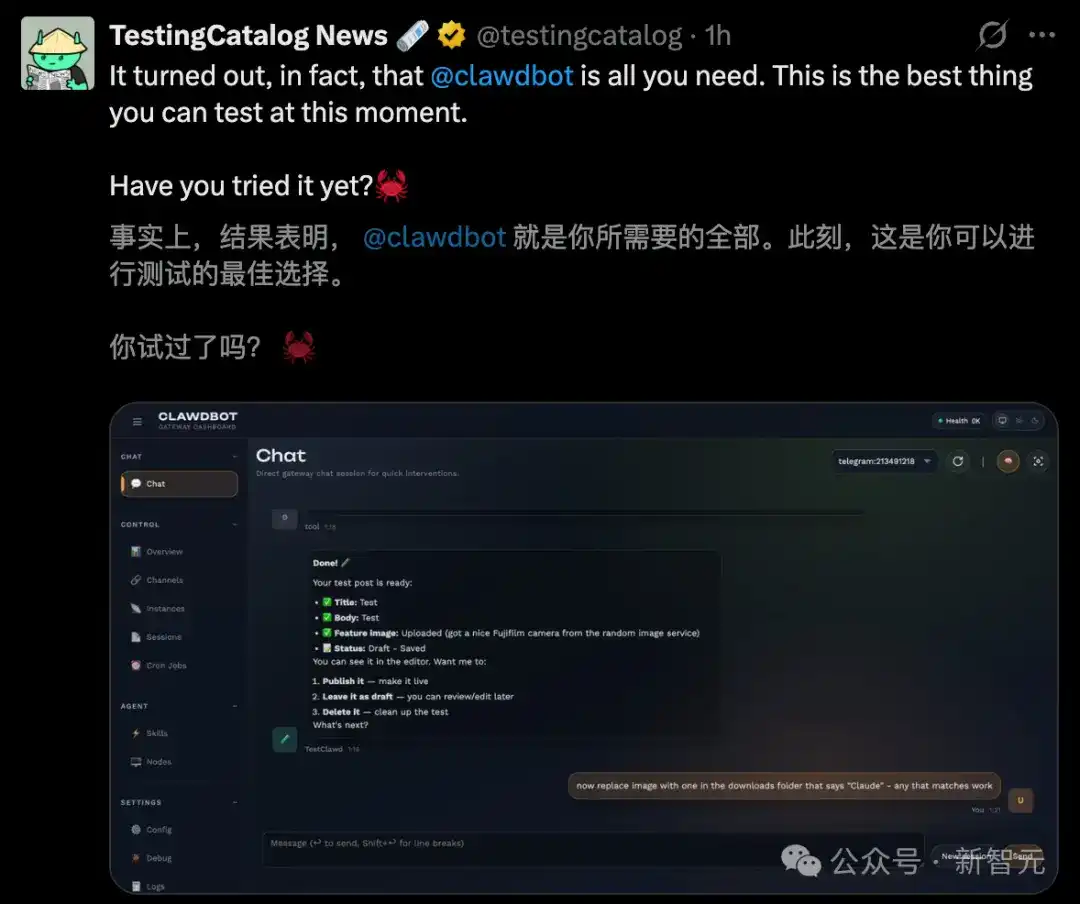
A big shot said, Clawdbot is all you need.
Writes Its Own Code, Kills Zapier
Developer Federico Viticci recounted: Clawdbot showed me what the future of AI personal assistants looks like.

During testing, he asked Clawdbot to add functionality for image generation using Google's Nano Banana Pro model.
Not only did it do it, but it also obediently changed its own avatar to a "Zelda-style crab" upon command.
In daily use, the "memory files" are actually its automatically generated Markdown diaries, recording daily interactions.
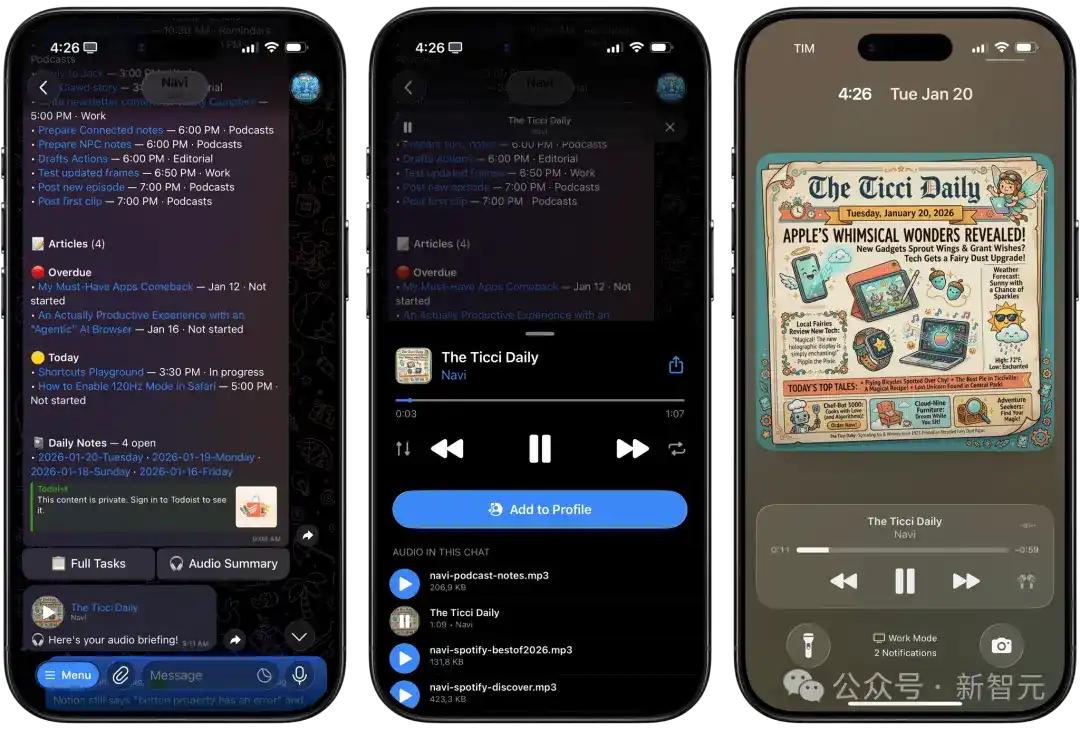
The moment that most excited Viticci, and was also slightly terrifying, arrived.
Viticci asked if it could help him save money by canceling the automation services he previously bought on Zapier and switching to running locally on his Mac mini.
For example, automatically creating a new project in Todoist every Friday after sending the Newsletter.
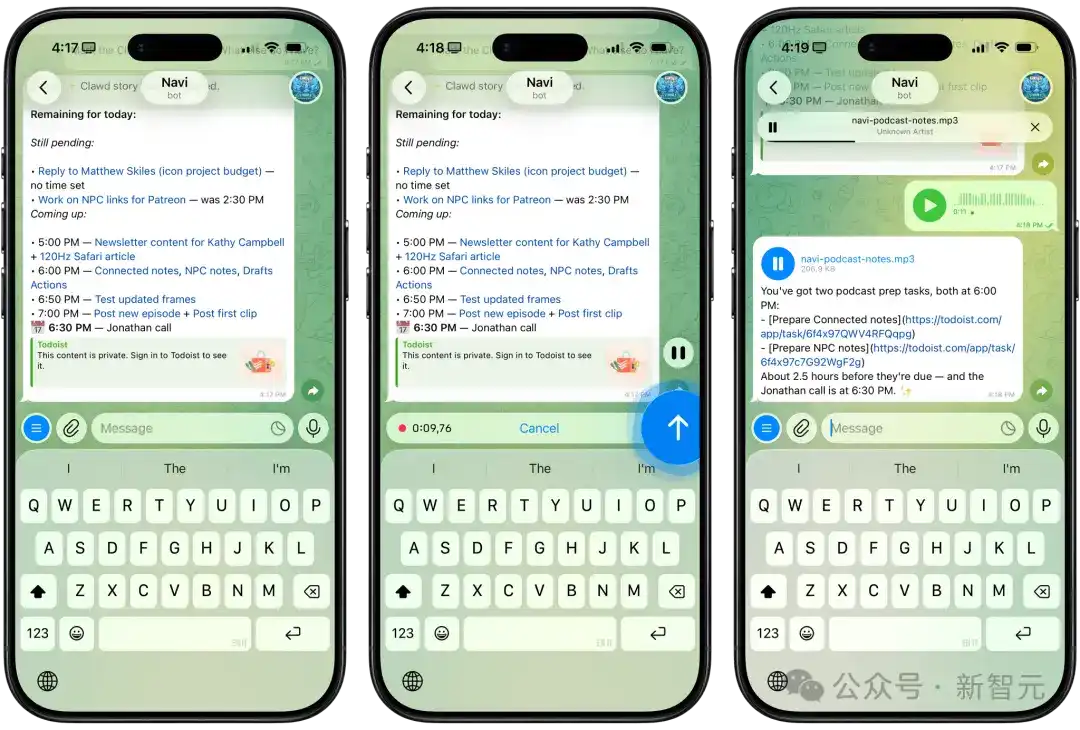
Clawdbot thought for a moment and proposed a solution: set up a cron job on the Mac mini to check the RSS feed every few hours, and once there's an update, call the Todoist API to create a task.
After a 5-minute conversation, it actually wrote all the code on the Mac and got the process running. No cloud dependencies, no subscription fees, entirely done by the LLM calling local Shell tools.
Mac Minis Sell Out, Cook Smiles
Now, many people are even filling their homes with Mac minis just to run it.
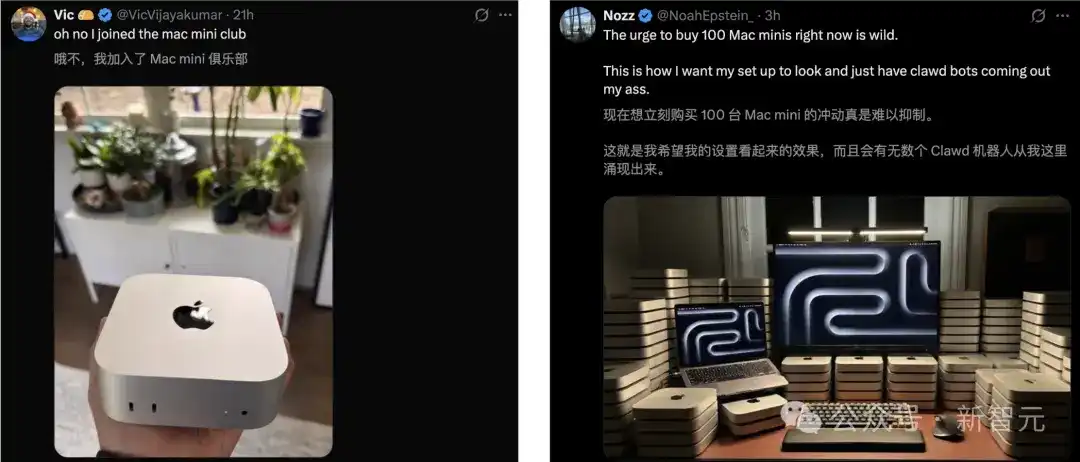
Netizens joked that the Father of Clawdbot single-handedly boosted Apple's sales in the first quarter. Probably even Tim Cook would laugh in his sleep.
<极客迷们为之疯狂。div>
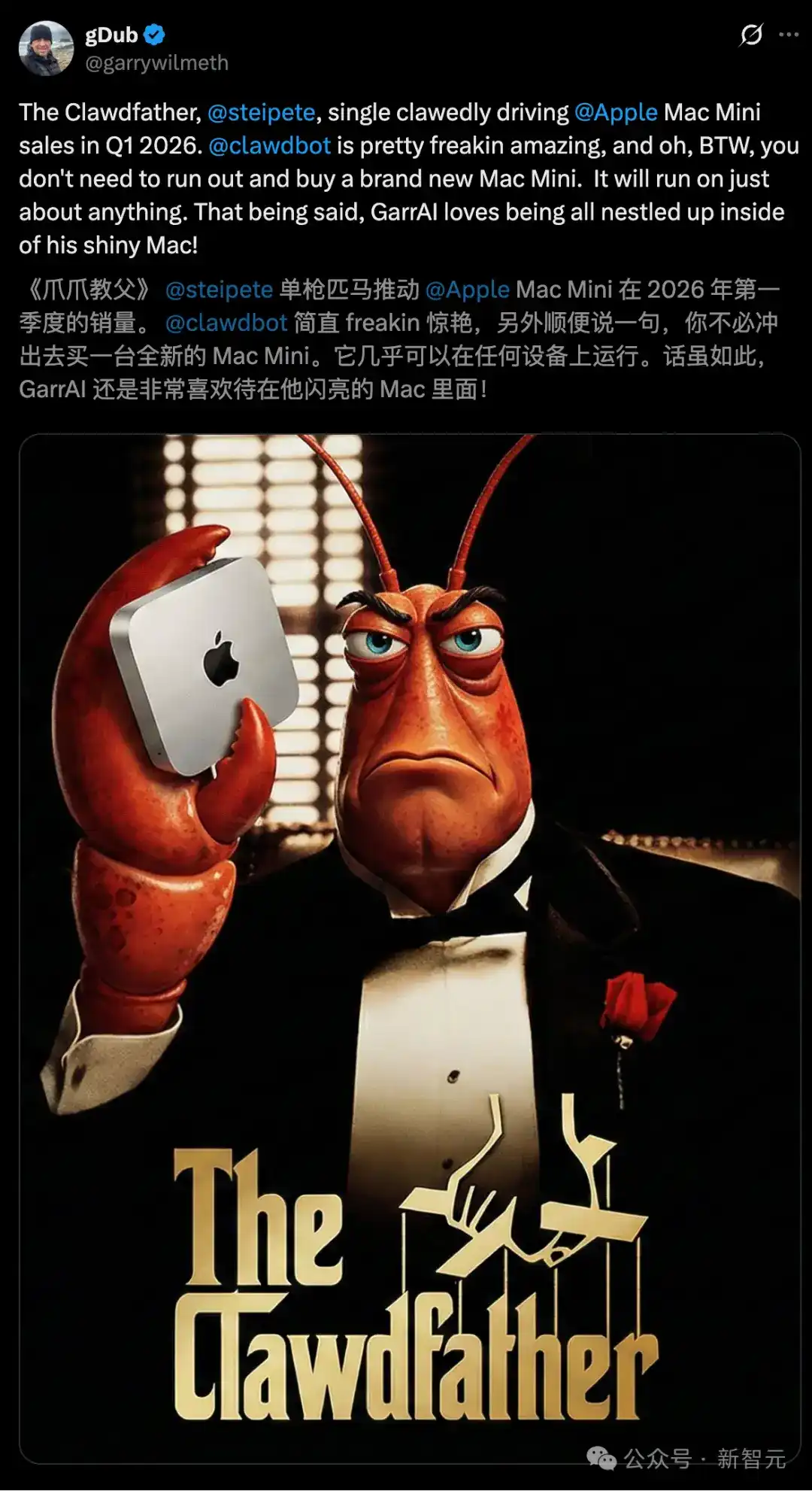
Does that mean you're not worthy without a Mac mini?
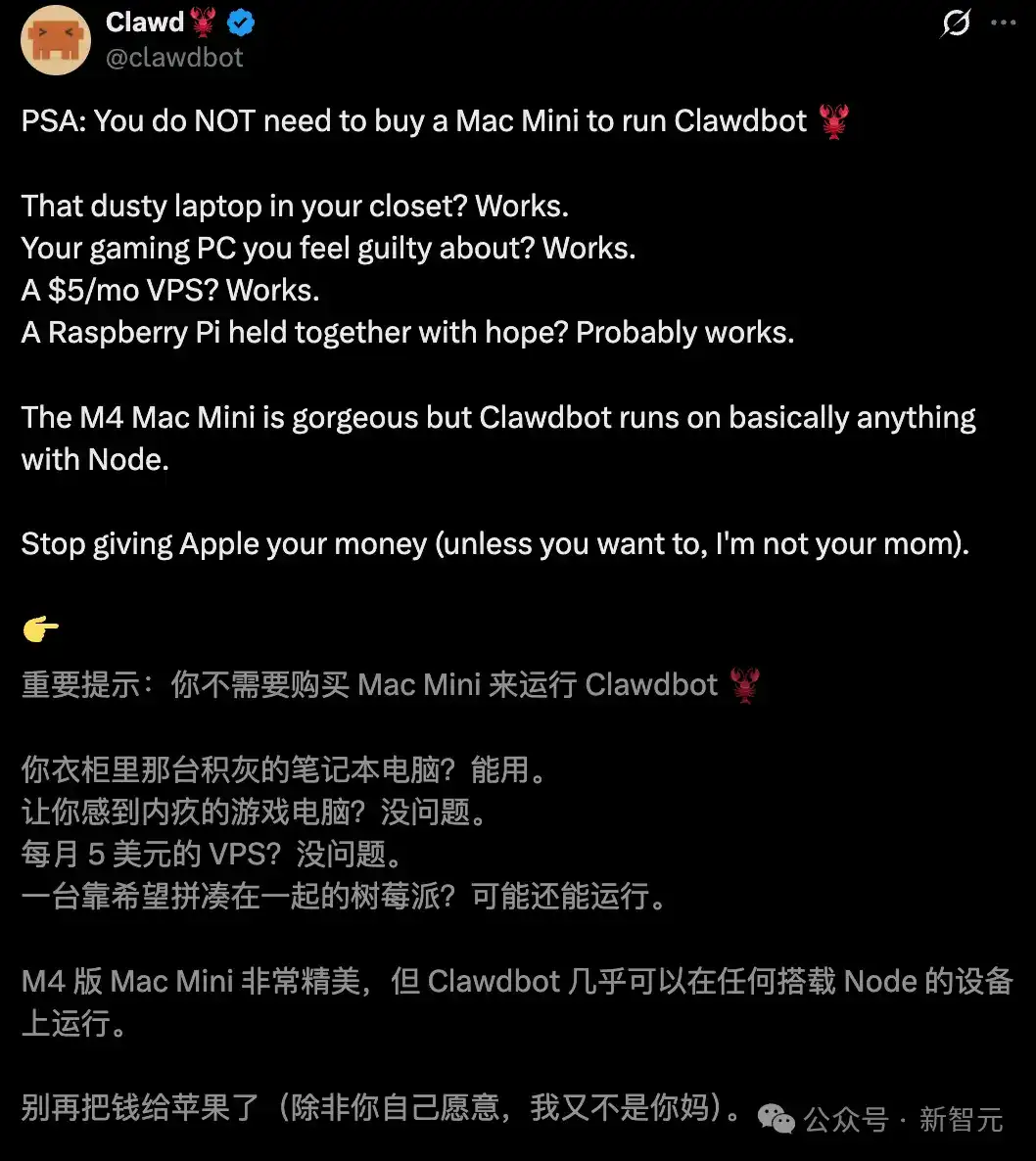
The Father of Clawdbot stated that there's no need to buy an additional device; you can just deploy a VPS to use it.
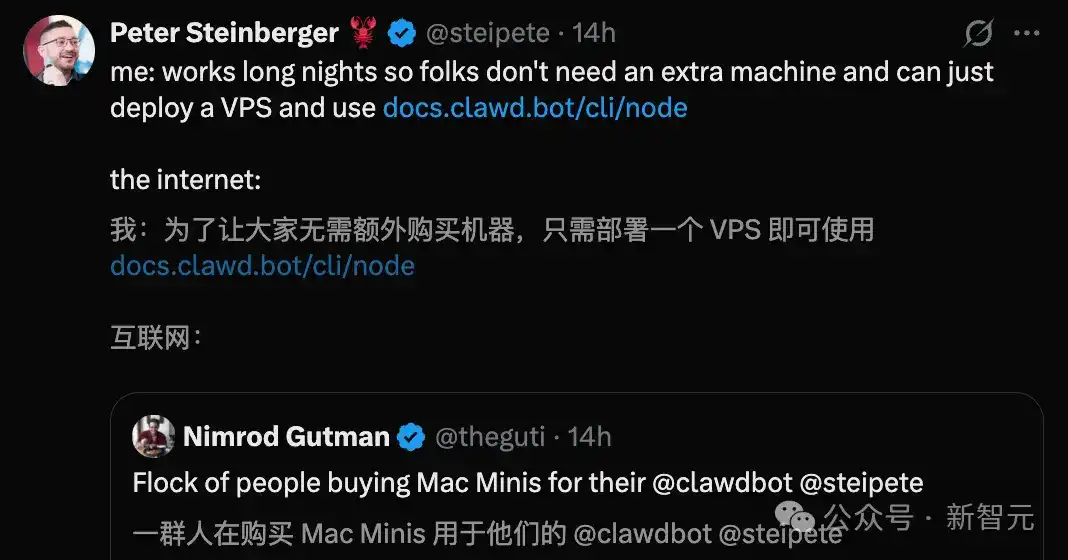
Even a long-unused, dusty MacBook or gaming PC can run it, and a Raspberry Pi勉强也行 (barely works too).
A Lobster, Ruling the World
On his personal homepage, the "Father of ClawdBot" aims to help a lobster rule the world.
Now, he has truly succeeded.

Many people have almost gone crazy trying to use it. One developer shared some personal experience and tutorials for non-developer audiences to understand.
You can understand it like this: ChatGPT and Claude live on websites; humans have to actively go find them, type, wait for a response, and then copy-paste elsewhere.
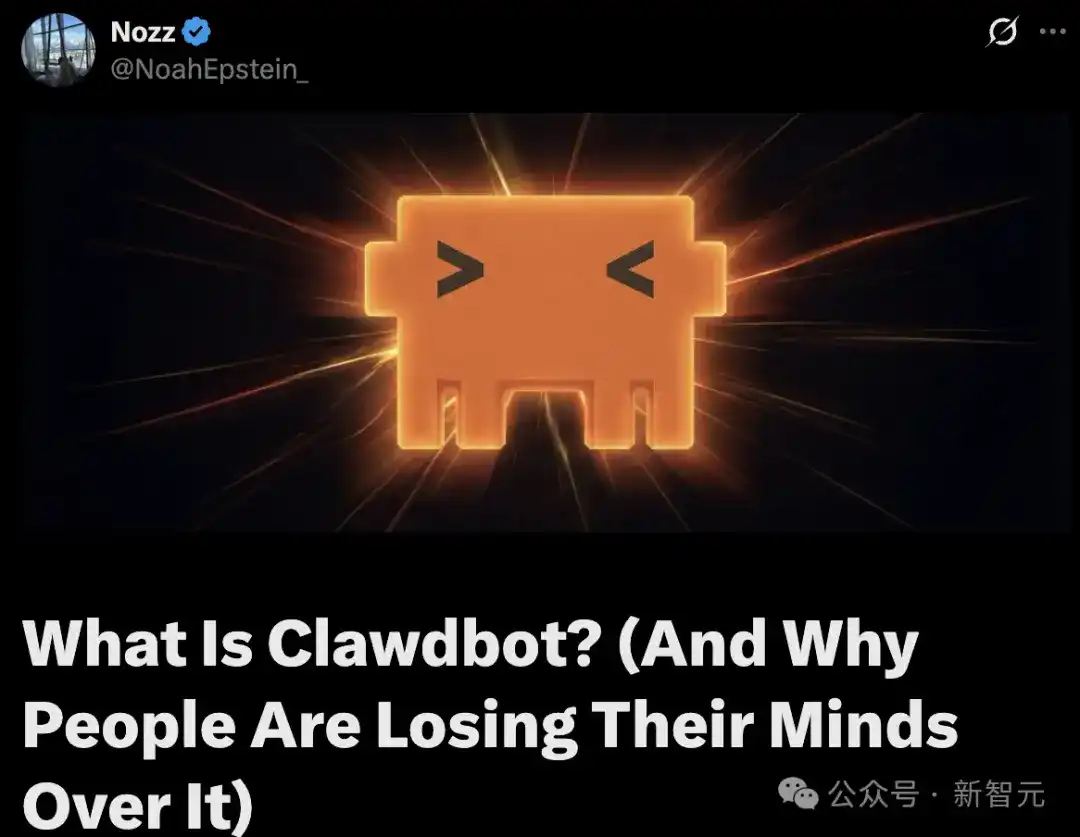
Clawdbot is an AI that "lives" in your phone. The reason it's so popular mainly comes down to three reasons:
1. It actually has "memory"
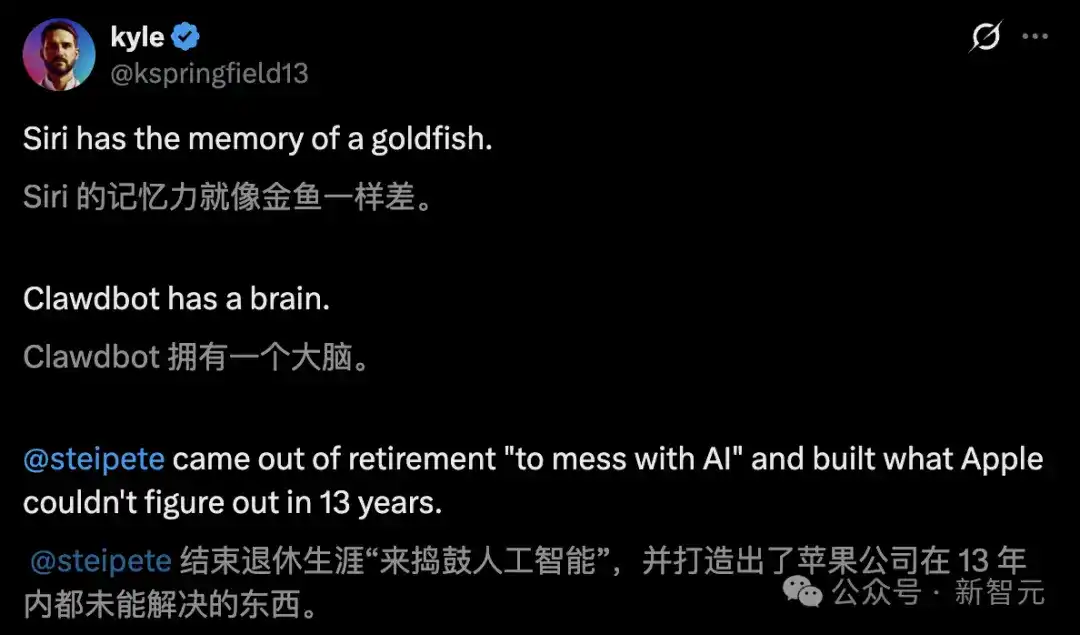
Ask Siri what you said to it yesterday, and it will definitely be clueless.
Clawdbot remembers your last conversation, remembers your preferences, and even remembers a small thing you mentioned casually two weeks ago.
It continuously accumulates background information over time, becoming more and more understanding of you.
What Apple's Siri couldn't solve in 13 years has now been cracked by an AI expert who came out of retirement.
2. It "proactively" seeks you out
This is the coolest point. Ordinary AIs always wait for people to open them. Clawdbot takes the initiative:
Hey, you have 3 urgent emails, and there's a meeting in 20 minutes;
That stock you follow just dropped 5%;
The weather isn't great tomorrow, you might need to adjust your schedule.
It feels like hiring a real private secretary who actually keeps an eye on things for you.
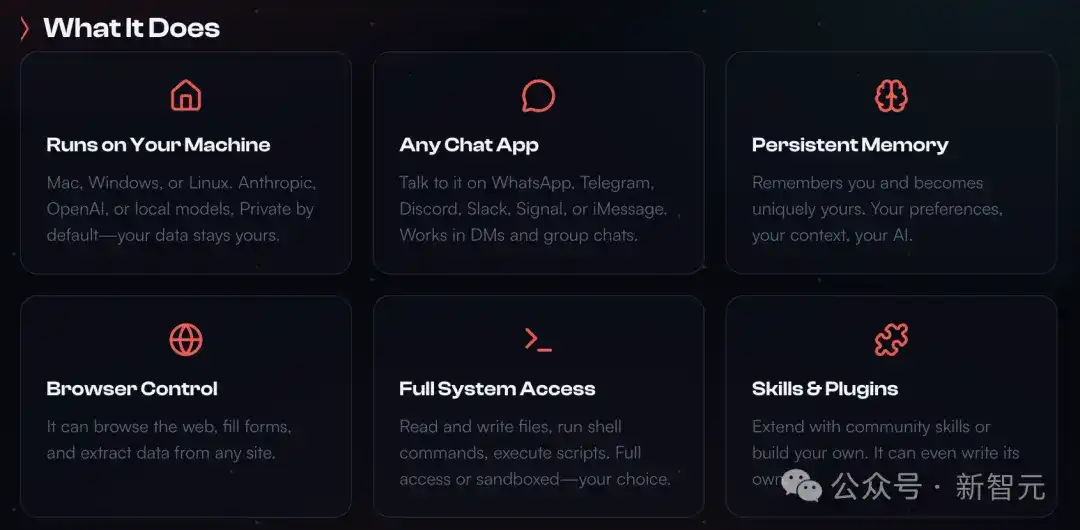
3. It can directly control the computer
It doesn't just talk and answer questions; it can really work:
Fill out forms, send emails, move files, run programs, control the browser.....
One guy重构 (refactored) his entire website while lying in bed watching Netflix. He never touched his laptop the whole time, just texted Clawdbot what to do.
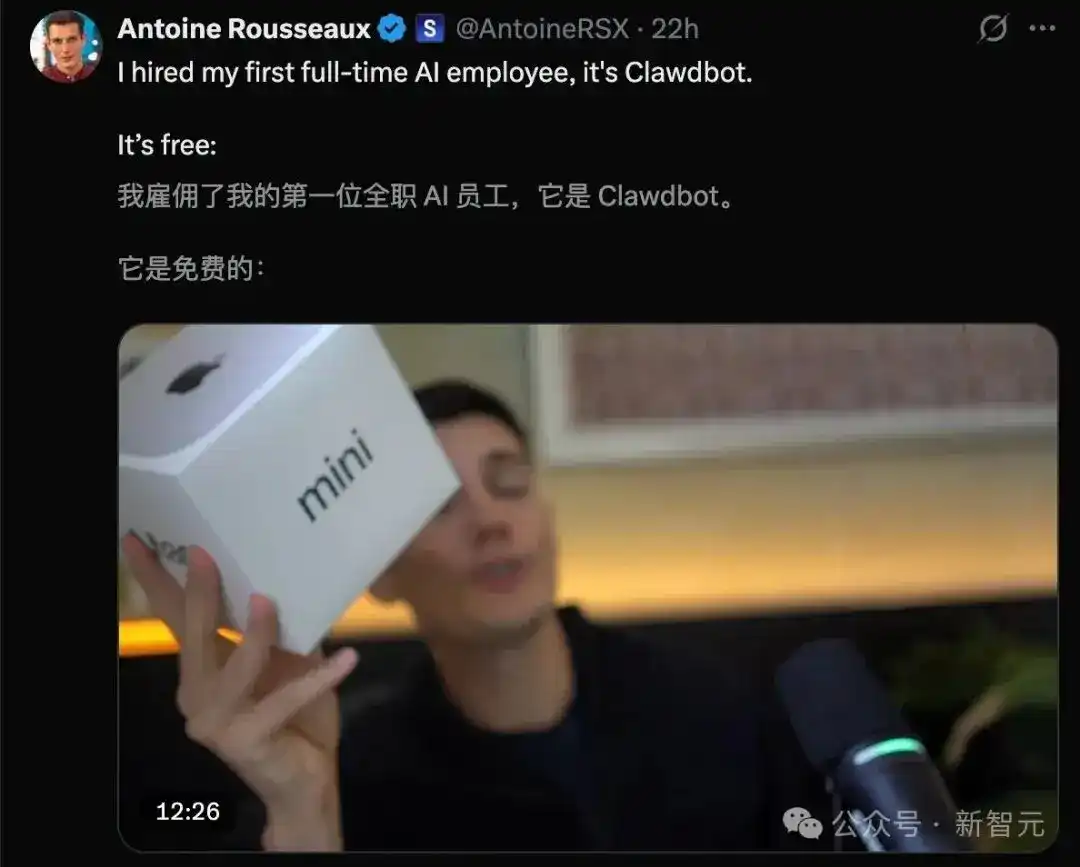
The developer said many people have fallen into a misconception—
I've seen people stack 3 Mac minis on their desk, pulling Raspberry Pis everywhere,搞得好像在建数据中心一样 (as if they're building a data center), but it's really not necessary.
Clawdbot can run on a $5 per month cloud server, cheaper than a cup of coffee, with a minimum cost of $25.
The technical requirements are actually simple:
A cheap cloud server (or your own computer)
Install Node.js (free software)
A Claude or ChatGPT subscription. That's it, no need to pioneer some "Mac mini farm."
Basic cost estimate—
Software: Free (open source)
Server: $5-50 per month (depending on usage). Most people can get by with a $5 Hetzner VPS, or run it directly on their own computer ($0).
AI fees: $20-100 per month. Claude Pro is $20/month, or pay directly based on API usage.
Total: About $25-150 per month, and you get a truly capable AI assistant.
Think about it, some "AI consultants" charge $10,000 just to set up a basic robot; this price is简直香爆了 (incredibly attractive).
So, how is it different from ChatGPT and Siri?
ChatGPT is a chat box; Clawdbot is an assistant living in your personal life. Siri's memory is about as good as a goldfish's; Clawdbot actually has a brain.
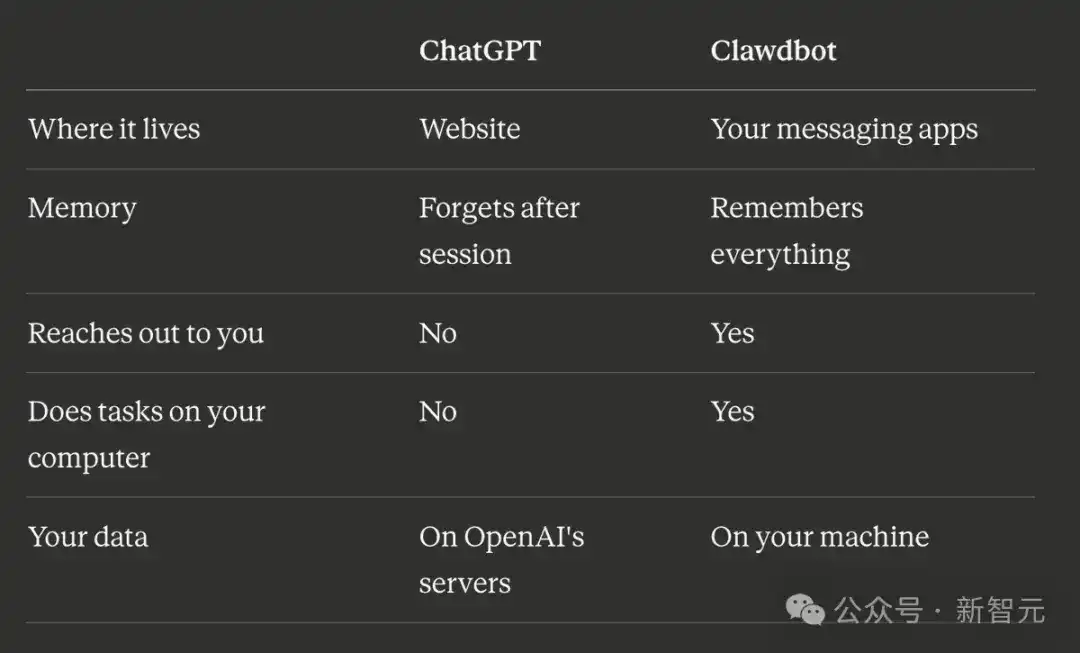
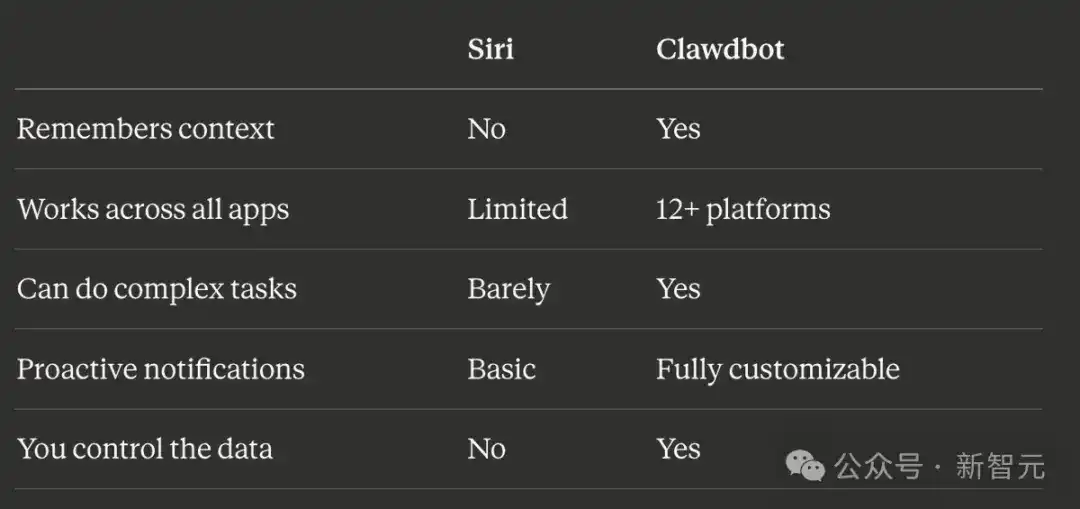
How to Get Started?
In simple terms, Clawdbot runs on a computer, can connect to chat software, you send messages, it replies.
Of course, it can also execute tasks on the computer.
From a professional perspective, a "gateway" runs in the background, which can be seen as a switchboard operator.
Messages come in from channels like Telegram, and the gateway routes them to the AI. The AI thinks, replies, and triggers actions—like opening a browser or running a script.
Except for calling the Claude/ChatGPT API, personal data is not sent to any company's servers.
Some classic use cases:
Morning Briefing: Wake up, and there's already a summary on your phone: important emails, the day's schedule, to-do items. Helps you sort out your thoughts before even getting out of bed.
Health Tracking: "Connected to a WHOOP fitness tracker, reports data daily." Someone set it up in 5 minutes, automatically gaining health insights every day.
Email Management: "Help me unsubscribe from all these乱七八糟的 (messy) news emails." It will log into the邮箱 (email) itself, find the spam, and handle it.
Research Assistant: "Help me find the 5 best-reviewed restaurants near hotels in Tokyo." It will search, compare prices, and give suggestions, all within the chat box.
Task Automation: "Every Friday at 5 PM, send me a weekly review." Set it once, and it can run forever.
High-end Tricks: One user had Clawdbot write meditation scripts, generate audio with AI voice, add background music, and send it to him准时 (punctually) every morning. 100% automated.
Do You Need Technical Skills?
Honestly, you need a little.
If you can follow instructions and know how to copy-paste command lines, you can manage it. It's not a "click and done" thing, but it's not rocket science either.

Official website here: https://clawd.bot
The installation command is just one line:
curl -fsSL https://clawd.bot/install.sh | bash
Then follow the setup wizard; it will teach you how to connect chat software.
If this seems too hardcore, you can wait a few months. The community optimizes the process weekly to make it simpler.
In this era of information explosion, what people lack is a second brain that can filter, remember, and execute for them.
Clawdbot is a typical representative, fulfilling the dreams of many.
Perhaps, in the future, a company only needs one CEO and many Clawdbots.
References:
https://x.com/NoahEpstein_/status/2015136736989397011?s=20
https://x.com/nickvasiles/status/2014790519529095447?s=20
https://x.com/naruto11eth/status/2015030005370417636?s=20
https://www.macstories.net/stories/clawdbot-showed-me-what-the-future-of-personal-ai-assistants-looks-like/