L'IA de WeChat s'est enfin mise en mouvement.
Le même jour que le WWDC d'Apple, WeChat a fait quelque chose de potentiellement plus important qu'Apple : publier une annonce d'une simplicité trompeuse : « Guide pour les développeurs souhaitant intégrer l'écosystème IA de WeChat ».
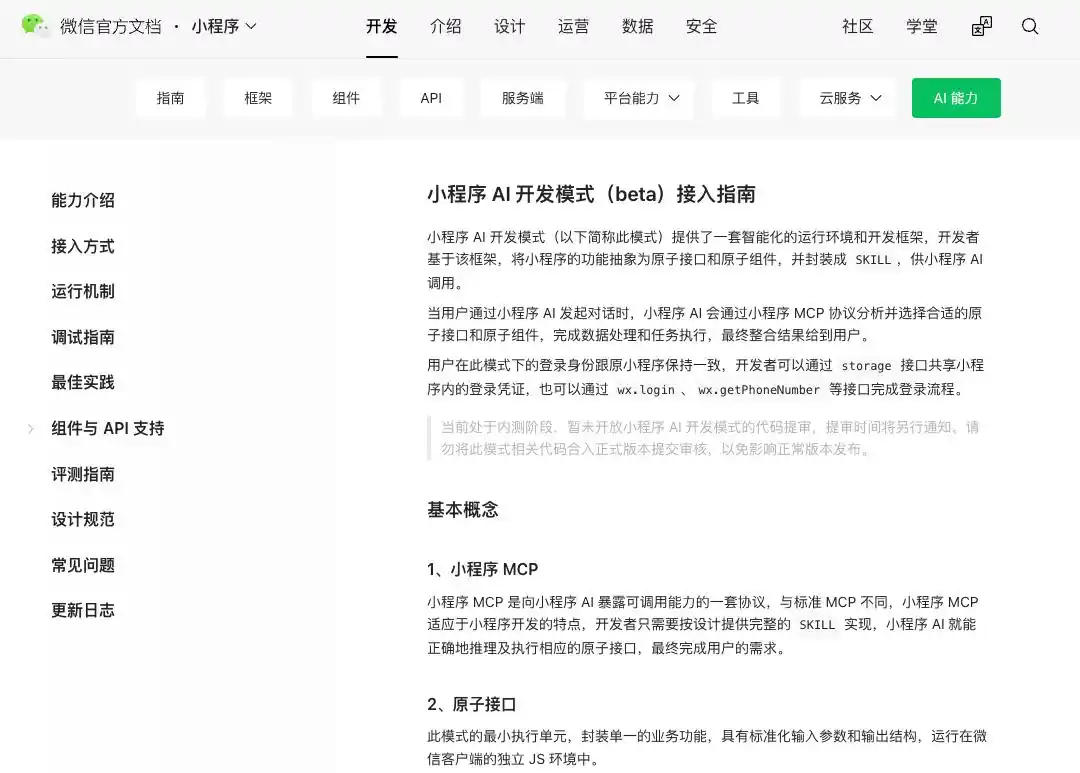
Dès aujourd'hui, les développeurs de mini-programmes peuvent donner leur autorisation pour que l'IA de WeChat puisse lire, manipuler et appeler les fonctionnalités de leur mini-programme.
WeChat propose deux modes d'intégration. Le premier, le « mode automatique », a un seuil d'accès quasi nul. Le développeur active un simple interrupteur, et la plateforme lit automatiquement le code source, analyse les pages, comprend ce que le mini-programme peut faire, puis l'IA peut directement commencer à l'utiliser, sans écrire une seule ligne de code.
L'autre mode s'appelle « mode développement ». Ici, les développeurs créent leurs propres « Skills » personnalisés, qui, une fois validés, pourront être appelés par l'IA. Les deux modes peuvent être activés simultanément. Meituan a déjà annoncé son intégration.
Il ne faut pas voir cela simplement comme le lancement d'une nouvelle fonctionnalité, mais comprendre que WeChat est en train de transformer son écosystème entier — des millions de mini-programmes, WeChat Pay, les notifications de service, les comptes publics — en une couche d'exécution pour l'IA.
Plongée dans la documentation des Skills : Comment l'IA de WeChat utilise les mini-programmes
La documentation ouverte de WeChat détaille les spécifications techniques pour connecter un mini-programme aux Skills de l'IA. En y regardant de près, on découvre de nombreux détails de conception.
Lien vers la documentation officielle des skills 👇🏻 :
https://developers.weixin.qq.com/miniprogram/dev/ai/best-practices.html
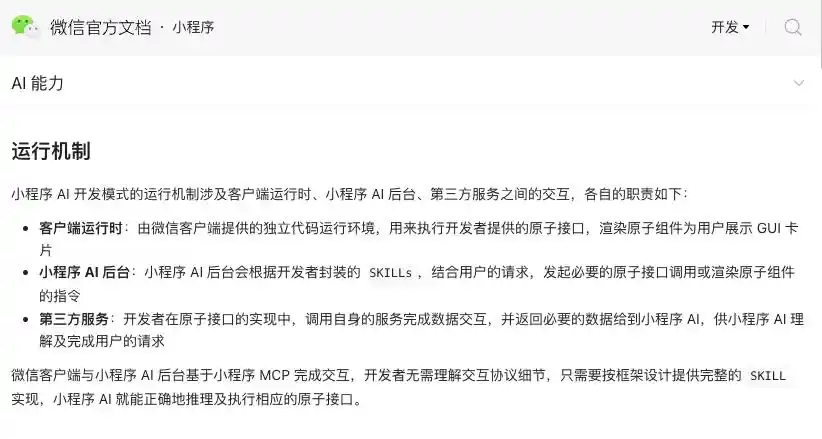
D'un point de vue architectural, ceux qui ont déjà développé des solutions IA reconnaîtront immédiatement qu'il s'agit essentiellement de MCP. Le fichier mcp.json déclare la fonction et les paramètres de chaque interface atomique, et SKILL.md décrit comment s'exécute l'ensemble du flux de travail. Cela ressemble presque trait pour trait à l'architecture MCP+Skills utilisée dans Claude, Cursor ou VS Code. WeChat n'a pas tout réinventé, mais a directement adopté le standard qui émerge dans le secteur.
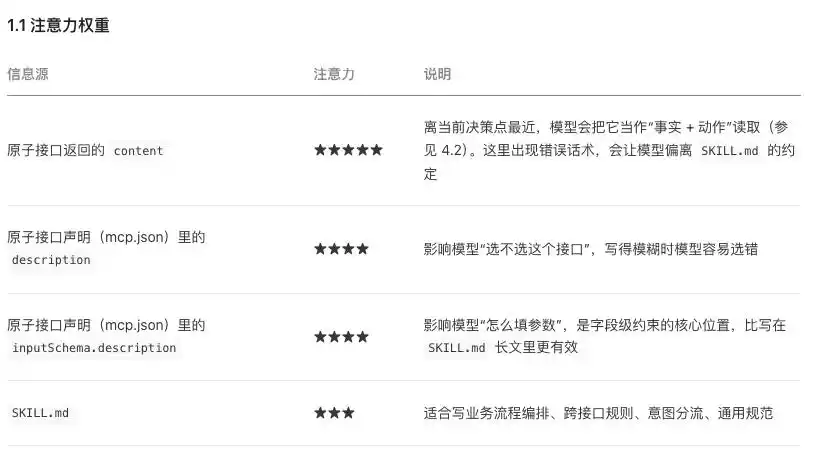
Dans ses recommandations, WeChat propose un système très clair de « pondération de l'attention ». Lorsque l'IA décide quelle interface appeler et quels paramètres générer, elle priorise d'abord le « content » renvoyé par l'interface (cinq étoiles), puis la « description » de l'interface (quatre étoiles) et la « description » des paramètres (quatre étoiles) dans le fichier mcp.json. Le fichier SKILL.md arrive en dernier (trois étoiles). Cela signifie que l'endroit où le développeur écrit est plus important que ce qu'il écrit. Une même règle écrite dans le retour d'interface ou dans SKILL.md aura un poids totalement différent pour l'IA.
Au niveau du retour d'interface, il existe une règle fondamentale : la structure en deux parties « fait + action ». Il faut d'abord dire à l'IA « ce qui s'est passé », puis lui dire « quelle est la prochaine étape ». Si on ne mentionne que l'action sans le fait, l'IA pourrait interpréter « afficher une carte » comme « préparer l'appel à l'interface suivante » et sauter la confirmation de l'utilisateur. C'est une règle qu'on ne rédige qu'après être tombé dans beaucoup de pièges.
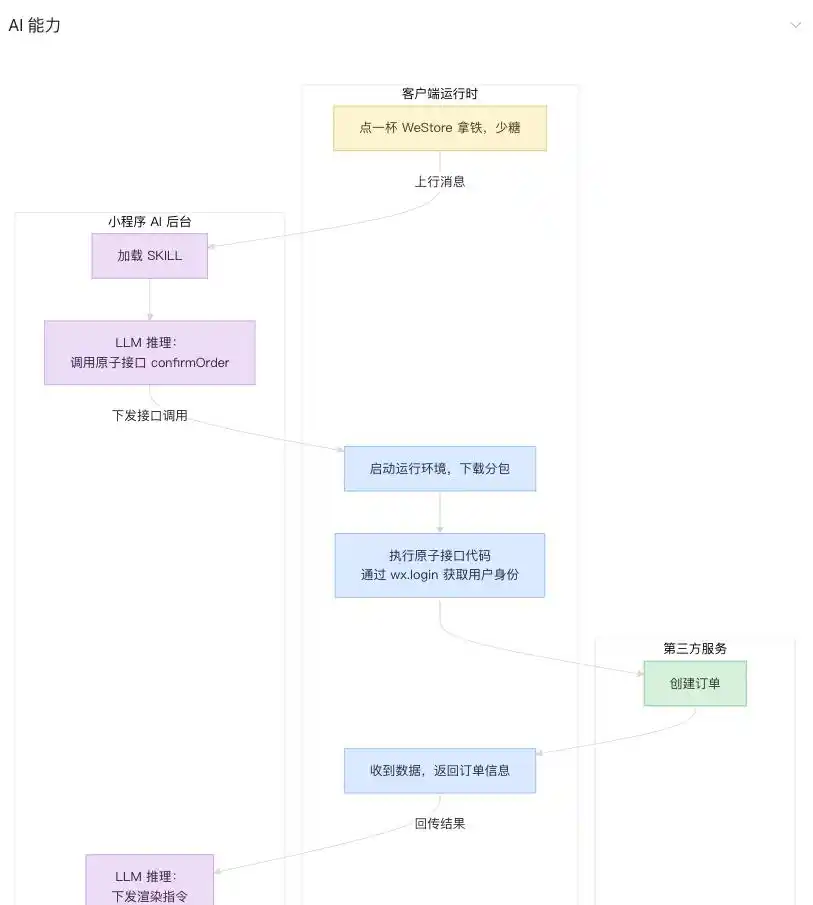
Quatrièmement, la transmission des paramètres privilégie les ID par rapport au langage naturel. Prenons l'exemple de la scène de « commande de café » illustrée. L'utilisateur formule une demande, l'IA comprend l'intention vague ainsi que les options, modifie les spécifications, gère le paiement, le tout sans jamais quitter la boîte de dialogue.
Cette conception envoie un signal clair : WeChat a déjà testé suffisamment de cas d'usage en situation réelle, sait où se trouvent les pièges liés à l'appel de services externes par une IA, et a figé cette expérience dans une norme pour les développeurs.
En réalité, si l'on compare les écosystèmes de WeChat (mini-programmes) et d'Apple (App Store), tous deux réputés, WeChat bénéficie d'une « vue d'ensemble » (« Dieu ») sur son propre écosystème, un prérequis essentiel à toutes ces réalisations.
En quoi c'est peut-être plus important que l'IA d'Apple
Cette année, lors du WWDC, Apple a dévoilé la nouvelle version de son assistant IA Siri. Bien que connecté en sous-couche à Google Gemini et capable de créer des raccourcis en langage naturel, il n'a pas suscité beaucoup de discussions.
En y regardant de plus près, l'écart est flagrant : Apple cherche à faire en sorte que l'IA coordonne certaines fonctions natives au sein du système iOS. Dès qu'il s'agit d'applications tierces, ces apps installées sur votre téléphone, elle montre ses limites.
Prenez par exemple l'app Ele.me. Son code s'exécute sur les propres serveurs d'Ele.me, qu'Apple ne peut pas lire. Pour que Siri puisse appeler Ele.me, les ingénieurs d'Ele.me doivent volontairement se connecter à l'ensemble d'interfaces App Intents, négocier une par une, les intégrer une par une, ce qui prend du temps et des efforts.
En revanche, ce que fait WeChat, c'est permettre à l'IA de manipuler directement des millions de services tiers, car les mini-programmes sont différents. Le code de chaque mini-programme, depuis sa soumission par le développeur, en passant par la revue de WeChat, jusqu'à son exécution sur le téléphone de l'utilisateur, se trouve entièrement dans l'écosystème technique de WeChat. WeChat peut scanner le code lors de l'étape de validation, analyser automatiquement « quelles sont les pages de ce mini-programme, ce qu'il peut faire, quelles sont ses entrées et sorties ».
C'est pourquoi le « mode automatique » est possible. Le développeur n'a pas besoin d'écrire une ligne de code ; il active un interrupteur, et WeChat traduit automatiquement son mini-programme en un outil utilisable par l'IA. L'architecture de base de WeChat supporte naturellement cette approche, elle bénéficie d'une « vue d'ensemble » (« Dieu »), capable de mettre en œuvre une orchestration basée sur la centralisation.
Cet avantage architectural, Apple ne l'a pas. Google non plus.
Il est également intéressant de noter que, selon des rumeurs récentes, WeChat collaborerait avec Huawei, Honor, Xiaomi, OPPO et vivo pour lancer des capacités d'assistant A2A (Agent-to-Agent), permettant aux utilisateurs de lancer directement un appel audio/vidéo WeChat ou d'envoyer un message via l'assistant vocal de leur téléphone.
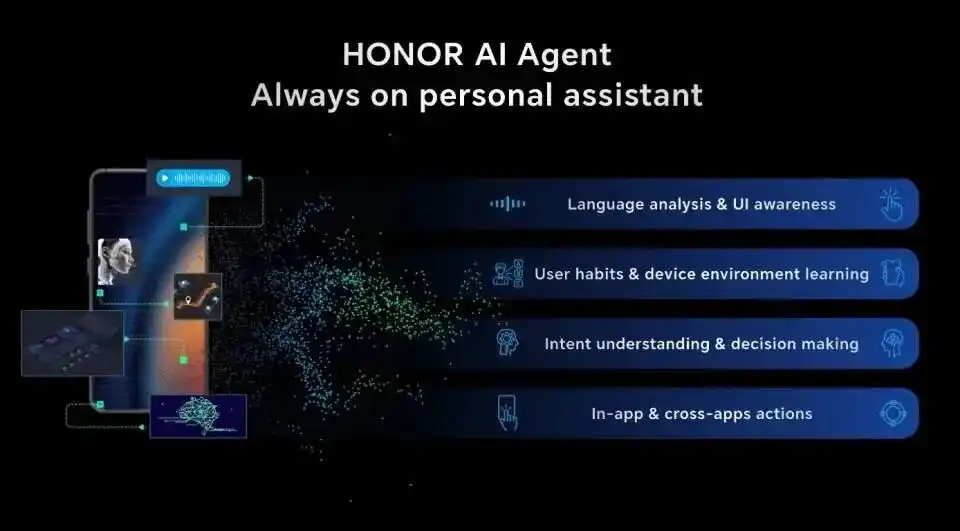
En interne, l'IA de WeChat peut appeler des millions de mini-programmes ; vers l'extérieur, les assistants IA des fabricants de téléphones peuvent appeler WeChat. WeChat est en train de devenir le super connecteur de l'ère de l'IA, le centre de service que toutes les IA peuvent intégrer.
L'ancienne prophétie du « WeChat OS »
Lorsque les mini-programmes ont été lancés, beaucoup plaisantaient en disant que WeChat voulait créer un « WeChat OS ». À l'époque, c'était plutôt une figure de style — les mini-programmes remplaçaient certaines fonctionnalités des applications, mais restaient fondamentalement une « plateforme d'applications légères ».
Plus fortuit, le mécanisme de validation centralisé conçu à l'époque l'était pour le contrôle de la qualité et de la sécurité. Mais neuf ans plus tard, cette conception initialement critiquée comme étant un « contrôle excessif » est devenue, par accident, un avantage infrastructurel à l'ère de l'IA. Les écosystèmes d'applications distribués (Apple/Android), qui semblaient alors plus « libres », sont aujourd'hui devenus un obstacle à l'intégration de l'IA.
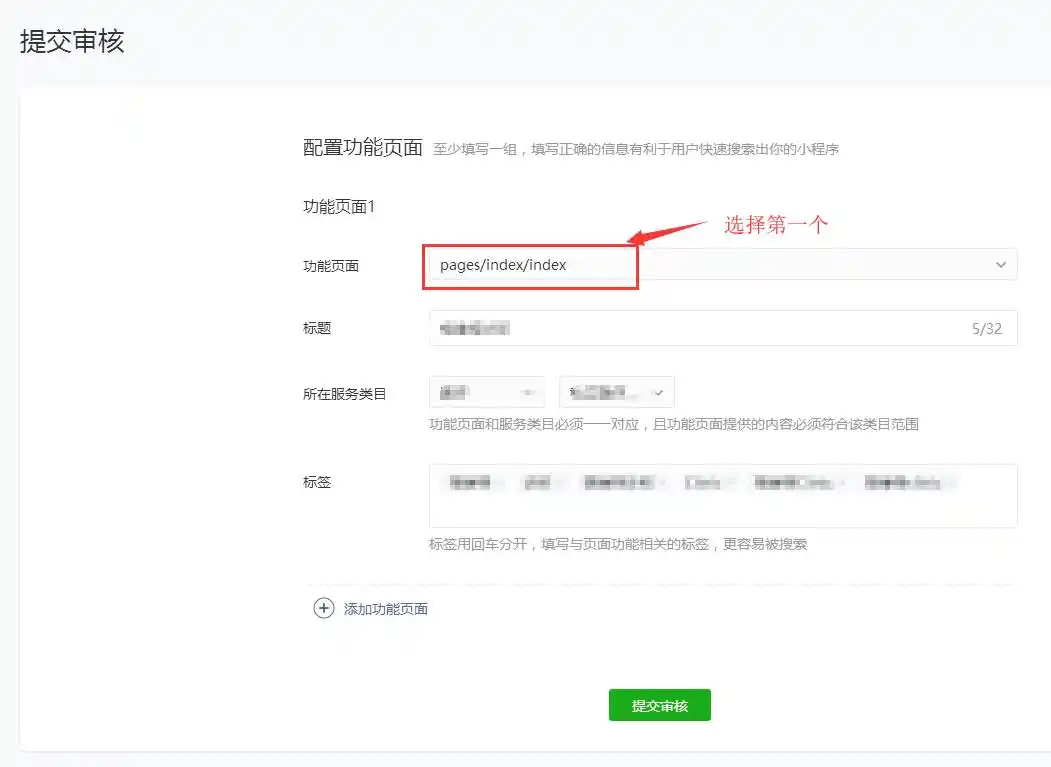
Une ancienne prophétie, avec l'arrivée d'une nouvelle technologie — l'IA —, prend un tournant radical.
Dans des articles précédents sur OpenClaw et Feishu, j'ai émis un constat : la messagerie instantanée (IM) est l'entrée la plus naturelle pour un Agent IA, car la conversation est en soi la manière la plus naturelle d'interagir avec une IA, et l'écosystème de services intégré à l'IM (robots, paiement, mini-programmes) permet à l'IA non seulement de « discuter » mais aussi d'« agir ». Feishu évolue déjà dans cette direction, avec le lancement de l'amélioration de son Bot API et des nœuds Agent IA.
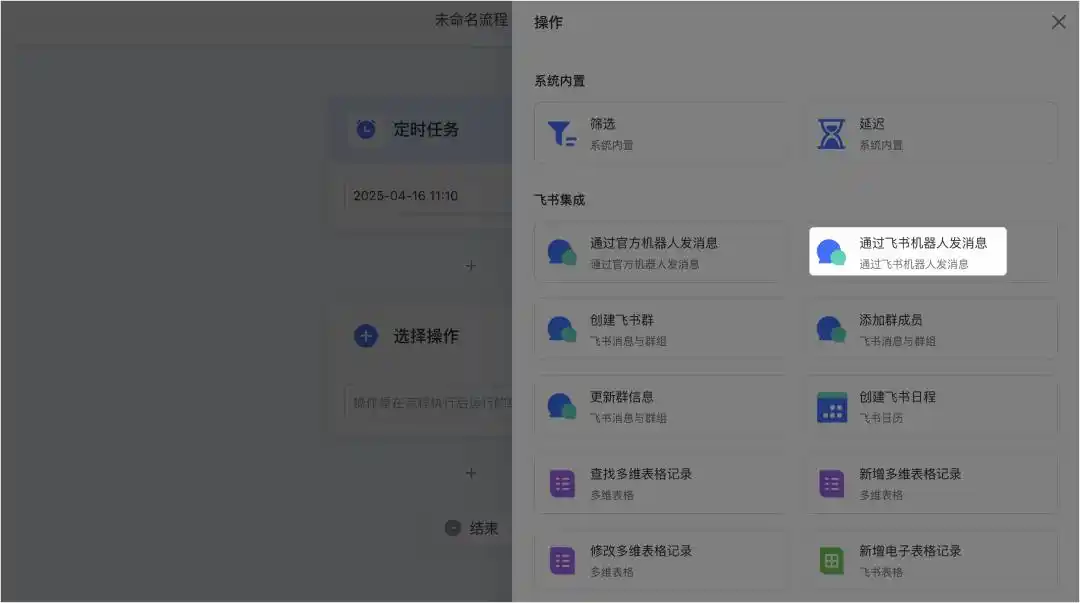
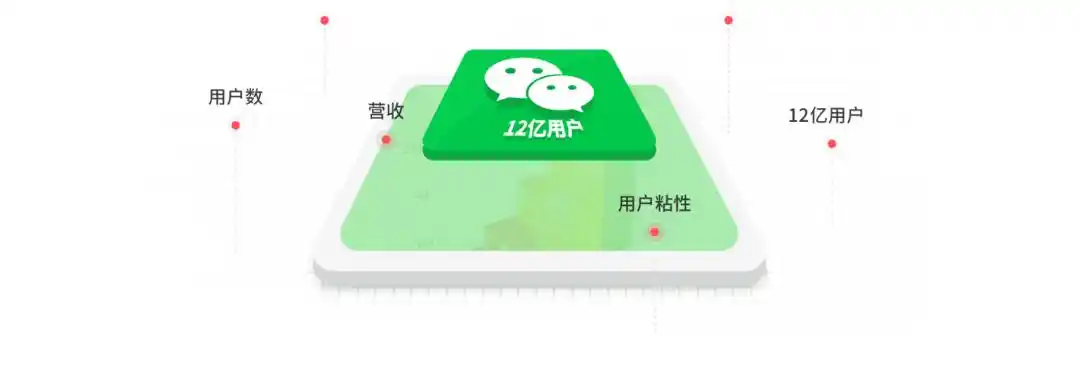
Cependant, Feishu est un outil de collaboration d'entreprise, couvrant des scénarios de travail. WeChat a une portée radicalement différente — 1,432 milliard d'utilisateurs actifs mensuels, des centaines de millions de mini-programmes dans des domaines variés, de la commande de nourriture à la prise de rendez-vous médicaux, en passant par l'achat de billets d'avion et le paiement des factures, couvrant presque tous les besoins quotidiens d'une personne.
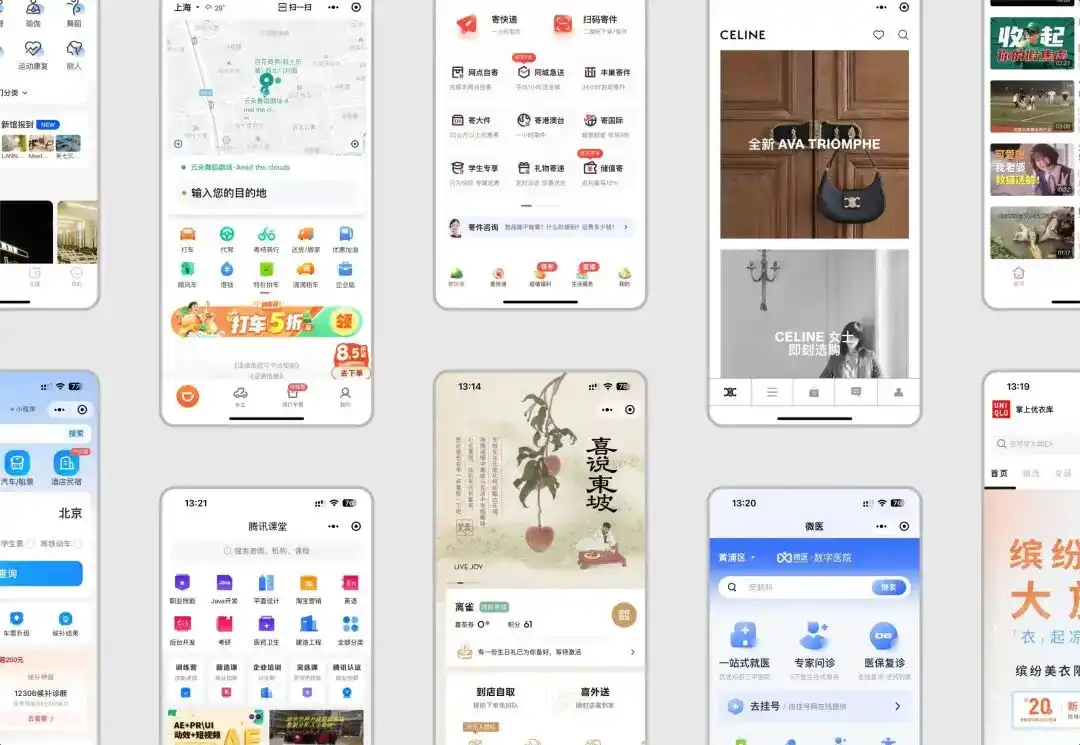
Si l'IA de WeChat parvient réellement à utiliser ces mini-programmes de manière fluide pour accomplir des tâches, alors, comme le dit la prophétie, elle deviendra un système d'exploitation piloté par le langage naturel.
L'utilisateur dit simplement « Aide-moi à réserver un billet de train pour demain après-midi à 15h de Pékin à Shanghai », l'IA décompose l'intention, appelle le mini-programme 12306 pour rechercher les billets, choisir un siège, utilise WeChat Pay pour finaliser la commande, le tout sans quitter WeChat. En théorie, ce cheminement pourrait fonctionner dès aujourd'hui.
Bien sûr, il y a un fossé entre la théorie et la réalité. L'appel par l'IA de services impliquant des paiements exige un taux d'erreur proche de zéro — commander le mauvais café est une petite erreur, mais acheter le mauvais billet d'avion est grave. La précision requise du modèle sous-jacent est bien supérieure à celle d'un simple scénario de conversation. C'est aussi le goulot d'étranglement commun au déploiement mondial des Agents IA : passer de « capable de discuter » à « capable d'accomplir des tâches », ce n'est pas une question de métrique technique, mais de confiance.
Mais WeChat a au moins fait une chose correcte : il n'a pas construit un réseau de services à partir de zéro. Ces dernières années, ce que faisait ChatGPT, c'était d'abord avoir un « cerveau » intelligent, puis se connecter un par un à Shopify, DoorDash, Stripe, chaque connexion étant établie à partir de zéro. Aujourd'hui, les requêtes liées aux transactions représentent encore moins de 3% de son activité.
Le véritable changement qui va se produire sera, pour la majorité des utilisateurs, probablement imperceptible. Un jour, vous taperez dans WeChat « Aide-moi à réserver un billet pour Shanghai ce soir à 21h », et ce sera fait. Vous ne saurez même pas quel mini-programme a été appelé en arrière-plan, ni quel processus de paiement a été utilisé.
Cette « réalisation sans perception » est le véritable signe de maturité d'un Agent IA. Et WeChat est plus proche de cette étape que quiconque.
Cet article provient du compte public WeChat « APPSO », auteur : APPSO, découvreur de produits de demain