On January 29, the Worldcoin token WLD) surged over 18% in the past 24 hours, jumping from around $0.46 to near $0.65, with a current market cap of approximately $2.5 billion. The immediate cause of the price spike stems from a Forbes report: OpenAI is developing a new social networking application and considering the use of iris scanning technology similar to Worldcoin's to verify user identities, aiming to address the rampant issue of online bots.
According to The Information, Nvidia, Amazon, and Microsoft are in discussions to invest up to $60 billion in OpenAI. A new round of funding could value OpenAI at $730 billion.
Fake Bots Escalating, OpenAI Urgently Needs Real Person Verification
OpenAI hopes to achieve "proof of personhood" through biometric means, thereby filter out AI-generated fake accounts. The rapid development of AI is creating problems it cannot solve itself, and Worldcoin正好 fills this gap. Sam Altman's dual role is the key link. He is not only the head of OpenAI but also a co-founder of Worldcoin.
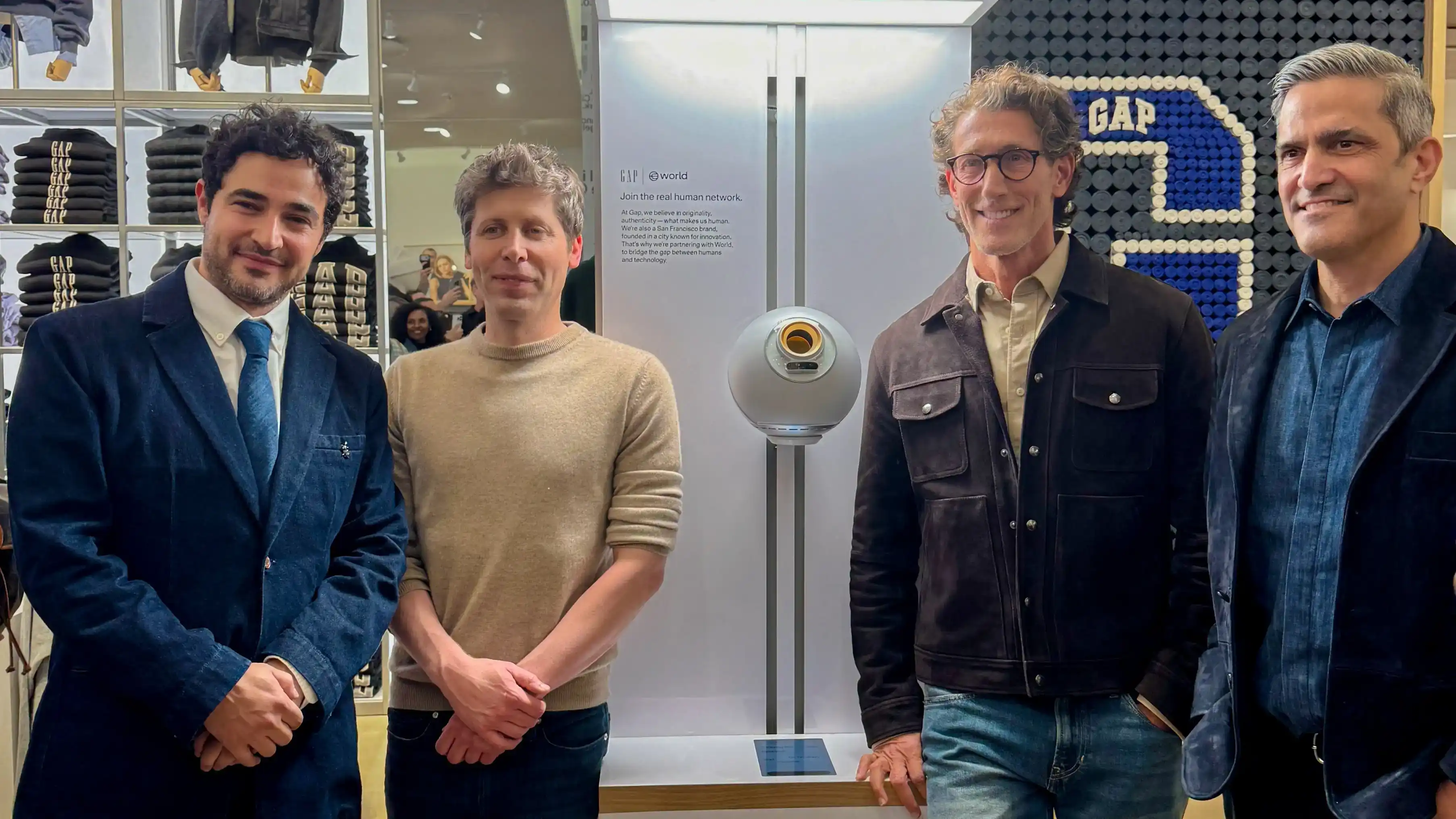
Altman foresaw as early as 2020 that AI would blur the lines between humans and machines, leading to a collapse of online trust. OpenAI's AI models, such as the GPT series, have permeated social media, recruitment, and finance, among other areas, but this has been accompanied by bot abuse: fake accounts spreading misinformation, AI agents manipulating markets, and even forging resumes on recruitment platforms.
OpenAI needs a reliable "personhood filter" to maintain the purity of its ecosystem; otherwise, its products will face regulatory pressure and user churn.
OpenAI's social application is reportedly aimed at creating a "bot-free" network space, but traditional CAPTCHAs or phone verification have become ineffective—AI can easily bypass them. Worldcoin's Orb provides zero-knowledge proof through iris scanning, allowing users to prove they are unique humans without exposing personal information. This technology is already used in the World App, covering 15 million users, and has expanded into payments and gaming. If OpenAI integrates a similar system, it could directly enhance its application's competitiveness.
For example, embedding World ID verification within the ChatGPT interface would allow users to securely make encrypted payments or authenticate identities, avoiding AI-generated fake interactions. This could also open up new revenue streams for OpenAI: charging verification fees or sharing data infrastructure with Worldcoin.
Integrating with Token Economics, Benefiting Everyone from AI Prosperity
Altman has publicly stated that AGI (Artificial General Intelligence) will reshape the global economy, but only if wealth distribution is ensured to be fair. Worldcoin's design初衷 is to distribute a "Universal Basic Income" (UBI) through WLD, allowing everyone to get a share of the AI prosperity.
OpenAI could embed Worldcoin's token economics into its platform, driving user adoption. For instance, social network users could receive WLD rewards after iris verification, usable for AI service subscriptions. This creates a business闭环: OpenAI provides AI tools, Worldcoin handles identity and payments, jointly combating the monopoly of centralized platforms.
On the regulatory front, cooperation between Worldcoin and OpenAI could also分散 risk. Worldcoin is already facing privacy investigations in Europe and Asia (such as bans in Spain and Kenya), but joining forces with OpenAI could leverage the latter's influence in Washington to push for policy relaxation. Altman has already lobbied the White House to discuss digital identity standards, paving the way for cooperation.
Currently, OpenAI has not disclosed specific details, but insiders透露 that the application might integrate biometric hardware to ensure every user on the platform is a real human.
Of course, critics point out that iris scanning involves privacy leakage risks, especially in the AI era, where data could be misused. OpenAI itself is also under antitrust scrutiny, and a union with Worldcoin might attract more regulatory attention. But from a business logic perspective, this move is beneficial for OpenAI: it can benefit from Worldcoin's blockchain infrastructure while injecting practical value into WLD, shifting the token from speculation to real-world application.
In 2025, Worldcoin pushed the protocol from a controversial project towards mainstream adoption. In May, Worldcoin officially launched in the US. In early October, the World Chain mainnet launched; it is a blockchain optimized for human activity, prioritizing transactions from verified users. On October 21, Worldcoin partnered with Mythical Games to integrate Orb technology into the game economy, allowing users to participate in the on-chain economy through iris verification, avoiding bots farming rewards.
Furthermore, Worldcoin partnered with platforms like Razer and Tinder, embedding World ID into hardware and dating apps, allowing users to verify identities and avoid fake scams.
Next-Generation ID Authentication 4.0
In January 2026, Worldcoin released the product and technical specifications for its next-generation identity recognition protocol.
Its core black technology is OPRF nodes (Oblivious Pseudorandom Function). When you log into different Apps, these nodes help generate a "pseudonym," making it harder to track user behavior.
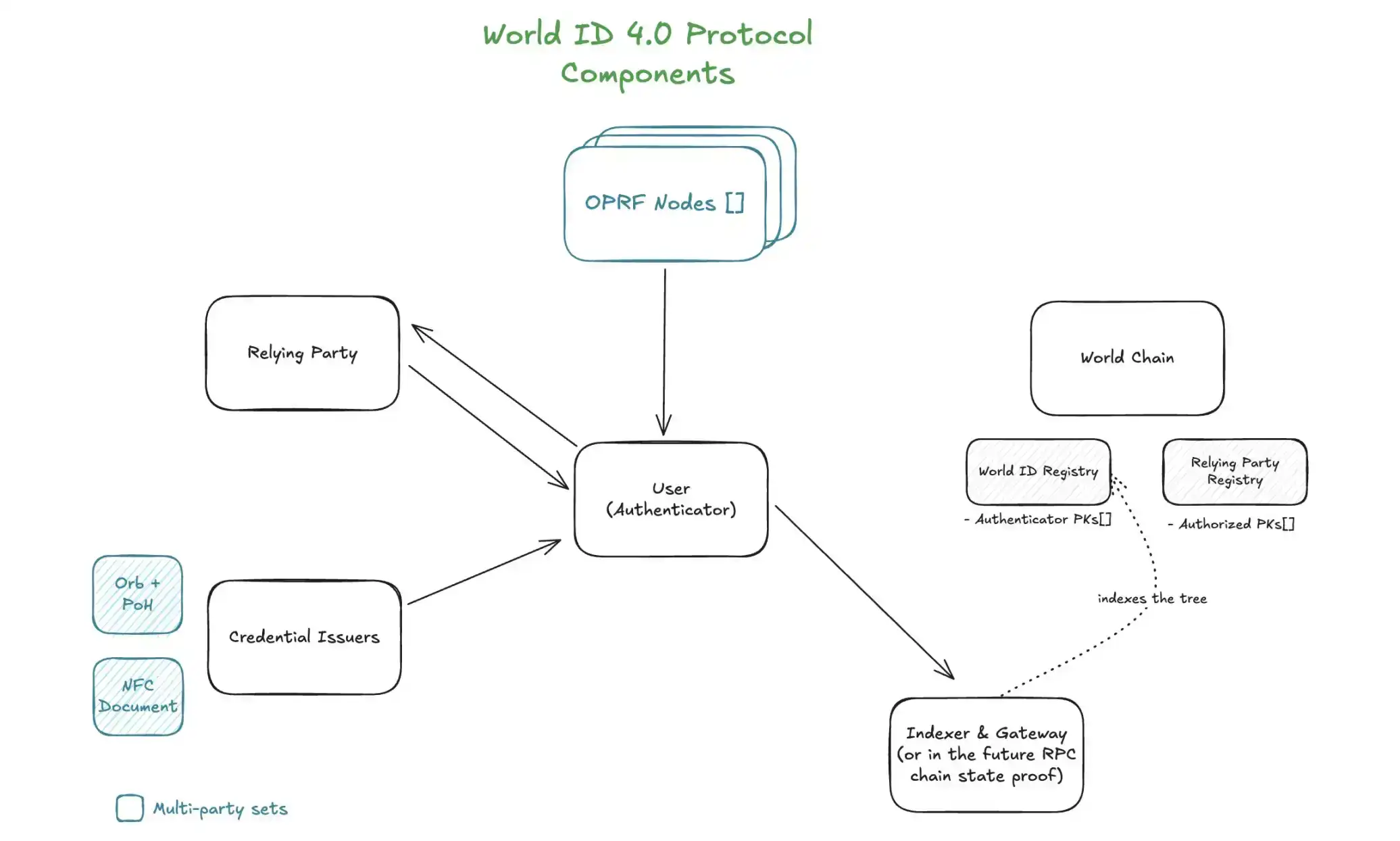
Compared to version 3.0, the new version 4.0 is a true "cloud identity account":
· Loss-proof: Supports multi-device login; can recover if phone is lost.
· More private: Introduces multi-node (OPRF), making tracking your behavior path extremely difficult.
· More flexible: In places without an Orb, you can join by scanning your passport.
In the future, if cooperation with OpenAI materializes, Worldcoin could leap from a fringe project to core AI infrastructure.
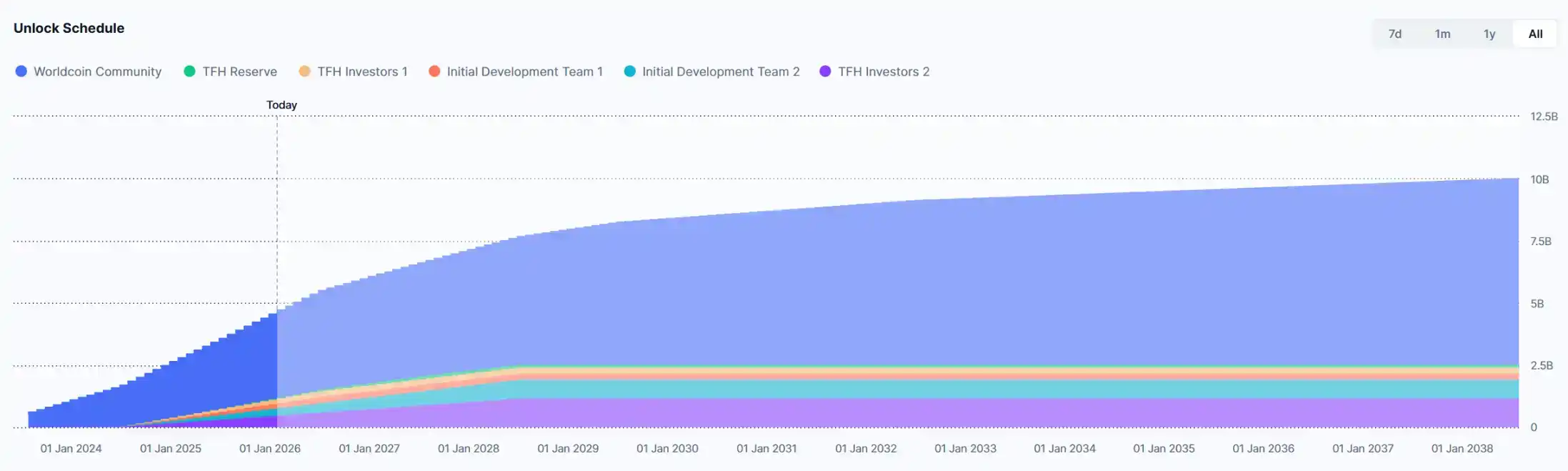
However, constrained by the sluggish broader market, lack of token demand, and unlock selling pressure, the WLD price is still about 20 times below its all-time high. Investors need to pay attention to risk control.