ENS Has Quietly Completed a 'Self-Revolution'

marsbitPublished on 2026-08-12Last updated on 2026-08-12

Abstract

On August 11th, the ENS DAO officially voted into effect the "Next Era of ENS DAO" proposal. This move by the crucial Ethereum domain name protocol establishes a legal entity, the ENS Foundation, to represent it in the real world—a long-missing piece after nearly a decade of operation. The proposal, initially introduced in June, sparked significant community debate. Critics feared it amounted to the DAO dissolving itself and handing over its treasury. The final version, however, represents a compromise, carefully balancing control. The DAO retains governance over its substantial ENS token holdings and its operational wallet. A $65 million endowment is delegated to the Foundation's Board but protected by a 9-day timelock and a Security Council veto. The DAO also holds ultimate power to appoint and remove Board members. The Foundation's role is to handle tasks the DAO is ill-suited for, such as legal representation, trademark enforcement, and engagement with traditional internet governance bodies like ICANN. This allows ENS Labs, the core development company, to focus on engineering, like the upcoming ENSv2. The five-member Foundation Board includes independent directors with provisions to manage conflicts of interest, particularly regarding funding to ENS Labs. This governance restructuring aims to create a clearer separation of duties: the DAO safeguards protocol neutrality, the Foundation handles real-world operations and diplomacy, and ENS Labs focuses on development. I...

Original author: Eric, Foresight News

At 8:00 PM Beijing time on August 11th, the ENS DAO formally voted to pass and execute the "Next Era of ENS DAO" proposal. After nearly a decade of operation, this most important domain name protocol on Ethereum has finally filled in a long-missing piece of the puzzle: a legal entity capable of representing it in the real world.

The story begins in June of this year. On June 19th, ENS Foundation Director Katherine Wu published a proposal on the governance forum, with the core idea being to delegate the DAO's daily operations, grant management, and long-term treasury strategy to a tangible, operational ENS Foundation.

This idea immediately ignited a firestorm within the community. Rotki founder Lefteris Karapetsas bluntly stated on X that this proposal essentially equated to the DAO dissolving itself and handing over a treasury worth nearly $500 million to the Foundation, even criticizing founder Nick Johnson for delegating half of his voting power to himself. An L2BEAT researcher, in anger, even started building an alternative domain name solution with no owner and no possibility of being rugged. At the peak of the debate, proposal author Katherine Wu posted a lengthy clarification but closed the comments section, which only attracted more skepticism.

The community's concerns were not unfounded. When that wave of DAOs was established in 2021, they all believed token-weighted governance could solve everything. However, after several years, problems such as voter fatigue, lack of accountability for grant recipients, and high coordination costs have plagued ENS just the same. Nick Johnson's response was frank: he stated that the DAO almost solely cared about how to spend the money in the treasury, and the low delegation rate precisely illustrated how difficult it is to maintain DAO security using token voting. In other words, this wasn't a question of whether to be decentralized, but rather what form of governance, like a DAO, is actually suitable for what tasks.

The final passed version showed significant concessions compared to the initial draft in June, which is precisely what makes this proposal worth examining in detail.

First, the approximately 54.6 million ENS tokens held by the DAO, representing 54.6% of the total supply, remain untouched, continuing to be controlled by token holders through on-chain mechanisms. The sole exception is a one-time transfer of 1 million ENS tokens, designated specifically for future employee compensation at the Foundation, which cannot participate in voting, be delegated, or lent/staked until they are vested.

Second, the operational wallet containing approximately $16 million in Ethereum and stablecoins also stays put, remaining under DAO control. The initial idea to also delegate the operational wallet to the Foundation was scrapped.

Third, although the roughly $65 million endowment fund is placed under the management of the Foundation's Board of Directors, every transaction is subject to a 9-day timelock, during which the Security Council can directly veto any unauthorized transaction. Before publishing its first annual budget, the Foundation can withdraw a maximum of $500,000 from the endowment fund for setup costs. Thereafter, annual expenditures are capped by the published budget and are subject to annual audits and quarterly grant reports.

In essence, the final solution splits the "keys to the treasury" into several parts: the Foundation holds one, the timelock holds one, the Security Council holds one, and DAO token holders always retain the master key, including the power to appoint and remove Directors. The removal process is also clearly defined: submitting a petition requires supporting evidence, the Board has a response window, there is a 30-day period between petition and vote, and impeached Directors can publicly present a written defense.

So what exactly will the Foundation do? The answer: things the DAO cannot do, and ENS Labs should not do.

ENS operates on-chain, but the rules of the domain name world are formulated in the meeting rooms of traditional institutions like ICANN, IETF, and W3C. A DAO lacks legal personhood; it cannot sign agreements, hire full-time employees, push for formal recognition of the ".ens" top-level domain at ICANN, nor initiate trademark enforcement against phishing websites impersonating ENS. Over the years, this work was either left undone or shouldered incidentally by ENS Labs, which is essentially an engineering company in Singapore, never intended to be the protocol's institutional representative.

The new Foundation's Board will have five seats. The Executive Director is Alexander Urbelis, who is also the General Counsel and Chief Information Security Officer at ENS Labs and previously served as CISO for the NFL. The Founder seat belongs to Nick Johnson. The three independent directors are: Kartik Talwar, Partner at A.Capital and co-founder of ETHGlobal; Brett Sun, co-founder of Prelude; and Anthony Leutenegger, CEO of Aragon. Independent directors receive an annual compensation of 40,000 USDC, which, if declined, is donated to a non-profit project of their designation. Conflict of interest clauses are detailed; decisions involving grants to ENS Labs require majority approval from independent directors, with the Founder seat automatically recusing itself from such votes.

For ENS Labs, this is also a form of unbinding. It can refocus its energy on product and engineering, concentrating on advancing ENSv2. In February this year, Labs made a rather decisive move by abandoning the plan to build its own L2 network, Namechain, and instead deploying ENSv2 directly on the Ethereum mainnet, citing Ethereum's own scaling having reduced registration gas costs by about 99%.

With the governance structure clarified, the true trinity of protocol, foundation, and development company, each fulfilling its distinct role, can finally take shape.

The impact of this proposal clearly extends beyond ENS. Over the past few years, the Web3 industry has witnessed numerous failures in DAO governance—either endless deliberation without decisions or domination by whales and professional governance players. The answer provided by ENS is to acknowledge the boundaries of token voting, letting it return to what it does best—guarding the protocol's neutrality—while delegating operations to a professional entity with budget constraints, audits, and a removal mechanism. The number of votes may decrease, but the weight of each vote will be heavier.

Of course, skepticism will not vanish. Handing administrative control of $65 million to a five-person board is, in essence, trading some design complexity for execution efficiency. The timelock and Security Council are technical fuses, but the real test lies in the first budget, the first grants, and the first appearance at an ICANN meeting after the inaugural board takes office. ENS aims to prove that critical internet infrastructure can be both credibly neutral and have someone to represent it at real-world negotiation tables. The outcome of this experiment will serve as a reference point for the entire DAO industry in the coming years.

Trending Cryptos

Related Questions

QWhat was the core proposal that sparked controversy in the ENS DAO community in June, and what was the primary concern raised against it?

AThe core proposal, introduced by ENS Foundation board member Katherine Wu, was to hand over the DAO's daily operations, grant management, and long-term funding strategy to a formalized ENS Foundation entity. The primary concern raised, notably by Rotki founder Lefteris Karapetsas, was that this essentially meant the DAO was dissolving itself and ceding control of its nearly $500 million treasury to the foundation, raising fears of centralization and misappropriation.

QHow does the final, approved version of the ENS DAO proposal address concerns about treasury control compared to the initial draft?

AThe final version makes significant concessions on treasury control. The DAO retains full control over its 54.6 million ENS tokens (54.6% of supply) on-chain. The operational wallet holding ~$16M in crypto also stays under DAO control, unlike the initial draft. A ~$65M endowment fund is managed by the Foundation board but with a 9-day timelock on all transactions, during which a Security Council can veto any unauthorized moves. Spending from the endowment is also capped and subject to annual budgets, audits, and quarterly reporting.

QAccording to the article, what specific real-world tasks is the new ENS Foundation designed to handle that the DAO and ENS Labs could not effectively do?

AThe ENS Foundation is designed to handle legal and institutional tasks requiring a formal legal entity. This includes engaging with traditional bodies like ICANN, IETF, and W3C to push for official recognition of the '.ens' top-level domain, enforcing trademark rights against phishing sites impersonating ENS, signing agreements, and hiring full-time staff for such advocacy and operational roles.

QWhat is the composition of the new ENS Foundation's board of directors, and what measures are in place to manage potential conflicts of interest?

AThe board has five seats: Executive Director Alexander Urbelis, Founder Nick Johnson, and three independent directors (Kartik Talwar, Brett Sun, Anthony Leutenegger). To manage conflicts of interest, decisions involving grants to ENS Labs require majority approval from the independent directors, with the founder's seat automatically recusing itself from such votes.

QBeyond ENS itself, what broader significance does the article attribute to the passing of this governance proposal for the Web3/DAO industry?

AThe article suggests the proposal's broader significance is providing a potential model for addressing common DAO governance failures like inefficiency and capture by whales. ENS's answer is to acknowledge the limits of pure token voting for operations, reserving it for safeguarding protocol neutrality, while delegating execution to a professional, accountable entity with checks and balances (budgets, audits, removal mechanisms). The outcome of this experiment could serve as a reference point for the entire DAO industry in the coming years.
Related Reads

CFTC Used Emergency Powers to Keep Kalshi Operational in Dispute with New York

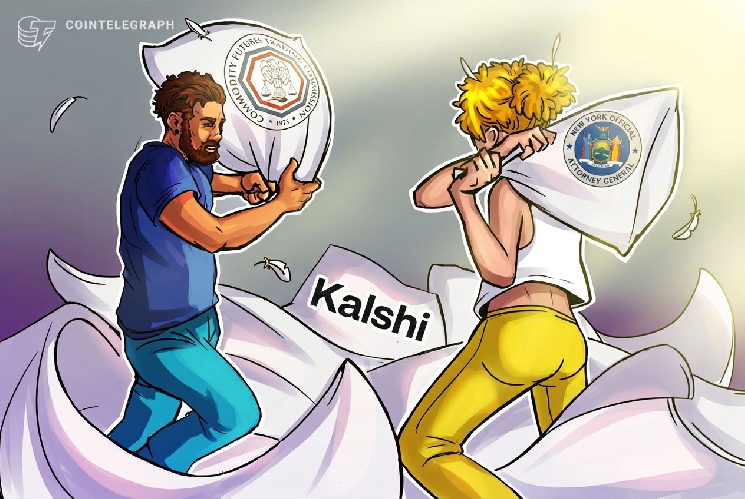
The U.S. Commodity Futures Trading Commission (CFTC) has used emergency powers to order prediction market Kalshi to remain operational amid a legal dispute with New York state. New York alleges Kalshi is operating an unlicensed gambling business by offering event contracts related to sports, elections, and culture. The state sought a temporary restraining order to halt this activity, which the CFTC argued would create a market emergency, potentially stopping Kalshi from offering any event contracts nationwide as it is based in New York. The CFTC asserts that the Commodity Exchange Act gives it exclusive jurisdiction over swaps traded on designated contract markets, which includes the event contracts Kalshi lists. It argues Congress intended to prevent a "patchwork of state gambling laws" from affecting federally regulated derivative exchanges. This clash is part of a broader national debate on whether federal law preempts state gambling laws for such contracts. While a federal judge in a related New York case recently denied Kalshi's motion for a preliminary injunction, finding state gambling laws were not preempted for its sports contracts, the CFTC's latest emergency order allows Kalshi to continue operating. However, it does not resolve the underlying jurisdictional dispute or halt New York's lawsuit. The CFTC has filed similar lawsuits against eight other states to defend its congressionally granted jurisdiction.

cryptonews.ru2m ago

CFTC Used Emergency Powers to Keep Kalshi Operational in Dispute with New York

cryptonews.ru2m ago

Top Manager at GSR Names Conditions for New Bull Rally

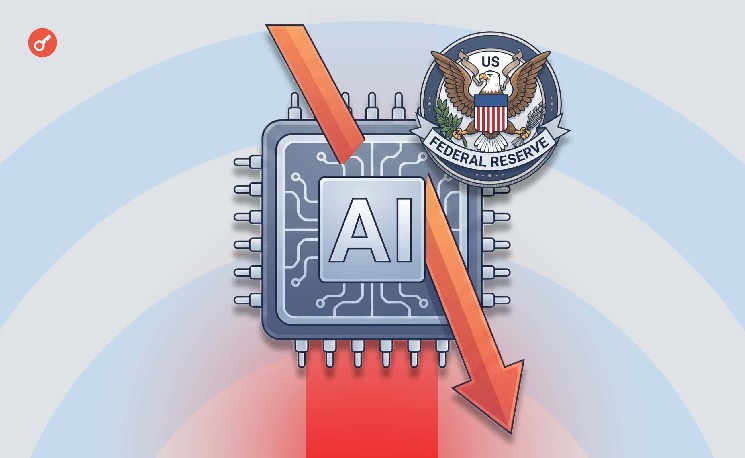
A top manager at GSR, Spencer Hallarn, states that the next major bull run in the cryptocurrency market depends on two key conditions: a cooling of the current hype surrounding the artificial intelligence (AI) sector and the start of interest rate cuts by the US Federal Reserve. He explains that the AI sector is absorbing a significant portion of available capital, diverting attention and funds away from crypto. Hallarn believes Bitcoin would lead any rally, as other cryptocurrencies need to prove their value by delivering on long-promised use cases. He notes the current market is sluggish, with low trading volumes tied to low prices and market capitalization. On a declining market, clients are more disciplined in hedging and planning, showing increased interest in over-the-counter risk management solutions and diversification, including through tokenized real-world assets (RWA). Hallarn views tokenization more as a challenge to traditional banking infrastructure than merely a new trading product. The article highlights uncertainty regarding Fed policy, with experts cited suggesting a potential rate hike in September 2026 due to persistent inflation, contrary to market hopes for easing. Meanwhile, AI hype continues unabated, with venture funding in the sector soaring to $300 billion in Q1 2026. The anticipated IPOs of major AI firms like Anthropic and OpenAI could further draw liquidity away from cryptocurrencies.

cryptonews.ru5m ago

Top Manager at GSR Names Conditions for New Bull Rally

cryptonews.ru5m ago

Trading

Spot

Hot Articles

How to Buy ENS

Welcome to HTX.com! We've made purchasing Ethereum Name Service (ENS) simple and convenient. Follow our step-by-step guide to embark on your crypto journey.Step 1: Create Your HTX AccountUse your email or phone number to sign up for a free account on HTX. Experience a hassle-free registration journey and unlock all features.Get My AccountStep 2: Go to Buy Crypto and Choose Your Payment MethodCredit/Debit Card: Use your Visa or Mastercard to buy Ethereum Name Service (ENS) instantly.Balance: Use funds from your HTX account balance to trade seamlessly.Third Parties: We've added popular payment methods such as Google Pay and Apple Pay to enhance convenience.P2P: Trade directly with other users on HTX.Over-the-Counter (OTC): We offer tailor-made services and competitive exchange rates for traders.Step 3: Store Your Ethereum Name Service (ENS)After purchasing your Ethereum Name Service (ENS), store it in your HTX account. Alternatively, you can send it elsewhere via blockchain transfer or use it to trade other cryptocurrencies.Step 4: Trade Ethereum Name Service (ENS)Easily trade Ethereum Name Service (ENS) on HTX's spot market. Simply access your account, select your trading pair, execute your trades, and monitor in real-time. We offer a user-friendly experience for both beginners and seasoned traders.

5.6k Total ViewsPublished 2024.03.29Updated 2026.06.02

How to Buy ENS

Discussions

Welcome to the HTX Community. Here, you can stay informed about the latest platform developments and gain access to professional market insights. Users' opinions on the price of ENS (ENS) are presented below.

活动图片